How to Spot a Clocked Car: Mileage Fraud Warning Signs
A clocked car is one whose odometer has been wound back to show fewer kilometres than it has really covered. To spot one, check the reading against three things: the car's paper trail, its physical wear and the seller's story. A reading that falls between two dated records is proof of tampering. Wear that does not fit the claimed distance is a strong warning, and so is a seller who cannot explain unusually low mileage.
Key takeaways
- Studies cited by the European Parliament in 2018 estimate that 5–12% of used cars sold nationally and 30–50% sold across borders have a manipulated odometer.
- Digital odometers are not safer: carVertical notes that cheap tools can edit them, while mechanical ones had to be taken apart.
- EU law requires the mileage to be checked at periodic inspections and makes odometer manipulation an offence (Directive 2014/45/EU, Article 8(6)).
- A mileage timeline built from inspection reports and invoices is the most reliable test you can do yourself.
Why clocking pays and what it costs you
Lower mileage means a higher price, and that is the whole business model. carVertical, which sells vehicle history reports, says buyers of clocked cars overpay by 48.8% on average, according to figures quoted by Start Rescue. The European Parliament put the economic damage across the EU at EUR 5.6 to 9.6 billion (2018 estimate).
The price is not the only loss. Servicing follows mileage, so a car showing 90,000 km instead of 180,000 km has probably missed work that was due: a timing belt, gearbox oil, brake fluid or a clutch. You pay for those too, usually soon after purchase.
In carVertical's own checks, the share of clocked cars was highest in:
| Country | Share of checked cars with rolled-back mileage |
|---|---|
| Latvia | 11.2% |
| Ukraine | 9.1% |
| Lithuania | 7.8% |
| Romania | 6.5% |
| Portugal | 2.3% |
| United Kingdom | 2.1% |
| Switzerland | 2.1% |
These figures come from one provider's database, not from official statistics, but they show where extra caution pays. carVertical adds that sellers in Western Europe tend to clock more expensive cars.
How odometers are tampered with
- Mechanical odometers (older cars) were wound back by dismantling the instrument cluster and swapping or turning the internal gears.
- Digital odometers can be rewritten through the diagnostic socket with special software, or by removing and editing the memory chip in the cluster.
- Mileage blockers, also called mileage stoppers or CAN filters, are small devices hidden behind the dashboard. They pause or slow the odometer while the car is driven, so the fraud happens before the sale rather than at it.
Some makes store the mileage in several control units. Start Rescue gives the example of modern BMW and Mini models, which show a "tamper dot" in the display when the cluster's serial number does not match the rest of the car.
9 warning signs of a clocked car
- Mileage that is low for the car's age. carVertical works with an average of about 12,000 miles (roughly 19,000 km) a year. A ten-year-old diesel estate showing 70,000 km needs a convincing paper trail.
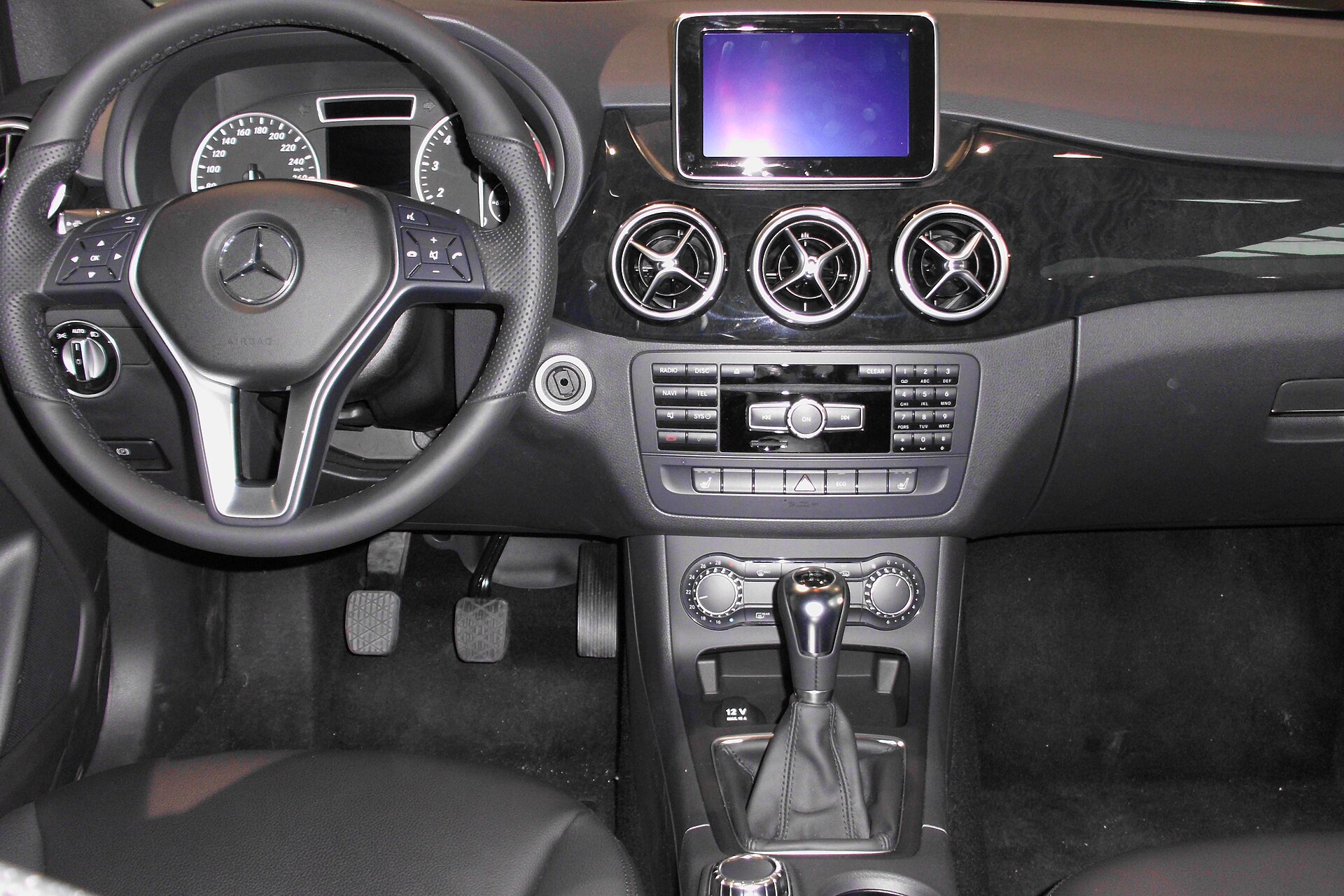
- A worn brake pedal. On a car with genuinely low mileage the pedal rubber shows only slight wear. Heavy wear, or a brand-new pedal rubber on an older car, is a red flag.
- A shiny steering wheel and gear knob. Polished leather, worn grain or a replaced wheel cover suggest far more use.
- A tired driver's seat. Look for a flattened or torn outer bolster and sagging foam.
- Play in the driver's door hinges. Lift the open door gently. Sellers rarely replace hinges, so looseness suggests higher real mileage.
- Stone chips that do not fit. A peppered bonnet and windscreen come with motorway kilometres.
- Traces on the instrument cluster. Pry marks, scratches, missing or mismatched screws and fingerprints inside the clear lens show the cluster has been removed. Use a torch.
- A suspicious service book. A book that looks newer than the car, stamps without invoices, or garages that do not answer the phone. Gaps in the middle of the car's life deserve a question.
- An evasive seller. Reluctance to show documents, pressure to decide quickly, a price well below the market, or selling on someone else's behalf.
One sign on its own proves nothing; a worn seat can come from a heavy driver. Three or four together mean you should walk away or pay for a professional check.
Build a mileage timeline
Write every dated mileage record in a table, oldest first. The readings must always rise, and the gaps between them should fit the car's use.
| Record | Where it comes from | What to check |
|---|---|---|
| Inspection reports | The MOT in the UK and the periodic roadworthiness test in EU countries | The reading at each test; EU rules make the previous test's data available to inspectors once it is stored electronically |
| UK MOT history | Free GOV.UK service using the registration number | Mileage at every test since 2005 for cars and vans |
| Belgium's Car-Pass | Mileage certificate for used car sales in Belgium | Not used in neighbouring countries, so it does not cover imports |
| Service invoices | Seller, or the garages named on them | Date, mileage and VIN; garages can check their own records |
| History reports | Commercial providers | Records from several countries; compare more than one source |
Here is how a falling reading looks in practice (illustrative example):
| Date | Record | Mileage |
|---|---|---|
| March 2019 | Service invoice | 48,200 km |
| April 2021 | Inspection report | 96,700 km |
| May 2023 | Service invoice | 141,300 km |
| September 2024 | Advert | 89,000 km |
Between 2019 and 2021 the car covered about 23,000 km a year. The advert then shows 52,300 km less than an invoice written 16 months earlier. No explanation fixes that. Not every inconsistency is fraud, though: Start Rescue notes that clerical errors at a test, a replaced instrument cluster or a legal repair can produce odd readings. A genuine replacement comes with an invoice that records the old and new mileage.
Use our VIN decoder to confirm that every invoice belongs to the same car, and check the original specification on the specs pages so the engine and gearbox match the records.
Which cars are most at risk
- Imports. The European Parliament's 30–50% estimate for cross-border sales is the strongest single warning. When a car changes country, its national records stay behind, so get the export country's inspection reports and invoices before you pay.
- Popular high-mileage models. Start Rescue, quoting carVertical data, reports that almost 10% of Nissan Qashqais checked in the UK showed tampering, with 8.4% for the Volvo XC60 and 7.2% for the XC90. Large SUVs feature prominently in these figures, and long-distance cars have the most kilometres to hide.
- Cars that recently changed hands several times. Each sale is a chance to clean up the history.
If you are shopping for a long-distance family car, our list of the best used diesel estates explains which models cope well with high mileage, which makes an honest 200,000 km car far less of a worry than a dishonest 100,000 km one.
Is odometer tampering illegal?
In the EU, yes. Directive 2014/45/EU requires Member States to treat odometer manipulation as an offence punishable by effective, proportionate, dissuasive and non-discriminatory penalties. Enforcement still varies: when the European Parliament adopted its resolution on 31 May 2018, it found that manipulation was prohibited in 26 Member States, only 10 had extra measures to let buyers verify mileage, and only 6 treated it as a criminal offence. Parliament asked for connected national mileage databases and for both the person who orders the change and the person who makes it to be punished.
In the UK, Start Rescue notes that rolling back an odometer to suggest fewer miles is illegal, and so is failing to tell a buyer about a change.
What to do if you have bought a clocked car
- Collect the evidence: the advert, the contract, every invoice and inspection report, and a printout of the history check.
- Contact the seller in writing. ADAC advises writing the total mileage, not just the odometer reading, into the purchase contract; if that figure is false, the buyer can withdraw from the sale. From a UK dealer, Start Rescue says you can ask for a full refund within 30 days under the Consumer Rights Act 2015.
- Private sale: ask for a refund; if refused, small-claims courts are the usual route in the UK.
- Report it to the police and, in the UK, to Action Fraud and Trading Standards. Reports help others, even when the seller cannot be traced.
Try our calculator
Cost of ownership calculatorFAQ
Can a digital odometer be rolled back?
Yes. Digital odometers can be rewritten with diagnostic software or by editing the memory chip, and carVertical says the tools are cheap. Some cars store the mileage in more than one control unit, which makes a mismatch easier to find, but the dashboard figure alone proves nothing.
How can I check a car's mileage for free?
In the UK, the GOV.UK MOT history service shows the mileage at every test since 2005. In Belgium, the Car-Pass comes with the car. Elsewhere, ask the seller for inspection reports and invoices, and call the garages named on them: they can confirm their own records.
Is a clocked car always a bad buy?
Not mechanically, because the maintenance history and the model's reliability matter more than the number alone. But the price is based on a false figure, servicing due by mileage has probably been missed, and you will face the same problem when you sell. Walk away unless the real mileage is known and the price reflects it.
What is a mileage blocker?
A small electronic device, also called a mileage stopper or CAN filter, fitted behind the dashboard. It pauses or slows the odometer while the car is being driven. Look for a mileage that has barely changed between two inspections despite regular use.
Can a history report prove that a car is not clocked?
No. A report shows only what was recorded. A steadily rising graph is reassuring, but a flat section can mean a gap in the records, a car standing unused or a blocker. Combine the report with the physical checks and with invoices you have verified yourself.
Sources
- European Parliament Legislative Observatory: Odometer manipulation in motor vehicles, resolution of 31 May 2018 (accessed 22 Oct 2026)
- Directive 2014/45/EU on periodic roadworthiness tests, Article 8 (legislation.gov.uk copy of the adopted text) (accessed 22 Oct 2026)
- GOV.UK: Check the MOT history of a vehicle (accessed 22 Oct 2026)
- Car-Pass: Importing a vehicle from abroad, useful tips when purchasing (accessed 22 Oct 2026)
- carVertical: How to detect an odometer rollback (accessed 22 Oct 2026)
- Start Rescue: How to spot odometer fraud in 2026 (accessed 22 Oct 2026)
- ADAC: Auto gebraucht kaufen, worauf Sie achten sollten (total mileage in the contract) (accessed 22 Oct 2026)
Found a mistake? Report an error