
DSG Problems Explained: Faults by Gearbox, Repair Costs, Used Buying
Most DSG trouble comes from two parts: the mechatronic unit that controls the gearbox and the clutch pack that wears like any clutch. Which faults to expect depends on the gearbox code. The 7-speed dry-clutch DQ200 has the longest fault history, the wet-clutch DQ250, DQ381 and DQ500 depend heavily on regular oil changes. A new mechatronic with clutch can cost EUR 2,500-4,000 in 2026, so service records matter more than mileage.
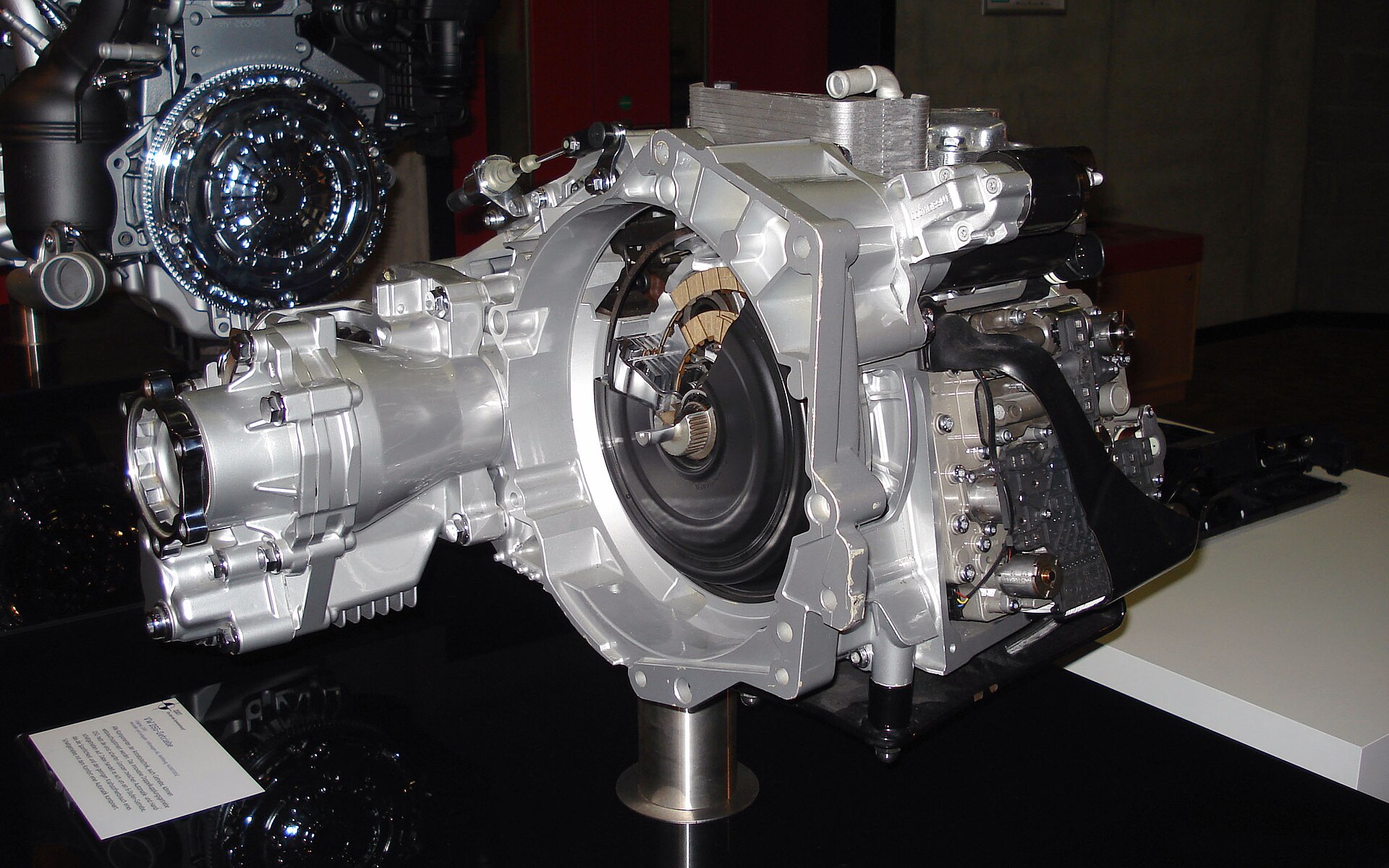
Key takeaways
- The DQ200 (7-speed, dry clutches, up to 250 Nm) is the unit the ADAC singles out for mechatronic, sensor and clutch faults in its June 2025 guide.
- Wet-clutch units need oil changes: about every 60,000 km for the DQ250 and 120,000 km for the DQ381, according to auto motor und sport (2026).
- Judder on pull-away, a flashing gear display, limp mode and a car stuck in one gear are the classic warning signs.
- Repair bills range from about EUR 200 for a diagnosis to EUR 6,000 for a full overhaul (Auto Bild, 2024).
- On a used car, check the recall history on the VIN, the oil service invoices and how the gearbox behaves from cold in stop-and-go traffic.
The basics of how a dual-clutch gearbox works, and how it compares with a torque converter or CVT, are covered in the guide to automatic gearbox types. This guide is about what goes wrong with the Volkswagen Group units and what it costs.
Which DSG does your car have
Volkswagen, Audi, Skoda, Seat and Cupra all use the same family of gearboxes. The internal code matters more than the badge, because each unit has its own faults and service needs.
| Code (gearbox ID) | Speeds and clutches | Torque rating | In production from | Typical cars | Oil service |
|---|---|---|---|---|---|
| DQ250 (02E) | 6-speed, wet | 350 Nm in text, 400 Nm in table (Wikipedia) | 2003 | Golf, Jetta, Touran, Passat, Caddy with 2.0 TDI and 2.0 TSI | About every 60,000 km |
| DQ200 (0AM) | 7-speed, dry | 250 Nm | 2008 | Golf Mk6, Polo Mk5, Ibiza, Yeti; 1.0-1.6 litre engines | No change set by VW; experts advise about 100,000 km |
| DQ500 (0BH) | 7-speed, wet | 600 Nm | 2009 | Transporter T5 2.0 TDI first, later Tiguan, Superb, Audi TT RS | Follow the service plan |
| DQ381 (0GC) | 7-speed, wet | 420-430 Nm | 2017 | Replaced the DQ250: Golf 7 facelift and Golf 8 GTI, GTD and R, Tiguan, Passat B8, Octavia RS, Kodiaq | About every 120,000 km |
Torque ratings and launch years come from the Wikipedia overview of the direct-shift gearbox; the intervals from auto motor und sport (March 2026). Audi's longitudinal S tronic units (DL501, DL382) and the DQ400e of the plug-in hybrids are separate designs and are not covered here.
To find the code on a specific car, ask a VW Group dealer to read it from the VIN, or look at the gearbox code on the vehicle data sticker in the service book or spare-wheel well. As a rule of thumb, small petrol engines up to 1.6 litres with front-wheel drive usually have the dry DQ200, and 2.0 TDI and 2.0 TSI engines a wet unit. The ADAC's used-car report on the 2014-2023 Passat says it plainly: DSG with dry clutches is less durable, and the 2.0 TSI is paired with a wet-clutch DSG.
DQ200: the dry-clutch 7-speed
The DQ200 arrived in 2008. Its dry clutches suit small, light cars, and the ADAC's guide notes that a slightly jerky start and a short delay before drive engages are typical of dry-clutch units. The faults it lists as most common are in the mechatronic unit, followed by sensors and the clutches themselves.
The fault history by year:
- 2012-2013, China and Asia: in March 2012 VW Group China acknowledged a possible problem with about 500,000 seven-speed DSG cars and offered a software update. In 2013 Volkswagen recalled about 1.6 million cars worldwide because the synthetic oil in the DQ200 could cause short circuits in the gearbox power supply; the fix was a change to mineral oil (CarWale, 15 November 2013).
- 2019, Australia: a recall dated 15 October 2019 covered a production fault that could crack the pressure accumulator, which interrupts hydraulic pressure and drive, much like suddenly losing the clutch.
- After 2014: Volkswagen told Auto Bild that the problems of the 7-speed dry-clutch DSG were resolved from 2014.
In practice this means a DQ200 car built before 2014 needs closer scrutiny, and any car should have its recall work confirmed on the VIN. Dry clutches also wear faster in heavy stop-and-go use and in hilly areas, so a high-mileage city car with a DQ200 may need a clutch set even if the mechatronic is healthy.
DQ250 and the newer wet-clutch units
The DQ250 was the first DSG, launched in 2003 behind higher-torque engines. Its clutches run in oil, which cools them, and the same oil supplies the hydraulics. That makes the oil service the deciding factor. Auto Bild quotes a gearbox specialist in June 2024 who traces many mechatronic failures to old oil.
Documented DQ250 issues are mostly from the early years. The ADAC's used-car report on the Golf VI records an October 2009 recall in Germany for about 17,000 cars with the 6-speed DSG (type 02E): a misread oil temperature could trigger clutch protection, causing jerks and sometimes no drive at all; a software update of about 30 minutes fixed it. Wikipedia's overview also mentions sulphur deposits in the oil causing short circuits and power loss on both the DQ200 and DQ250.
The DQ381 replaced the DQ250 from 2017 and the DQ500 handles up to 600 Nm in vans and larger SUVs. Neither has a pattern of failures in the strong sources consulted for this guide. Workshops mainly report judder on pull-away or when shifting as the first sign that a DQ381 needs a diagnosis, and stress that its long 120,000 km oil interval is a maximum for normal use, with 60,000-80,000 km advised for towing or hard driving (Kfz-Meisterbetrieb Dietrich, October 2026).
Symptoms and what they usually mean
| Symptom | Most likely cause | First step |
|---|---|---|
| Judder or shudder pulling away, worst uphill or in reverse | Worn or glazed clutch, old oil, clutch adaptation values out of range | Read fault codes, run a clutch adaptation, check oil history |
| Jerky or delayed engagement in stop-and-go traffic | Clutch wear (DQ200), mechatronic pressure control | Diagnosis before further driving in traffic |
| Flashing gear indicator, gearbox warning, limp mode | Mechatronic fault, sensor fault, low hydraulic pressure | Stop safely, restart once; if it returns, have it checked |
| Odd or even gears missing, car stuck in one gear | Fault on one clutch or one half of the mechatronic | Do not keep driving long distances; book a diagnosis |
| No drive in D or R | Pressure accumulator, mechatronic, clutch release | Stop and call for recovery |
| Clunks or knocks when shifting, rattle at idle | Clutch, dual-mass flywheel, gear selectors | Diagnosis |
A German car workshop notes in a July 2026 price guide that jerky pull-away on its own does not always mean damage: adaptation values or aged oil can cause it, and both are cheaper to fix than parts.
If the gearbox loses drive in traffic or the car will not move, treat it as a breakdown. Put on the hazard lights, get everyone out to a safe place and call for help instead of trying to restart repeatedly on a live lane.
Mechatronic and clutch pack: what repairs cost
The mechatronic is the gearbox's hydraulic and electronic control unit, bolted to the gearbox. The clutch pack is either two dry plates (DQ200) or two sets of oil-cooled plates (wet units). Prices vary with the code, the car and whether parts are new or overhauled.
| Job | Typical cost | Source |
|---|---|---|
| Damage analysis | about EUR 200 | Auto Bild, June 2024 |
| Mechatronic overhaul | from EUR 700, up to EUR 2,500 with new oil and filters | Auto Bild, June 2024 |
| New mechatronic with clutch | EUR 2,500-4,000 | German workshop price guide, July 2026 |
| Clutch set, low-torque DSG | EUR 1,500-2,500 | Auto Zeitung, March 2025 |
| Clutch set, larger units, incl. labour | EUR 2,500-5,000 | Auto Zeitung, March 2025 |
| Complete DQ200 replacement | more than EUR 2,000 | ADAC, June 2025 |
| Complete gearbox overhaul | up to EUR 6,000 | Auto Bild, June 2024 |
| Oil service with filter (wet DSG) | EUR 300-600 | German workshop price guide, July 2026 |
The ADAC's figure for a whole DQ200 replacement in 2025 is lower than some quotes for a new mechatronic plus clutches in 2026, because a gearbox swap can use an exchange unit. Ask for both options. Specialist gearbox workshops often overhaul a mechatronic rather than replace it, which the July 2026 price guide describes as clearly cheaper than a new part.

Oil service intervals
Sources and service plans differ, so the handbook or the dealer's service plan for the car's VIN is the binding reference.
- DQ250: about every 60,000 km, usually with the filter (auto motor und sport, 2026; workshop guide, July 2026).
- DQ381: about every 120,000 km under the manufacturer's plan; workshops advise 60,000-80,000 km for towing or sporty use.
- DQ200: Volkswagen sets no gearbox oil change; experts quoted by auto motor und sport in 2026 advise about every 100,000 km. The mechatronic has its own separate fluid.
- DQ500: no figure in the sources used here; check the service plan.
A specialist quoted by Auto Bild in 2024 recommends shorter intervals of about 40,000-60,000 km and a full flush rather than a simple drain. That is a cautious view; a documented change at the manufacturer's interval is the minimum to look for. Oil changes on wet DSG units are part of the major service items in the car service schedule.
Buying a used car with DSG
A DSG car with full records can be a good buy; one with an unknown gearbox history can cost more than the price difference to a manual. The ADAC put that surcharge for a DSG on a new car at EUR 1,000-2,500 in 2025.
Before and during the viewing:
- Identify the gearbox code and look up the faults above. For a Golf or Octavia, the used VW Golf guide and the used Skoda Octavia guide cover the engine and gearbox choices for those two models.
- Ask for oil service invoices on wet-clutch units, with mileage and date, and for any mechatronic or clutch repairs.
- Check the recall and campaign history on the VIN at a dealer; several DSG faults were cured by software or recall work.
- Start the test drive from cold. Many faults appear only with cold oil or with hot clutches after traffic.
- Drive in stop-and-go traffic, creep forward, reverse up a slope and pull away uphill. Judder or a delay is the warning.
- Use kick-down and the manual mode, checking that every gear up and down engages cleanly with no flare in revs.
- Have the fault memory read for gearbox codes and clutch adaptation values; a specialist can see clutch wear from them.
The general test drive guide covers the rest of the car. If a dealer offers a used-car warranty, check that it covers the mechatronic and clutches; many exclude wear parts.
FAQ
Which VW DSG is the most reliable?
The wet-clutch units have a better record than the dry DQ200, and the ADAC calls the dry-clutch DSG less durable. The wet units still depend on oil changes. A well-serviced DQ250 or DQ381 is a safer used buy than a DQ200 with unknown history.
How long does a DSG gearbox last?
There is no fixed lifespan. A specialist quoted by Auto Bild in 2024 sees damage after five, sometimes three years on neglected units, while well-serviced gearboxes run far longer. Oil changes, driving style and recall work done decide it more than mileage.
Is the DQ200 still a problem after 2014?
Volkswagen told Auto Bild that the main DQ200 problems were solved from 2014. Later cars still have a dry clutch that wears faster in heavy traffic, and an October 2019 recall in Australia covered cracked pressure accumulators, so check the VIN for open campaigns.
Does a DSG need an oil change?
Wet-clutch units do: about every 60,000 km for the DQ250 and 120,000 km for the DQ381. Volkswagen sets no change for the dry DQ200, though experts suggest one around 100,000 km. The service plan for the specific VIN is the binding reference.
Can a DSG judder be fixed without new clutches?
Often, yes. A clutch adaptation with diagnostic equipment, a software update or fresh oil on a wet unit can cure judder. If the clutch is worn beyond its adjustment range, the clutch set has to be replaced.
Sources
- ADAC: Doppelkupplungsgetriebe - Wie funktionieren DSG, PDK und DCT? (23.06.2025) (accessed 5 Nov 2026)
- ADAC Gebrauchtwageninfo VW Passat (2014-2023) Benziner (2025 edition) (accessed 5 Nov 2026)
- ADAC Gebrauchtwageninfo VW Golf VI (2008-2012) Benziner, recalls section (Pannenstatistik 2026 edition) (accessed 5 Nov 2026)
- auto motor und sport: DSG-Oelwechsel erklaert, Intervalle fuer DQ200, DQ250, DQ381 (via WEB.DE, updated 03.03.2026) (accessed 5 Nov 2026)
- Auto Bild: Doppelkupplungsgetriebe - Probleme, Schaeden, Wartung, Reparatur (21.06.2024) (accessed 5 Nov 2026)
- Auto Zeitung: DSG alias Doppelkupplungsgetriebe - Funktion und Defekte (12.03.2025) (accessed 5 Nov 2026)
- Automobilsalon Bellemann: DSG-Reparatur, was Steuerungseinheit und Kupplung kosten (21.07.2026) (accessed 5 Nov 2026)
- Automobilsalon Bellemann: DSG-Oelwechsel, Intervall, Kosten, Getriebespuelung (21.07.2026) (accessed 5 Nov 2026)
- CarWale: Volkswagen is recalling 1.6 mn cars globally for DSG box problems (15.11.2013) (accessed 5 Nov 2026)
- Kfz-Meisterbetrieb Dietrich: DQ381 Oelwechsel, Intervall, Ablauf (updated 16.10.2026) (accessed 5 Nov 2026)
- Wikipedia: Direct-shift gearbox (codes, torque ratings, launch years, recall overview) (accessed 5 Nov 2026)
Found a mistake? Report an error


