Low-Emission Zones in Europe: Crit'Air, Umweltplakette and DGT Labels
Many European cities restrict older, more polluting cars in low-emission zones (LEZs), and each country runs its own system. France requires a Crit'Air sticker, Germany an Umweltplakette, Spain classifies cars with DGT environmental labels. Belgium and Denmark ask foreign drivers to register their plate online, while the Netherlands and Poland enforce their zones with cameras and no sticker at all. There is no single EU scheme, so a sticker from one country is rarely recognised in another. Before a trip, check every city on your route and order stickers from the official sites well in advance.
Key takeaways
- France: Crit'Air sticker in 42 towns and cities with low-emission zones; order it only from certificat-air.gouv.fr.
- Germany: a green Umweltplakette (emissions group 4, Euro 4) opens every environmental zone; foreign cars need one too.
- Spain: DGT labels (Cero, ECO, C, B) decide access to city zones; more than 140 municipalities with over 50,000 inhabitants must create one.
- Belgium, Denmark: register a foreign car online before entering; the Netherlands and Poland check plates by camera.
Why the rules differ from country to country
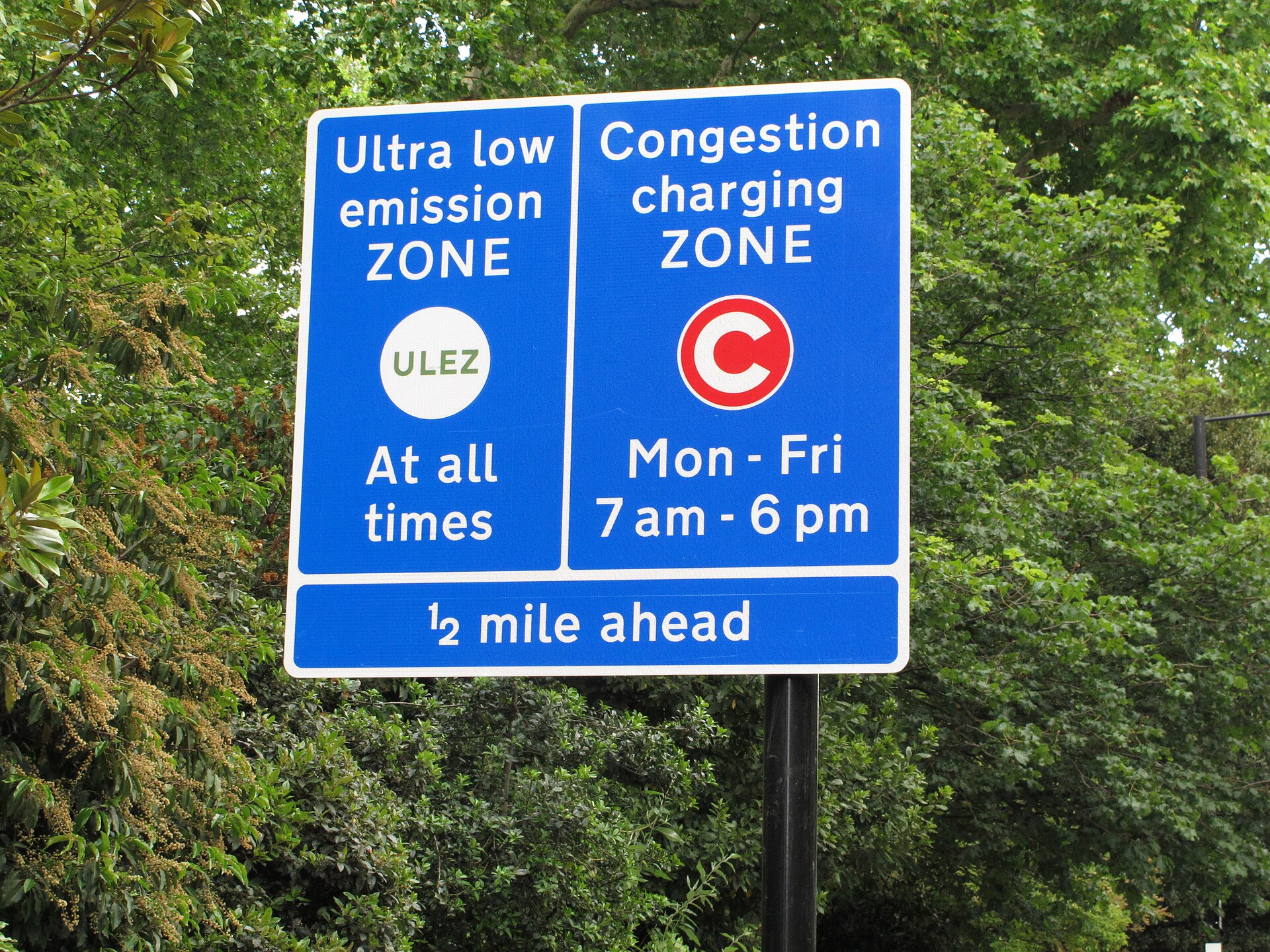
Low-emission zones exist to help cities meet EU air quality limits, and there were already about 250 of them across Europe by 2019. The EU sets the air quality targets but leaves the means to national and city governments. The result, as the European Consumer Centres network (ECC-Net) puts it, is that there is no uniform regulation. Each country chooses its own sticker or registration system, and within France and Italy each city sets its own times and areas.
Almost every scheme is built on the same foundation, the car's Euro emissions standard (or, where that is missing, its first registration date) and its fuel type. Electric cars are always in the cleanest class.
Country by country
| Country | System | Foreign cars | Typical fine |
|---|---|---|---|
| France | Crit'Air sticker, six classes from Crit'Air 0 to 5 | Sticker required in active zones (ZFE) | €68 (ECC France, 2026) |
| Germany | Umweltplakette: green, yellow or red | Sticker required | €100 (ARBÖ, 2026) |
| Spain | DGT labels Cero, ECO, C, B | French Crit'Air recognised; Barcelona requires online registration | Set by each city |
| Italy | City rules: ZTL limited traffic zones and seasonal bans | Same rules as residents; camera-enforced | Set by each city |
| Belgium | Brussels, Antwerp and Ghent LEZs; none in Wallonia | Antwerp and Ghent: registration compulsory | Brussels day pass €35 (2026) |
| Netherlands | Camera-enforced zones in Amsterdam, The Hague, Utrecht and others | No sticker or registration | €110 for a car (2026) |
| Denmark | Camera-enforced zones | Older vehicles must register online | Fine possible |
| Poland | Camera-enforced zones in Warsaw and Kraków | No sticker; check eligibility online | PLN 500, about €117 (2026) |
| Austria | Zones apply to heavy goods vehicles only | Cars: no LEZ sticker, but motorway vignette needed | — |
| Czech Republic | Prague LEZ for vehicles over 3.5 t only | Cars not covered | — |
Fines and amounts are from ECC-Net's environmental zones page, updated in August 2026, unless stated otherwise.
France: the Crit'Air sticker
France sorts vehicles into six Crit'Air classes by fuel and Euro standard, from Crit'Air 0 for electric and hydrogen cars to Crit'Air 5 for the most polluting vehicles. Cars that do not meet at least Euro 2 cannot get a sticker at all. ECC France counts 42 towns and cities with low-emission zones (zones à faibles émissions, ZFE) that require it at certain times or in certain areas, and each city decides which classes may enter.
- Where to buy: only the official site certificat-air.gouv.fr. ECC France gives the price as €3.81 in 2026; the RAC quotes €4.91 for delivery to the UK. Delivery takes days, so order before you travel.
- Fines: in 2026, ECC France gives €68 for entering a zone without the right sticker, while the RAC quotes an on-the-spot fine of €135.
- Spain and Geneva: Spain recognises the Crit'Air sticker for French-registered cars, and Geneva in Switzerland accepts it in its own Stick'Air scheme.
Germany: the Umweltplakette
German environmental zones (Umweltzonen) use a coloured windscreen sticker based on the car's emissions group:
| Sticker | Emissions group | Euro standard | Access |
|---|---|---|---|
| Green | 4 | Euro 4 and newer | All environmental zones |
| Yellow | 3 | Euro 3 | Limited |
| Red | 2 | Euro 2 | Limited |
| None | 1 or 0 | Euro 1 and older | No access |
ARBÖ states that in practice the zones are open only to cars with a green sticker. The sticker is tied to the registration plate, has no expiry date and is valid in every German zone. The Austrian club ARBÖ notes that it is compulsory for foreign drivers too and that the fine is €100 as of 2026. Some cities, including Stuttgart, Munich and Darmstadt, also restrict older diesels on certain roads. Automobile clubs such as ARBÖ sell it at their branches; order it well before the trip.
Spain: DGT environmental labels
Spain's traffic authority (DGT) classifies cars with four labels. The criteria for cars and light vans, as summarised by the Spanish automobile club RACE in February 2026:
| Label | Colour | Cars that qualify |
|---|---|---|
| Cero | Blue | Battery electric, range-extended electric, fuel cell, plug-in hybrids with at least 40 km electric range |
| ECO | Blue and green | Plug-in hybrids under 40 km, full and mild hybrids, natural gas (CNG, LNG) and LPG cars |
| C | Green | Petrol cars registered from 2006, diesel cars from 2015 |
| B | Yellow | Petrol cars registered from January 2001, diesel cars from 2006 |
| No label | — | Older petrol and diesel cars |
The Climate Change and Energy Transition Law (Law 7/2021) requires more than 140 municipalities with over 50,000 inhabitants to create a low-emission zone (zona de bajas emisiones, ZBE). For Spanish-registered cars the sticker costs €5 at a Correos post office in 2026, according to RACE. French-registered cars use their Crit'Air sticker instead, and Barcelona requires foreign vehicles to register online before entering, with occasional access for non-compliant vehicles on up to 24 days a year.
Belgium, the Netherlands, Denmark, Italy and Poland
- Belgium: Brussels requires diesel cars to meet at least Euro 5. Non-compliant vehicles can buy a day pass at €35 in 2026, up to 24 times a year. In Antwerp and Ghent registration of foreign vehicles is compulsory; it is free if the car meets the rules, and registering in Ghent covers all Flemish zones.
- Netherlands: zones in Amsterdam, The Hague, Utrecht, Arnhem and other cities ban diesel cars below Euro 4. Cameras read plates, so no sticker or registration is needed; ECC-Net gives a fine of €110 for a light vehicle in 2026.
- Denmark: older vehicles must be registered on the official Miljøzoner site no later than the day they enter a zone.
- Italy: many historic centres are limited traffic zones (ZTL) closed to non-resident cars, enforced by cameras. Emilia-Romagna runs winter restrictions on weekdays from 1 October to 31 March, and Euro 5 diesels have been restricted in some urban areas since 1 October 2025.
- Poland: Warsaw and Kraków check plates by camera. Use the cities' official checkers to see if your car may enter.
How to check your car and plan a trip: step by step
- Find your car's Euro standard. It is shown in the vehicle papers. Where it is missing, schemes such as Crit'Air use the first registration date instead.
- List every city on your route, including ring roads that may fall inside a zone.
- Check the national system with the table above, then the city rules: times, classes and exemptions differ.
- Order stickers early from official sites only: certificat-air.gouv.fr for Crit'Air, an automobile club for the Umweltplakette.
- Register online where required (Antwerp, Ghent, Barcelona, Denmark) before the day of entry.
- Plan where to park outside any zone your car cannot enter, and continue by public transport.
Choosing your next car with LEZs in mind
If you live in or drive into cities with zones, the fuel and Euro standard of your next car matter as much as its price. An electric car gets the best class everywhere, and a hybrid earns Spain's ECO label, or Cero for plug-in hybrids with at least 40 km of electric range. A Euro 6 diesel meets all the limits in the tables above today, but cities such as Brussels have tightened their rules in steps. Our petrol vs diesel cost comparison helps check whether a diesel still pays off for your mileage.
Try our calculator
Fuel cost comparisonFAQ
Do I need a Crit'Air sticker to drive through France?
Only to enter towns and cities with active low-emission zones (42 according to ECC France in 2026) during their restricted times. Motorways and rural roads do not need one. Order it from certificat-air.gouv.fr, the only official site.
Do foreign cars need the German Umweltplakette?
Yes. The sticker is compulsory for all vehicles in German environmental zones, including those registered abroad, and the fine is €100 as of 2026. ARBÖ says the zones are in practice open only to green stickers.
Which DGT label does my car have?
For Spanish-registered cars, label C covers petrol cars registered from 2006 and diesels from 2015, and B petrol cars from 2001 and diesels from 2006. ECO is for hybrids and gas cars, and Cero for electric cars and plug-in hybrids with at least 40 km electric range.
Is there one sticker for all of Europe?
No. Each country has its own system and stickers are rarely recognised abroad. Spain accepts the French Crit'Air sticker for French cars, and Geneva accepts Crit'Air in its own scheme, but in most cases you need the local sticker or registration.
Are electric cars exempt from low-emission zones?
Electric cars are in the cleanest class everywhere, so they may enter all zones. In Germany they still need an Umweltplakette to drive in environmental zones, ARBÖ notes, and in Belgium or Denmark the registration rules for foreign cars still apply.
Sources
- ECC-Net / European Consumer Centre France — Environmental zones in Europe (updated 18.08.2026) (accessed 22 Oct 2026)
- RACE (Real Automóvil Club de España) — Etiqueta ambiental DGT (16.02.2026) (accessed 22 Oct 2026)
- ARBÖ — Maut und Umweltzonen Deutschland (Umweltplakette) (accessed 22 Oct 2026)
- RAC — Driving in France (Crit'Air price and fine) (accessed 22 Oct 2026)
- Wikipedia (FR) — Certificat qualité de l'air (Crit'Air classes, Stick'Air Geneva) (accessed 22 Oct 2026)
- Wikipedia — Low-emission zone (number of LEZs, Brussels, Netherlands) (accessed 22 Oct 2026)
Found a mistake? Report an error