
Webasto Coolant Parking Heaters: How They Work, Models and Rules
A Webasto coolant heater, also called a water or parking heater, is a small diesel- or petrol-fired burner that warms the engine's coolant while the engine is switched off. It draws fuel from the vehicle's tank and power from the 12 V or 24 V battery, so the engine is preheated and the cabin warm before you set off.

Key takeaways
- The heater warms the engine coolant first, then the cabin through the vehicle's own heater and fan.
- Webasto's car units, such as the Thermo Top Evo, are in the 2.5–5 kW class; truck and bus units go far higher.
- Installation belongs with a qualified workshop, ideally a certified Webasto partner.
- A fuel-fired heater produces exhaust gas, so it must not run in a closed garage.

How a Webasto coolant heater works
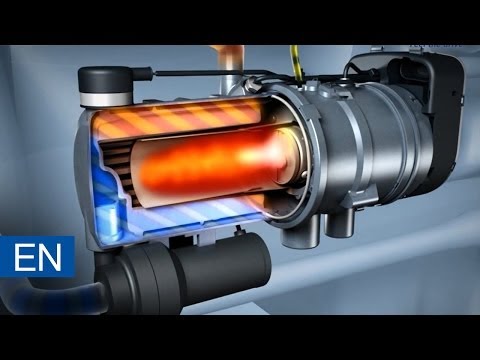
A coolant heater is a compact boiler plumbed into the cooling circuit and running independently of the engine. It works in this sequence:
- A small fuel pump meters fuel from the vehicle's tank into the combustion chamber.
- A blower feeds in combustion air.
- A glow plug ignites the mixture and switches off once the flame is stable.
- The hot exhaust gas heats the coolant through the wall of the heat exchanger; combustion gases stay separate from the coolant and the cabin air.
- An electric circulation pump moves the warm coolant through the engine block and the heater matrix with the engine off.
- Once the coolant is warm enough, the cabin fan blows heated air into the interior and onto the windscreen.
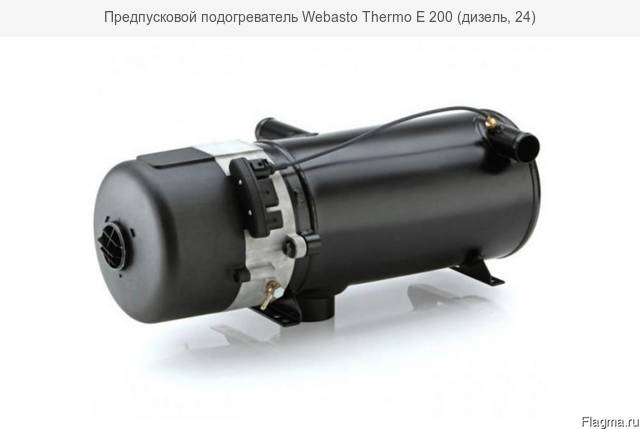
Output of a car water heater is usually quoted at 4–6 kW, reached about 30 seconds after ignition, and the units are designed to start at down to −40 °C (−40 °F). Warm air reaches the cabin later than with an air heater, because the engine warms up first. The benefit is a preheated engine: oil flows more easily, the first minutes of driving are gentler on components, and a battery weakened by cold has a much lighter load at start-up.
Webasto, founded in Germany in 1901 by Werner Baier as a maker of bicycle spokes, is usually credited with its first engine-independent car heaters in 1952. Other manufacturers, for example Eberspächer, build heaters on the same principle.
Coolant, air or electric: which heater type does what
A coolant heater warms engine and cabin, an air heater warms only the interior air, and an electric engine heater needs a mains socket where the vehicle is parked.
| Type | How it heats | Typical output | Best for |
|---|---|---|---|
| Coolant (water) parking heater | Fuel burner heats the engine coolant; cabin heated through the vehicle's own heater | 4–6 kW for cars; up to 35 kW for buses | Cars and vans parked outside |
| Fuel-fired air heater | Fuel burner heats cabin air directly | 2.5–5 kW (Webasto Air Top Evo 40/55: 4–5.5 kW) | Truck cabs, campervans, boats, overnight heating |
| Electric engine heater | Mains-powered element warms the coolant or block | Depends on the element | Vehicles parked next to a mains socket |
For overnight use, an air heater is quick and quiet. A coolant heater needs its circulation pump and the cabin fan, which together draw significant current, so it is not suited to running all night from the vehicle battery.
The Webasto water-heater range at a glance
Webasto makes coolant heaters for cars, vans, motorhomes, trucks, buses, boats and machinery. Figures are from Webasto's product pages, October 2026.
| Model | Heat output | Voltage | Fuel | Typical use |
|---|---|---|---|---|
| Thermo Top Evo 4 | 2.5–4.0 kW | 12 V | Diesel or petrol | Small and mid-size cars |
| Thermo Top Evo 5 | 2.8–5.0 kW | 12 V | Diesel or petrol | Larger cars and vans |
| Thermo Top Evo 5+ | 2.5–5.0 kW | 12 V | Diesel or petrol | Larger vehicles and interiors |
| Thermo Top Evo Smart | Up to 5 kW | 12 V | Diesel or petrol | Cars, motorhomes, heavy duty |
| Thermo Top Pro 50 | Up to 5 kW | 24 V | Diesel | 24 V commercial vehicles |
| Thermo Pro 90 | 1.8–9.1 kW | 12 V / 24 V | Diesel | Vans and commercial vehicles |
| Thermo Top Pro 120 / 150 | 12 / 15 kW | 12 V / 24 V | Diesel, HVO compatible | Trucks, buses, special vehicles |
| Thermo plus 230 / 300 / 350 | Up to 35 kW | See datasheet | See datasheet | Buses and coaches |
A Thermo Top Evo measures 218 x 91 x 147 mm (8.6 x 3.6 x 5.8 in) and weighs 2.1 kg (4.6 lb), so it usually fits in the engine bay. The Evo Smart works between −40 °C and +60 °C (−40 °F and 140 °F), has an optional altitude kit for up to 3,000 m (9,840 ft) and supports analogue, LIN, CI and W-Bus interfaces. The Pro 120 and 150 are rated up to 3,500 m (11,480 ft). The 24 V units belong on trucks, buses and special equipment.
Fuel types, consumption and battery load
A Webasto coolant heater burns the same fuel as the engine: diesel cars get a diesel heater, petrol cars a petrol one. The Thermo Top Evo Smart is listed for diesel including HVO, biodiesel blends and FAME, and for petrol including E5, E10, E85 and M15.
Biodiesel is where sources differ. Webasto's Evo Smart page includes FAME and biodiesel blends, while general German reference material warns that diesel parking heaters should not run on biodiesel (RME) because of heavy smoke and coking. Older heaters may not share the newest models' approvals, so follow the manual for your specific heater.
Fuel consumption depends on the model, the power stage and the running time. Webasto's product pages give no single litres-per-hour figure, so check the datasheet for your unit rather than rules of thumb.
The blower, fuel pump, circulation pump and cabin fan all draw from the battery. A preheated engine is easier on the battery at start-up, but a short drive after a long heating cycle may not put back what the heater used.
Remote controls, timers and the ThermoConnect app
Webasto heaters can be started from a timer or panel in the car, a handheld remote, the ThermoConnect smartphone app or, on some vehicles, the car's own infotainment system.
- Radio remote: range is usually quoted at 300–500 m (980–1,640 ft), up to about 1,000 m (3,280 ft) in good conditions. Bidirectional remotes confirm that the heater has started.
- GSM or app control: no distance limit, but it needs a mobile connection or a SIM card with running costs.
- Timer: pre-set departure times suit a fixed routine such as the morning commute.
Integrated heaters can sit alongside other on-board computer functions, and the Evo Smart is certified to an automotive cybersecurity standard, retrofits included.
Getting a parking heater installed: checklist
A coolant heater connects to the coolant circuit, fuel supply, exhaust outlet and wiring, so installation is workshop work. Webasto offers vehicle-specific installation kits for many models and extends the warranty on car installations from two to three years when a certified Webasto installation partner fits the heater.
| Step | What to check | Tools / time |
|---|---|---|
| 1 | A vehicle-specific installation kit exists for your model and engine | Registration document, VIN |
| 2 | Heater output, fuel and voltage match the vehicle | Webasto product data, workshop advice |
| 3 | Control option: timer, remote, app or vehicle integration | Decide before booking |
| 4 | The installer is a certified partner and documents the work | Installation and warranty papers |
| 5 | Approval paperwork for the heater is handed over | Keep with vehicle documents |
| 6 | First start and test run with the workshop | At handover |
In the EU, permanently fitted accessories without the required approval can affect the vehicle's road registration, another reason to avoid improvised installations. No reliable dated EU price survey was available for this guide; the total depends mainly on the heater model, the control option and the labour time for your vehicle.
Safety, exhaust and EU approval rules
A coolant heater is a combustion appliance, and its exhaust contains carbon monoxide. Never run it in a closed garage, a workshop with the doors shut or any other unventilated space.
Manuals also prohibit operation at filling stations and where fuel vapour can collect. Rules on when and where a parking heater may run differ between EU countries, so check the manual and the local rules, and note that vehicles carrying dangerous goods can face extra requirements.
The combustion chamber is a wear part to be replaced at the intervals the manufacturer sets, and many manuals recommend running the heater briefly from time to time outside the heating season. A heater that smokes, smells of fuel or stops with a fault code belongs in a workshop, as codes differ by model. Other winter checks still apply, from battery condition to winter tyres.
Common mistakes with parking heaters
Most problems come from use and maintenance, not the units themselves:
- Short trips after long heating cycles. The battery cannot recover, and eventually the heater or the engine will not start.
- Heating all night. A coolant heater is not made for continuous overnight cabin heating from the vehicle battery; an air heater is.
- The wrong fuel. Biodiesel, HVO and high-ethanol petrol are approved on some models only.
- Skipping maintenance. An unserviced heater is more likely to fail on the first cold morning.
- DIY wiring and fuel connections. They risk leaks, faults and approval problems, and void the installation warranty.
Terms such as coolant circuit, heater matrix or glow plug are explained in our dictionary of automotive terms and the glossary, and more practical guides are in the advice section.
FAQ
How much fuel does a Webasto heater use?
It depends on the model, the power stage and the running time. Webasto's product pages do not give a single litres-per-hour figure, so check the datasheet or manual for your heater.
Can I install a Webasto heater myself?
It is not recommended. The heater connects to the fuel, coolant, exhaust and electrical systems, and Webasto's three-year warranty on car installations applies to fitting by a certified installation partner.
Does a parking heater drain the car battery?
It can, if frequent heating is combined with short drives, because the blower, pumps and cabin fan run on battery power. A preheated engine does, however, put much less load on a cold battery at start-up.
Can a Webasto heater run in a garage?
Not in a closed garage. The heater burns fuel and produces exhaust gas containing carbon monoxide, so it should only run outdoors or where exhaust can escape freely.
Webasto or Eberspächer: what is the difference?
Both are German makers of fuel-fired water and air heaters working on the same principle. The choice usually comes down to the installation kit for your vehicle, the control options and the service network nearby.
Safety note: operate a fuel-fired parking heater only as its manual describes, keep the exhaust outlet clear of snow, and leave installation and repairs to a qualified workshop.


