
Truck Tyres Explained: Axle Positions, Markings and Choice
Truck tyres are chosen in a fixed order: first the size and load capacity approved for the vehicle, then the tread pattern for each axle (steer, drive or trailer), then the type of work, from long-haul motorway runs to building sites. Only after that do brand, price and the EU label decide between candidates. A tyre that is right for a trailer can be dangerous on a steer axle.
Key takeaways
- Steer axles take "F" or all-position "Z" patterns, drive axles "D" or "Z", trailers "T" or "Z"; trailer tyres never go on steer or drive axles.
- The sidewall code, such as 315/80 R22.5 156/150L, gives size, load per tyre (single and dual) and maximum speed.
- Since May 2021, truck and bus tyres (class C3) sold in the EU carry a label with rolling resistance, wet grip and noise grades.
- A good casing can be regrooved and retreaded, which lowers the cost per kilometre; used tyres need a careful check of age and damage.

Which tyre goes on which axle
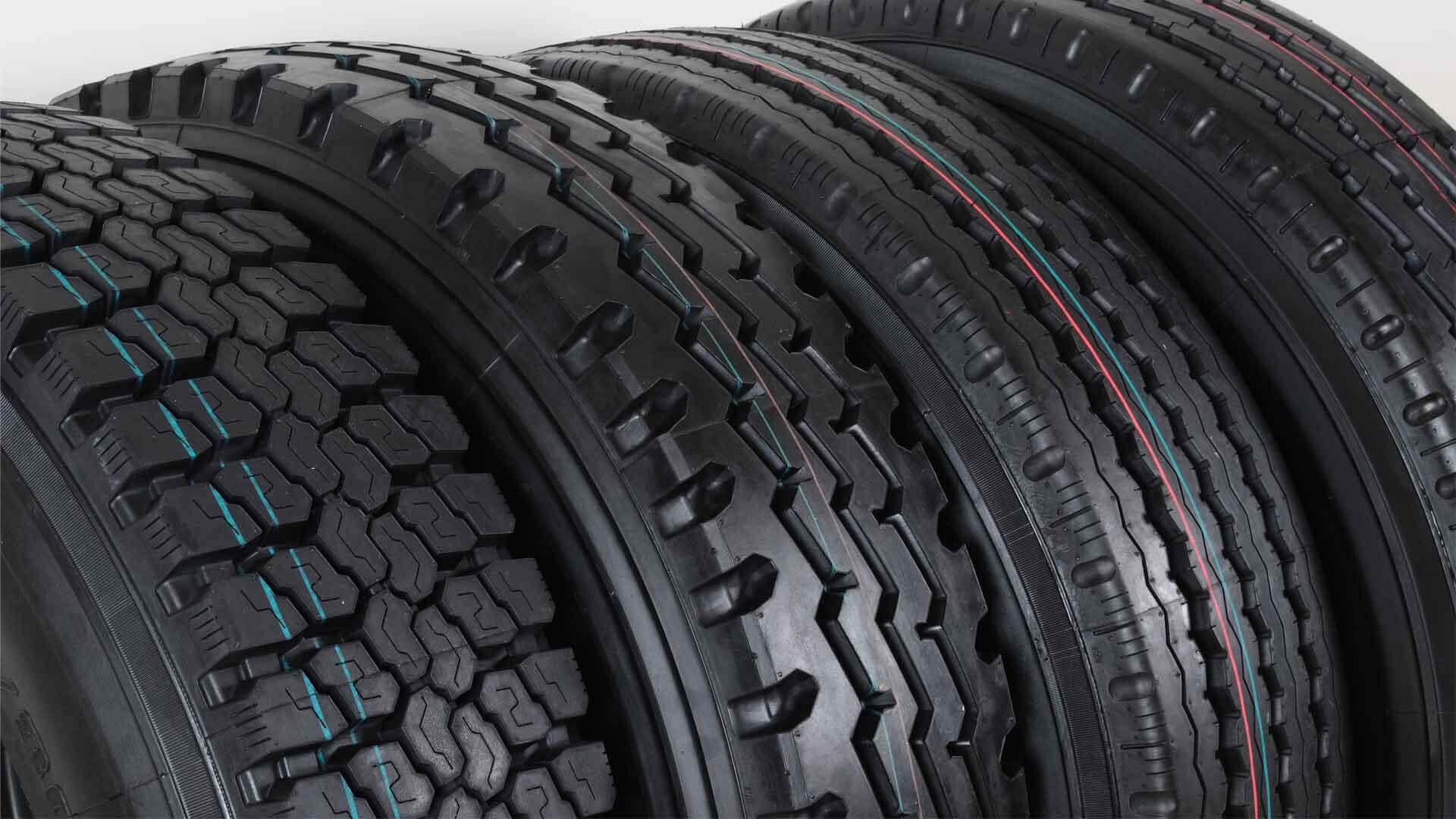
Heavy commercial vehicles have three tyre positions, and manufacturers design a different tread for each. The letters below are used by Michelin and, in similar form, by most large tyre makers.
| Axle position | Pattern code | What the tyre must do | Typical tread |
|---|---|---|---|
| Steer (front) | F or Z | precise steering, even wear, resistance to side forces | ribbed, mostly longitudinal grooves |
| Drive | D or Z | transmit engine and braking torque, work in twin pairs | blocks with lateral sipes for traction |
| Trailer | T or Z | carry heavy loads with low rolling resistance, resist scrubbing in tight turns | ribbed, reinforced shoulders |
| Free-rolling rear axle | marked FRT | carry load only, no steering or drive | similar to trailer tyres |
"Z" means an all-position tyre that may be fitted anywhere, which is useful in urban fleets where vehicles change roles. Even so, Michelin advises against fitting retreaded tyres on the first steering axle. The FRT marking (free rolling tyre, under UN ECE Regulation 54) allows a tyre only on trailer axles and on non-driven, non-steering axles of a motor vehicle.
Reading the sidewall of a truck tyre
Take the common size 315/80 R22.5 156/150L as an example:
| Part of the code | Meaning |
|---|---|
| 315 | section width in millimetres |
| 80 | profile: sidewall height is 80 per cent of the width |
| R | radial construction |
| 22.5 | rim diameter in inches (the usual truck size; 17.5 and 19.5 are used on lighter trucks) |
| 156 | load index for a single tyre: 4,000 kg |
| 150 | load index when fitted as a dual pair: 3,350 kg per tyre |
| L | speed symbol: 120 km/h |
By our calculation, a twin-tyred drive axle with four such tyres can carry up to 13,400 kg (4 × 3,350 kg), and a steer axle with two singles up to 8,000 kg. In twin fitment each tyre is rated 650 kg less than when it runs alone, because a pair shares the load unevenly on cambered roads. The legal axle load of the vehicle is usually lower. The tyre must at least cover the maximum load the vehicle manufacturer sets, and a higher load index does not let you exceed it.
Other markings matter as well. "REGROOVABLE" means the tread can be recut once it wears down. M+S and the three-peak mountain snowflake (3PMSF) symbol show winter capability. The four-digit date code gives the week and year of manufacture, which is essential when you buy used tyres. Each size also needs the right rim width; check the vehicle manufacturer's approval or the ETRTO standards manual before changing size. For car and van sizes, our tyre size calculator shows how a change affects diameter and speedometer reading.
Matching the tyre to the type of work
| Type of operation | What to prioritise | Typical choice |
|---|---|---|
| Long haul, motorways, constant speed | low rolling resistance, long tread life | fuel-saving steer and trailer tyres, regional-grade drive tyres only if roads demand it |
| Regional and national distribution | balance of wear, grip and durability on all road types | mixed-service tyres for each axle |
| Urban delivery and buses | resistance to kerb damage, frequent stopping, low noise | reinforced sidewalls, often "Z" all-position tyres |
| Construction and quarries (on/off road) | cut and chip resistance, traction on loose ground | block treads, deeper tread, reinforced casing |
Fleet managers compare tyres by cost per kilometre, not by purchase price: divide the price, plus the cost of later regrooving and retreading, by the total distance the casing is expected to cover. A cheaper tyre that wears faster or cannot be retreaded often costs more over its life.
The EU tyre label for truck tyres
Regulation (EU) 2020/740 replaced the 2009 labelling rules and has applied since May 2021. It covers three classes: C1 for cars, C2 for vans and C3 for trucks and buses. Suppliers register every tyre in the EPREL database before sale, and the label's QR code links to that entry.
| Label item | Scale | Why it matters for trucks |
|---|---|---|
| Rolling resistance | A (best) to E | the biggest lever on fuel use in long-haul work |
| Wet grip | A (best) to E | stopping distance on wet roads; for cars the Commission puts one class at 3 to 6 metres |
| External rolling noise | A to C, plus the value in dB | important for urban and night deliveries |
| Snow grip | 3PMSF pictogram | proven performance in a snow test |
Truck tyres make up only about 4 per cent of the 1.6 billion tyres in use in the EU, but in long-haul work their rolling resistance has a large effect on fuel use. The European Commission estimates that labelling saved about 3.2 billion litres of fuel across all vehicle types in 2020. To see what a small change in consumption means over a year of driving, try our fuel cost calculator. Two limits apply: the label does not cover off-road professional tyres, and labelling of retreaded truck tyres was planned but not yet in force when this guide was updated.
New, retreaded, used and special tyres
New tyres give a known history and full tread, and premium casings are built to be retreaded more than once. Retreaded tyres reuse a sound casing with a new tread. In Europe, commercial retreads need approval under UN ECE Regulation 109 and carry the "109R" mark. They cost less than new tyres and save raw material, and fleets often run them on trailer and drive axles.
Used tyres are sold in large numbers by fleets and dealers. They can be a reasonable choice for trailers or low-mileage vehicles, provided you check:
- the date code (many buyers avoid tyres older than about five to six years, whatever the tread depth);
- the remaining tread across the whole width;
- signs of repairs, cuts, bulges or exposed cords;
- that a pair fitted as twins has the same size, construction and similar wear.
Special tyres cover vehicles that work off public roads: dump trucks in quarries, loaders, reach stackers and mobile cranes. These off-the-road (OTR) and industrial tyres use different size systems and are outside the EU label. Michelin, Bridgestone, Goodyear and Continental are the largest tyre makers overall; their position in the market is covered in our ranking of tyre manufacturers.
Tread depth, winter rules and inspections
The EU sets a minimum tread depth of 1.6 mm for cars and light vehicles (Directive 89/459/EEC). For heavy trucks the limit is set nationally: Germany applies 1.6 mm, while the UK allows 1 mm across three quarters of the tread width on goods vehicles over 3.5 tonnes. Most fleets replace or regroove tyres well before these limits, because grip in the wet falls sharply as the tread wears.
Several European countries, including Germany and Austria, require winter-marked tyres on heavy trucks in winter conditions, at least on the drive axles; check the rules for every country on your route. Our guide on how to choose winter tyres explains the markings for cars.
Pressure is the most common cause of early failure. Check it cold at least weekly, and inspect twin pairs together, because an underinflated inner tyre is easy to miss and overheats.
How to choose truck tyres: a seven-step checklist
- Find the approved sizes and maximum axle loads in the vehicle documents.
- Choose the pattern for each axle: steer, drive, trailer or all-position.
- Match the tyre range to the work: long haul, regional, urban or on/off road.
- Confirm the load index (single and dual) and speed symbol.
- Compare EU label grades, giving rolling resistance priority on motorway work and wet grip on steer axles.
- Plan the life of the casing: regroovable, retreadable, and how often it can be retreaded.
- Set up a pressure and inspection routine before the tyres go into service.
For heavy vehicles that work off-road, tyre care is part of a wider maintenance plan; see our rules for repairing special equipment. Trucks in the catalogue are listed in the trucks section, and the glossary explains technical terms.

FAQ
What do the letters F, D, T and Z mean on truck tyres?
They show the intended axle position. F tyres are for steer axles, D for drive axles and T for trailers. Z marks an all-position tyre that can be fitted anywhere, as long as its load index and speed symbol suit the axle.
What does 156/150L mean on a truck tyre?
156 is the load index for a single tyre (4,000 kg) and 150 the index when the tyre is fitted as a dual pair (3,350 kg each). L is the speed symbol for 120 km/h.
Do truck tyres have an EU label?
Yes. Since May 2021, truck and bus tyres of class C3 carry the EU tyre label with grades for rolling resistance, wet grip and external noise, plus a QR code that links to the EPREL product database.
Are retreaded truck tyres safe?
Retreads approved under UN ECE Regulation 109 must meet defined standards and are widely used on trailer and drive axles. Many fleets avoid them on the front steer axle, as tyre makers such as Michelin recommend.
How old can a used truck tyre be?
There is no single EU limit, but many buyers avoid tyres more than five or six years old. Check the four-digit date code on the sidewall, the tread across its full width and any signs of repairs or damage.


