Third-Party, Fire & Theft or Comprehensive: Which Cover Do You Need?
There are three main types of car insurance in Europe. Third-party liability is the legal minimum and pays for injury and damage you cause to others, never for your own car. Third-party, fire and theft (partial cover, called Teilkasko in Germany) adds your own car against fire, theft and, in many countries, glass, storms and animal collisions. Comprehensive or fully comprehensive cover (Vollkasko, or "casco" in many languages) also pays for damage to your own car in an accident that was your fault. Comprehensive makes sense for new, financed, leased or valuable cars; on an old car of low value, partial cover or liability only is often enough.
Key takeaways
- Third-party liability is compulsory in every EU country and is valid in all other EU countries. Optional cover is not harmonised, so check it before driving abroad.
- EU law sets the minimum liability cover at €6,450,000 per accident for personal injury (or €1,300,000 per injured person) and €1,300,000 per accident for property damage, under Directive (EU) 2021/2118.
- Comprehensive is not always the most expensive. Uswitch notes it is often cheaper than third-party only, because drivers who choose third-party cover are statistically more likely to claim.
- Financed and leased cars usually have to be fully insured, as the German motoring club ADAC points out.
The three levels of cover compared
| What is covered | Third-party liability | Third-party, fire and theft / partial cover (Teilkasko) | Comprehensive / full cover (Vollkasko) |
|---|---|---|---|
| Injury to other people | Yes | Yes | Yes |
| Damage to other people's cars and property | Yes | Yes | Yes |
| Theft of your car | No | Yes | Yes |
| Fire and explosion | No | Yes | Yes |
| Glass, such as a stone chip in the windscreen | No | Often (included in German Teilkasko) | Yes |
| Storm, hail, lightning, flood | No | In German Teilkasko, yes | Yes |
| Collision with wild animals | No | In German Teilkasko, yes | Yes |
| Marten bites to cables | No | In German Teilkasko, yes | Yes |
| Damage to your car in an accident you caused | No | No | Yes |
| Vandalism | No | No | Yes |
The German column follows ADAC's description of Teilkasko and Vollkasko. In the UK and Ireland, third-party, fire and theft (TPFT) usually adds only fire and theft, while glass, weather and other risks depend on the policy. The Netherlands uses three levels too: WA (liability), WA beperkt casco (limited, adding weather, fire and theft) and WA volledig casco (full, adding damage to your own car). Whatever the name, read the list of insured events in the policy.
Third-party liability: the legal minimum
Every car used on public roads in the EU must have third-party liability insurance. It covers you if you cause an accident that damages property or injures anyone other than the driver. The EU's Your Europe portal states that this compulsory insurance is valid in all other EU countries.
The EU sets minimum amounts, which the European Commission reviews every five years:
| EU minimum liability cover (Directive (EU) 2021/2118) | Amount |
|---|---|
| Personal injury, per accident | €6,450,000, regardless of the number of injured people |
| Personal injury, per injured person | €1,300,000 |
| Property damage, per accident | €1,300,000 |
Member states may set higher limits. Germany, for example, requires at least €7.5 million for bodily injury, €500,000 for property damage and €50,000 for financial loss, according to Wikipedia's summary checked in October 2026. Insurers there commonly offer combined limits of €50 million or €100 million, according to the same 2026 summary. Higher limits than the legal minimum are widely offered, so check which limit your policy has.
Liability cover never pays to repair your own car. If you cause a crash, you pay for your own damage yourself.
Partial cover: fire, theft and natural events
Partial cover protects your car against events you do not cause. ADAC lists the risks in German Teilkasko as theft and robbery, fire and explosion, glass damage such as stone chips, collisions with wild animals, storm, hail, lightning and flood, and marten bites. The price depends on where you live, the vehicle type and the deductible: a higher deductible means a lower premium.
The AA in Ireland suggests that third-party, fire and theft can suit drivers of older cars, new drivers and people with a low annual mileage. For an older car, it notes, replacing the car after a crash may cost less than paying for a higher level of cover.
Comprehensive cover: protection for your own car
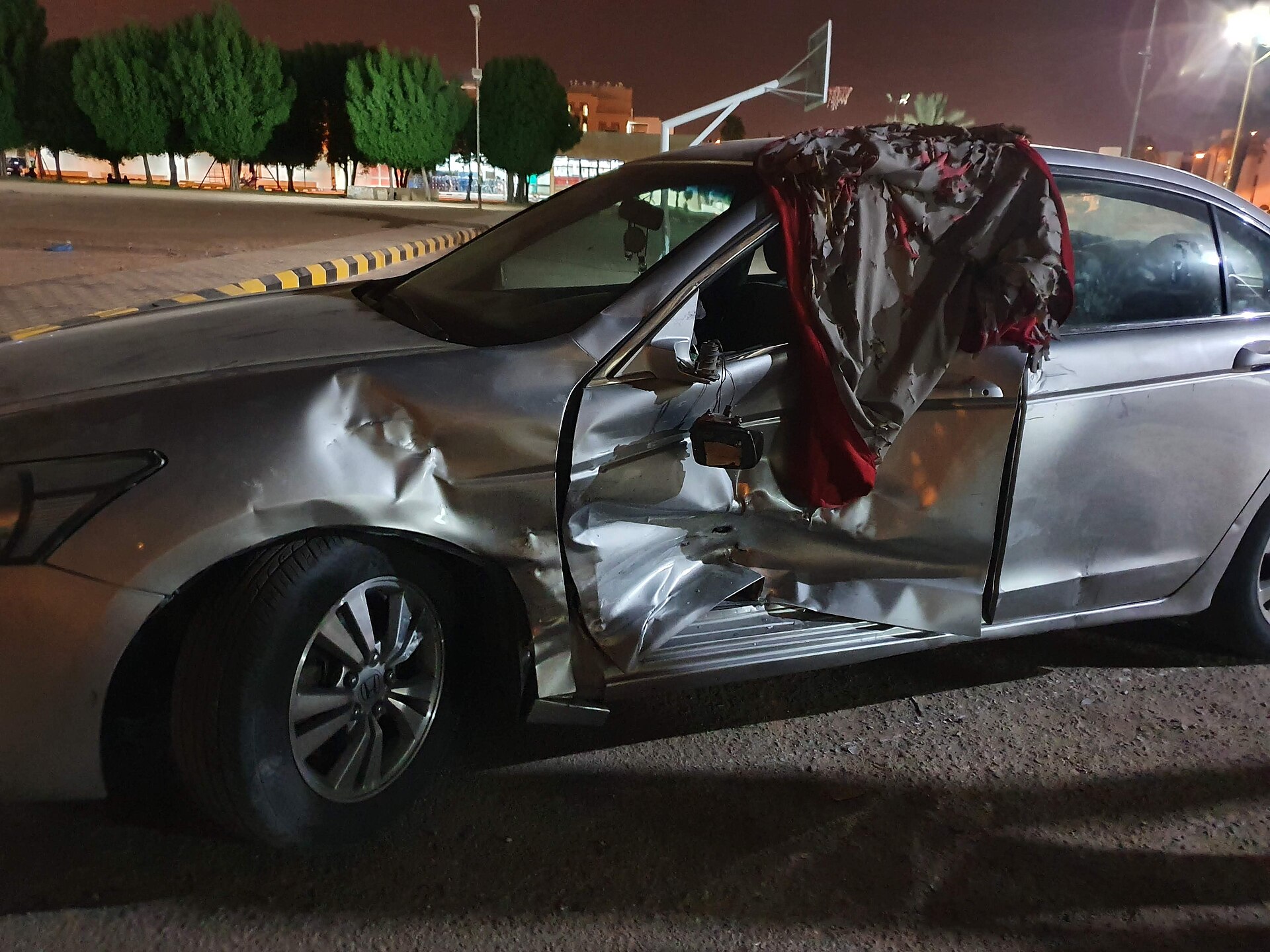
Comprehensive cover includes everything above and adds damage to your own car when the accident is your fault, from a parking bump to a total loss, as well as vandalism. Uswitch lists common optional extras such as windscreen cover, a courtesy car and personal accident cover.
ADAC recommends full cover for new and valuable cars, high annual mileage and cars with several drivers, and notes that it is usually mandatory when the car is financed or leased. A long claim-free record can make full cover surprisingly affordable: according to ADAC, a high no-claims class (SF-Klasse) can make Vollkasko cheaper than Teilkasko.
If the car is written off, any insurer pays only its market value on the day, which the AA in Ireland calls the value set by the insurer's assessor. Declaring a higher value than that raises your premium without increasing the payout. On a new car with finance, the gap between that value and what you owe is a separate risk, which GAP insurance can cover.
Worked example: when is comprehensive worth it?
A simple test is to compare the extra premium for comprehensive cover with the most it could ever pay for your own car: the car's value minus the excess. We calculated a 2026 example with an assumed extra premium of €350 a year over partial cover and a €500 excess.
| Car value (2026 example) | Most comprehensive could pay for your car | Extra premium as a share of that maximum | Our view |
|---|---|---|---|
| €25,000 | €24,500 | 1.4% a year | Comprehensive clearly worth it |
| €12,000 | €11,500 | 3.0% a year | Usually worth it |
| €6,000 | €5,500 | 6.4% a year | Compare quotes carefully |
| €3,000 | €2,500 | 14.0% a year | Partial cover or liability is often enough |
Our rule of thumb, not an insurance standard: once the extra premium costs more than about a tenth of the maximum payout every year, comprehensive cover rarely pays off unless you could not afford to replace the car. Ask for all three quotes, though. As Uswitch and the AA in Ireland both note, comprehensive is sometimes cheaper than lower levels of cover. You can add the result to our cost of ownership calculator to see the full yearly cost of the car.
Driving abroad: what your cover includes
- Liability: valid in all EU countries, as Your Europe confirms.
- Partial and comprehensive cover: there are no EU-wide rules on optional car insurance. Your policy may be limited by time or distance, or exclude some countries or risks such as theft. Check the terms with your insurer before you travel.
- Moving abroad: if you register your car in another country, ask your insurer whether the contract is still valid there.
How to choose the right cover
- Start with the car's value. New, nearly new and valuable cars: comprehensive. Cars worth only a few thousand euros: weigh the extra premium against the payout, as in the example above.
- Check your finance or lease contract. It usually requires full cover.
- Think about what you could afford to lose. If losing the car would be a financial problem, insure it.
- Check the liability limit. Many policies offer more than the legal minimum; ask what yours covers and what a higher limit would cost.
- Choose the excess consciously. A higher excess lowers the premium; pick an amount you could pay at once.
- Read the insured events, especially glass, animals, weather and theft from the car.
- Get all three quotes. The cheapest level is not always the one with the least cover.
Who should buy comprehensive: drivers of new, financed, leased or valuable cars, people who park on the street in busy areas, and anyone who could not replace the car from savings. Who can drop it: owners of older cars worth a few thousand euros who could afford a replacement if the car were written off. For more on how the price itself is set, see our Advice section, and shortlist cheaper-to-run cars with the car finder.
Try our calculator
Cost of ownership calculatorFAQ
What is the difference between third party and comprehensive insurance?
Third-party liability only protects other people: their injuries, cars and property. Comprehensive adds your own car, including crashes you caused, theft, fire and the other insured events in the policy.
Is third-party insurance enough?
It is the legal minimum, and it can be enough for an old car of low value. It never pays to repair or replace your own car, so you carry that risk yourself.
Is comprehensive insurance always more expensive?
No. Insurers price each level by the drivers who buy it, and third-party-only customers tend to claim more, so the top level can cost less. Always compare quotes for each level.
What is the difference between Teilkasko and Vollkasko?
They are the German names for partial and full cover. Teilkasko covers theft, fire, glass, storms and hail, flood, collisions with wild animals and marten bites. Vollkasko adds damage you cause yourself and vandalism.
Is my car insurance valid in other EU countries?
The compulsory third-party liability cover is valid in all EU countries. Optional partial or comprehensive cover is not harmonised, so check the countries and limits in your policy before you travel.
Sources
- ADAC: Was ist der Unterschied zwischen Kfz-Haftpflicht, Teilkasko und Vollkasko? (accessed 23 Oct 2026)
- Your Europe (European Union): Car insurance validity in other EU countries (accessed 23 Oct 2026)
- Ganado Advocates: Amendments to the Motor Insurance Directive, the key changes (Directive (EU) 2021/2118 minimum amounts) (accessed 23 Oct 2026)
- Wikipedia: Vehicle insurance (German minimum sums, Dutch WA / casco levels) (accessed 23 Oct 2026)
- The AA Ireland: Comprehensive insurance vs third party, fire and theft (updated 22 September 2023) (accessed 23 Oct 2026)
- Uswitch: Is third-party insurance cheaper than comprehensive insurance? (updated 8 June 2026) (accessed 23 Oct 2026)
Found a mistake? Report an error