Studebaker — The Wagon Maker That Built Cars for 64 Years
Studebaker was an American vehicle maker from South Bend, Indiana, whose story began long before the car. The brothers Henry and Clement Studebaker opened a blacksmith and wagon shop there in 1852, and by 1900 the company was the largest maker of horse-drawn vehicles in the world. It built electric cars from 1902 and petrol cars from 1904, survived a receivership in 1933, gave America the Champion and the Loewy-styled cars of the post-war years, merged with Packard in 1954 and ended car production in March 1966.
Key takeaways
- Founded in February 1852 in South Bend by Henry and Clement Studebaker; the Studebaker Brothers Manufacturing Company followed in 1868.
- By 1900 South Bend built more than 100,000 horse-drawn vehicles a year; the first Studebaker cars were electric (1902).
- The company went into receivership on 18 March 1933 and recovered under Paul Hoffman and Harold Vance.
- South Bend car production ended on 20 December 1963; the last Studebaker was built in Hamilton, Ontario, in March 1966.
Studebaker at a glance
| Fact | Value |
|---|---|
| Founded | February 1852, South Bend, Indiana |
| Founders | Henry and Clement Studebaker (H & C Studebaker) |
| Company names | Studebaker Brothers Manufacturing Company (1868), Studebaker Corporation (1911), Studebaker-Packard (1954–1962) |
| First cars | Electric cars from 1902, petrol cars from 1904 |
| Best-known models | Champion, Commander, Starlight coupé, Hawk, Lark, Avanti |
| Peak output | 268,226 vehicles (1950) |
| Last car | March 1966, Hamilton, Ontario |
Origins: the Studebaker brothers of South Bend
In February 1852 Clement and Henry Studebaker set up as blacksmiths and founders in South Bend, Indiana, under the name H & C Studebaker. They made metal parts for freight wagons, then complete wagons, and in 1857 their first carriage. Their brother John Mohler Studebaker, who had made wheelbarrows in Placerville, California, put his savings into the business and bought out Henry in 1858. In 1868 Clem, Peter and John formed the Studebaker Brothers Manufacturing Company.
Wagons for the Union Army in the Civil War of 1861–1865 were the company's first big step. During the peak years of westward migration half of the wagons used were Studebakers. By 1900 the South Bend works, with about 3,000 workers, built more than 100,000 horse-drawn vehicles a year and was described as the largest buggy and wagon works in the world.
From wagons to cars
John M. Studebaker saw the car as a complement to the wagon rather than a threat. The company began with electric cars in 1902, building 20 that year and 1,841 up to 1912. Petrol cars followed in 1904 in partnership with Garford of Elyria, Ohio, and from 1908 E-M-F cars were sold through Studebaker's wagon dealers. On 14 February 1911 the business became the Studebaker Corporation, and in August 1912 it launched the first petrol cars it built entirely itself.
Albert Russel Erskine became president in July 1915. Wagon production ended in 1919, and output of cars grew from 46,845 in 1915 to 145,167 in 1923. The engineers Fred Zeder, Owen Skelton and Carl Breer, known as "The Three Musketeers", designed the 1918 models before leaving in 1920. In 1926 Harold Vance moved the company's Detroit plants to South Bend.
Erskine, receivership and the Champion
The Depression hit hard. Studebaker had paid large dividends in 1930 and 1931 and bought shares in the White Motor Company at an inflated price, and in 1932–1933 it sold a low-priced car under the separate Rockne brand. With US$6 million owed to banks in 1933, the company entered receivership on 18 March 1933. Erskine was forced out and died on 1 July 1933. Under Paul Hoffman and Harold Vance Studebaker was profitable again by December 1933, and refinancing was completed on 9 March 1935.
The car that secured the recovery was the Champion of 1939, a light car designed under chief engineer Delmar "Barney" Roos with final styling by Virgil Exner and Raymond Loewy. Its 2.7-litre six produced 58 kW (79 PS), and it doubled the company's sales after a weak 1938. In the Second World War Studebaker built the US6 truck and the M29 Weasel tracked vehicle, ranked 28th among American companies by the value of its war contracts, and its Chicago plant made 63,789 Wright engines for the B-17 bomber between January 1944 and August 1945.
Post-war styling and the Packard merger
Studebaker advertised itself as "First by far with a post-war car", and the redesigned Champion of 1947 was one of the first new post-war American cars. The 1947 Starlight coupé had a flat-backed boot and a wrap-around rear window, and the 1950–1951 Champion and Commander gave rise to the joke that one could not tell whether the car was coming or going. In 1947 the Champion accounted for 65.08% of Studebaker's sales, and production reached 199,460 in 1949 and a record 268,226 in 1950. In 1953 Robert Bourke of Loewy's studio redesigned the Champion.
The good years did not last. In 1954 Studebaker sold only about 82,000 cars, against a break-even point of about 282,000. On 1 October 1954 it was taken over by the smaller but financially stronger Packard, and the group became Studebaker-Packard Corporation. After a disastrous 1956 Packard's James Nance resigned, the company signed a management agreement with Curtiss-Wright, and car production was concentrated in South Bend. Packard's cars are listed in the Packard catalogue.
Lark, Avanti and the end
Under president Harold Churchill the company bet on a compact. The Lark, launched in autumn 1958 as a 1959 model, used the bodyshell of the 1953–1958 cars with shorter overhangs and was the first car of its size to offer a V8. It sold well in 1959 and 1960, partly through dealers of the Big Three who had no compact of their own, but sales fell sharply in 1961 when Detroit launched its own compact cars. In spring 1962 the company dropped the Packard name and became Studebaker Corporation again.
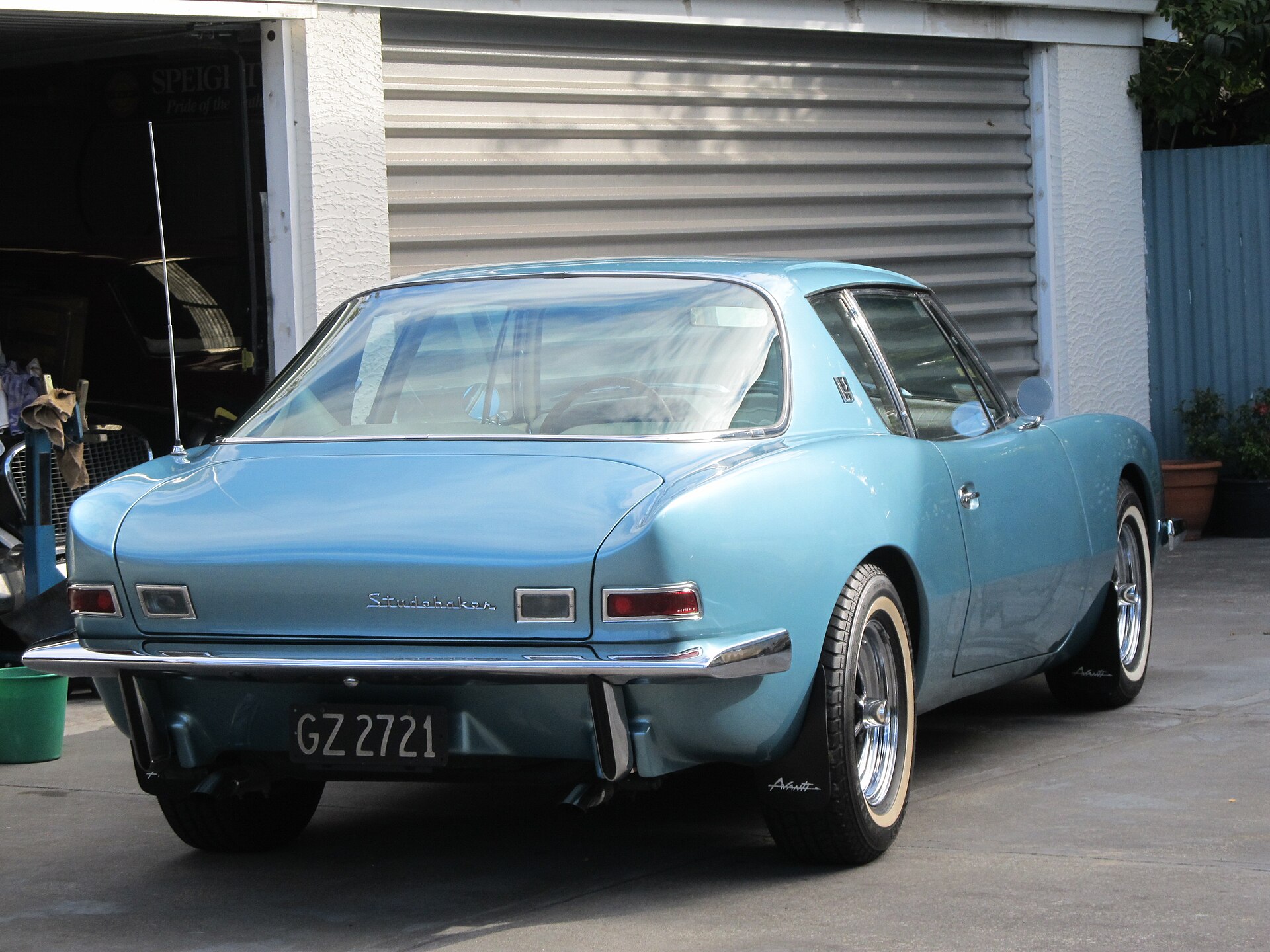
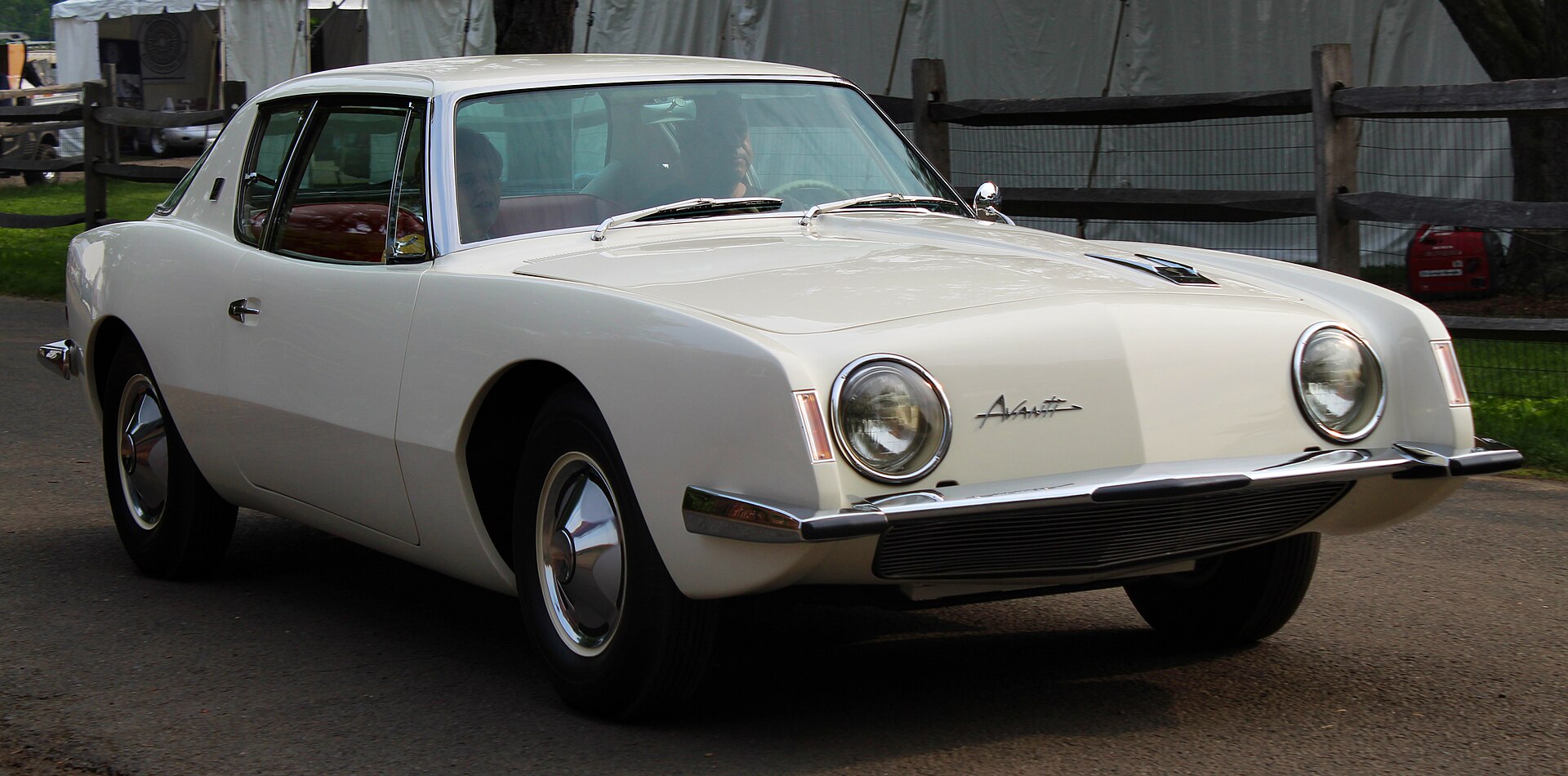
Sherwood Egbert, president from February 1961, directed the development of a new sports car. The Studebaker Avanti, designed in a 40-day programme by Raymond Loewy's team of Tom Kellogg, Bob Andrews and John Ebstein, was shown on 26 April 1962. It had a glass-fibre body and a 4.7-litre 289 V8 with 179 kW (240 hp) in 1963, and a supercharged R3 version set 29 world speed records at Bonneville at over 270 km/h. About 1,200 were built in 1962 and fewer than 4,600 in 1963.
It was too late. Egbert was removed on 9 December 1963, the last Larks and Hawks were built in South Bend on 20 December 1963, and the last Avanti on 26 December. Production continued at the profitable plant in Hamilton, Ontario, with engines from General Motors of Canada, until the last car, a Cruiser saloon, left the line in March 1966. The Avanti name and tooling went to Nate Altman and Leo Newman, who revived it as the Avanti II in 1965. The company itself merged with Wagner Electric and Worthington in 1967. Studebaker models in the catalogue are listed under Studebaker. More cars of the period are in the classic cars section.

Studebaker timeline
| Year | Event |
|---|---|
| 1852 | H & C Studebaker founded in South Bend |
| 1868 | Studebaker Brothers Manufacturing Company |
| 1902 | First Studebaker electric cars |
| 1904 | Petrol cars with Garford |
| 1911 | Studebaker Corporation incorporated (14 February) |
| 1919 | End of horse-drawn vehicle production |
| 1933 | Receivership (18 March); Erskine dies |
| 1939 | Champion launched |
| 1947 | First all-new post-war cars |
| 1950 | Record output of 268,226 vehicles |
| 1954 | Packard takes over Studebaker (1 October) |
| 1959 | Lark compact |
| 1962 | Avanti; company becomes Studebaker Corporation again |
| 1963 | South Bend car production ends (20 December) |
| 1966 | Last Studebaker built in Hamilton (March) |
Landmark Studebaker models
| Model | Years | Why it matters |
|---|---|---|
| wagons | 1850s–1919 | Union Army supplier and the wagon of westward migration |
| Electric cars | 1902–1912 | Studebaker's first cars, 1,841 built |
| Champion | 1939–1942, 1946–1958 | Light car that saved the company after 1938 |
| Starlight coupé | 1947 | Flat-backed boot and wrap-around rear window |
| Lark | 1959–1966 | Compact that brought a short revival |
| Avanti | 1962–1963 | Glass-fibre coupé by Loewy's team, Bonneville records |
FAQ
Who founded Studebaker?
Henry and Clement Studebaker, who opened a blacksmith and wagon shop in South Bend, Indiana, in February 1852. Their brothers John Mohler, Peter and Jacob also joined the business.
When did Studebaker start making cars?
In 1902 with electric cars. Petrol cars followed in 1904, and from 1912 Studebaker built them entirely itself.
Why did Studebaker merge with Packard?
In 1954 Studebaker was selling far fewer cars than it needed to break even. Packard, financially stronger, took it over on 1 October 1954.
When did Studebaker stop making cars?
South Bend production ended on 20 December 1963. The Hamilton, Ontario, plant built the last Studebaker in March 1966.
Who designed the Studebaker Avanti?
Raymond Loewy's team of Tom Kellogg, Bob Andrews and John Ebstein, in a 40-day programme ordered by president Sherwood Egbert.
Sources
- Wikipedia — Studebaker (accessed 24 Oct 2026)
- Wikipedia — Studebaker-Packard Corporation (accessed 24 Oct 2026)
- Wikipedia — Studebaker Champion (accessed 24 Oct 2026)
- Wikipedia — Studebaker Lark (accessed 24 Oct 2026)
- Wikipedia — Studebaker Avanti (accessed 24 Oct 2026)
Found a mistake? Report an error