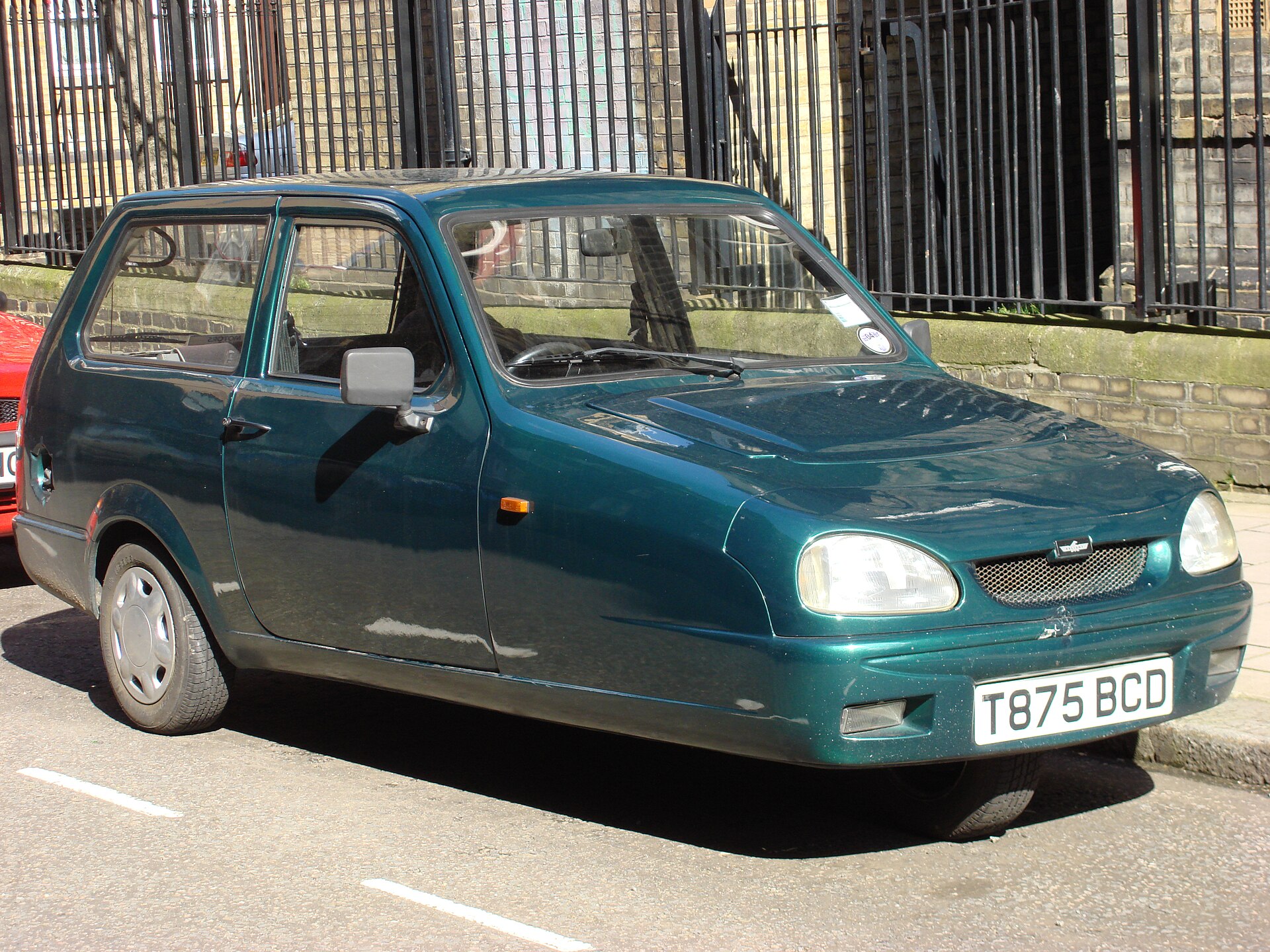
Reliant — Britain's Three-Wheeler Maker That Also Built a Royal GT
Reliant was a British vehicle maker from Tamworth in Staffordshire, best known for its fibreglass three-wheelers. T. L. Williams built the first one, a small van, in his back garden in 1934–1935, and the company went on to make the Regal, the Robin and the Rialto, as well as the Scimitar GTE sports estate, of which Princess Anne owned nine. It also designed cars for other countries, took over Bond and built about half a million vehicles before it stopped making its own models in 2001.
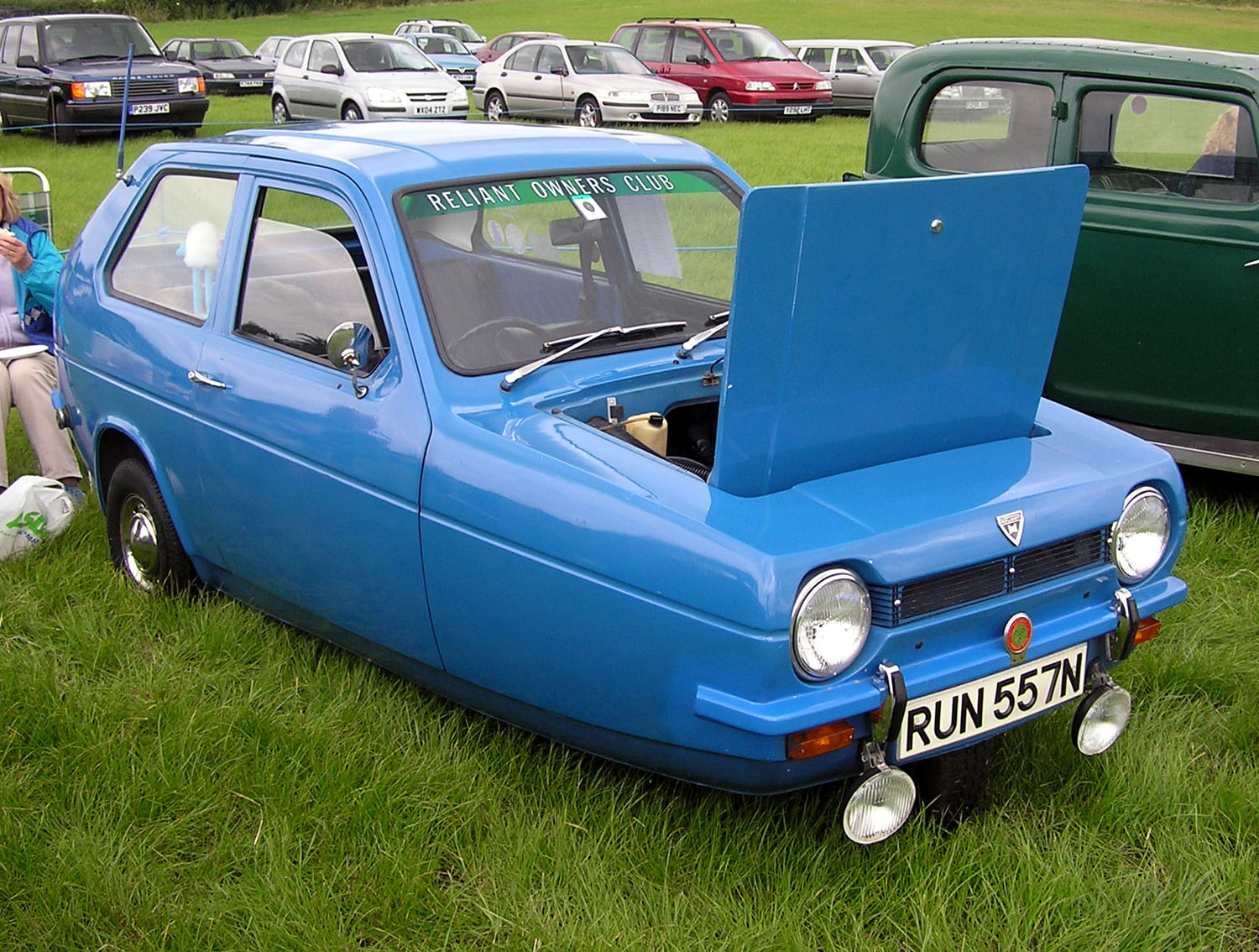
Key takeaways
- Founded by T. L. Williams and E. S. Thompson in Tamworth; the first Reliant, a three-wheel van, was delivered on 3 June 1935.
- From 1963 Reliant built its own all-aluminium overhead-valve engine, used in the Regal, Robin, Kitten and Fox.
- The Scimitar GTE of 1968, styled by Tom Karen of Ogle, was a four-seat sports estate; Princess Anne received one in 1970.
- The Robin ran from 1973 to 2002 in several generations; Reliant stopped making its own vehicles in 2001.
Reliant at a glance
| Fact | Value |
|---|---|
| Founded | 1935, Tamworth, Staffordshire |
| Founders | T. L. Williams and E. S. Thompson |
| First vehicle | Three-wheel van with a 600 cc J.A.P. engine, 1935 |
| Specialities | Fibreglass bodies, three-wheelers, own aluminium engine |
| Best-known models | Regal, Robin, Rialto, Kitten, Scimitar GTE, Bond Bug |
| Total output | About half a million vehicles |
| Own production ended | 2001 |
Origins: a van built in a Tamworth garden
In 1934 Raleigh stopped making three-wheelers. Its works manager T. L. Williams and his colleague E. S. Thompson decided to build their own, and the prototype was put together in Williams's back garden in Tamworth. It was a van with a 600 cc single-cylinder J.A.P. engine and a weight of 356 kg, and it was licensed in January 1935. The first Reliant was delivered on 3 June 1935, and the company soon moved to a disused bus depot in Fazeley.
A water-cooled two-cylinder J.A.P. engine followed in March 1936. On 12 March 1938 Reliant delivered its first four-cylinder vehicle, with a 747 cc side-valve engine of 7.8 kW (10.5 hp) derived from the Austin Seven; when Austin stopped making that engine, Reliant bought the tooling and the rights. During the Second World War the factory machined parts for the war effort, and on 13 March 1946 it completed the first post-war Regent van.

Regal, fibreglass and the aluminium engine
Reliant moved into passenger cars in 1952 with a four-seat three-wheeler with an aluminium body, and in 1953 the Regal arrived. The Mk III Regal of 1956 was the first with an all-fibreglass body, and the 750 cc engine was reworked to 13.0 kW (17.5 hp). In 1962 the Hodge Group bought a majority of the company, and side-valve engine production ended.
The Regal 3/25 of 1962–1963 introduced a new engine: an overhead-valve four of 598 cc and 18 kW (24 bhp), made entirely of aluminium alloy and reverse-engineered from the 803 cc Standard Eight engine. It was the first mass-produced aluminium-alloy overhead-valve engine. The body was now a unitary fibreglass shell bonded and bolted to a steel chassis, and the car weighed 445 kg, which gave about 40 W per kg; the power-to-weight calculator makes the same comparison for any car. The 50,000th Regal 3/25 left the line on 25 April 1968, and the later 3/30 had a 701 cc engine with 22 kW (29 bhp). The Supervan III van version became famous as Del Boy's yellow van in the comedy series Only Fools and Horses.
In the early 1960s Reliant also designed vehicles for other countries: for Israel, sold there by Autocars as the Sussita and Carmel, and for Turkey, where the Anadol used a fibreglass body, a separate chassis and Ford running gear.

Scimitar: the sports car side
The Scimitar GT coupé of 1964 had styling based on the Ogle SX250 by David Ogle and a 2.6-litre Ford straight-six of 89 kW (120 bhp), later Ford Essex V6 engines of 3.0 and 2.5 litres. About 1,000 coupés were built until November 1970.
Its successor made a bigger mark. Tom Karen of Ogle designed the Scimitar GTE, a four-seat sports estate with a hatchback, launched at the 1968 Motor Show with the 3.0-litre Essex V6. The SE5A of 1972 reached 195 km/h, and 4,311 SE5 and 5,105 SE5A cars were built, making the SE5A the best-selling Scimitar. In November 1970 Princess Anne received an SE5 as a 20th-birthday and Christmas present from the Queen and the Duke of Edinburgh; she later owned eight more GTEs. The longer, more luxurious SE6 of 1976 had 101 kW (135 bhp), and the GTC convertible of 1980 (442 built) used a 2.8-litre Ford Cologne V6. Production of the GTE ended in 1986.
Bond, the Bug and the Robin
In 1969 Reliant bought Bond Cars after that company's liquidation. The Bond Bug of 1970–1974, a wedge-shaped three-wheeler designed by Tom Karen of Ogle, used Reliant's 700 cc engine with 22 kW (29 bhp); 2,270 were built.
The Robin replaced the Regal in October 1973. Its engine grew from 750 cc to 850 cc in 1975, and the fibreglass body made it, after the Chevrolet Corvette, the second most popular fibreglass car in history. Its official weight was below 450 kg, and in the United Kingdom it is classed as a category A motorcycle vehicle. The four-wheeled Kitten of 1975–1982 used the same 850 cc engine, and its rights were later sold to Sipani in India. The Fox utility vehicle was built in Greece by MEBEA from 1979 to 1983 and by Reliant from 1982 to 1990, and the Rialto three-wheeler ran from 1982 to 1997.


Changing owners and the end of production
Reliant was sold to J.F. Nash Securities in the late 1970s. In the early 1990s its owner, a housing developer, was hit by the 1992 recession; the company folded and was sold to Beans Engineering. Under Jonathan Haynes from 1996 sales reportedly doubled, and in 1997 production moved to Plant Lane in Burntwood. The Robin was revived in 1989 with a hatchback body and redesigned again in 1999 by Andy Plumb.
In 2001 Reliant stopped making its own models, after building about 50 vehicles a week, and turned to importing Ligier microcars and Piaggio Ape vans. The last Robin 65 limited edition sold for £10,000 in the United Kingdom in 2001. B&N Plastics then bought the Robin rights and built the BN-1 Robin from July 2001, but it built only about 40 complete cars before production ended in October 2002. The company became Reliant Partsworld, the original Tamworth site became the Scimitar Park housing estate, and on 8 July 2017 a blue plaque was unveiled to Williams and Thompson. The vehicles are listed in the Reliant catalogue, the Reliant Robin article covers the best-known model, and the brands timeline places Reliant among other British makes.
Reliant timeline
| Year | Event |
|---|---|
| 1935 | First Reliant van delivered (3 June) |
| 1938 | First four-cylinder Reliant with an Austin Seven-based engine |
| 1953 | Regal three-wheeler |
| 1956 | All-fibreglass Regal Mk III |
| 1962 | Hodge Group takes a majority stake |
| 1963 | Reliant's own aluminium engine in the Regal 3/25 |
| 1964 | Scimitar GT coupé |
| 1968 | Scimitar GTE sports estate |
| 1969 | Takeover of Bond Cars |
| 1970 | Bond Bug; Princess Anne receives a GTE |
| 1973 | Robin replaces the Regal |
| 1975 | Kitten four-wheeler |
| 1997 | Move to Burntwood |
| 2001 | End of Reliant's own vehicle production |
| 2002 | Last BN-1 Robin built under licence |
Landmark Reliant models
| Model | Years | Why it matters |
|---|---|---|
| Regal | 1953–1973 | First Reliant car line; fibreglass from 1956 |
| Regal 3/25 | 1962–1968 | Reliant's own all-aluminium engine |
| Scimitar GTE | 1968–1986 | Four-seat sports estate by Ogle |
| Bond Bug | 1970–1974 | Wedge-shaped three-wheeler by Tom Karen |
| Robin | 1973–2002 | Three-wheeler built in several generations for almost 30 years |
| Kitten | 1975–1982 | Four-wheeled small car with the 850 cc engine |
Photo gallery


FAQ
Why did Reliant build three-wheelers?
The company began with three-wheel vans after Raleigh gave up the type in 1934. Light three-wheelers such as the Robin, under 450 kg, are classed as motorcycle-category vehicles in the United Kingdom.
Who drove a Reliant Scimitar?
Princess Anne received a Scimitar GTE in November 1970 as a present from the Queen and the Duke of Edinburgh and later owned eight more.
Where were Reliant cars made?
In the Tamworth area of Staffordshire, starting in a former bus depot in Fazeley, and from 1997 at Plant Lane in Burntwood.
When did Reliant stop making the Robin?
Reliant's own production ended in 2001 with the Robin 65 limited edition; B&N Plastics built the BN-1 Robin under licence until October 2002.
What engine did Reliant use?
From 1963 its own all-aluminium overhead-valve four-cylinder of 600 to 850 cc; earlier vehicles used J.A.P. engines and a side-valve engine derived from the Austin Seven.
Sources
- Wikipedia — Reliant Motors (accessed 24 Oct 2026)
- Wikipedia — Reliant Regal (accessed 24 Oct 2026)
- Wikipedia — Reliant Robin (accessed 24 Oct 2026)
- Wikipedia — Reliant Scimitar (accessed 24 Oct 2026)
- Wikipedia — Bond Bug (accessed 24 Oct 2026)
Found a mistake? Report an error