Hennessey — From Tuned Vipers in Texas to the Venom F5
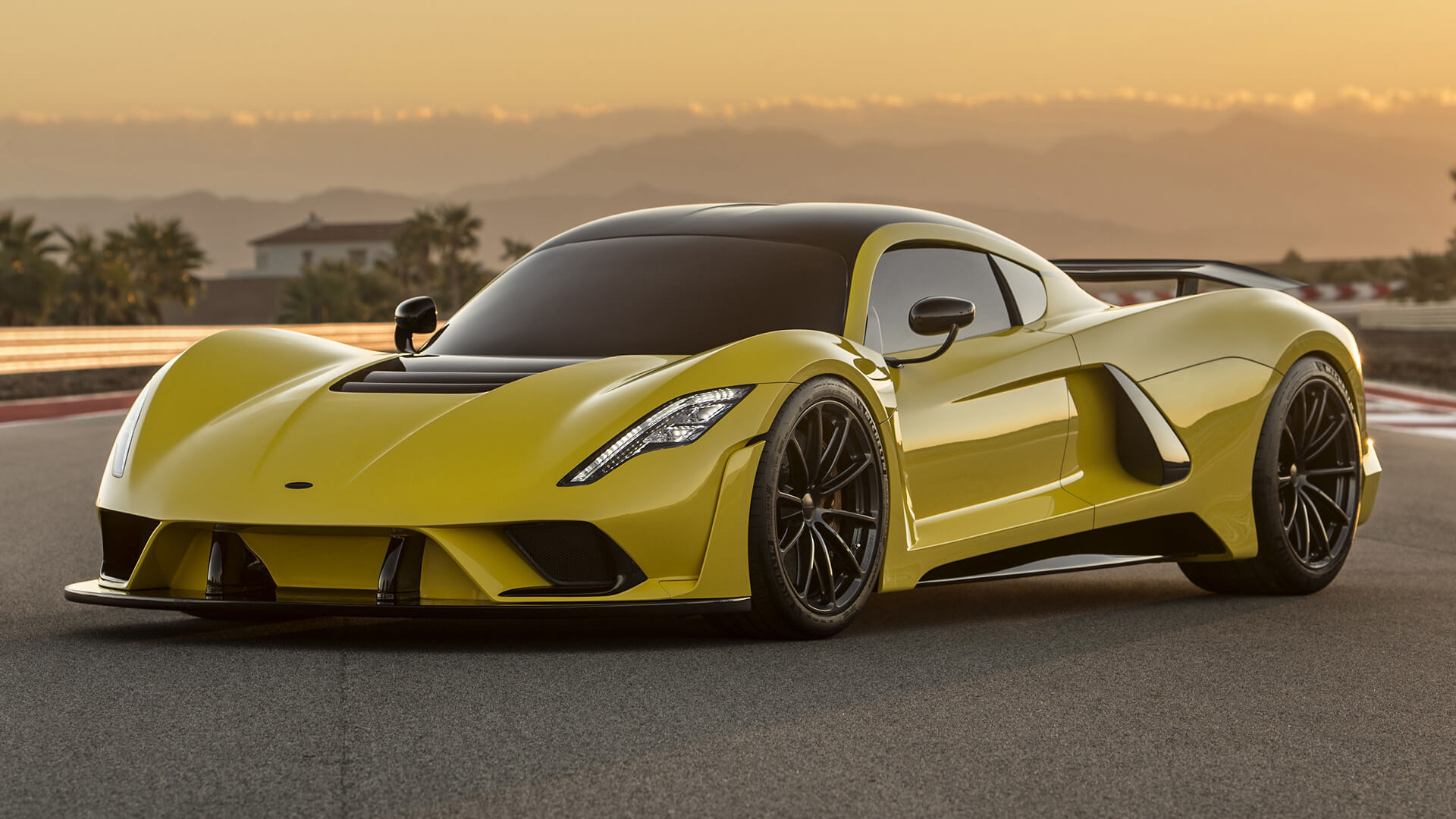
Hennessey is an American maker of high-performance cars from Sealy, Texas, about 45 minutes west of Houston. John Hennessey founded Hennessey Performance Engineering in 1991 to tune American cars, and the company first became known for heavily modified Dodge Vipers. In 2010 it revealed the Venom GT, a Lotus-based supercar that reached 435.31 km/h in 2014. Its own hypercar, the Venom F5 with a 1,355 kW twin-turbo V8, is built by Hennessey Special Vehicles. The tuning business continues alongside it, with pickups such as the VelociRaptor.
Key takeaways
- Founded in 1991 by John Hennessey in Sealy, Texas.
- The Venom 650R package for the 1996 Dodge Viper GTS raised output to 485 kW (650 hp).
- The Venom GT had 928 kW (1,244 hp) and ran 435.31 km/h at the Kennedy Space Center on 14 February 2014.
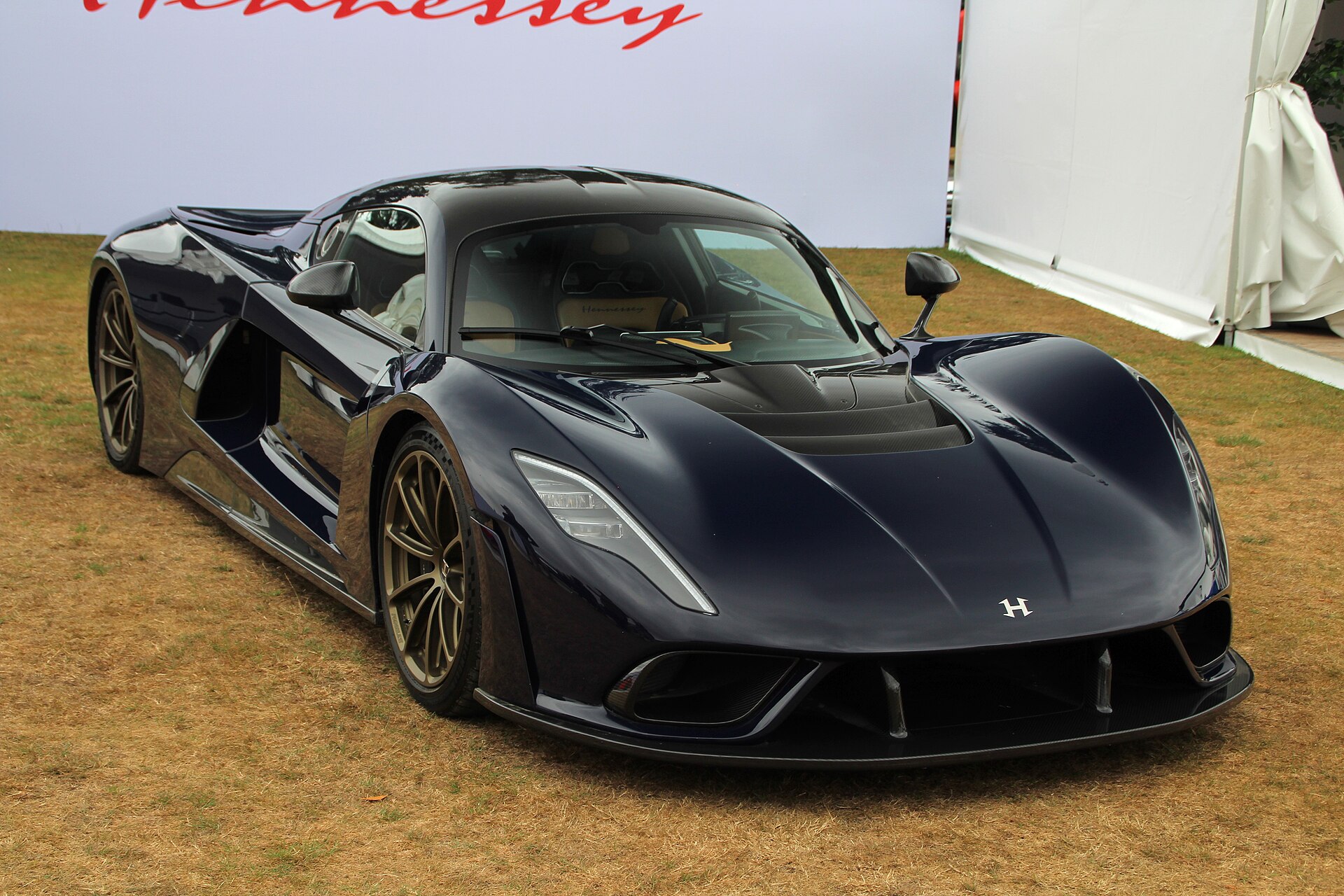
- The Venom F5, shown in 2017, has Hennessey's first own engine, a 6.6-litre twin-turbo V8 of 1,355 kW; all 24 coupés were sold by August 2021.
Hennessey at a glance
| Fact | Value |
|---|---|
| Founded | 1991, Sealy, Texas |
| Founder | John Hennessey |
| Divisions | Hennessey Performance Engineering, Hennessey Special Vehicles (2017) |
| Early fame | Venom 650R Dodge Viper |
| Own models | Venom GT (2010), Venom F5 (2017), Blackbird (2026) |
| Venom GT power | 928 kW (1,244 hp) |
| Venom F5 power | 1,355 kW (1,817 hp) |
| Top speed run | 435.31 km/h (Venom GT, 2014, one direction) |
Origins: John Hennessey and the Viper Venom
John Hennessey founded Hennessey Performance Engineering (HPE) in 1991, with its main base in Sealy, Texas. The company made its name with the Venom 650R package for the 1996 Dodge Viper GTS. The engine grew from 8.0 to 8.4 litres and produced 485 kW (650 hp) at 5,800 rpm. The package cost US$108,500 on top of a 1996 Viper GTS. HPE reported 0–60 mph in 3.3 seconds and a top speed of over 215 mph (346 km/h). The Dodge catalogue lists the Viper itself.
HPE grew into a tuner for many American cars and trucks. In 2008 it opened a Tuner School, a 14-week training programme for performance technicians at the Lonestar Motorsports Park complex next to its headquarters. Later it tuned a 2016 Cadillac CTS-V to about 746 kW (1,000 hp). The Exorcist package for the Chevrolet Camaro ZL1 gave the same output and 349 km/h.

The Venom GT
The Venom GT, revealed in 2010, was built on a heavily modified chassis of the Lotus Elise and Exige. It kept the roof, doors, cockpit and floor pan of the Elise, although Hennessey has no link with Lotus. Its 7.0-litre twin-turbo V8, based on GM's LS engine, produced 928 kW (1,244 hp) and 1,566 Nm in a car weighing 1,244 kg. That is about 746 W per kg; the power-to-weight calculator shows how far that is from an ordinary sports car. The Lotus side of the story is in the history of Lotus.
On 21 January 2013 the Venom GT reached 300 km/h in an average of 13.63 seconds, a Guinness record for a road-legal car. On 14 February 2014 it reached 270.49 mph (435.31 km/h) at the Kennedy Space Center. The run was made in one direction only over 3.7 km, and because only 29 cars were planned, below the 30 Guinness requires, it was not recognised as a production-car record.
How many were built is unclear. Hennessey material of the time spoke of 13 cars, later research identified 8, and in 2014 the company said production would be limited to 29. Three "World's Fastest Edition" coupés at US$1.25 million each in 2014 were reported sold. The Venom GT Spyder of 2012, built at the request of Steven Tyler, had 1,082 kW in its final form. On 25 March 2016 a Spyder reached 427.4 km/h at Naval Air Station Lemoore, verified by Racelogic as the fastest road-legal open car.


The Venom F5
In 2017 HPE set up Hennessey Special Vehicles to build its own cars. The Venom F5 was first revealed in August 2014, and a mock-up without engine or interior was shown at the SEMA Show in Las Vegas on 1 November 2017. The chassis and body are made almost entirely of carbon fibre. The engine, the 6.6-litre twin-turbo V8 named Fury, is Hennessey's first in-house engine. It produces 1,355 kW (1,817 hp) and 1,617 Nm, and the car weighs 1,385 kg.
The target top speed is over 500 km/h, but the sources do not confirm that it has been reached. On 30 July 2024, with John Hennessey driving, it set a half-mile record for production cars of 14.44 seconds at 353 km/h in Florida. Twenty-four coupés were planned at US$1.6 million each, and the company said in August 2021 that all had been sold; the last 12 cost US$2.1 million in 2021.
Further versions followed: a Roadster, the track-focused Revolution in 36 cars, the F5-M Roadster with a six-speed manual gearbox, and in April 2025 an Evolution upgrade with 1,515 kW on E85 fuel. The Hennessey Venom F5 article covers the car's specifications.

Hennessey today
Hennessey still sells tuned production cars and pickups. The VelociRaptor programme for the Ford Raptor, limited to 30 a year, has produced more than 400 trucks, and a six-wheel VelociRaptor 6×6 was offered from 2018. The company has also faced numerous lawsuits and Better Business Bureau complaints, many of them unresolved according to the HPE article. On 10 September 2025 Hennessey broke ground on a new manufacturing facility, and on 3 August 2026 it revealed a new model, the Blackbird, which the company says sold out within four hours. Hennessey models are listed in the Hennessey catalogue, and other hypercars are in the supercars section.
Hennessey timeline
| Year | Event |
|---|---|
| 1991 | John Hennessey founds Hennessey Performance Engineering |
| 1990s | Venom 650R package for the Dodge Viper GTS |
| 2008 | Tuner School opens |
| 2010 | Venom GT revealed |
| 2012 | Venom GT Spyder |
| 2013 | Guinness record 0–300 km/h in 13.63 s (21 January) |
| 2014 | 435.31 km/h run at the Kennedy Space Center (14 February) |
| 2017 | Hennessey Special Vehicles; Venom F5 shown at SEMA (1 November) |
| 2021 | All 24 Venom F5 coupés sold (August) |
| 2024 | Half-mile record for production cars (30 July) |
| 2026 | Blackbird revealed (3 August) |
Landmark Hennessey models
| Model | Years | Why it matters |
|---|---|---|
| Venom 650R | 1990s | Tuned Viper that made the name |
| Venom GT | 2010 onwards | Lotus-based car, 435.31 km/h in 2014 |
| Venom GT Spyder | 2012 onwards | 427.4 km/h open-car run in 2016 |
| Venom F5 | 2020s | Own carbon chassis and Fury V8, 1,355 kW |
| VelociRaptor 6×6 | 2018 onwards | Six-wheel version of the tuned Ford Raptor |
Photo gallery

FAQ
Who founded Hennessey?
John Hennessey, who set up Hennessey Performance Engineering in Sealy, Texas, in 1991.
How fast is the Hennessey Venom GT?
It reached 435.31 km/h at the Kennedy Space Center on 14 February 2014. The run was one-way and was not recognised by Guinness as a production-car record.
What engine does the Venom F5 have?
Hennessey's own 6.6-litre twin-turbo V8 called Fury, with 1,355 kW (1,817 hp) and 1,617 Nm.
Is the Venom GT a Lotus?
It is built on a heavily modified Lotus Elise and Exige chassis, but Hennessey is not associated with Lotus.
How many Venom F5s were made?
Twenty-four coupés were planned and sold by August 2021; Roadster, Revolution and F5-M versions followed.
Sources
- Wikipedia — Hennessey Performance Engineering (accessed 24 Oct 2026)
- Wikipedia — Hennessey Venom GT (accessed 24 Oct 2026)
- Wikipedia — Hennessey Venom F5 (accessed 24 Oct 2026)
- Wikipedia — Lotus Exige (accessed 24 Oct 2026)
- Hennesseyspecialvehicles (accessed 24 Oct 2026)
Found a mistake? Report an error