 Delahaye 135
Specs, engines and history
Published Sources (1) Report an error
By Oleksandr Hnatiuk, Automotive Editor & Used Car Specialist
- Built
- 1935–1954
- Top power
- 119 kW (162 PS)
Delahaye was a French car maker of the pioneer era. Émile Delahaye, who had experimented with belt-driven cars while managing the Brethon foundry and machine works, founded the company in Tours in 1894. In 1898 it was incorporated with George Morane and Léon Desmarais, and production moved to Paris into a former hydraulic machinery plant owned by the Morane family. Émile Delahaye retired in 1901. Under Charles Weiffenbach the firm built trucks, heavy commercial vehicles and fire engines for the government as well as cars, and the Type 44 of 1911 had one of the first production V6 engines. The company remained in family hands until its merger with Hotchkiss in 1954.
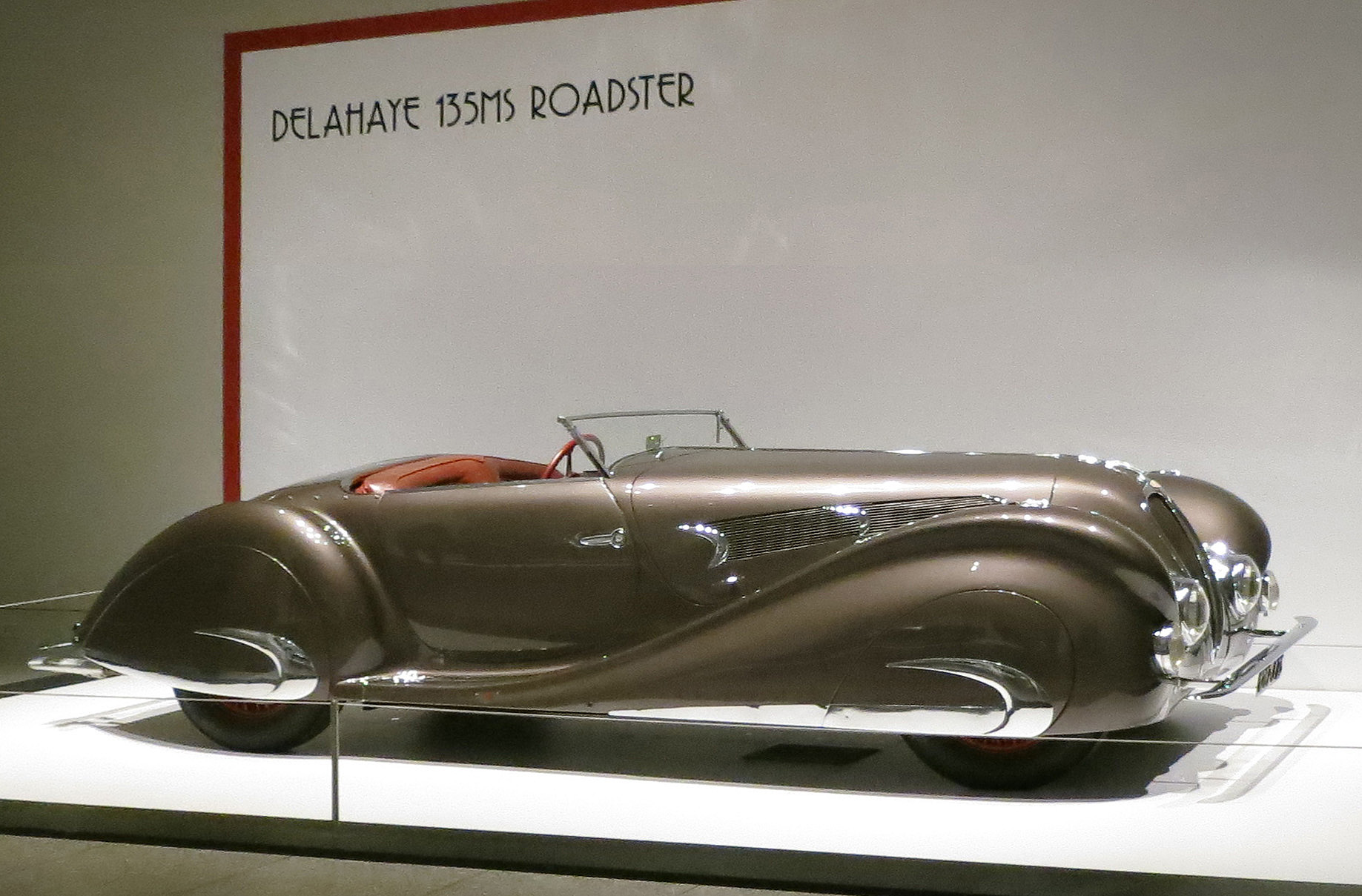
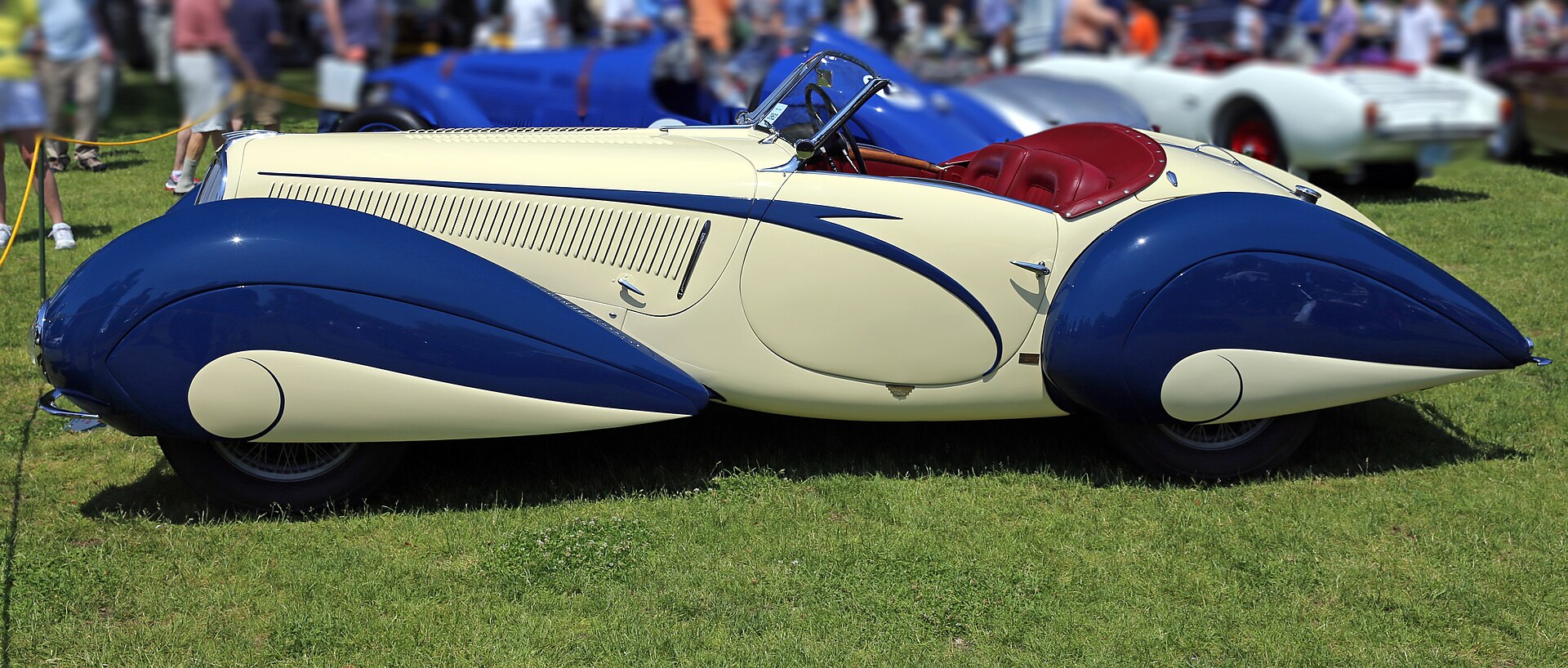
The 135 is the six-cylinder sports and touring car that made Delahaye's name in the 1930s. Jean François designed it, and it was first presented in 1935. It won the Monte Carlo Rally in 1937 and the 24 Hours of Le Mans in 1938, and it carried some of the most extravagant bodies French coachbuilders ever made. About 2,000 were built between 1935 and 1954. It is also known as the "Coupe des Alpes", after its success in the Alpine Rally.
Specs by version
Verified Manufacturer and type-approval data from our catalog · Sources and methodology
In short
- Produced 1935–1954, with a break during the war; about 2,000 built.
- Overhead-valve straight-six derived from a Delahaye truck engine: 3,227 cc with 71–82 kW (95–110 hp), and 3,557 cc in the 135M of 1936.
- Won the 1937 Monte Carlo Rally and the 1938 Le Mans 24 Hours (Chaboud and Trémoulet), with Delahayes also second and fourth.
- Bodies by Figoni & Falaschi, Chapron, Saoutchik, Letourneur et Marchand, Pourtout, Franay, Guilloré and many others.
Delahaye 135 at a glance
| Parameter | Metric | Imperial |
|---|---|---|
| Maker | Delahaye, Paris | - |
| Production | 1935–1954 (3.2-litre to 1940) | - |
| Built | about 2,000 | - |
| Designer | Jean François | - |
| Engine | OHV straight-six, four-bearing crankshaft; 3,227 cc and 3,557 cc | 196.9 and 217.1 cu in |
| Power | 71 kW (95 hp) to over 119 kW (160 hp) in racing form | - |
| Gearbox | four-speed partly synchronised manual or four-speed Cotal pre-selector | - |
| Suspension | independent front with leaf spring, live rear axle | - |
| Brakes | cable-operated Bendix drums | - |
| Wheelbase | 2,950 mm (MS competition: 2,700 mm) | 116 in |
| Weight | 935 kg (chassis); 1,250–1,640 kg (complete car) | 2,061 lb; 2,756–3,616 lb |
| Top speed (three carburettors) | 148 km/h | 92 mph |
| Successor | Delahaye 235 (1951) | - |
Delahaye before the 135
Commercial vehicles were a large part of Delahaye's business for decades. Charles Weiffenbach, hired in 1898 as a managerial assistant, rose to run the company and concentrated on trucks and fire engines for the government. The sporting turn came after Jean François joined as chief design engineer in 1932. Amédée Varlet had earlier designed the V6 for the Type 44.
| Year | Event |
|---|---|
| 1894 | Émile Delahaye founds the company in Tours |
| 1898 | incorporation; production moves to Paris |
| 1901 | Émile Delahaye retires |
| 1911 | Type 44 with a V6 engine |
| 1932 | Jean François becomes chief design engineer |
| 1933 | Type 134 |
| 1935 | Type 135 presented; Delage cars begin to use Delahaye parts |
| 1936 | 135M with 3,557 cc |
| 1937 | Monte Carlo Rally win; Type 145 V12 wins the Million Franc prize |
| 1938 | Le Mans win |
| 1940 | 3.2-litre production ends with the German occupation |
| 1951 | Type 235 |
| 1954 | Hotchkiss takeover; production ends |
A truck engine with three carburettors
The 135 used a 3.2-litre (3,227 cc) overhead-valve straight-six with a four-bearing crankshaft, derived from a Delahaye truck engine. With two carburettors it gave 71 kW (95 hp); with three downdraught Solex carburettors it gave 82 kW (110 hp) and a top speed of 148 km/h (92 mph).
The chassis had leaf-sprung independent front suspension and a live rear axle. Brakes were Bendix drums operated by cable, and standard cars ran on 17-inch spoked wheels. Buyers chose between a four-speed manual gearbox with partial synchromesh and a four-speed Cotal pre-selector. The standard wheelbase was 2,950 mm. The four-cylinder 134N used a 2,150 cc version of the same engine, while the long-wheelbase 138 had a single-carburettor six of 57 kW (76 hp) or a sportier 67 kW (90 hp) tune.

135, 135M, 135MS and their relatives
| Variant | Years | Engine | Power | Notes |
|---|---|---|---|---|
| 135 | 1935–1940 | 3,227 cc six | 71 kW (95 hp), twin carburettors; 82 kW (110 hp), three Solex | 148 km/h with three carburettors |
| 135M | from 1936 | 3,557 cc six | 67, 78 or 86 kW (90, 105 or 115 hp), one to three carburettors | - |
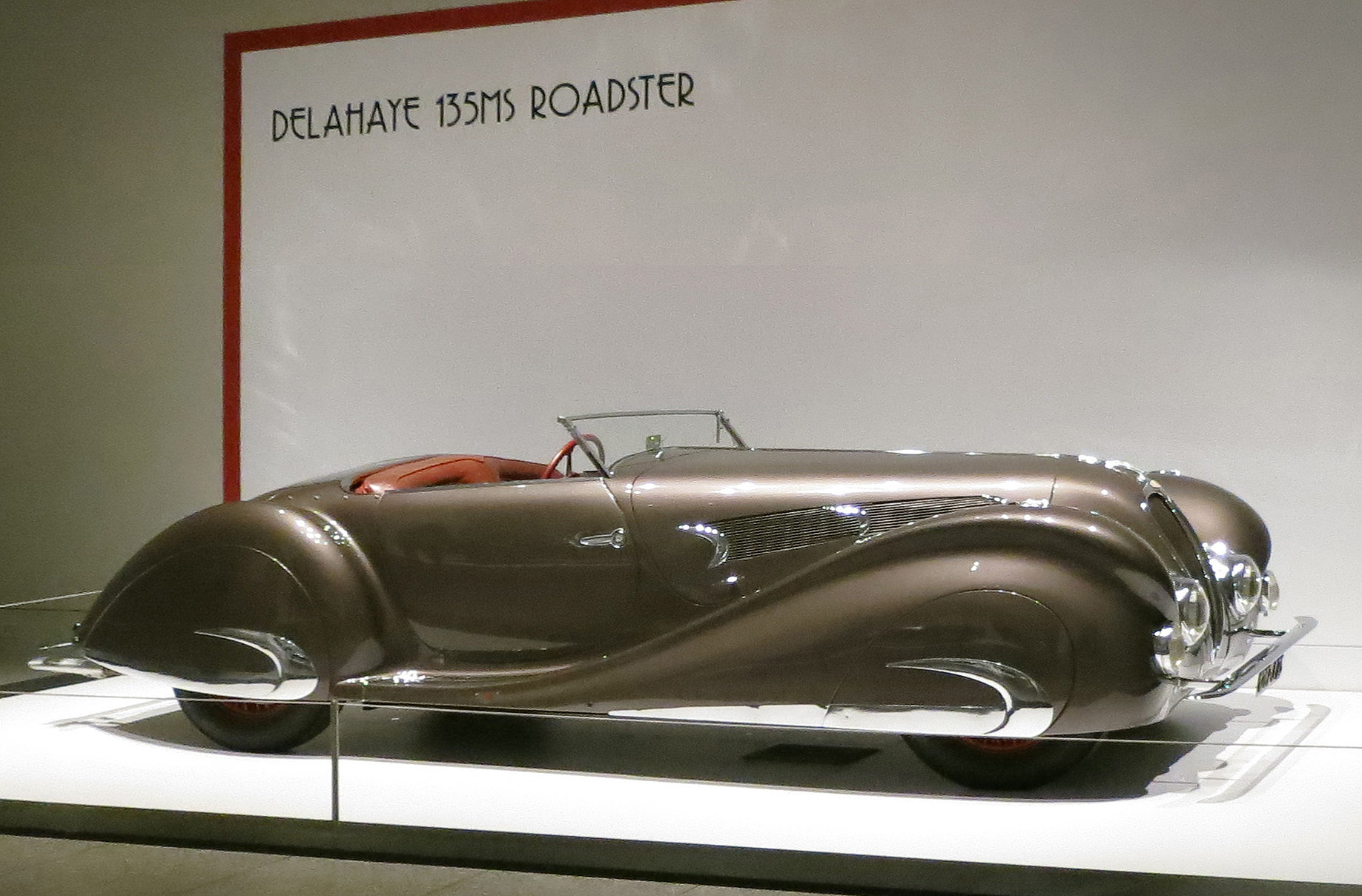
| 135MS | to 1954 | 3,557 cc six | 89–108 kW (120–145 hp); over 119 kW (160 hp) for racing | sports and competition model |
| 138 | - | six | 57 kW (76 hp) or 67 kW (90 hp) | 3,160 mm wheelbase |
| 134N | - | 2,150 cc four | - | four-cylinder version of the six |
| 148 / 148L | - | six | - | 3,150 or 3,350 mm wheelbase; four-door berline by Letourneur et Marchand |
| 168 | from December 1938 | six | - | Renault Viva Grand Sport body on the 148L, Wilson pre-selector; about 30 built |
| 235 | 1951–1954 | 135MS-based | - | ponton body by Philippe Charbonneaux; 84 built |
The short "Competition Court" chassis, with a 2.70-metre wheelbase, came about because Lucy O'Reilly Schell paid for its development. She bought 12 of these cars and kept half for her own Ecurie Bleue racing team.
Le Mans, Monte Carlo and the Mille Miglia
The 135 proved itself quickly. At the 1936 French Sports Car Grand Prix at Montlhéry, 135s finished second, third, fourth, fifth, seventh, eleventh and twelfth, and in the 1936 Mille Miglia they took second and third. In 1937 a 135 won the Monte Carlo Rally, and 135MS cars finished second and third at Le Mans.
The high point came at Le Mans in 1938, when Chaboud and Trémoulet won in a Delahaye, with two more Delahayes second and fourth. In 1939 two 135MS cars finished sixth and eighth, and after the war 135MS entries placed fifth, ninth and tenth. Competition 135s also set the all-time record in the Ulster Tourist Trophy, and in 1949 John Crouch won the Australian Grand Prix in a 135MS.
| Event | Result |
|---|---|
| 1936 Mille Miglia | 2nd and 3rd |
| 1936 French Sports Car Grand Prix, Montlhéry | 2nd–5th, 7th, 11th, 12th |
| 1937 Monte Carlo Rally | win |
| 1937 Le Mans | 2nd and 3rd |
| 1938 Le Mans | win (Chaboud / Trémoulet), plus 2nd and 4th |
| 1939 Le Mans | 6th and 8th |
| 1949 Australian Grand Prix | win (John Crouch) |
The coachbuilders' Delahaye
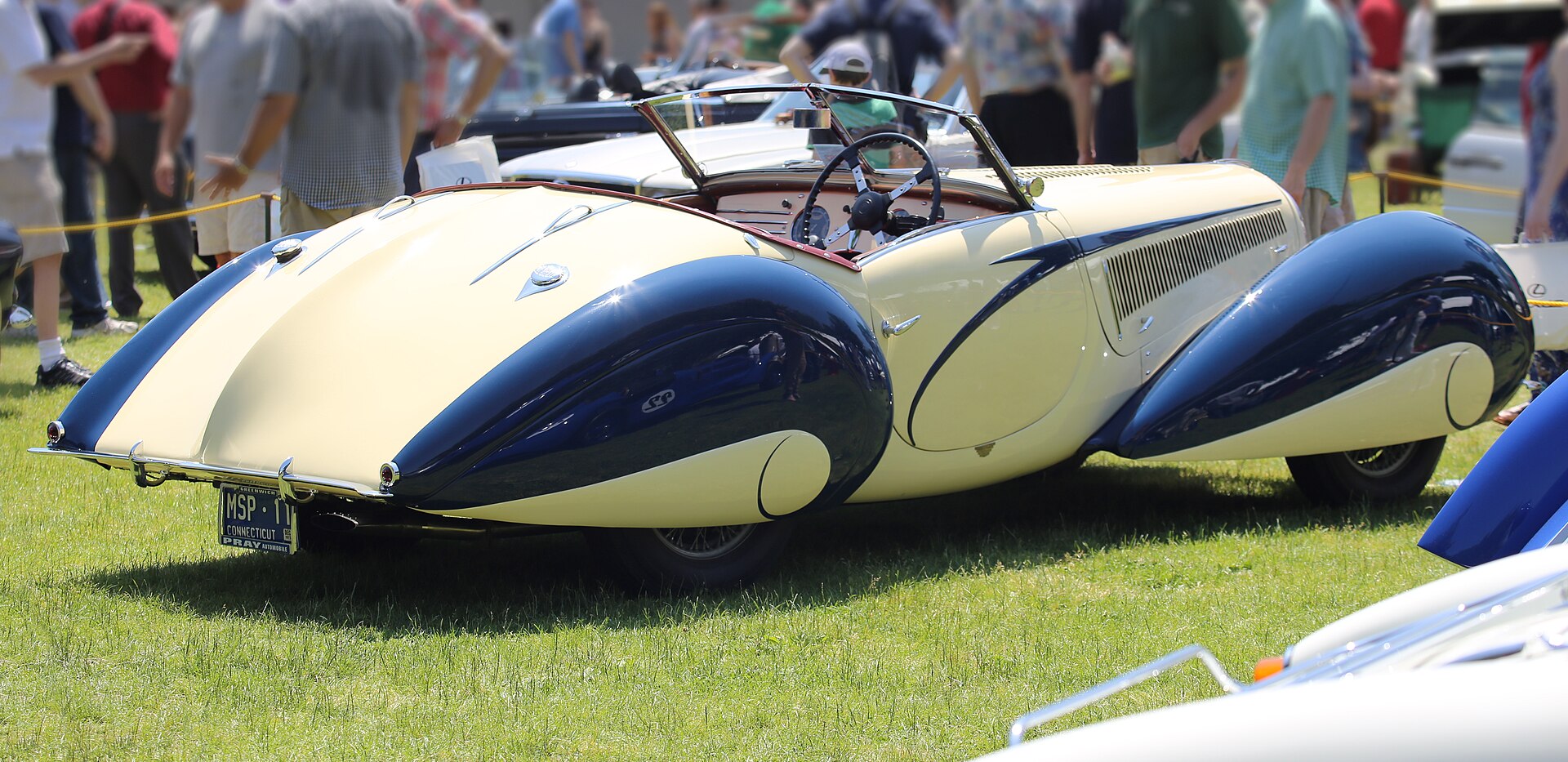
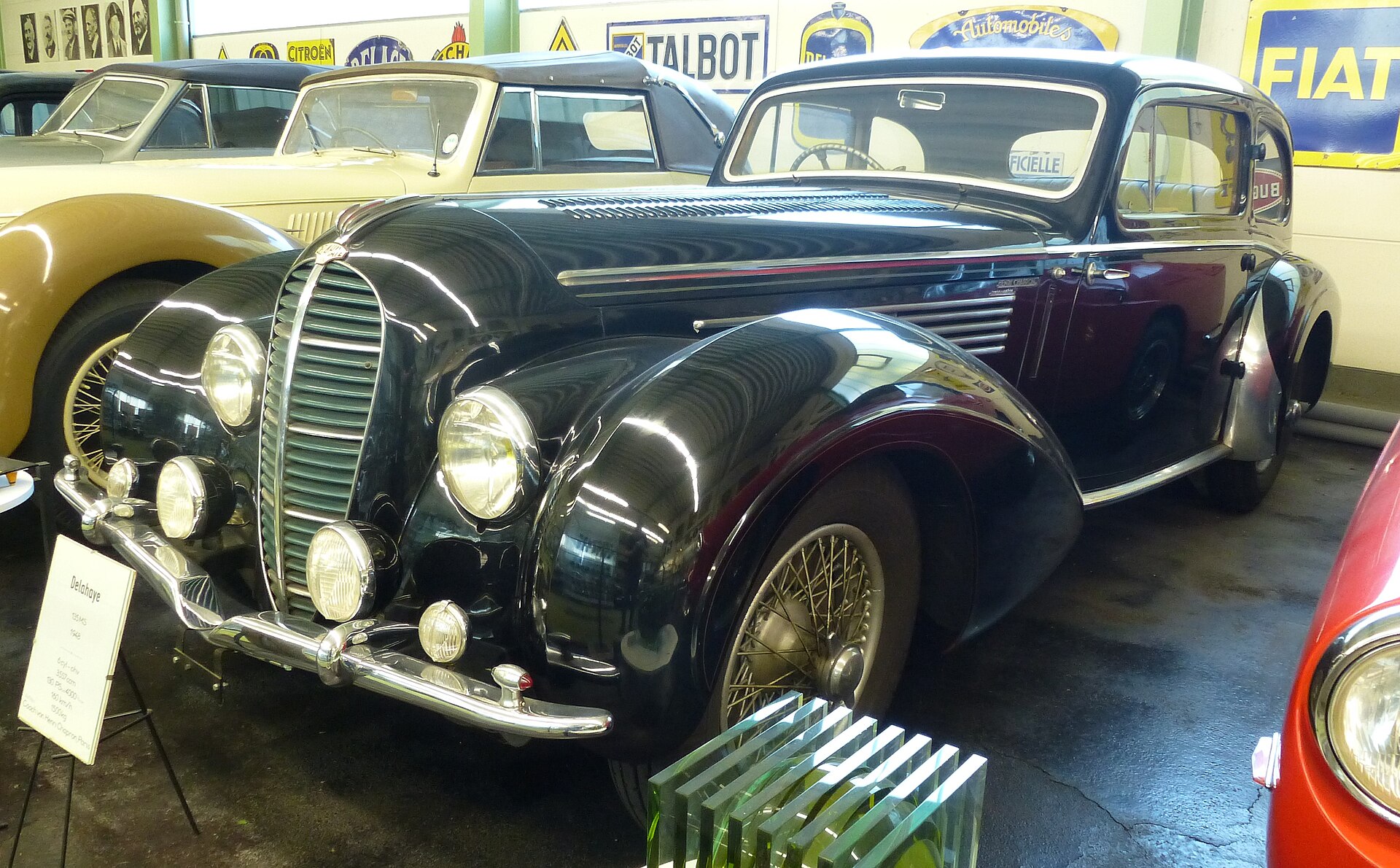
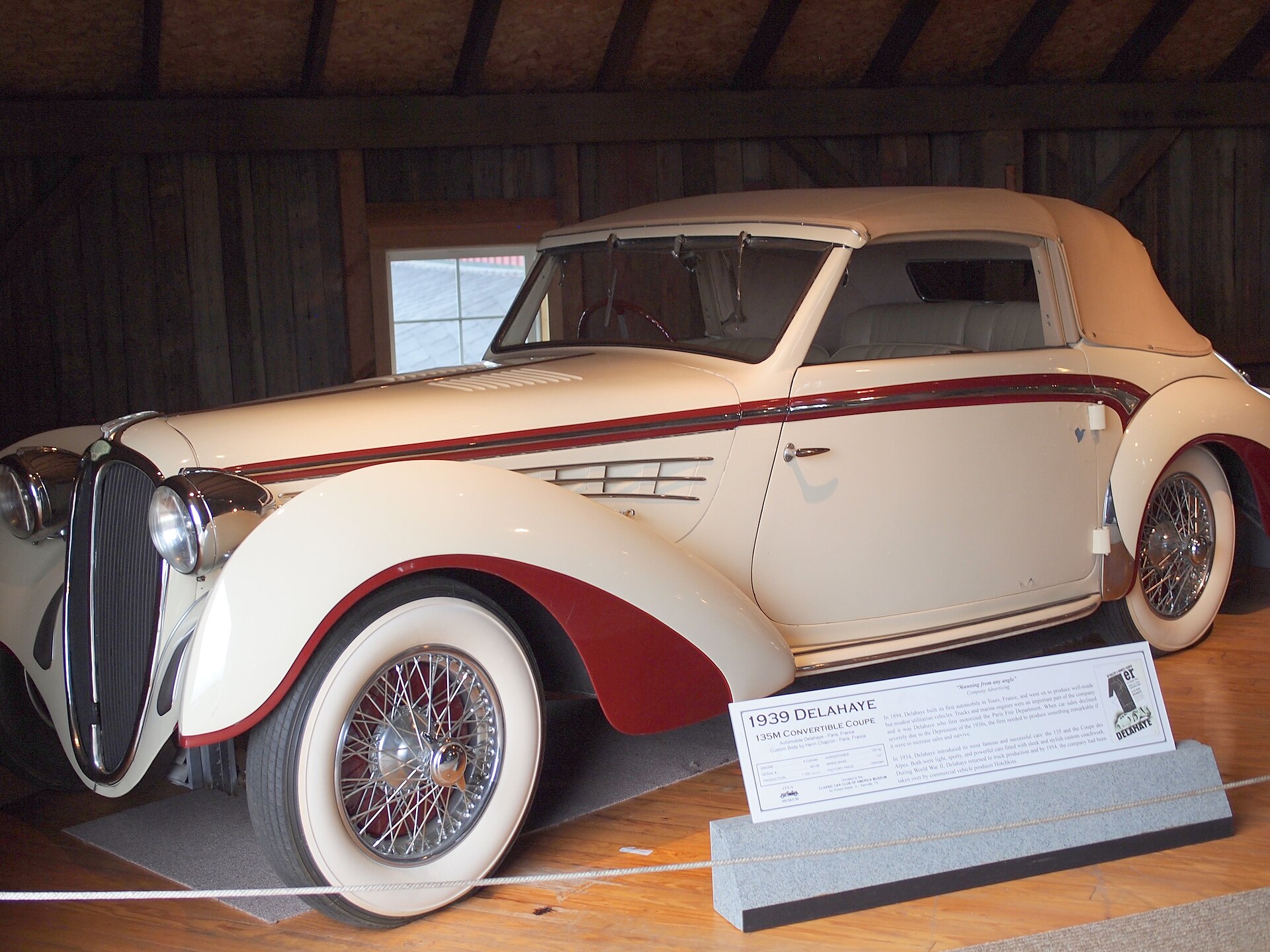
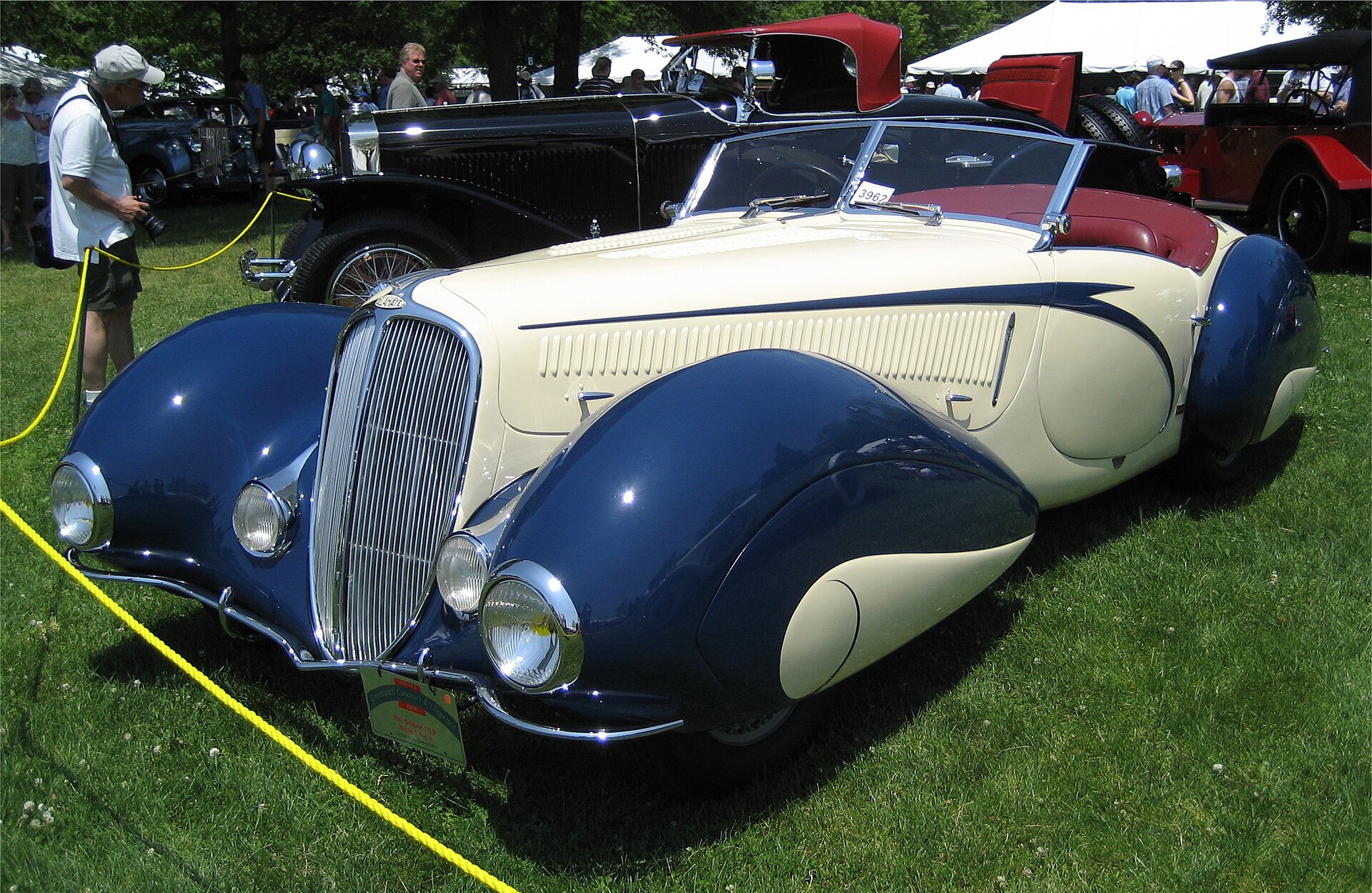
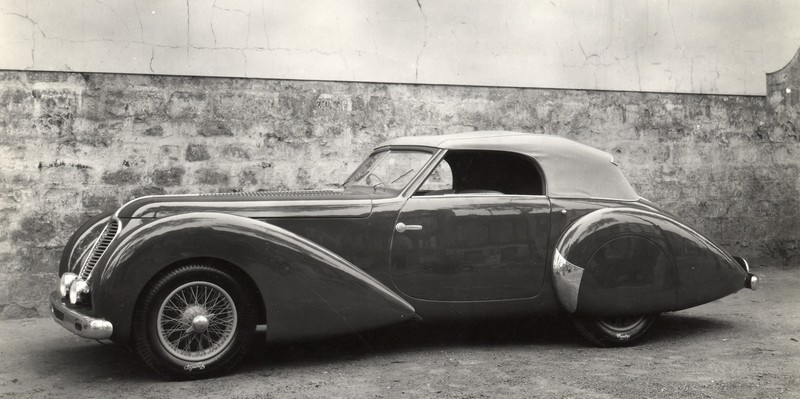
The 135 was bodied by the leading French carrossiers: Figoni & Falaschi, Letourneur et Marchand, Alphonse Guilloré, Marcel Pourtout, Frères Dubois, Jacques Saoutchik, Marius Franay, Henri Chapron, Faget-Varnay, Antem and others. Graber also bodied cabriolets after the war. A bare chassis weighed 935 kg, and complete cars ranged from 1,250 to 1,640 kg depending on the body, so two 135s can look very different. The Type 168 shows the other extreme: from December 1938 about thirty cars were built with Renault Viva Grand Sport bodywork on the long 148L chassis.

Million francs, Hotchkiss and the end
Delahaye's racing programme went beyond the 135. In 1937 René Dreyfus drove the V12 Type 145 at Montlhéry at an average of 146.56 km/h (91.07 mph) over 200 km. The run won a government prize of 200,000 francs (1937), and the car has been known as the "Million Franc Delahaye" ever since.
After the war the 135M and 135MS returned alongside new designs. The Type 175 ran from 1948 to 1951, the related 178 and 180 were dropped around mid-1951, and the VLR light reconnaissance vehicle, built for the military from 1951 to 1954. The 3.2-litre 135 had not come back after 1940, and the 235 of 1951, a 135MS with modern ponton bodywork by Philippe Charbonneaux, sold only 84 copies. On 19 March 1954 Delahaye president Pierre Peigney and Hotchkiss president Paul Richard signed a merger agreement. Shareholders accepted the takeover on 9 June 1954, Hotchkiss ended car production, and Delahaye closed for the last time on 31 December 1954.
Collecting the Delahaye 135
- Variant: a 3.2-litre 135 from 1935–1940, a 3.5-litre 135M, or a 135MS with the most power.
- Body: the coachbuilder and the chassis number define the car's identity and history.
- Competition history: cars with a racing record, such as the Competition Court chassis, are a separate class.
- Gearbox: the Cotal pre-selector or the manual gearbox, as specified when new.
The power converter translates the 135's hp ratings into kW and PS. The 135 belongs with the great pre-war cars in the 1930s classics section and the wider classic cars hub.

Photo gallery


Delahaye 135 in our rankings
- No. 170 of 912 · Longest-running car nameplates (19 years · top 21%)
- No. 224 of 557 · Biggest engines: cars (3,557 cc · top 41%)
- No. 25 of 56 · Most powerful French cars (119 kW · top 45%)
- No. 648 of 859 · Most powerful cars (119 kW · top 76%)
In production longer than 79% of ranked nameplates in the 1CARS catalog (No. 170 of 912).
Delahaye 135 photos 6
FAQ
How many Delahaye 135s were built?
About 2,000, between 1935 and 1954.
What engine does the Delahaye 135 have?
An overhead-valve straight-six derived from a Delahaye truck engine: 3,227 cc in the 135 and 3,557 cc in the 135M and 135MS.
Did the Delahaye 135 win Le Mans?
Yes, in 1938 with Chaboud and Trémoulet; Delahayes also finished second and fourth.
Why is the Delahaye 135 called the Coupe des Alpes?
The name comes from its success in the Alpine Rally.
Who built bodies for the Delahaye 135?
Figoni & Falaschi, Chapron, Saoutchik, Letourneur et Marchand, Pourtout, Franay, Guilloré, Faget-Varnay, Antem and others.
Data sources
Data checked by an editor against the sources below.