Blocked DPF: Symptoms, Regeneration and How to Avoid a Costly Repair
A diesel particulate filter (DPF) traps soot from the exhaust and burns it off from time to time in a process called regeneration. It blocks when regeneration cannot finish, almost always because the car does too many short, slow trips. If the DPF warning light comes on, a drive of about 10 minutes at a steady speed above roughly 65 km/h usually clears it; if you ignore it, the car can go into limp mode, and ADAC puts a new filter at €1,000 to €3,000 depending on the model (2025).
Key takeaways
- Soot burns off above about 550 °C; an active regeneration raises the exhaust to about 600 °C and takes 5 to 10 minutes of driving.
- The AA says active regeneration starts roughly every 300 miles (about 480 km), depending on use.
- Professional cleaning costs about €400 to €500 and a new DPF €1,000 to €3,000, according to ADAC in 2025.
- Removing a DPF is illegal in the UK and fails the roadworthiness test there; German tests have counted particles on Euro 6 diesels since July 2023.
What a DPF does and why it blocks
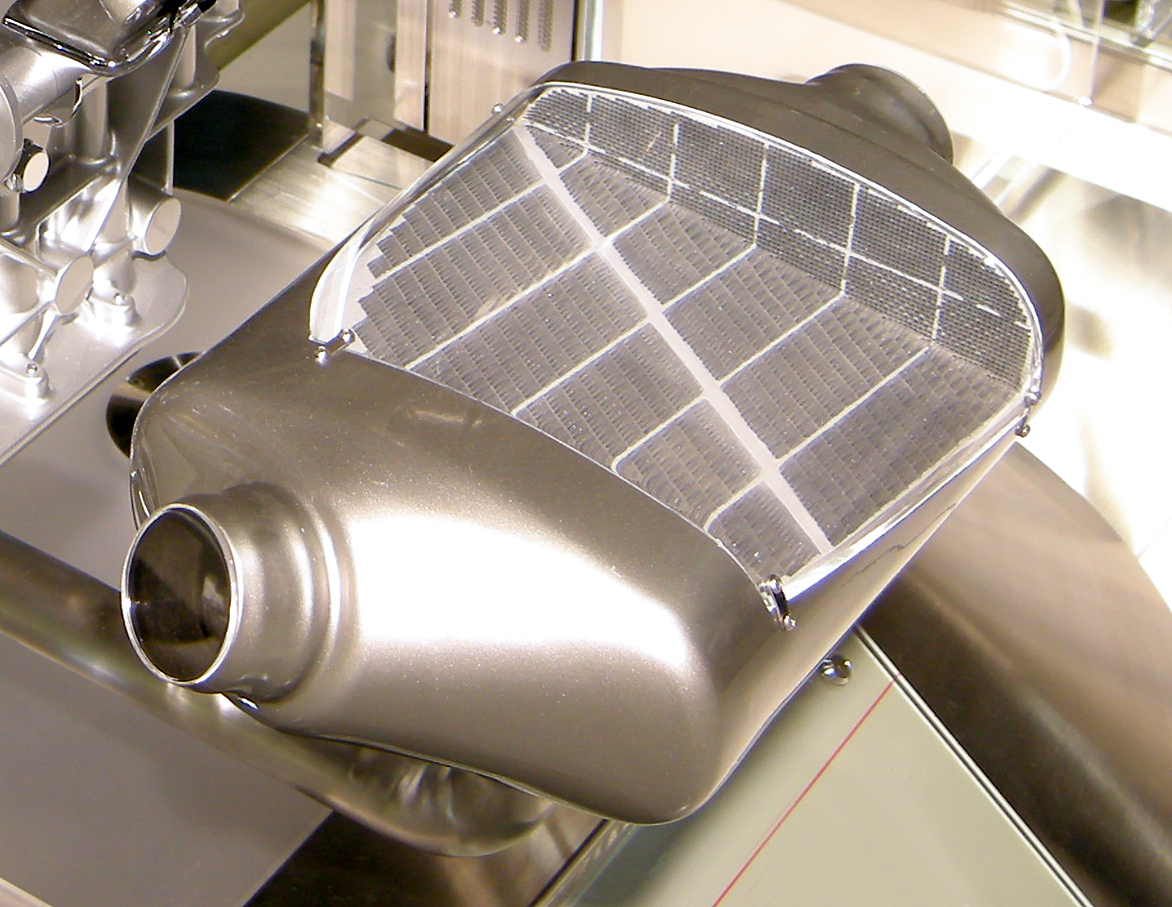
The filter sits in the exhaust and catches soot with a porous ceramic or metal wall. ADAC says it removes more than 90 % of soot, including fine particles. The trapped soot then has to be burned off, leaving a small amount of ash. That ash cannot be burned, so it builds up slowly over the filter's life.
PSA Peugeot Citroën was the first maker to fit particulate filters as standard on passenger cars, in 2000. Since the Euro 5 standard came fully into force in January 2011, diesel cars sold in the EU need one, so practically every diesel you can buy today has a DPF.
Problems start when the soot arrives faster than the car can burn it. Short trips keep the exhaust too cool, and every unfinished regeneration leaves more soot behind. A filter in a car used as intended lasts a long time: the AA says well over 100,000 miles, or about 160,000 km.
Passive and active regeneration
| Specification | Passive regeneration | Active regeneration |
|---|---|---|
| When it happens | Whenever the exhaust is hot enough, mostly on motorways or under load | When the engine software sees the filter filling up |
| How it works | Soot burns above about 550 °C on its own | Changed fuel injection raises the exhaust to about 600 °C |
| Typical frequency | Continuous on long fast trips | Roughly every 300 miles (about 480 km), depending on use (AA) |
| Duration | No fixed duration | 5 to 10 minutes of uninterrupted driving (AA) |
| What the driver notices | Nothing | Fans running, faster idle, stop-start disabled, higher consumption, hot acrid smell |
Some systems use a fuel additive that lowers the ignition temperature of soot to about 400 °C, according to ADAC. It helps cars in town traffic, but it adds ash to the filter.
If you switch off in the middle of an active regeneration, it stops and has to start again later. That is how a city car ends up with a filter that never quite gets clean.
Blocked DPF symptoms and warning lights
The first sign is usually the DPF warning light, which means the soot load has reached a limit. Other symptoms build up if nothing is done:
- the engine management light, because a DPF or pressure sensor fault can trigger it;
- regenerations becoming more frequent, which you notice as the fans running after you stop;
- loss of power and a restricted top speed when the car goes into emergency or limp mode;
- rising fuel consumption;
- a failed emissions test.
Your car's handbook shows which symbol means what. If you are unsure, the on-board computer often gives a text message along with the lamp.
What to do when the DPF light comes on
- Plan a steady drive soon. The AA advises driving for about 10 minutes at over 40 mph (about 65 km/h) to let an active regeneration finish. A dual carriageway or motorway is ideal.
- Keep the revs up a little. Use a gear that keeps the engine working, as long as it is safe and legal.
- Do not switch off during the drive. Stopping in the middle restarts the process from scratch.
- Check fuel and additive levels. The AA notes that a fuel level below about a quarter tank can stop active regeneration, and a low additive level on cars with an additive tank has the same effect.
- Go to a garage if the light stays on or the car loses power. Once in limp mode, the AA says driving at speed alone is not enough: a workshop has to run a forced regeneration with diagnostic equipment.
The gap between partial and severe blockage can be short, so do not wait weeks after the first warning.
Forced regeneration, cleaning or a new filter
| Fix | What it involves | Cost (ADAC, 2025) |
|---|---|---|
| Forced regeneration | Garage triggers a regeneration with diagnostic equipment | Not given by ADAC; ask for a quote first |
| Professional cleaning | Filter is removed and sent to a specialist; the car may be off the road for several days | About €400 to €500 |
| New filter | Replacement part, sometimes as a cheaper exchange unit from the manufacturer | €1,000 to €3,000, depending on the model |
ADAC has no test results on cleaning and makes no general recommendation. Methods vary, are often trade secrets, and providers do not guarantee a minimum life afterwards. Older models sometimes had fixed replacement intervals of about 120,000 to 180,000 km; on newer ones the workshop decides from the measured ash content.
Before paying for any fix, ask the garage to find out why the filter blocked. If the cause is a faulty sensor or exhaust gas recirculation (EGR) valve, a new filter will block again.
Why DPFs fail: the common causes
The AA and ADAC list the same main causes:
- Short trips and city driving. The exhaust never gets hot enough, which ADAC names as the main cause.
- The wrong engine oil. Both recommend the low-ash oil specified by the manufacturer; oil residues add ash that cannot be burned.
- Engine faults. A fault in the fuel system or the EGR valve produces extra soot.
- Ignored warning lights and stored fault codes. These can block regeneration.
- Late services. Going past the service interval is on the AA's list.
- An empty additive tank, where fitted. The AA says a full tank lasts around 70,000 miles (about 110,000 km).
- Running on a low fuel level, which can prevent active regeneration.
Removing a DPF: illegal and an inspection fail
Some garages offer to remove the filter and reprogram the engine. Do not do it. In the UK, the AA explains that this is an offence under the Road Vehicles (Construction and Use) Regulations, could invalidate your insurance, and that a missing DPF that was fitted at build has been an MOT failure since February 2014.
In Germany, ADAC explains that a failed emissions test counts as a major defect, so the car gets no inspection sticker. Since July 2023, Euro 6 diesels are tested by particle count: the limit is 250,000 particles per cm³, while a good filter shows about 10,000, and three measurements are averaged. A removed or damaged filter will not pass that test.
Is a diesel still right for you?
A DPF is not a fault of diesel cars; it is a filter that needs the right kind of driving. The AA's advice is blunt: if you are buying a car mainly for town and stop-start driving, avoid a diesel with a particulate filter.
| Your driving | DPF risk | What to consider |
|---|---|---|
| Mostly motorway, long trips | Low: passive regeneration does most of the work | A diesel still makes sense; see our diesel car pages |
| Mixed, with a weekly longer drive | Moderate | Fine if it gets a regular steady run long enough for a regeneration to finish |
| Mostly short urban trips | High | Petrol, hybrid or electric is usually the safer choice |
To check whether the fuel savings justify a diesel at your mileage, put your numbers into the petrol vs diesel fuel cost comparison. If you do want a used diesel for long distances, our list of the best used diesel estates is a starting point.
Try our calculator
Fuel cost comparisonCost of ownership calculatorFAQ
How do I clear a DPF warning light?
Drive for about 10 minutes at a steady speed above about 65 km/h, without switching off, so an active regeneration can finish. If the light stays on or the car loses power, a garage needs to run a forced regeneration.
How long does a DPF regeneration take?
The AA puts an active regeneration at 5 to 10 minutes of driving. Passive regeneration happens continuously whenever the exhaust is hot enough, for example on the motorway.
How much does it cost to fix a blocked DPF?
Start with a forced regeneration at a garage and ask for a quote. ADAC gave about €400 to €500 for professional cleaning and €1,000 to €3,000 for a new filter in 2025, depending on the model.
Can I drive with a blocked DPF?
Only to get it regenerated or to a garage. If you keep driving slowly with the light on, soot keeps building up until the car enters limp mode, and then a garage visit is the only fix.
Is it legal to remove a DPF?
No. In the UK it is an offence under the Construction and Use Regulations and an MOT failure if the car was built with a filter, and it may invalidate your insurance. In Germany a car without a working filter fails the particle-count emissions test.
Sources
- The AA: Diesel particulate filters (DPF) (accessed 23 Oct 2026)
- ADAC: Diesel-Partikelfilter, Funktion, Reinigung, Tausch (09.09.2025) (accessed 23 Oct 2026)
- Wikipedia: Diesel particulate filter (accessed 23 Oct 2026)
Found a mistake? Report an error