 Venturi Atlantique
Specs, engines and history
Published Sources (1) Report an error
By Felix Hartmann, Automotive Technology & EV Contributor
- Built
- 1996–2000
- Top power
- 228 kW (310 PS)
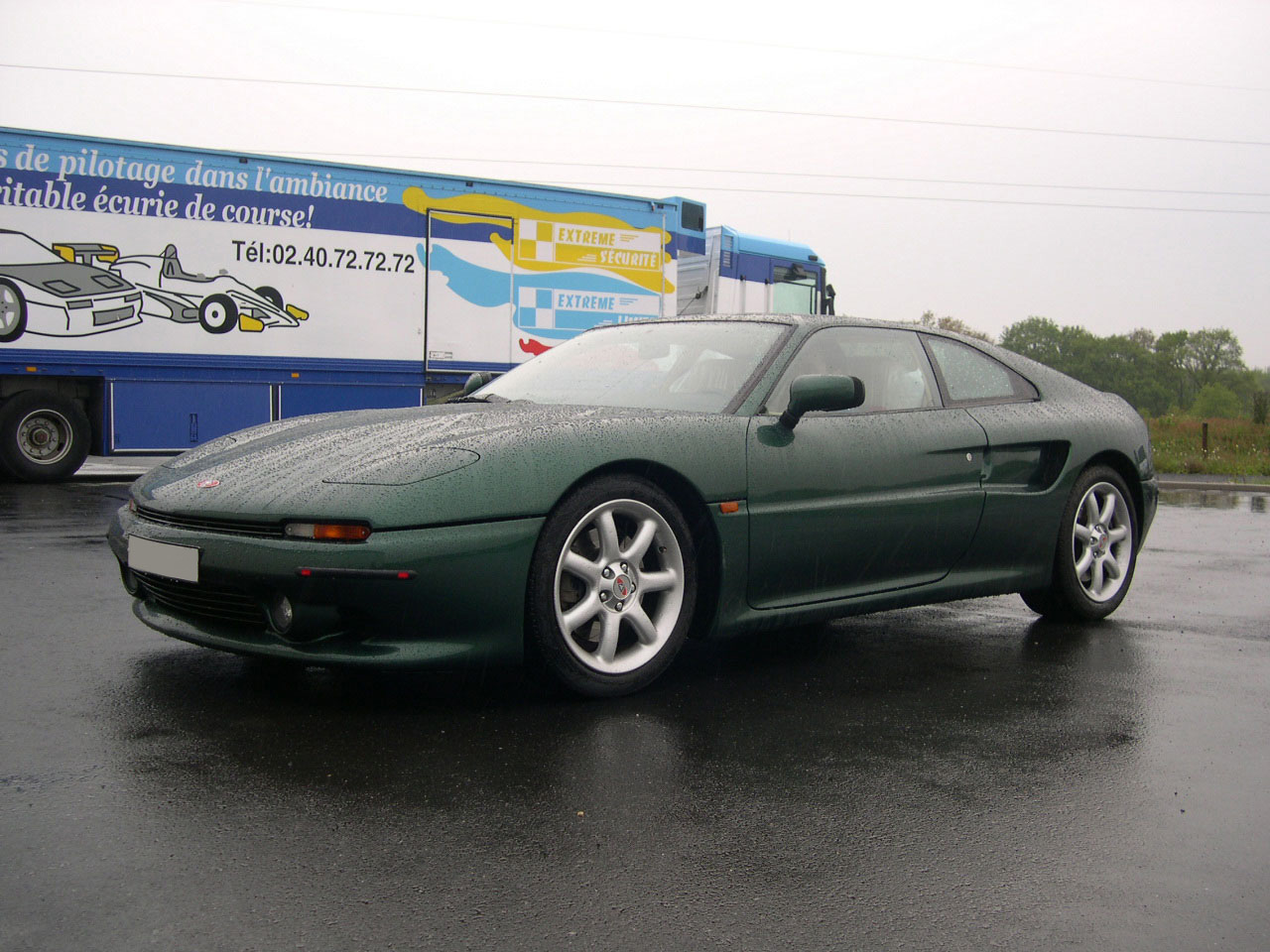
The Venturi Atlantique is the mid-engined sports coupé that the small French company Venturi built in several versions until 2000. It started as a revised Venturi 260 and became the Atlantique 300 with a 3.0-litre V6 and, from 1998, the Atlantique 300 Biturbo with 228 kW (310 PS). Only 13 Biturbos were made before Venturi's second bankruptcy ended production. After that, the company's new owner moved the brand towards electric vehicles.
In short
- Built until 2000; Wikipedia gives the Atlantique's production as 1991–2000, counting the earlier 260 version.
- PRV V6 engines: 2.8-litre turbo with 191 kW (260 PS), 3.0-litre with 154 kW (210 PS) or 207 kW (281 PS) turbo.
- Atlantique 300 Biturbo (1998): 228 kW (310 PS) at 6,200 rpm, 394 Nm, 0–100 km/h in 4.7 seconds, 275 km/h; 13 built.
- Fibreglass body, mid-engine, five-speed manual gearbox; two track-only 300 GTR cars in 1999.
Venturi Atlantique at a glance
| Specification | Venturi Atlantique |
|---|---|
| Production | to 2000 (1991–2000 including the 260) |
| Designers | Claude Poiraud, Gérard Godfroy |
| Body | two-door coupé, fibreglass |
| Layout | mid-engine, rear-wheel drive |
| Engines | PRV V6 2.8 turbo, 3.0 and 3.0 turbo; 2.9 biturbo V6 (L7X) |
| Power | 154–228 kW (210–310 PS) |
| Gearbox | five-speed manual |
| Dimensions | 4,242 × 1,840 × 1,180 mm, wheelbase 2,500 mm |
All Venturi models are in the Venturi catalogue.
From the 260 to the Atlantique 300
The first car to carry the Atlantique name was a revised Venturi APC 260. It had a 2.8-litre turbocharged PRV V6 with 191 kW (260 PS), and its weight was reduced to 1,110 kg. Wikipedia gives it a top speed of 269 km/h.
The Atlantique 300 was the more thorough renewal. It was unveiled at the Paris motor show after a design period of only six months and used the 3.0-litre PRV V6. The design is credited to Claude Poiraud and Gérard Godfroy. The car is a two-door coupé with a fibreglass body and the engine mounted behind the cabin, driving the rear wheels through a five-speed manual gearbox.
| Dimension | Venturi Atlantique |
|---|---|
| Length | 4,242 mm |
| Width | 1,840 mm |
| Height | 1,180 mm |
| Wheelbase | 2,500 mm |
Engines: from PRV V6 to Biturbo
The Atlantique used several versions of the PRV V6. The last and most powerful version, the Atlantique 300 Biturbo of 1998, had a different engine: the 2,946 cc L7X, a Renault variant of the ESL V6, with two turbochargers.
| Version | Engine | Power | Torque | Performance |
|---|---|---|---|---|
| Atlantique 260 | 2,849 cc PRV Z7W V6, turbo | 191 kW (260 PS) | - | 269 km/h |
| Atlantique 300 | 2,975 cc PRV Z7X V6 | 154 kW (210 PS) | - | - |
| Atlantique 300 Turbo | 2,975 cc PRV Z7X V6, turbo | 207 kW (281 PS) | - | - |
| Atlantique 300 Biturbo | 2,946 cc L7X V6, two turbos | 228 kW (310 PS) at 6,200 rpm | 394 Nm at 3,800 rpm | 0–100 km/h 4.7 s, 275 km/h |
The Biturbo was built in only 13 examples in 1999 and 2000.

Racing: the 300 GTR
In 1999 Venturi built two track-only 300 GTR cars based on the Atlantique.

Venturi before the Atlantique
Venturi was founded in 1984 as MVS (Manufacture de Voitures de Sport) by two former Heuliez engineers, Claude Poiraud and Gérard Godfroy. The first prototype used a Volkswagen Golf GTI engine, and the name was first spelt "Ventury". Production at Couëron began in 1987 with five cars. The early range included the Coupé 160 with a naturally aspirated PRV V6, the Coupé and Transcup with turbocharged PRV V6 engines of 147–191 kW (200–260 PS), and a Venturi 180 with a Renault 21 Turbo engine, developed mainly for Italy.
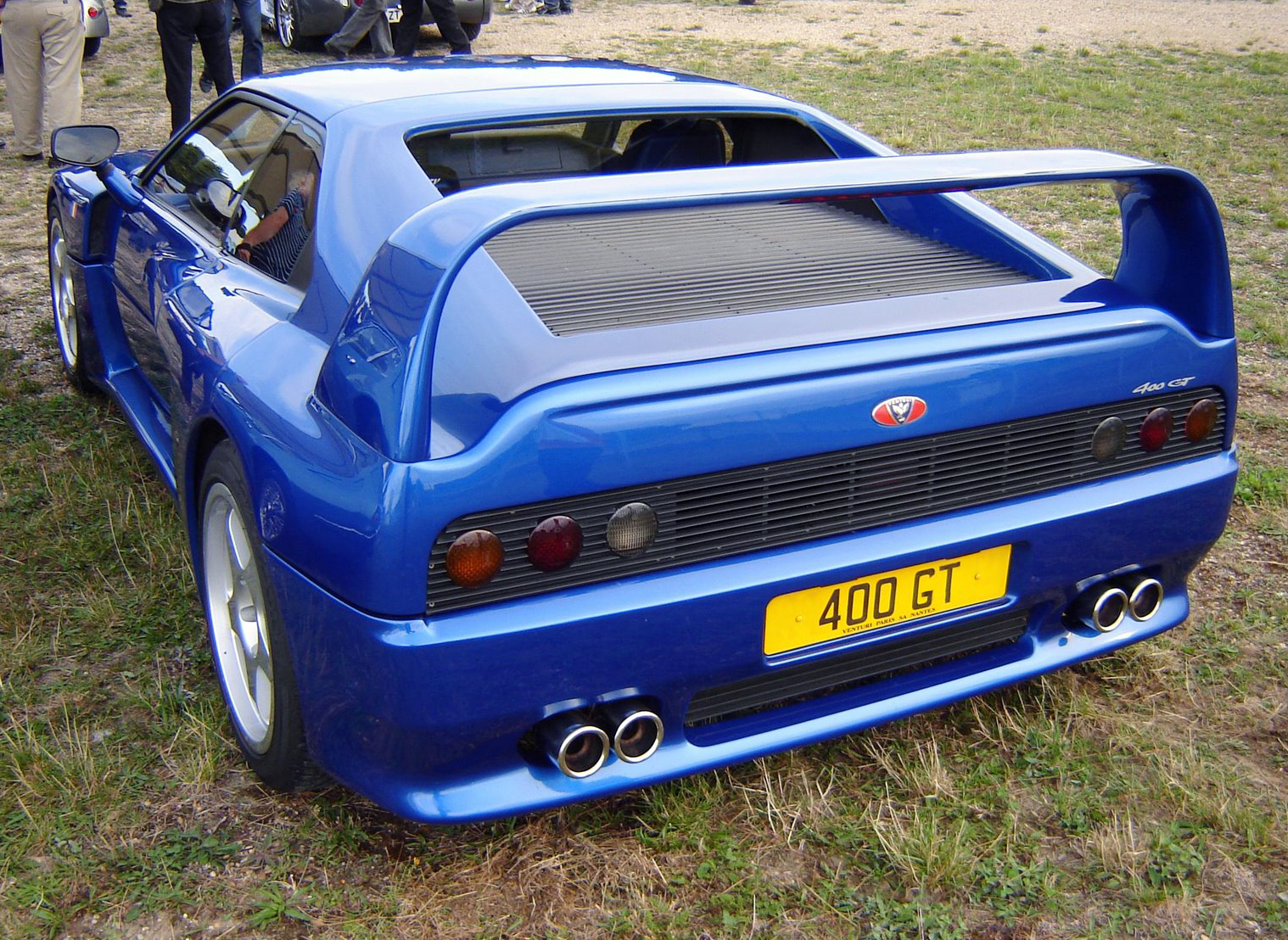
The brand also went racing. Its one-make Gentlemen Drivers Trophy of 1993 used more than 70 Trophy cars, and a Venturi ran at Le Mans in 1993 with Jacques Laffite among the drivers. In the 1994 BPR Global GT Series, Venturi won at Dijon-Prenois, in the Paris 1000 km and in the 4 Hours of Spa. The 400 GT of 1994–1997, of which only 15 were built, had a 2,975 cc twin-turbo V6 with 300 kW (408 PS), 0–100 km/h in 4.7 seconds and 291 km/h.
The company article on Wikipedia dates the Atlantique 300 to 1996–1998 and the Biturbo to 1999–2000, slightly differently from the Atlantique article.
The company behind the car
The Atlantique's history is closely tied to Venturi's difficult finances. Hubert O'Neill bought the company in 1994; the Venturi 400 GT was conceived under his ownership alongside the revised Atlantique. In 1996 Venturi went into receivership and was bought by the Thai company Nakarin Benz, which concentrated on road cars. In 2000 the company faced bankruptcy again, and the Atlantique went out of production. According to Wikipedia, fewer than 700 Venturi cars were sold over the company's lifespan up to that point.
The current owner, the Monegasque businessman Gildo Pallanca Pastor, moved the brand towards electric cars such as the Venturi Fetish.
Legacy
The Atlantique was the last Venturi sports car in production before the company's bankruptcy of 2000. It combined a fibreglass body with PRV and Renault V6 engines and reached 228 kW (310 PS) in its final Biturbo form. Very few were built, especially of the Biturbo. The story of the brand is told in our history of Venturi.
Photo gallery

Venturi Atlantique in our rankings
- No. 411 of 859 · Most powerful cars (228 kW · top 48%)
- No. 220 of 313 · Most powerful coupes (228 kW · top 71%)
- No. 717 of 912 · Longest-running car nameplates (4 years · top 83%)
More powerful than 52% of ranked cars in the 1CARS catalog (No. 411 of 859).
FAQ
What engine does the Venturi Atlantique have?
The 300 uses a 3.0-litre PRV V6 with 154 kW (210 PS), or 207 kW (281 PS) with a turbo. The 300 Biturbo has a 2.9-litre twin-turbo V6 (L7X) with 228 kW (310 PS).
How many Venturi Atlantique Biturbos were built?
13, in 1999 and 2000.
Why did production of the Venturi Atlantique end?
Venturi faced bankruptcy again in 2000, and the Atlantique went out of production.
How fast is the Atlantique 300 Biturbo?
Wikipedia gives 0–100 km/h in 4.7 seconds and a top speed of 275 km/h.
Data sources
Data checked by an editor against the sources below.