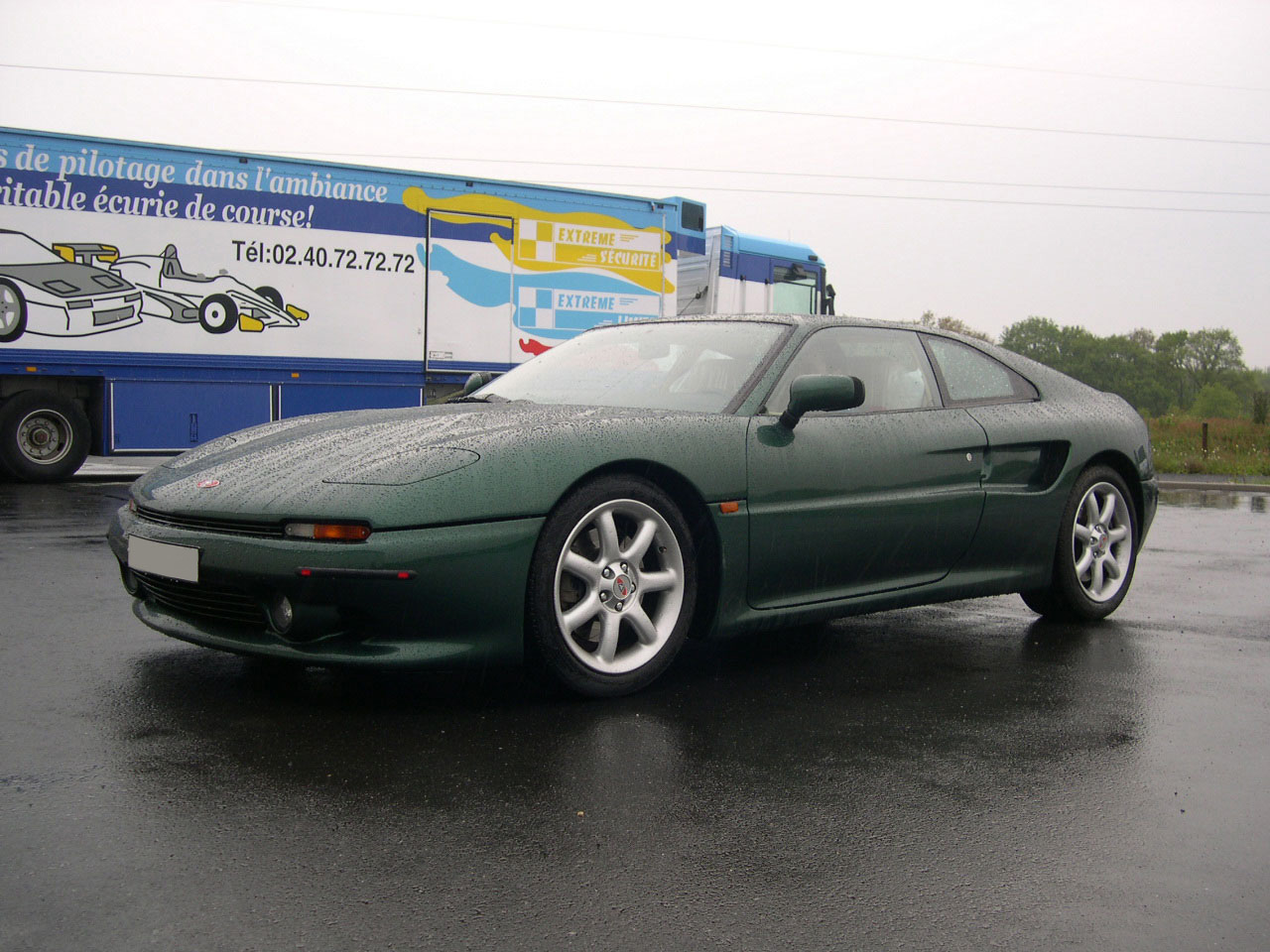
 Venturi 400 GT
Specs, engines and history
Published Sources (1) Report an error
By Felix Hartmann, Automotive Technology & EV Contributor
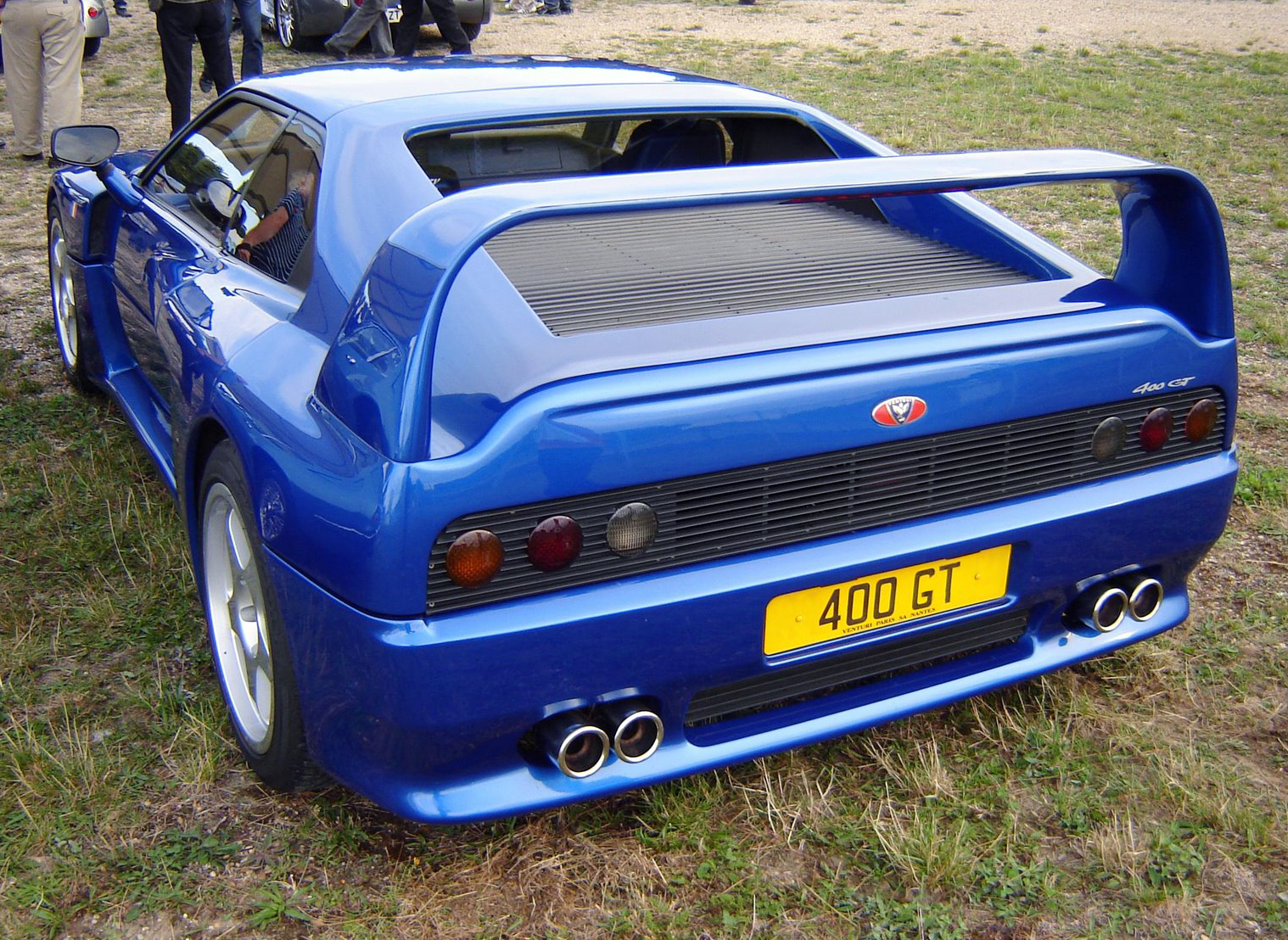
The Venturi 400 GT is a mid-engined French supercar built in Couëron, France, in the mid-1990s. It is the road version of the Venturi 400 Trophy, a racing car created for a one-make championship, and it shares that car's 3.0-litre twin-turbo V6 with 300 kW (408 PS). Presented by Henri Pescarolo in 1994, the 400 GT is described by Wikipedia as the first car in the world with carbon brakes as standard. Only about 15 road cars were made.
In short
- Built from 1994 (to 1996 or 1997, depending on the source) in Couëron, France; about 15 road cars (13 Series 1, 2 Series 2) plus 73 racing 400 Trophy cars.
- 2,975 cc twin-turbo V6 derived from the PRV engine: 300 kW (408 PS) at 6,000 rpm and 520 Nm.
- Five-speed manual gearbox, mid-engine, rear-wheel drive; carbon brakes as standard.
- 0–100 km/h in 4.7 seconds and a top speed of 290–291 km/h.
Venturi 400 GT at a glance
| Specification | Venturi 400 GT |
|---|---|
| Production | 1994–1996/1997, Couëron (France) |
| Cars built | about 15 road cars; 73 racing 400 Trophy |
| Body | two-door coupé; mid-engine, rear-wheel drive |
| Engine | 2,975 cc V6, twin-turbo (PRV-derived), catalytic converter |
| Power | 300 kW (408 PS) at 6,000 rpm |
| Torque | 520 Nm (400 GT); 530 Nm quoted for the 400 Trophy |
| Gearbox | five-speed manual |
| Brakes | carbon, as standard |
| Top speed | 290–291 km/h |
| Designers | Claude Poiraud and Gérard Godfroy |
Venturi as a brand is introduced in our article Venturi Automobiles: sports and eco-friendly cars, and later Venturi models include the electric Venturi Fetish. All models are listed in the Venturi catalogue.
Venturi: a French sports car maker
Venturi began in 1984 as MVS (Manufacture de Voitures de Sport), founded by Claude Poiraud and Gérard Godfroy, two former engineers of the coachbuilder Heuliez. The first car used the engine of a Volkswagen Golf GTi. Production began in 1987 with five cars, and in the following 20 years almost 750 cars were built.
In the 1990s Venturi made mid-engined coupés and roadsters with turbocharged PRV V6 engines of 147 to 191 kW (200 to 260 PS). The smaller Venturi 180 had a 1,995 cc turbocharged four-cylinder of 136 kW (185 PS). At the top of the range sat the Atlantique 300 Biturbo with 228 kW (310 PS), 0–100 km/h in 4.7 seconds and a top speed of 275 km/h. The name also appeared in Formula 1: the 1992 Larrousse car carried the Venturi name.
From the 400 Trophy to the 400 GT
The 400 GT grew out of motorsport. In 1992 Venturi built the 400 Trophy for the Gentlemen Drivers Trophy, a one-make series created with Stéphane Ratel, then the company's director of competition services. Modelled on the Porsche Cup, it gave each entrant an identical car with the same technical preparation and a service package that covered everything needed to race. The first season had six races, at Le Mans, Pau, Paul Ricard, the Nürburgring, Magny-Cours and Dijon, and the championship ran for four seasons. Rocky Agusta financed much of the racing development. Wikipedia gives 72 or 73 racing cars, used by 75 drivers.
The road-going 400 GT was presented by Henri Pescarolo in 1994. It uses the same engine as the racing car but has a catalytic converter. About 15 road cars were built: 13 of the first series and 2 of the second.
Engine and carbon brakes
The engine is a 2,975 cc V6 with two turbochargers, derived from the PRV unit. In the 400 GT it produces 300 kW (408 PS) at 6,000 rpm and 520 Nm; for the 400 Trophy Wikipedia gives 304 kW (408 hp) and 530 Nm. It drives the rear wheels through a five-speed manual gearbox.
| Figure | 400 GT | 400 Trophy |
|---|---|---|
| Engine | 2,975 cc twin-turbo V6 | 2,975 cc twin-turbo V6 |
| Power | 300 kW (408 PS) at 6,000 rpm | 304 kW (408 hp) |
| Torque | 520 Nm | 530 Nm |
| 0–100 km/h | 4.7 s | 4.1 s |
| Top speed | 290–291 km/h | — |
Wikipedia describes the 400 GT as "the first car in the world to have standard carbon brakes".

Racing: Trophy, BPR and Le Mans
Venturi raced its cars widely in the early 1990s. In 1993 several cars, including about seven 500 LMs, ran at Le Mans, Jarama and Zolder; one Venturi was entered by Jacadi with Christophe Dechavanne and Jacques Laffite. In the 1994 BPR Global GT Series, Venturi won at Dijon-Prenois, in the 1000 km of Paris with Henri Pescarolo, and in the 4 Hours of Spa. In 1995 Paul Belmondo raced the 600 SLM.
| Year | Event |
|---|---|
| 1984 | MVS founded by Poiraud and Godfroy |
| 1992 | 400 Trophy built for the Gentlemen Drivers Trophy |
| 1993 | Venturis at Le Mans, Jarama and Zolder |
| 1994 | 400 GT presented by Henri Pescarolo; BPR wins at Dijon, Paris and Spa |
| 1995 | Paul Belmondo races the 600 SLM |
| 2000 | Venturi declares bankruptcy; bought by Gildo Pallanca Pastor |

Legacy
The 400 GT remained extremely rare, with only about 15 made for the road. Still, it showed that a small French company could build a supercar with a twin-turbo V6 of 300 kW and carbon brakes. After financial difficulties Venturi went bankrupt in 2000 and was bought the same year by Gildo Pallanca Pastor.
Venturi 400 GT in our rankings
In production longer than 4% of ranked nameplates in the 1CARS catalog (No. 835 of 912).
FAQ
How many Venturi 400 GTs were built?
About 15 road cars (13 Series 1 and 2 Series 2), plus 72–73 racing 400 Trophy cars.
How powerful is the Venturi 400 GT?
Its 3.0-litre twin-turbo V6 produces 300 kW (408 PS) at 6,000 rpm and 520 Nm.
What is special about the 400 GT's brakes?
Wikipedia describes it as the first car in the world with carbon brakes as standard.
Where does the 400 GT come from?
It is the road version of the 400 Trophy, built in 1992 for Venturi's one-make Gentlemen Drivers Trophy.
Who founded Venturi?
Claude Poiraud and Gérard Godfroy, two former Heuliez engineers, who founded the company as MVS in 1984; production began in 1987.
Data sources
Data checked by an editor against the sources below.