
 Venturi Fetish
Specs, engines and history
Updated Published Sources (2) Report an error
By Felix Hartmann, Automotive Technology & EV Contributor Reviewed by Oleksandr Hnatiuk

- Built
- 2004
- Top power
- 220 kW (299 PS)
The Venturi Fétish is a two-seat electric sports car from Venturi of Monaco, offered from late 2004 as one of the first electric sports cars in series production. Its rear-mounted motor delivered 180 kW (245 PS) and 220 Nm, a lithium-ion battery gave a range of about 300 to 350 km, and only 25 cars were planned.
In short
- First shown in 2002 as a petrol concept with a 2.0-litre Renault engine; the electric version followed in 2004.
- Designed by Sacha Lakic around a carbon-fibre and aluminium structure, at about 1,100 kg.
- Launch price of roughly 660,000 US dollars, which made it one of the most expensive cars of its time.
- An updated version with 220 kW (299 PS) and a top speed of 200 km/h appeared in 2010.

Size at a glance
| Dimensions | Venturi Fetish |
|---|---|
| Length | 3,935 mm154.9 in |
| Width | 1,885 mm74.2 in |
| Height | 1,180 mm46.5 in |
| Wheelbase | 2,600 mm102.4 in |
Specs by version
Engines
| Version | Engine | Power | Torque |
|---|---|---|---|
| VM300 180 kW (245 PS) Coupe | Electric VM300 | 180 kW 245 PS241 hp | 220 Nm162 lb-ft |
Performance
Show all 1 versions
| Version | 0–100 km/h | Top speed |
|---|---|---|
| VM300 180 kW (245 PS) Coupe | 4.5 s 0–62 mph | 171 km/h106 mph |
Dimensions and weight
Show all 1 versions
| Version | Length | Width | Height | Wheelbase | Kerb weight |
|---|---|---|---|---|---|
| VM300 180 kW (245 PS) Coupe | 3,935 mm154.9 in | 1,885 mm74.2 in | 1,180 mm46.5 in | 2,600 mm102.4 in | 1,225 kg2,701 lb |
Verified Manufacturer and type-approval data from our catalog · Sources and methodology
Venturi Fétish at a glance

| Specification | Electric Fétish (2004) | Updated Fétish (2010) |
|---|---|---|
| Body | Two-seat roadster | Two-seat roadster |
| Motor | One electric motor, rear-mounted, rear-wheel drive | One electric motor, rear-mounted |
| Power | 180 kW (245 PS) | 220 kW (299 PS) |
| Torque | 220 Nm | not published in our sources |
| Battery | Lithium-ion polymer, 45 kWh (Venturi figure) | Lithium-ion, liquid-cooled (old 1cars text) |
| 0–100 km/h | 4.5 s (claimed) | about 4 s to 97 km/h |
| Top speed | 171 km/h, limited | 200 km/h |
| Range | 320–350 km (official figures vary) | not published in our sources |
| Kerb weight | 1,099–1,125 kg | not published in our sources |
| Production | 25 cars planned | small series, built to order |
From petrol concept to electric car
The Fétish began as a very different car. In March 2002 Venturi showed it at the Geneva Motor Show as a mid-engined petrol roadster, and it later appeared at the Paris show. Auto Bild described that concept in July 2002 with a 1,998 cc Renault four-cylinder from the Clio Williams, rated at 133 kW (180 PS), with a five-speed manual gearbox and rear-wheel drive.

That first car weighed only 850 kg. It was quoted at 6.0 seconds from 0 to 100 km/h, a top speed of 225 km/h and a target price of about €35,000. Venturi talked about a small series of around 500 cars a year. None of that went ahead. The company's new owner had other plans for the name.
The 225 km/h figure in the old 1cars text comes from this petrol concept, so it does not apply to the electric car that customers bought.
Venturi under Gildo Pallanca Pastor
Venturi had built French petrol sports cars since the 1980s, the last of them the Venturi Atlantique. After a bankruptcy, the Monegasque businessman Gildo Pallanca Pastor bought the company in 2000 and moved it to Monaco. He decided that every future Venturi would be electric. The full story of the company, from the first MVS coupé to its speed records, is told in our Venturi history.

Pastor's team kept the Fétish shape and replaced the petrol engine with a battery pack and an electric motor. The old 1cars text claimed that a Thai dealer group bought Venturi in 1997 and presented the Fétish in 2002. That is only half right: Nakarin Benz did own Venturi in the late 1990s, but the electric Fétish was the work of the Monaco owner.
Electric motor, battery and charging
The production Fétish uses one electric motor behind the cabin, driving the rear wheels through a single reduction gear. It revs to about 14,000 rpm and produces 180 kW (245 PS). All 220 Nm of torque is available from a standstill, which explains the strong launch.

Venturi lists the battery as a 45 kWh lithium-ion polymer pack of its own design; some later reports give 54 kWh. In 2005, evo magazine counted 100 battery modules of 72 cells each, mounted in a T shape under the central tunnel and cooled by air. The pack made up about a third of the car's weight.
Charging times depended on the supply. On an 80-amp connection a full charge took about 3.5 hours. On an ordinary 18-amp supply it took about 16.5 hours, which matches the 16 hours given in the old 1cars text. According to that text, the cells were made by Saft and were rated for more than 1,800 charge cycles.
| Charging situation | Approximate time to full |
|---|---|
| 80-amp supply | 3.5 hours |
| 18-amp supply | 16.5 hours |
| Battery rating | more than 1,800 cycles (old 1cars text) |
Chassis, body and the Sacha Lakic design
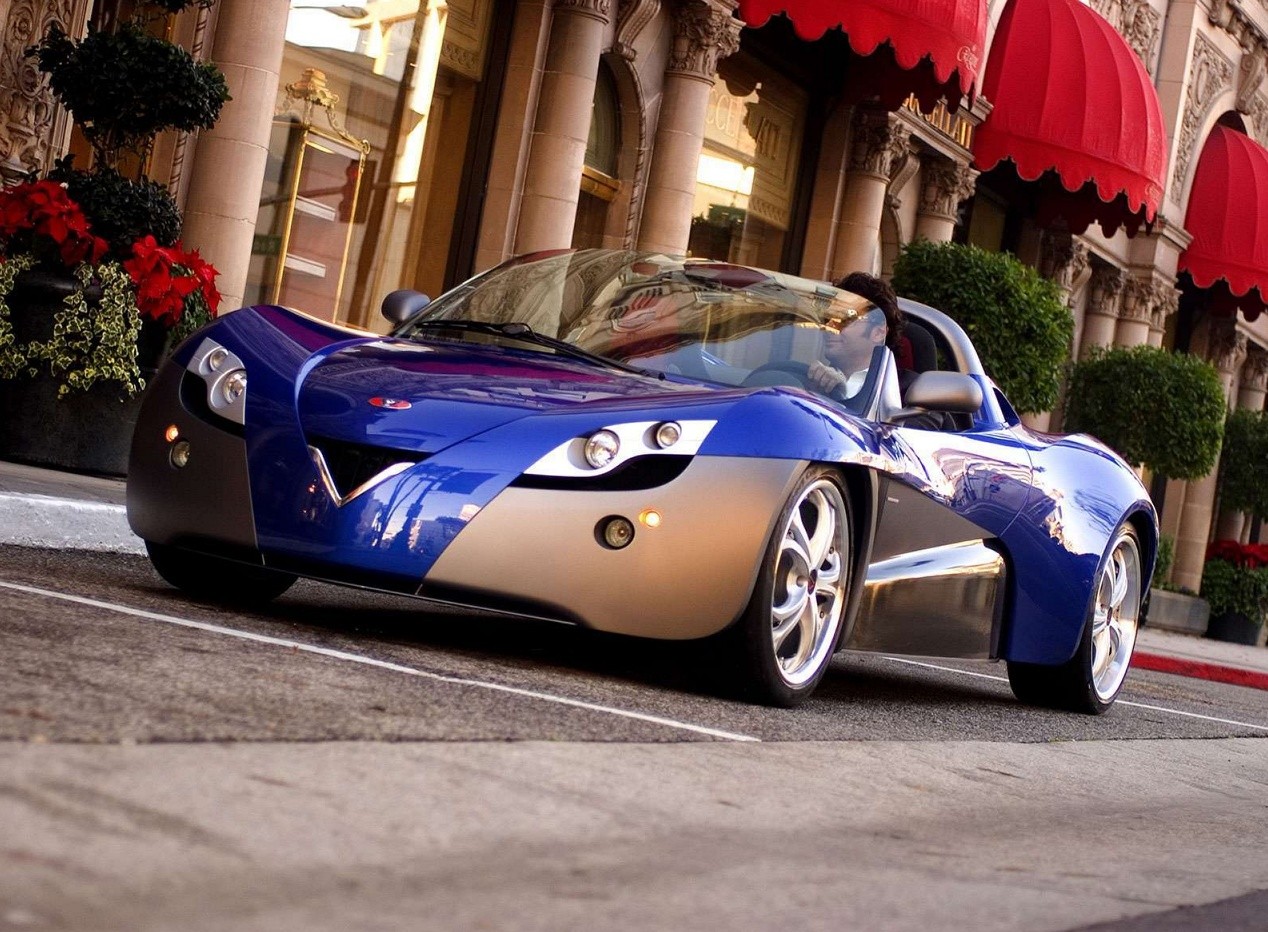
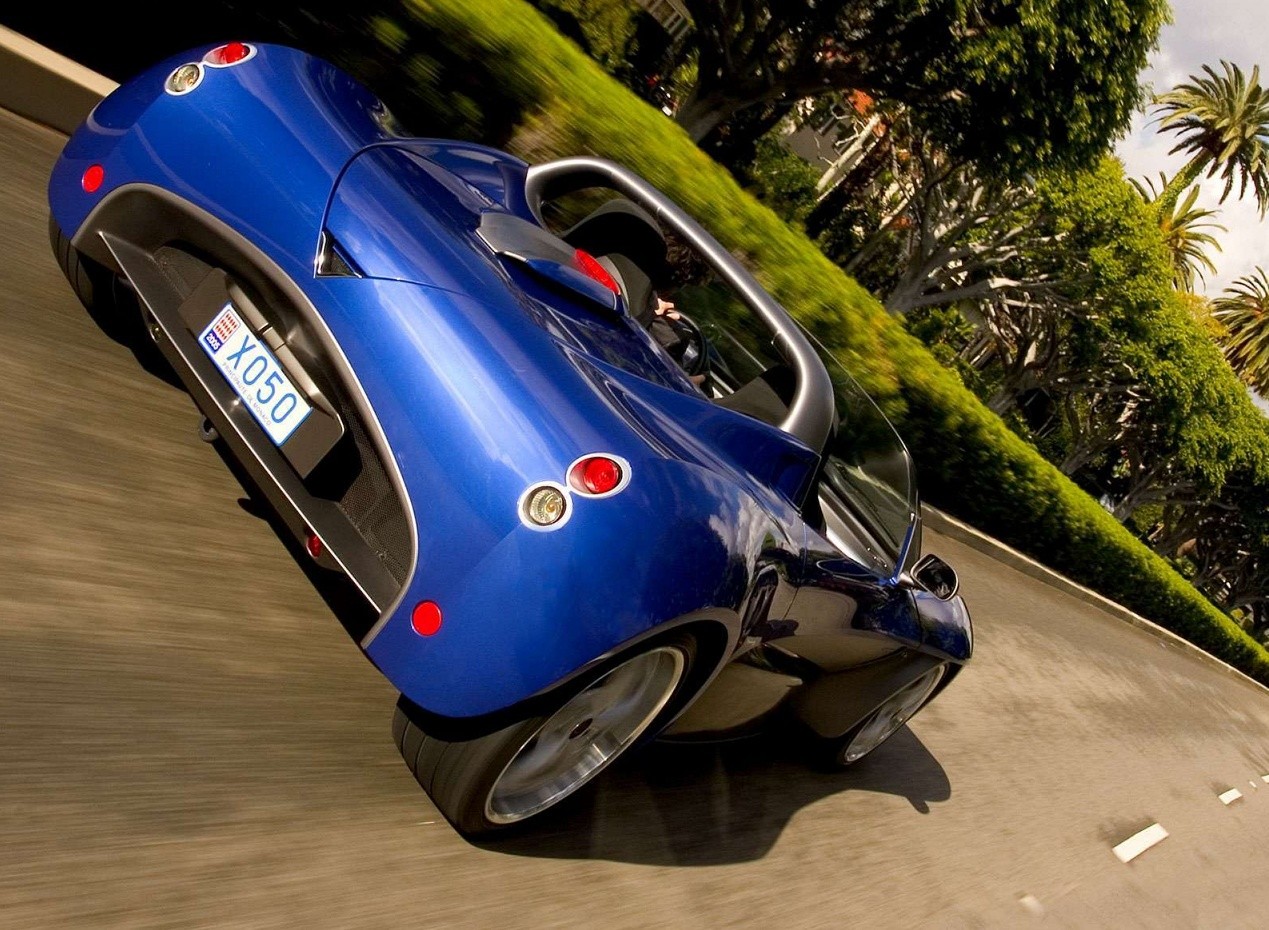
Sacha Lakic, a Paris-based designer, drew the Fétish as a low, open two-seater with a long rear deck. The centre of the car is a carbon and aluminium honeycomb structure, with extruded aluminium sections at the front and rear. Venturi itself describes the body and monocoque as carbon fibre.

The front suspension uses wishbones and the rear a multi-link layout. The car runs on 18-inch front and 19-inch rear wheels with Michelin tyres. With a kerb weight of 1,099 kg according to evo, or 1,125 kg according to Venturi, it is light for an electric car with this much battery. By our calculation, that is about 6.1 kg per kW, close to a petrol sports car of the same period.
The petrol concept of 2002 measured 3,852 mm long, 1,793 mm wide and 1,140 mm high. The electric car kept the same basic shape, although Venturi did not publish separate dimensions for it in our sources.
Performance and what the testers found
Venturi claimed 4.5 seconds from 0 to 100 km/h for the 2004 car. Its own website now quotes 4 seconds. Top speed was limited to 171 km/h (106 mph) to protect the battery. That limit is the main weakness compared with petrol rivals of the time, which reached well over 250 km/h.

The official range was about 320 km (200 miles), and a figure of 340 km at a steady 90 km/h appears on Venturi's site. A 2004 report gave 217 miles, or about 350 km. The differences come from different test speeds, so treat 300 to 350 km as a realistic band for gentle driving.
Peter Dron drove a development car for evo in July 2005. He found the performance dramatic on dry roads and the chassis well balanced, with little body roll. On the negative side, the power steering felt uneven at low speed, the brakes felt rough on the prototype and the traction control cut in often on damp roads.
Price, buyers and production numbers
The Fétish was never meant for volume. When Venturi announced its appearance at the 2005 Los Angeles show, the price was given as 660,000 US dollars, about €490,000 at the end-2004 rate. In July 2005, evo quoted 370,000 pounds sterling, about €540,000 at the time.
Venturi planned 25 cars, built largely by hand. The first sales began in November 2004 in Japan, and the cars were offered through a few showrooms in cities such as Los Angeles, Tokyo and Monte Carlo. The old 1cars text gives a price of "at least €300,000" without a date, which is far below the launch figures above.
| Source and date | Price as published | Approximate EUR at the time |
|---|---|---|
| Launch announcement, December 2004 | 660,000 US dollars | about €490,000 |
| evo, July 2005 | 370,000 pounds sterling | about €540,000 |
| Old 1cars text, undated | "at least €300,000" | as published |
The 2010 update and the Fétish legacy
Venturi launched a revised Fétish in 2010, sold from 2011. Power rose to 220 kW (299 PS), and the claimed top speed went up to 200 km/h. The claimed sprint from 0 to 97 km/h took about 4 seconds. The old 1cars text mentions a liquid-cooled battery for the later cars and a motor rated at about 300 hp, which fits this update.
The Fétish proved that a tiny company could sell an electric sports car before the large brands did. Tesla delivered its first Roadster in 2008, four years after the first Fétish sale. Venturi later turned to electric speed-record cars, Formula E and vehicles for polar and lunar exploration. To see how the Fétish's power compares with today's electric cars, browse the electric cars section or check its ratio in the power-to-weight calculator.
Who should buy a Venturi Fétish
The Fétish suits collectors of early electric cars and of rare French and Monegasque marques. It has historical weight: it shows how electric performance cars were built before modern battery packs. As a driving car it is limited by its top speed, its range and the difficulty of finding parts and specialists.

A buyer should check the battery state first, ask for the car's service history with Venturi and confirm which version it is. Parts and expertise come only from the factory in Monaco. For other rare sports cars from small makers, see the supercars section, and the full list of models is on the Venturi brand page.
Venturi Fetish in our rankings
- No. 2 of 99 · Smallest coupes (3,935 mm)
- No. 6 of 33 · Quickest French cars, 0–100 (4.5 s)
- No. 43 of 531 · Smallest cars (3,935 mm · top 9%)
- No. 13 of 85 · Lightest coupes (1,225 kg · top 16%)
- No. 14 of 70 · Most powerful French cars (220 kW · top 20%)
- No. 84 of 391 · Lightest cars (1,225 kg · top 22%)
Shorter than 97% of ranked coupes in the 1CARS catalog (No. 2 of 99).
Venturi Fetish photos 14



FAQ
Is the Venturi Fétish fully electric?
Yes. The production Fétish sold from 2004 has a battery-electric drivetrain with one rear-mounted motor. Only the 2002 show concept used a petrol engine, a 2.0-litre Renault four-cylinder that never reached customers.
How many Venturi Fétish cars were made?
Venturi planned a run of 25 cars of the 2004 electric version, built largely by hand. The later 2010 update was produced in very small numbers to order, so the total remains in the low dozens.
How much did the Venturi Fétish cost?
Venturi announced 660,000 US dollars, roughly €490,000, for the car shown in Los Angeles in 2005. In July 2005 a British magazine reported 370,000 pounds sterling, roughly €540,000.
What is the range of the Venturi Fétish?
Official figures range from about 320 km to 350 km on a full charge, depending on the test. Venturi itself quotes 340 km at a constant 90 km/h, so faster driving gives noticeably less.
How fast is the Venturi Fétish?
The 2004 car reaches 100 km/h in about 4.5 seconds and is limited to 171 km/h. The 2010 update with 220 kW raised the top speed to 200 km/h and reached 97 km/h in about 4 seconds.
Data sources
Data checked by an editor against the sources below.
- The text of this article (1cars archive)
- Wikipedia - Venturi Fetish


