 Chevrolet Tahoe
All generations, specs and history
Published Sources (2) Report an error
By Felix Hartmann, Automotive Technology & EV Contributor
- Built
- 1995–present
- Generations
- 5 · GMT400 to T1XX
Timeline
Tahoe generations
Click a generation for its own page


GMT900 and K2XX overlapped in 2013–2014, so K2XX sits on a second lane
- Tahoe GMT400 1995–2000 · SUV
- Tahoe GMT800 2000–2006 · SUV
- Tahoe GMT900 2006–2014 · SUV
- Tahoe K2XX 2013–2020 · SUV
- Tahoe T1XX Current 2020–now · SUV
Newest first · 5 generations since 1995
-
2020
-
2013
-
2006
-
2000
-
1995
All generations by year: Tahoe T1XX (2020–now) · Tahoe K2XX (2013–2020) · Tahoe GMT900 (2006–2014) · Tahoe GMT800 (2000–2006) · Tahoe GMT400 (1995–2000)
Which one is mine?
Pick the year of first registration to see which generation it is.
Check by VINThe Chevrolet Tahoe is a full-size, body-on-frame SUV with bold styling, a high-quality and roomy cabin, excellent comfort and good off-road ability. Five generations have been built, and the latest was unveiled on 10 December 2019.
In short
- Five generations: GMT400 (1995–2000), GMT800 (2000–2006), GMT900 (2006–2014), K2XX (2013–2020) and T1XX (from 2020).
- Petrol V8 engines from 4.8 to 6.2 litres, plus a 6.5 turbodiesel V8 in the first generation and a 3.0 Duramax in-line six in the fifth.
- The fifth generation has independent rear suspension, a 10-speed automatic and optional air suspension.
- Cargo space reaches 3,479 litres in the latest model.
Safety
-
T1XX · NHTSA 2025
US NCAP (NHTSA)
-
K2XX · NHTSA 2019
US NCAP (NHTSA)
-
GMT900 · NHTSA 2012
US NCAP (NHTSA)
Stars from different years and organisations are not directly comparable: test protocols change every few years.
Chevrolet Tahoe at a glance
Every Tahoe is a ladder-frame SUV with a longitudinal front engine and rear-wheel drive as standard, with four-wheel drive available. It has become popular well beyond North America. More Chevrolet models are listed in our Chevrolet catalogue.
History
In 1992 General Motors launched a new full-size SUV under two names, GMC Yukon and Chevrolet Blazer. In 1995 the Chevrolet version was renamed Tahoe, and a five-door model joined the three-door. The Tahoe has been built ever since.
Chevrolet Tahoe generations
First generation: GMT400 (1995–2000)
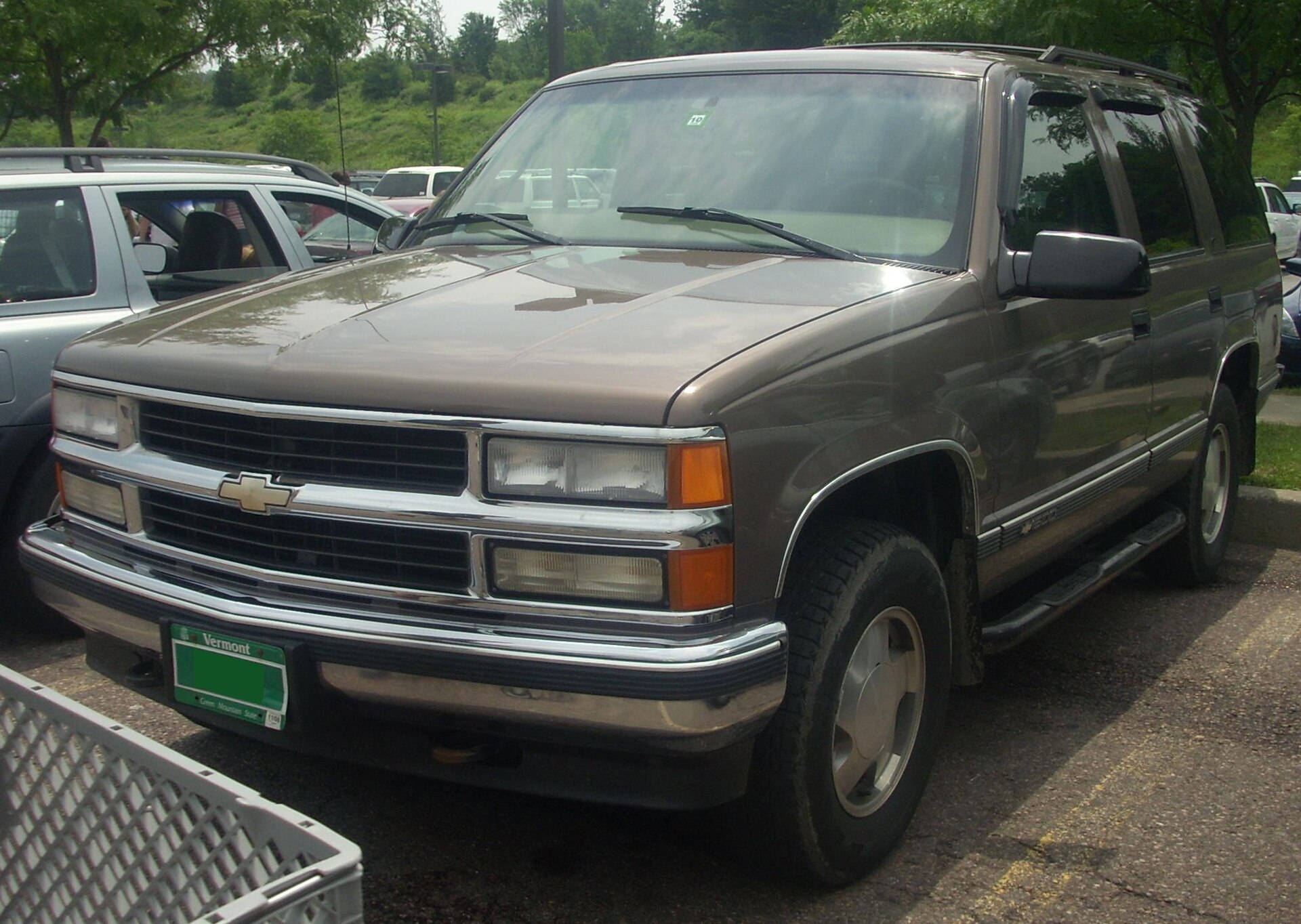
The first Tahoe (GMT400) was built in the United States for six years, with imposing styling and powerful V8 engines, as a three- or five-door SUV. Ground clearance was 200 mm. Several rectangular headlights on each side were linked by a chrome strip with the Chevrolet badge in the centre, and large windows, doors and wheels and small vertical tail lights defined the body. Inside were a four-spoke steering wheel, informative instruments, reasonably comfortable seats, a column-mounted gear selector and a practical armrest.
Petrol engines were 5.7-litre V8s with throttle-body injection and 16 valves, producing 147–190 kW (200–258 PS) and 420–441 Nm. The diesel was a 6.5-litre turbocharged V8 with 134 kW (182 PS) and 488 Nm. Gearboxes were a five-speed manual or four-speed automatic, with rear-wheel drive or part-time four-wheel drive. The ladder frame carried independent torsion-bar front suspension and a rigid rear axle on leaf springs; steering had hydraulic assistance, and the brakes were front discs and rear drums with ABS.
Second generation: GMT800 (2000–2006)
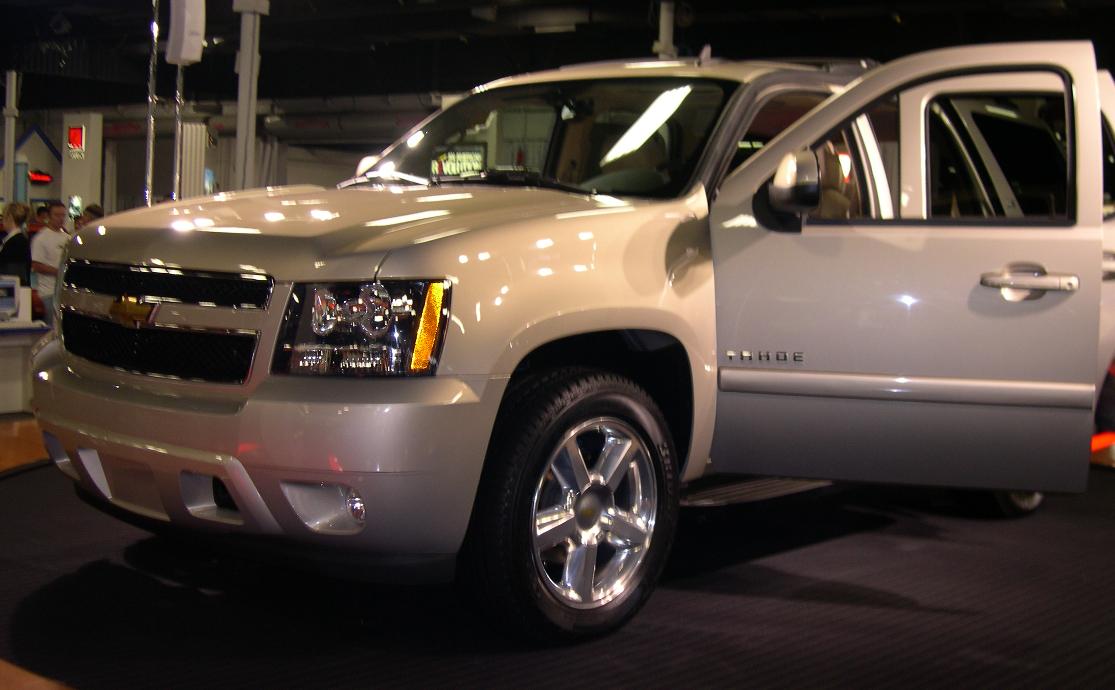
The second Tahoe arrived in 2000 as a five-door only, with powerful petrol engines; a minor update in 2004 mainly concerned the engines. The body became smoother and rounder while the front stayed close to its predecessor. A stronger bumper with small fog lamps, large wheel arches, twin side-hinged rear doors and slightly larger tail lights were new, and ground clearance was unchanged. The cabin was more comfortable, with a nicer steering wheel and better seats.
Two naturally aspirated V8s of 4.8 and 5.3 litres with multi-point injection and 16 valves produced 205–220 kW (275–295 hp) and 393–449 Nm, paired with a four-speed automatic. Drive went to the rear wheels or to all four via a system with low range. The GMT800 platform used a strong ladder frame, independent torsion-bar front suspension and a rigid rear axle, power steering and disc brakes all round (ventilated at the front).
Third generation: GMT900 (2006–2014)
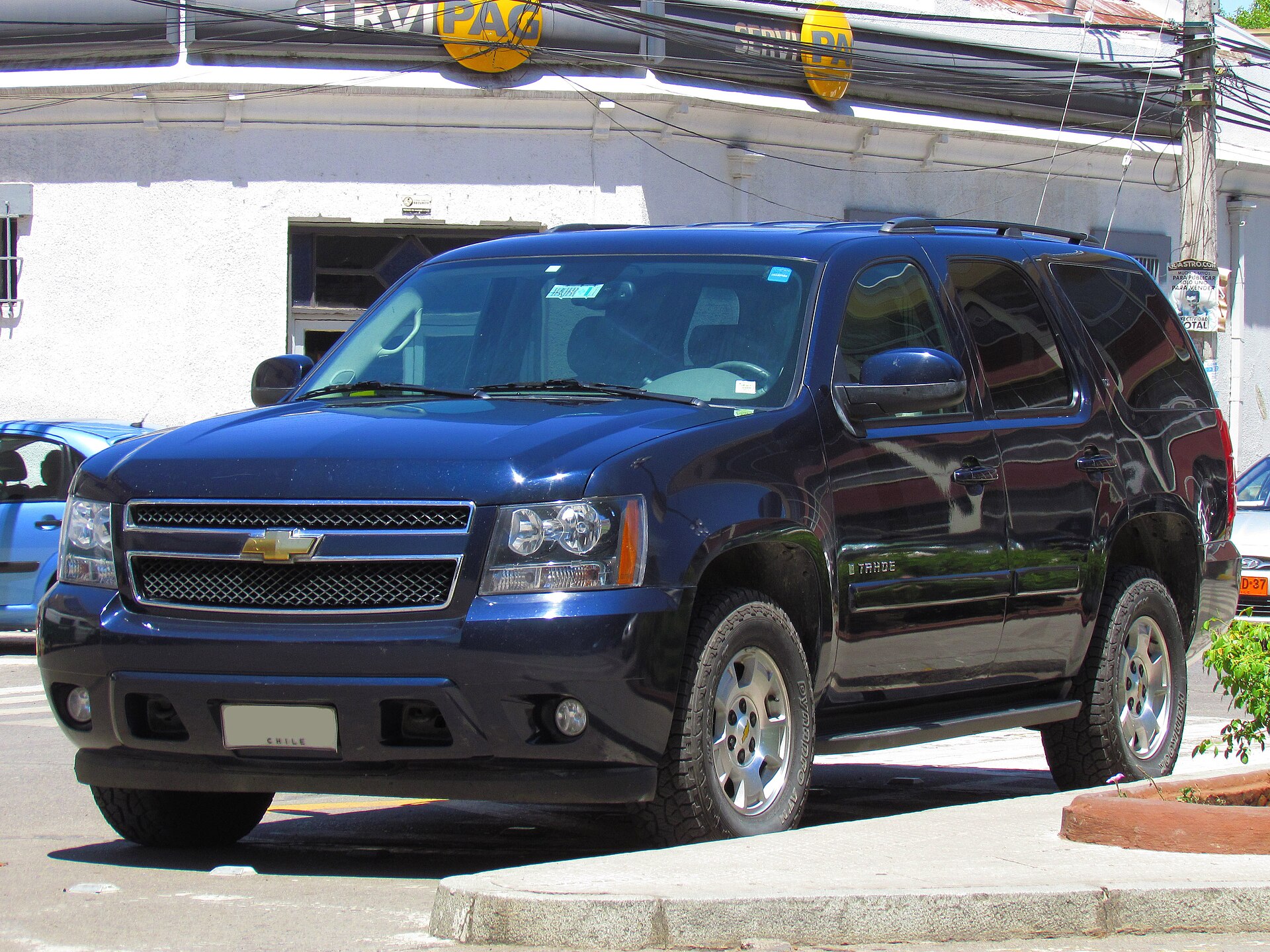
The third Tahoe stayed on sale for nine years, offering an imposing look, a spacious cabin, rich equipment and very powerful engines; it was updated in 2010. Simple, strict shapes, neat lights, a massive grille, big bumpers and rounded-square wheel arches with 20-inch wheels give it a certain elegance for such a giant. Ground clearance is 231 mm.
The cabin is comfortable but spoiled by a lot of hard plastic and mediocre build quality, while the design is decent: a chunky four-spoke multifunction wheel, clear instruments and a solid centre console with logically arranged controls. There is plenty of space in every row, but the seats are shapeless. The boot holds 480 litres, 1,162 litres with the third row folded and 2,269 litres with the second row power-folded too. A full-size spare sits under the floor.
A 5.3-litre naturally aspirated V8 with multi-point injection, 16 valves and cylinder deactivation produced 238 kW (324 PS) and 470 Nm, with a six-speed automatic and a four-mode drive system: 2HI (rear-wheel drive), Auto 4WD (adapting automatically to conditions), 4HI (permanent four-wheel drive) and 4LO (low range for serious off-roading). It reached 100 km/h in 9 seconds and 192 km/h, using about 13.5 l/100 km. Other versions had 4.8- and 6.2-litre V8s with 217–291 kW (295–396 PS) and 414–565 Nm, and a hybrid with 244 kW (332 PS). Front suspension used double wishbones and coil springs, and the rigid rear axle had coil springs; more expensive versions had two-mode adaptive Autoride damping. Steering was rack-and-pinion with hydraulic assistance.
Fourth generation: K2XX (2013–2020)
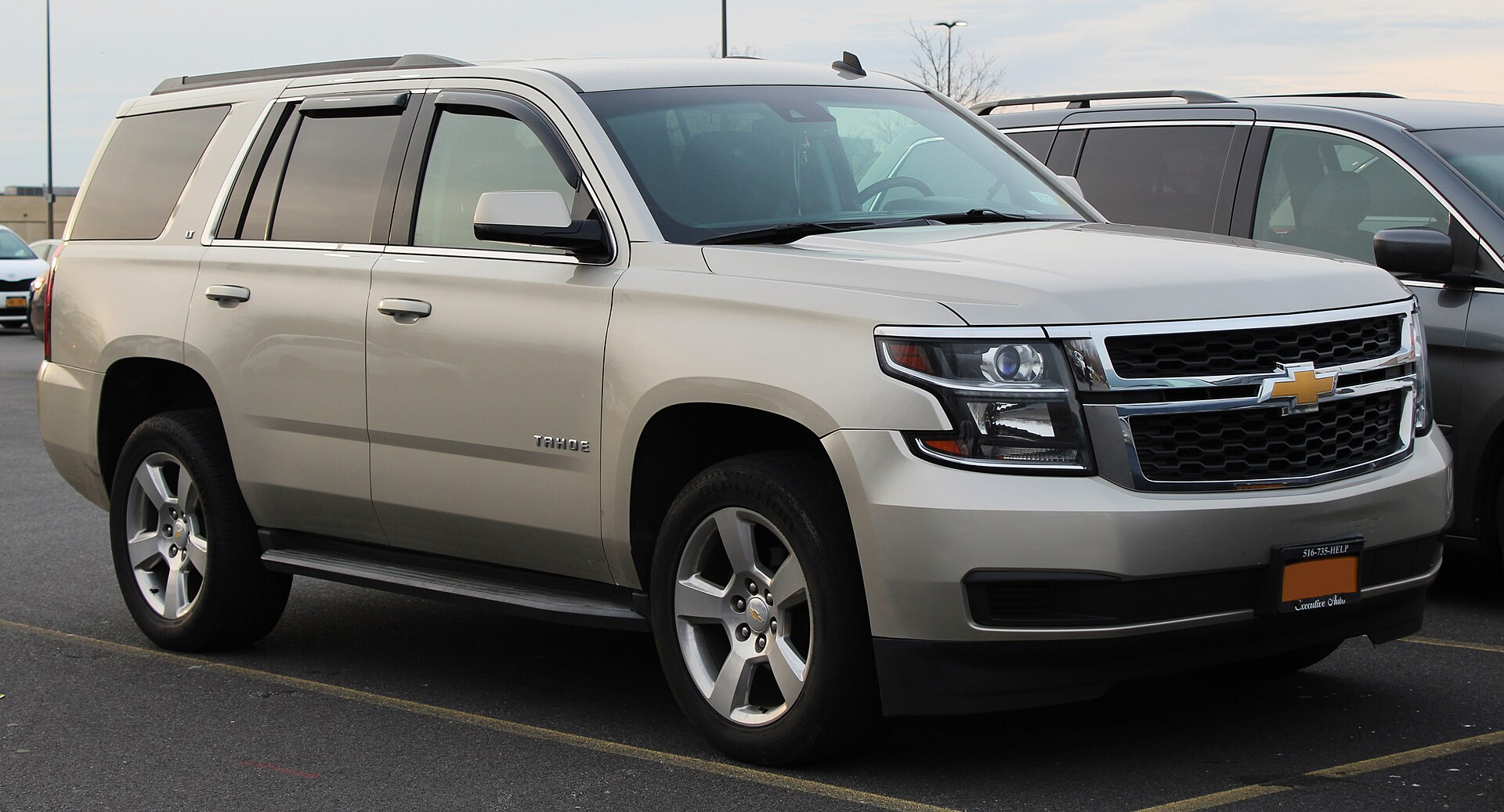
The fourth Tahoe was unveiled in September 2013 and updated in summer 2016, with striking styling, an expensive-feeling and roomy cabin, powerful engineering and rich equipment. It is a working off-roader at heart, yet its smooth lines make it handsome rather than boxy or threatening. Huge headlights (bi-xenon rather than LED) flank a massive chrome grille, with chrome above the fog lamps. Large wheel arches, big chrome mirrors and 200 mm of ground clearance shape the profile, and the rear has high-set lights, a large protruding bumper, a big third brake light on the spoiler and a power tailgate.
The cabin feels stylish and expensive. The four-wheel-drive control falls naturally to the driver's left hand, and the instruments, which look crowded at first, prove well thought-out, with coloured lighting and a colour trip-computer display. Leather and soft plastics cover the areas you touch, and the pedals are adjustable. An 8-inch MyLink touchscreen sits above three-zone climate controls, and the large armrest hides a wireless phone charger. Three passengers fit easily in the second row, which has its own vents and climate controls and an almost flat floor; the third row is tighter and uncomfortable for tall people. The tailgate remembers its opening angle and has an opening window. The boot holds 460 litres with all seats in place and 2,682 litres with a flat floor when the second and third rows are folded.
The engine is the 6.2-litre L86 V8 of the Small Block (EcoTec3) family, with direct injection, variable valve timing, a variable-displacement oil pump and cylinder deactivation. After the update it produced 313 kW (426 PS) and 621 Nm, up from 301 kW (409 PS) and 610 Nm, using 12.6 l/100 km. An eight-speed automatic drives an all-wheel-drive system with an electromagnetic clutch for the front axle (which can be locked), an automatic transfer case with low range and a limited-slip rear differential. It reaches 100 km/h in 6.7 seconds and is limited to 180 km/h. The body, a third of it high-strength steel with an aluminium bonnet and tailgate, sits on a ladder frame. Front suspension uses aluminium A-arms and the rear a multi-link rigid axle; higher trims have Magnetic Ride Control dampers. Steering has variable electric assistance, and all four brakes are ventilated discs.
Fifth generation: T1XX (2020 onwards)
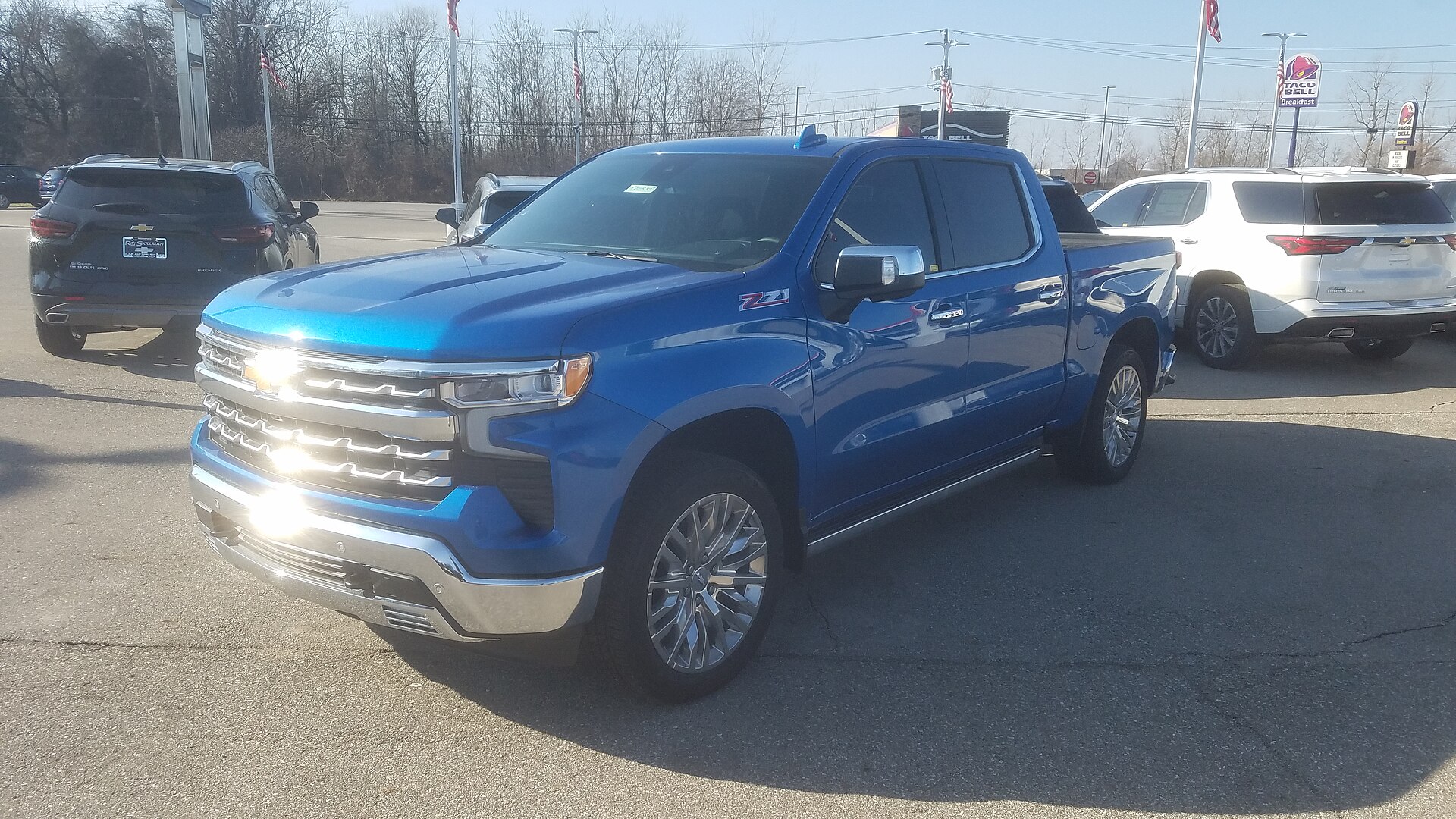
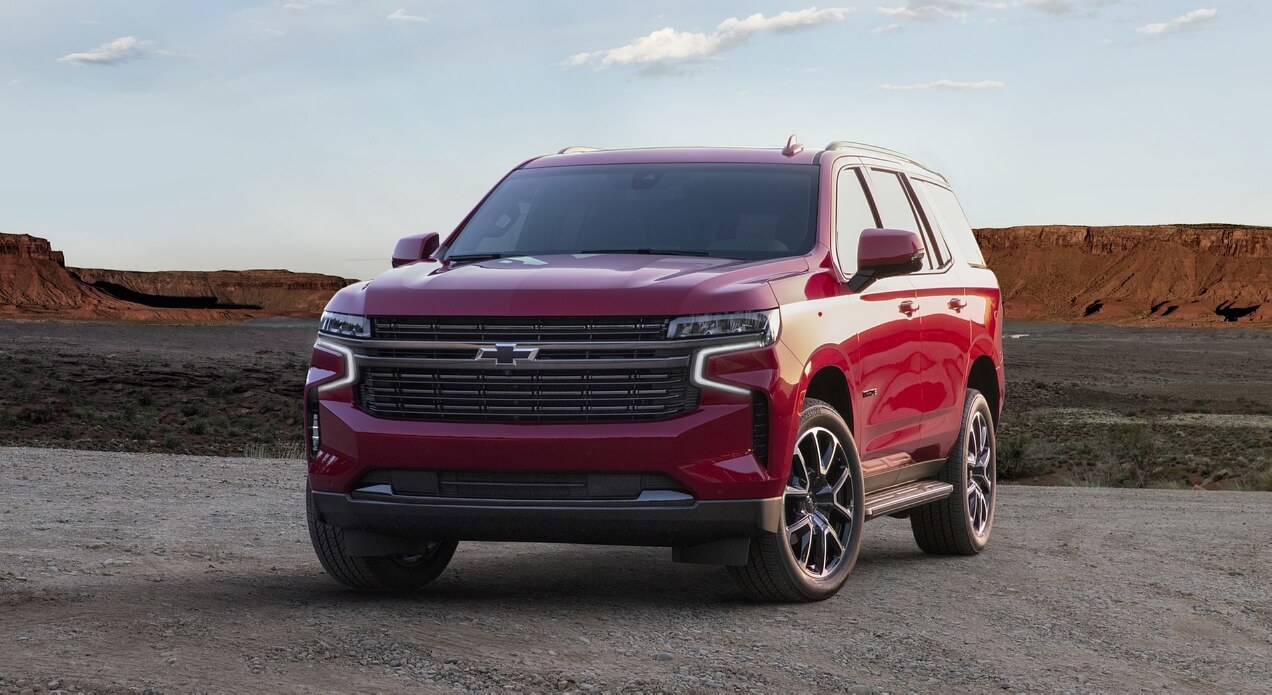
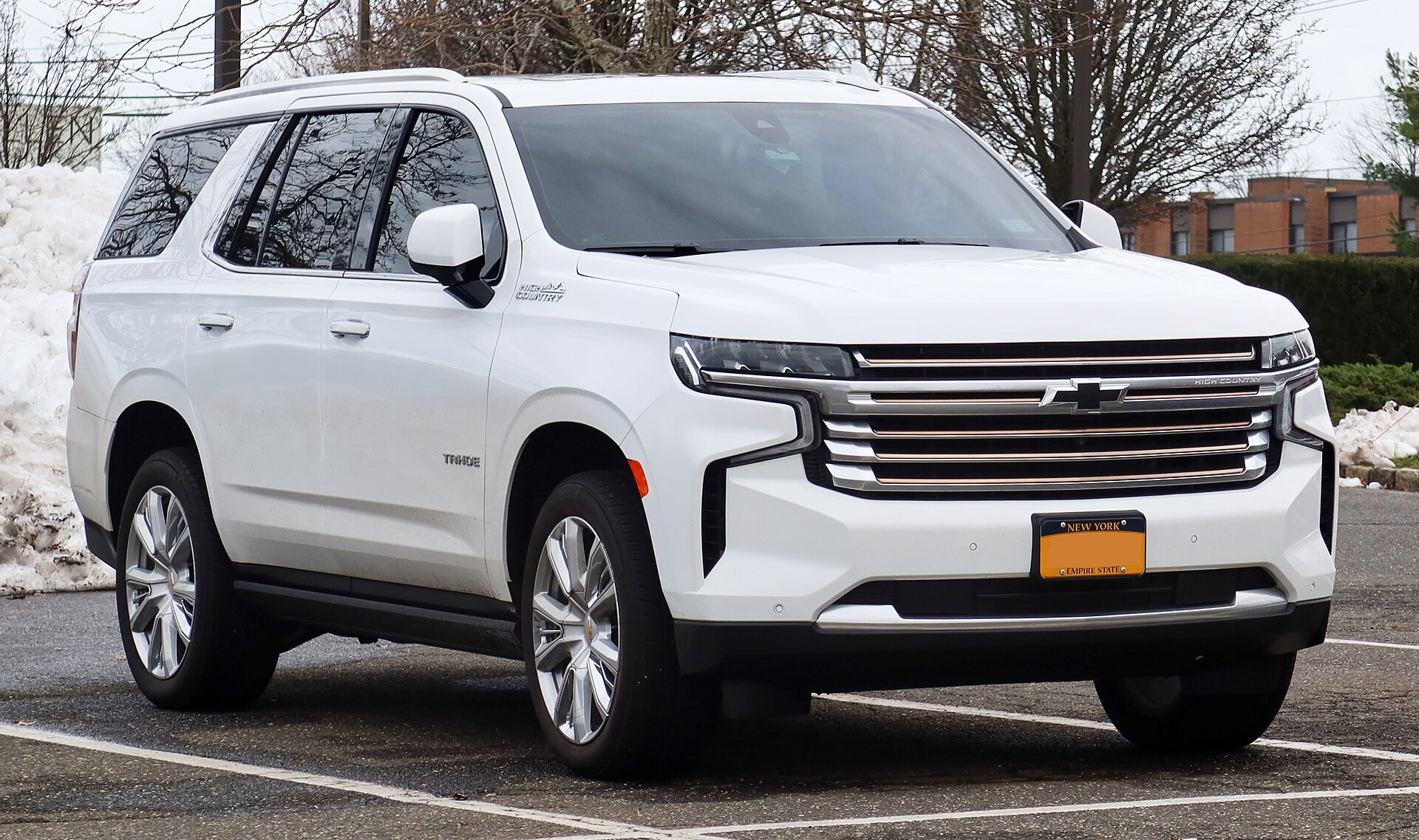
The fifth Tahoe was unveiled on 10 December 2019 at a special event in Detroit, with monumental styling, a premium cabin and high-performance engineering. The front end is taller and more upright, with a small channel in the bonnet, a large rectangular chrome grille and simple headlights with LED lamps as standard. A sculpted bumper has a long auxiliary intake and fog lamps. Large rectangular windows with wide chrome surrounds, a thick pillar between the doors and windows, square wheel arches with extensions and large side steps define the profile, with 18-inch wheels (22-inch on expensive versions). Vertical tail lights on the corner pillars echo earlier generations.
The interior uses leather, soft plastics, quality fabrics, metal and, on some versions, real wood. Six analogue dials surround a 4.2- or 8-inch colour display, and a 10-inch touchscreen is set into the dashboard alongside vents, physical buttons and controllers. Front seats have strong bolstering, electric adjustment and heating, with ventilation and massage on higher trims; a wide, high centre tunnel ends in a huge armrest with a cool box. Seven adults fit easily; the third row is a three-seat bench with heating and adjustable headrests but less comfort. The boot holds 722 litres with all seats in use, 2,058 litres with the third row folded and 3,479 litres with the second row folded too, with a flat floor and a spare underneath.
Engines and transmissions (fifth generation)
| Engine | Power (kW / PS) | Torque |
|---|---|---|
| 5.3 V8 petrol, direct injection, cylinder deactivation | 265 kW / 360 PS | 519 Nm |
| 6.2 V8 petrol, direct injection, cylinder deactivation | 313 kW / 425 PS | 623 Nm |
| 3.0 Duramax in-line six turbodiesel, common rail, 24 valves | 207 kW / 281 PS | 623 Nm |
All engines have start/stop. The 10-speed Hydra-Matic 10L80 automatic drives the rear wheels, with optional four-wheel drive using a multi-plate clutch for the front axle and a low range. The T1XX platform uses a ladder frame and a body largely made of high-strength steel. Suspension is independent at both ends — double wishbones at the front and a multi-link rear with three lateral links and one large trailing link per side — with passive dampers, coil springs and anti-roll bars as standard. Magnetic Ride Control or Air Ride Adaptive Suspension are optional; the latter varies ground clearance over a 101 mm range and levels the body at each wheel. Steering has active electric assistance, and all four brakes are ventilated discs with ABS, EBD and brake assist.
Safety and equipment
The fifth generation offers adaptive cruise control with collision avoidance and automatic braking, active lane keeping and lane-change assistance, rear cross-traffic detection, a Safety Alert driver's seat, a rear camera, front and rear parking sensors, a front centre airbag and anti-theft protection. Standard equipment includes LED headlights, tail lights and running lights, fog lamps, a multifunction wheel, 18-inch wheels, climate control, a light sensor, the 10-inch infotainment system, start/stop, front and side airbags, a suite of driver aids and LATCH child-seat anchors.
Key specifications by generation
| Parameter | GMT400 | GMT800 | GMT900 | K2XX | T1XX |
|---|---|---|---|---|---|
| Years | 1995–2000 | 2000–2006 | 2006–2014 | 2013–2020 | 2020 onwards |
| Petrol power (kW / PS) | 147–190 / 200–258 | 205–220 / 279–299 | 217–291 / 295–396 | 301–313 / 409–426 | 265–313 / 360–425 |
| Gearbox | 5MT / 4AT | 4AT | 6AT | 8AT | 10AT |
| Ground clearance | 200 mm | 200 mm | 231 mm | 200 mm | — |
| Max cargo | — | — | 2,269 l | 2,682 l | 3,479 l |
Strengths and weaknesses
Owners of earlier generations praise the Tahoe's looks, off-road ability, four-wheel drive, powerful engines, generous interior space, large boot, comfortable cabin and sound insulation. They criticise the hard suspension, interior materials and high fuel consumption. Rivals include the Ford Expedition, Nissan Armada (Patrol), Toyota Sequoia, Jeep Wagoneer and, at the luxury end, its own Cadillac Escalade sibling.
Chevrolet Tahoe evolution in numbers
Did you know?
- The Chevrolet Tahoe has been around for 31 years: 5 generations in our catalog since 1995.
- The longest-running generation is the Tahoe GMT900 (2006–2014): 8 years.
Image credits · Photos from Wikimedia Commons under free licences
- Chevrolet Tahoe GMT400 · Photo: Bull-Doser / Wikimedia Commons, Public domain
- Chevrolet Tahoe GMT800 · Photo: No machine-readable author provided. Sfoskett~commonswiki assumed (based on copyright claims). / Wikimedia Commons, CC BY-SA 3.0
- Chevrolet Tahoe GMT900 · Photo: order_242 from Chile / Wikimedia Commons, CC BY-SA 2.0
- Chevrolet Tahoe K2XX · Photo: Kevauto / Wikimedia Commons, CC BY-SA 4.0
- Chevrolet Tahoe T1XX · Photo: Kevauto / Wikimedia Commons, CC BY-SA 4.0
Chevrolet Tahoe in our rankings
- No. 61 of 912 · Longest-running car nameplates (31 years · top 7%)
- No. 48 of 305 · Oldest car models still on sale (31 years · top 17%)
- No. 74 of 345 · Cars with the most generations (5 generations · top 25%)
In production longer than 93% of ranked nameplates in the 1CARS catalog (No. 61 of 912).
FAQ
How many generations of the Chevrolet Tahoe are there?
Five: 1995, 2000, 2006, 2013 and 2020.
What engines does the latest Chevrolet Tahoe have?
A 5.3 V8 with 265 kW (360 PS), a 6.2 V8 with 313 kW (425 PS) and a 3.0 Duramax diesel with 207 kW (281 PS).
How much cargo space does the Chevrolet Tahoe have?
The fifth generation offers 722 litres with all seats in use and up to 3,479 litres with the second and third rows folded.
Does the latest Tahoe have independent rear suspension?
Yes. The fifth generation has independent suspension at both ends, with optional Magnetic Ride Control or adaptive air suspension.
Data sources
Data checked by an editor against the sources below.
- Wikipedia — Chevrolet Tahoe
- NHTSA 5-Star Safety Ratings (US NCAP) — U.S. Government work, public domain