BMW 7 Series (G11/G12) — the Sixth Generation
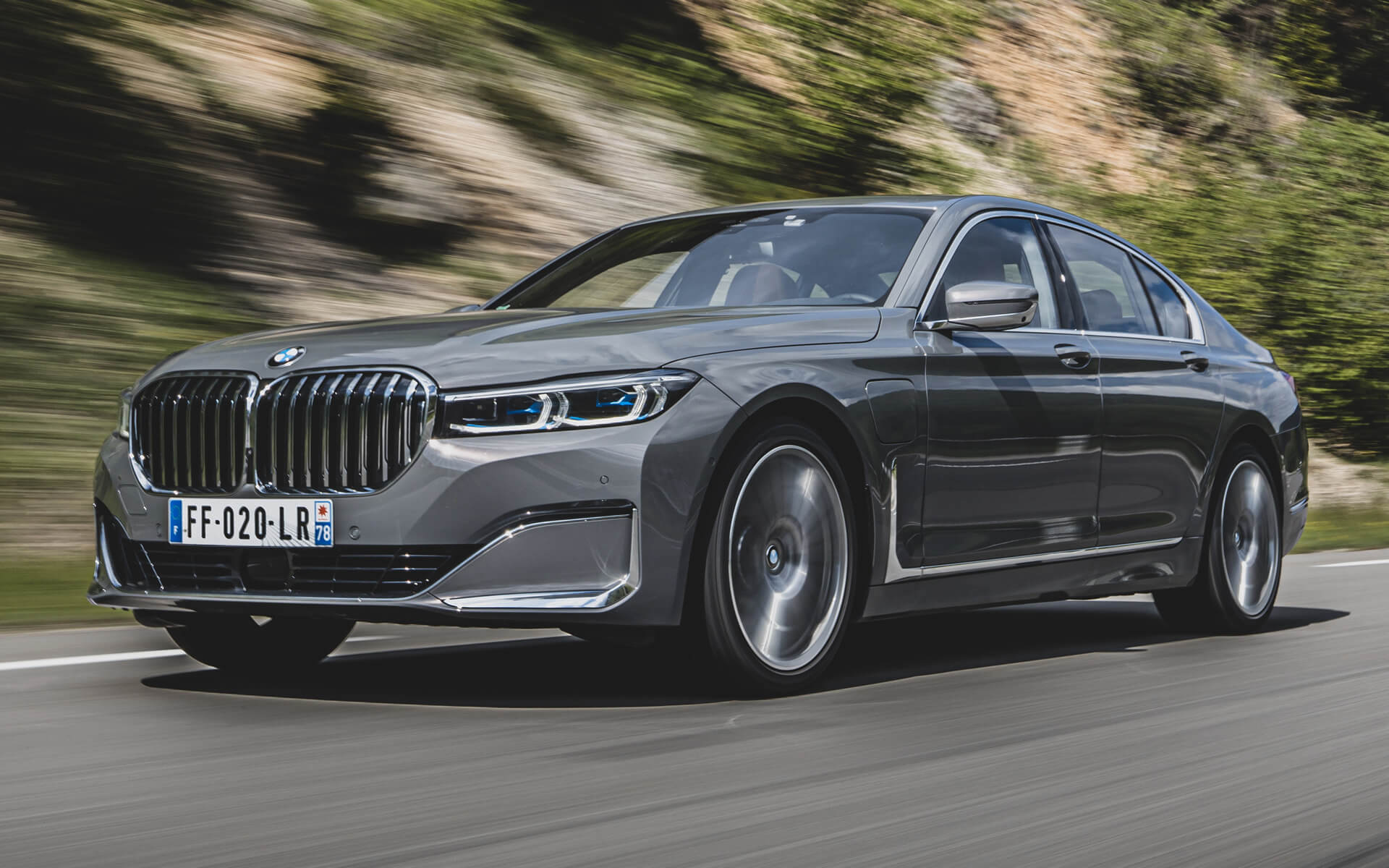
The sixth-generation BMW 7 Series — the long-wheelbase G12 and the standard G11 — was the Bavarian brand's flagship sedan from 2015 until the seventh-generation G70 took over in 2022. It was officially revealed in June 2015 and made its public debut at the Frankfurt motor show that September. Its size and proportions changed little from its predecessor, but technologically it was a major step forward. A facelifted version was unveiled on 16 January 2019 with a bolder exterior, a higher-quality interior, revised suspension, improved petrol and diesel engines and a plug-in hybrid, the 745e.
Key takeaways
- Revealed in June 2015, facelifted in January 2019; built in Dingolfing, Germany.
- CLAR platform with a Carbon Core body mixing high-strength steel, aluminium and carbon fibre; kerb weight 1,825–1,915 kg.
- Example engines: 730d with 195 kW (265 PS), 740d with 235 kW (320 PS), 750i with a 4.4-litre V8 and 331 kW (450 PS).
- Air suspension, an eight-speed automatic and optional Laserlight headlights with a range of up to 600 m.
BMW 7 Series G11/G12 overview: years, platform, where built
The G11/G12 is built at BMW's plant in Dingolfing. It is the first 7 Series on the modular CLAR platform designed for longitudinal engines, and its Carbon Core body structure combines high-strength steel, aluminium and a substantial amount of carbon fibre. The body design earned BMW 42 out of 50 points at the EuroCarBody conference — the highest score of any company since the event began in 2002. Earlier BMW flagships include the BMW 745i; the wider range is in our BMW catalogue.
Size at a glance
| Dimensions | BMW 7 Series G70 |
|---|---|
| Length | 5,391 mm212.2 in |
| Width | 1,950 mm76.8 in |
| Height | 1,544 mm60.8 in |
| Wheelbase | 3,215 mm126.6 in |
Design and body styles
The facelifted car has BMW's signature kidney grille in a much larger form, combined with slim LED headlights and LED fog lamps. The "angel eye" light signatures are no longer round but have a more complex, angular shape. The front bumper looks as if it is cast in one piece with the body, and parts of the lights extend towards the wheel arches, making the car look wider. Small partitions in the grille keep large debris out of the engine bay.
Optional Laserlight headlights, recognisable by the "Laserlight" lettering and blue inserts, adapt their beam to avoid dazzling oncoming drivers and reach up to 600 m, compared with 300 m for the standard units. The flanks are low, long and graceful, with a few clean lines running from front to rear lights and a side air vent that also reduces lift. Wheels range from 17 to 21 inches depending on specification. Cameras in the chrome mirror housings provide an all-round view. Ground clearance is 135 mm. At the rear there are large LED tail lights joined by a chrome strip, an electrically operated boot lid and shaped chrome exhaust trims. The sedan is offered in two wheelbases: the standard G11 and the long G12, badged with an "L".
Interior, equipment and technology
The cabin combines BMW's family style with careful ergonomics and very high build quality, using fine leather, real wood and aluminium. A multifunction steering wheel faces a fully digital instrument display. The front armrest opens with twin lids to take large items. A 10.25-inch iDrive screen dominates the centre console, above a touch-sensitive panel for the multi-zone climate control with two rotary temperature controls.
An infrared camera in the roof lining enables gesture control: drivers can accept a call with a tap in the air, scroll through pages or assign their own gestures to functions. All seats can be heated and ventilated. Rear passengers can have massage seats, an entertainment system with two large screens, folding tables, separate climate controls and a removable tablet with a 7-inch display. The boot holds 515 litres, more than in the previous generation; because the car runs on run-flat tyres, there is no spare wheel.
Engines and transmissions
| Model | Engine | Power (kW / PS) | Torque | 0–100 km/h | Combined consumption |
|---|---|---|---|---|---|
| 730d xDrive | 3.0 six-cylinder turbodiesel | 195 kW / 265 PS | 620 Nm | 5.8 s | 4.8 l/100 km |
| 740d xDrive | 3.0 six-cylinder turbodiesel | 235 kW / 320 PS | 680 Nm | 5.2–5.3 s | 4.9 l/100 km |
| 750i xDrive | 4.4 V8 petrol, aluminium | 331 kW / 450 PS | 650 Nm | 4.4 s | 8.1–8.3 l/100 km |
| 745e | Plug-in hybrid | — | — | — | — |
Long-wheelbase versions (730Ld, 740Ld, 750Li) take 0.1 seconds longer to reach 100 km/h. Top speed is electronically limited to 250 km/h. Every engine is paired with an eight-speed Steptronic automatic. The xDrive all-wheel-drive versions engage the front axle through a multi-plate clutch, while the base car is rear-wheel drive.
Chassis
The suspension is fully independent, with double wishbones at the front and a five-link rear axle, all made of aluminium. Air suspension on all four wheels and electronically controlled dampers are standard. Electric power steering uses a variable-ratio rack, and Integral Active Steering, which turns the rear wheels by up to 3 degrees, is optional. Large ventilated disc brakes are supported by a range of electronic driver aids.
Dimensions and weight
| Parameter | Value |
|---|---|
| Kerb weight | 1,825–1,915 kg |
| Ground clearance | 135 mm |
| Boot | 515 l |
| Wheels | 17–21 in |
| Top speed | 250 km/h (limited) |
Safety and driver assistance
Standard equipment includes six airbags, Dynamic Stability Control, front and rear parking sensors, rain and light sensors, tyre-pressure monitoring, cruise control, LED headlights, air suspension, a power boot lid, memory seats and iDrive navigation. Options include blind-spot monitoring, active cruise control, a collision-avoidance system, a rear camera and surround view, night vision, automatic parking, a heated steering wheel, electrically adjustable rear seats, four-zone climate control, two sunroofs, a rear entertainment system and Laserlight headlights. Equipment is broadly the same across engine versions, with the long-wheelbase car better equipped.
Strengths and weaknesses
Owners praise the high level of comfort, precise and sporty handling, strong performance — speed hardly registers inside — and the modern, sporting design. The cabin looks expensive, the audio system is excellent, and the diesel engines combine economy with brisk acceleration. The car holds the road confidently, brakes very well and offers a high level of safety and a large boot. On the downside, the petrol engines are much thirstier, and maintenance, parts, tax and insurance are expensive. The main rivals are the Mercedes-Benz S-Class and the Audi A8.
FAQ
When was the BMW 7 Series G11/G12 launched?
It was revealed officially in June 2015 and shown to the public at the Frankfurt motor show in September 2015. The facelift was unveiled on 16 January 2019.
What is the difference between the G11 and the G12?
The G11 is the standard-wheelbase sedan; the G12 is the long-wheelbase version, badged with an "L" (for example 740Ld or 750Li).
What is Carbon Core?
BMW's body structure for this generation, combining high-strength steel, aluminium and carbon fibre to keep weight down to 1,825–1,915 kg.
How fast is the BMW 750i G11?
Its 4.4-litre V8 with 331 kW (450 PS) takes it from 0 to 100 km/h in 4.4 seconds; top speed is limited to 250 km/h.
How far do BMW Laserlight headlights reach?
Up to 600 m, twice the range of the standard headlights.