Jeep: History, Landmark Models and Ownership
Jeep began in 1940–1941 as a US Army design competition for a light four-wheel-drive car, won by Willys-Overland with the Willys MB. About 640,000 wartime vehicles were built with Ford, the civilian CJ followed in 1945, and the brand has since passed through Kaiser, AMC and Chrysler to Stellantis, selling more than one million vehicles worldwide in 2025.

Key takeaways
- American Bantam built the first prototype in 1940; Willys-Overland's MB, also built by Ford as the GPW, became the standard design.
- The CJ (1945–1986) turned the military car into a civilian product, and the Wrangler has continued that line since 1986–87.
- Owners: Willys-Overland, Kaiser (1953), AMC (1970), Chrysler (1987), DaimlerChrysler, Cerberus, Fiat Chrysler and, since 2021, Stellantis.
- The Grand Cherokee was the best-selling Jeep in the US in 2025, with 210,082 sales.

Jeep at a glance
Jeep is an American brand of four-wheel-drive vehicles and SUVs owned by Stellantis through its US arm, FCA US. Key facts as of October 2026:
| Fact | Value |
|---|---|
| Origin | 1940–1941, US Army light vehicle competition |
| First civilian model | CJ-2A, 1945 |
| "Jeep" trademark | Registered to Willys-Overland in June 1950 |
| Home plant | Toledo, Ohio, since 1945 (today the Wrangler plant) |
| Parent company | Stellantis, since 2021 |
| Sister brands in the US | Chrysler, Dodge, Ram |
| US sales, 2025 | 593,401 vehicles |
| Global sales, 2025 | More than one million vehicles |
1940–1945: the Army competition and the Willys MB
The Jeep was created to a 1940 US Army specification for a light four-wheel-drive reconnaissance car. The Army asked 135 companies, but only two answered within the 49-day deadline: American Bantam and Willys-Overland.

Bantam moved first: its engineer Karl Probst started work on 17 July 1940, and the Army tested the Bantam prototype from 23 September 1940. About 2,700 of the production Bantam BRC-40 are usually quoted as built.
The Army then ordered around 1,500 test vehicles each from Bantam, Ford and Willys. The weight limit was 1,111 kg (2,450 lb). Willys won the production contract, largely on the strength of its L134 "Go Devil" engine: a 2.2-litre four-cylinder rated at 45 kW (60 hp gross). Ford was brought in to build the same design under licence as the GPW, and the slat grille became the standard front end.
Wartime production by Willys and Ford is usually given as about 640,000; the Studebaker National Museum puts the MB and GPW total at 639,235 and all jeeps built from 1940 to 1945 at 647,925.
Where the name "Jeep" comes from
The origin of the name is uncertain. It began as Army slang, and the most common theory links it to "GP", read as "General Purpose", although no period document proves this. The word reached the wider public through a newspaper story of 19 February 1941 about a demonstration on the steps of the US Capitol in Washington. Willys-Overland filed for the trademark in 1943.
Who invented the Jeep?
Credit for the design was disputed after the war. In 1948 the US Federal Trade Commission ruled that Willys could not claim to have created the vehicle alone; Bantam is credited with the quarter-ton concept itself. Willys engineer Delmar "Barney" Roos received the design patent for the front of the vehicle.
1945–1970: from the CJ to the Wagoneer
After 1945 Willys-Overland turned the military design into the Civilian Jeep, or CJ, built in Toledo, Ohio, which has been home to Jeep production ever since. The CJ-2A of 1945 is recorded at 214,760 units and the CJ-3A of 1949–1953 at 131,843.

The CJ-5, introduced in 1954–55, ran until 1983 with 603,303 built. Later models followed: the CJ-7 (1976–1986, 379,299 built) and the long-wheelbase CJ-8 Scrambler (1981–1986). More than 1.5 million CJs had been made when the series ended after 1986.
Ownership changed in 1953, when Kaiser Motors bought Willys-Overland; from 1963 the company traded as Kaiser-Jeep. Its best-known new product was the Wagoneer (SJ), introduced in November 1962 as a 1963 model. Styled by Brooks Stevens, the 1963 model was offered with an automatic gearbox and independent front suspension. The better-equipped 1966 Super Wagoneer is often described as a forerunner of the luxury SUV.
1970–1987: AMC and the Renault years
American Motors Corporation (AMC) bought Kaiser's Jeep operations in 1970. In 1971 the commercial and military vehicle business was moved into a separate company, AM General.

AMC introduced Quadra-Trac permanent four-wheel drive in 1973 and the CJ-7 in 1976. From 1979 the French carmaker Renault invested in AMC, and by 1986 it held about 46–47% of the company.
The key model of this period was the Cherokee XJ, launched in 1984 as Jeep's first all-new design since 1963. Its "Uniframe" body integrated the frame into a unibody shell, a first for an American off-road vehicle. From 1987 it could be ordered with AMC's 4.0-litre straight-six, and production from 1983 to 2001 is usually put at about 3 million. The Wrangler YJ replaced the CJ in 1986–87.
1987–2007: Chrysler, the Grand Cherokee and DaimlerChrysler
Chrysler acquired AMC in 1987, and Jeep was the only AMC brand it kept. Chrysler's Lee Iacocca called Jeep "the best-known automotive brand name in the world".

The Grand Cherokee (ZJ) was shown at the 1992 Detroit motor show and went on sale in April 1992 as a 1993 model. Around 1.65 million ZJs were sold up to 1998. The WJ (1999–2004) and WK (2005–2010) followed, and the Grand Cherokee is built at plants in Detroit. The last Grand Wagoneer was built on 21 June 1991.
The Wrangler TJ arrived for the 1997 model year, replacing the YJ, and stayed in production until 2006. In 1998 Chrysler merged with Daimler-Benz to form DaimlerChrysler, which sold Chrysler, and with it Jeep, to the investment firm Cerberus in 2007. The first Compass, a smaller crossover, appeared in 2006–07.
2007–2021: Fiat Chrysler and global expansion
The Wrangler JK of 2007–2018 introduced the four-door Wrangler Unlimited. Fiat later took control of Chrysler, and FCA US, the American arm of Fiat Chrysler Automobiles, was formed on 15 December 2014.

Under Fiat, Jeep began building its own models in Europe and South America: the Renegade, a small SUV shown at the Geneva show in March 2014, went into production in late August 2014 at Melfi in Italy and Goiana in Brazil.
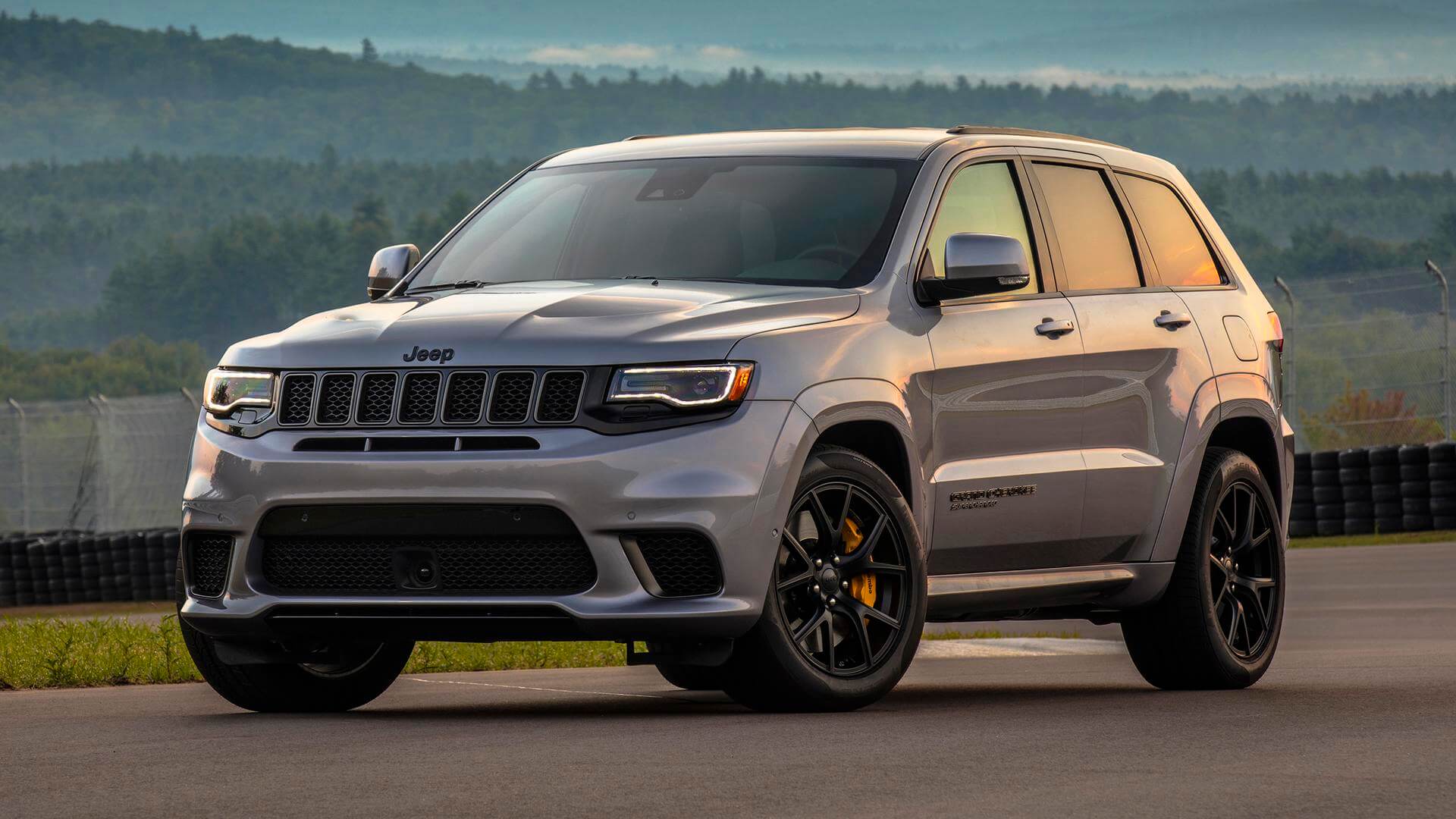
The Wrangler JL arrived in 2018, when US Wrangler sales peaked at about 240,000. The Gladiator pickup, based on the Wrangler, went on sale for the 2020 model year. The year 2021 brought the Wrangler 4xe plug-in hybrid, the Rubicon 392 with a 6.4-litre Hemi V8 rated at 350 kW (470 hp), the three-row Grand Cherokee L (revealed in January) and the 280 kW (375 hp) Grand Cherokee 4xe plug-in hybrid. The WK2 generation of 2011–2021 also included the Grand Cherokee Trackhawk.
2021 to today: Stellantis and electrification
Jeep has belonged to Stellantis since the 2021 merger of Fiat Chrysler Automobiles and the PSA Group. The Avenger, a small SUV presented on 8 September 2022, has been built at Tychy in Poland since January 2023. It became Jeep's first European Car of the Year in 2023 and is not sold in the United States; cumulative sales are reported at more than 230,000.

In the US the Cherokee name returned with an all-new model revealed on 21 August 2025, the successor to the fifth-generation Cherokee. It combines a 1.6-litre turbocharged petrol engine with electric drive, a self-charging hybrid without a plug, rated at 157 kW (210 hp) with all-wheel drive. The range now also includes two battery-electric models, the mid-size Wagoneer S and the Recon off-roader. For 2026 the Wrangler marks the brand's 85th anniversary with a special edition.
Engineering firsts and records
Jeep's milestones are in four-wheel-drive layout and SUV packaging rather than motorsport:
- Willys MB (1941): set the pattern for the light 4x4 and introduced the slat grille.
- Wagoneer (1963): automatic gearbox and independent front suspension offered in a four-wheel-drive estate car.
- Quadra-Trac (1973): permanent four-wheel drive for road and off-road use.
- Cherokee XJ (1984): the first American off-road vehicle with a unibody structure.
- Wrangler Unlimited (2007) and 4xe (2021): the first four-door and the first plug-in hybrid Wrangler.

A Wrangler is credited with a 2007 Guinness World Record for the highest altitude reached by a four-wheeled vehicle.
Owners, factories and licensed production
Jeep has changed owners seven times since 1953:
| Period | Owner of the Jeep brand |
|---|---|
| 1941–1953 | Willys-Overland |
| 1953–1970 | Kaiser Motors (Kaiser-Jeep from 1963) |
| 1970–1987 | American Motors Corporation (Renault a shareholder from 1979) |
| 1987–1998 | Chrysler Corporation |
| 1998–2007 | DaimlerChrysler |
| 2007–2014 | Chrysler under Cerberus, then Fiat |
| 2014–2021 | FCA US (Fiat Chrysler Automobiles) |
| 2021– | Stellantis |

Toledo, Ohio, builds the Wrangler. The Grand Cherokee is built in Detroit, the Renegade at Melfi in Italy and Goiana in Brazil, and the Avenger at Tychy in Poland.
Mitsubishi built Jeeps in Japan from 1953 to 1998, Mahindra in India has done so since the 1960s, and EBRO assembled them in Spain. Beijing Jeep, a joint venture in China formed in 1984, filed for bankruptcy in October 2022.
Jeep timeline
The dated milestones below run from the Army competition to the current line-up.

| Year | Event |
|---|---|
| 1940 | US Army asks 135 firms for a light 4x4; Bantam prototype tested on 23 September |
| 1941 | Willys MB enters production; Ford builds it as the GPW |
| 1945 | CJ-2A, the first civilian Jeep, built in Toledo |
| 1953 | Kaiser buys Willys-Overland; Mitsubishi licence production begins |
| 1962 | Wagoneer introduced in November as a 1963 model |
| 1970 | AMC buys Kaiser's Jeep operations |
| 1984 | Cherokee XJ with Uniframe body; Beijing Jeep joint venture formed |
| 1986–87 | Wrangler YJ replaces the CJ |
| 1987 | Chrysler acquires AMC and Jeep |
| 1992 | Grand Cherokee goes on sale in April |
| 2007 | Wrangler JK and the four-door Unlimited; Cerberus buys Chrysler |
| 2014 | Renegade built in Italy and Brazil; FCA US formed |
| 2021 | Stellantis formed; Wrangler 4xe and Grand Cherokee L |
| 2025 | New Cherokee revealed; more than one million sales worldwide |
Landmark models
These Jeeps changed the brand's direction, from the wartime original to the 2023 European Car of the Year.

| Model | Years | Why it matters |
|---|---|---|
| Willys MB / Ford GPW | 1941–1945 | The original Jeep; about 640,000 built |
| CJ-2A | From 1945 | First civilian Jeep, 214,760 built |
| CJ-5 | 1954–55 to 1983 | Longest-running CJ, 603,303 built |
| Wagoneer (SJ) | 1963–1991 | Early comfort-oriented four-wheel-drive estate |
| Cherokee XJ | 1984–2001 | Unibody compact SUV, about 3 million built |
| Grand Cherokee (ZJ) | 1992–1998 | About 1.65 million sold; the line now leads US sales |
| Wrangler | 1986–87 to date | Direct successor to the CJ, built in Toledo |
| Renegade | 2014 to date | Small SUV built in Italy and Brazil |
| Avenger | 2023 to date | European Car of the Year 2023 |
The Jeep Wrangler continues the MB and CJ line, and early CJs are now collected as classic cars.
Current model line-up
As of October 2026 the official US website lists eight Jeep models, while the UK range is built around the Avenger, Compass, Renegade and Wrangler 4xe.

| Model | Segment | Body | Years |
|---|---|---|---|
| Avenger | Small SUV (Europe) | SUV; petrol mild hybrid, 4xe | 2023– |
| Renegade | Small SUV (Europe) | SUV | 2014– |
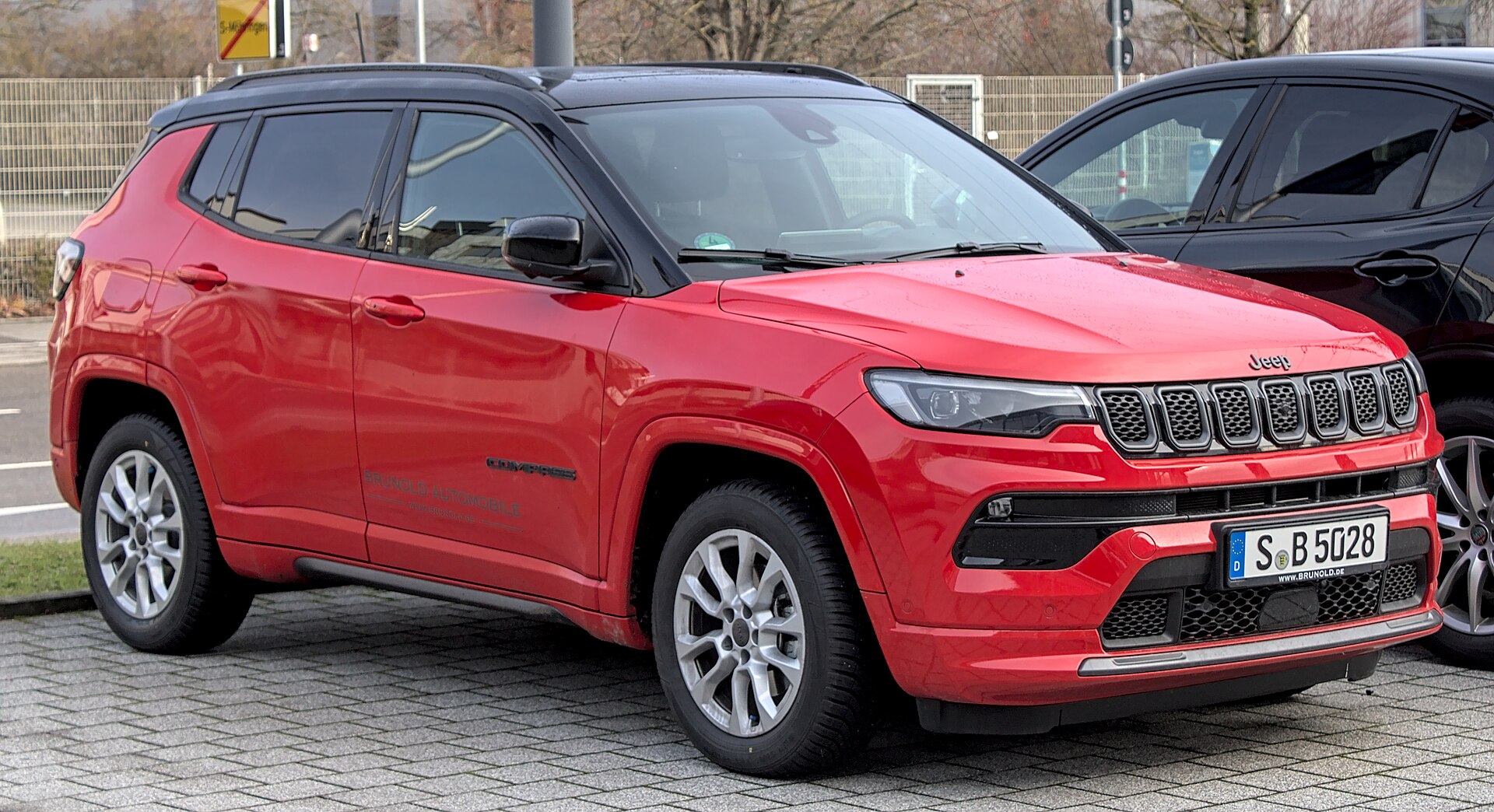
| Compass | Compact SUV | SUV; hybrid or electric in Europe | 2006–07– (new generation 2025) |
| Cherokee | Mid-size SUV | SUV, hybrid | current model revealed 2025 |
| Wrangler | Off-roader | Two- and four-door SUV, 4xe | 1986–87– (JL from 2018) |
| Gladiator | Mid-size pickup | Double-cab pickup | 2020 model year– |
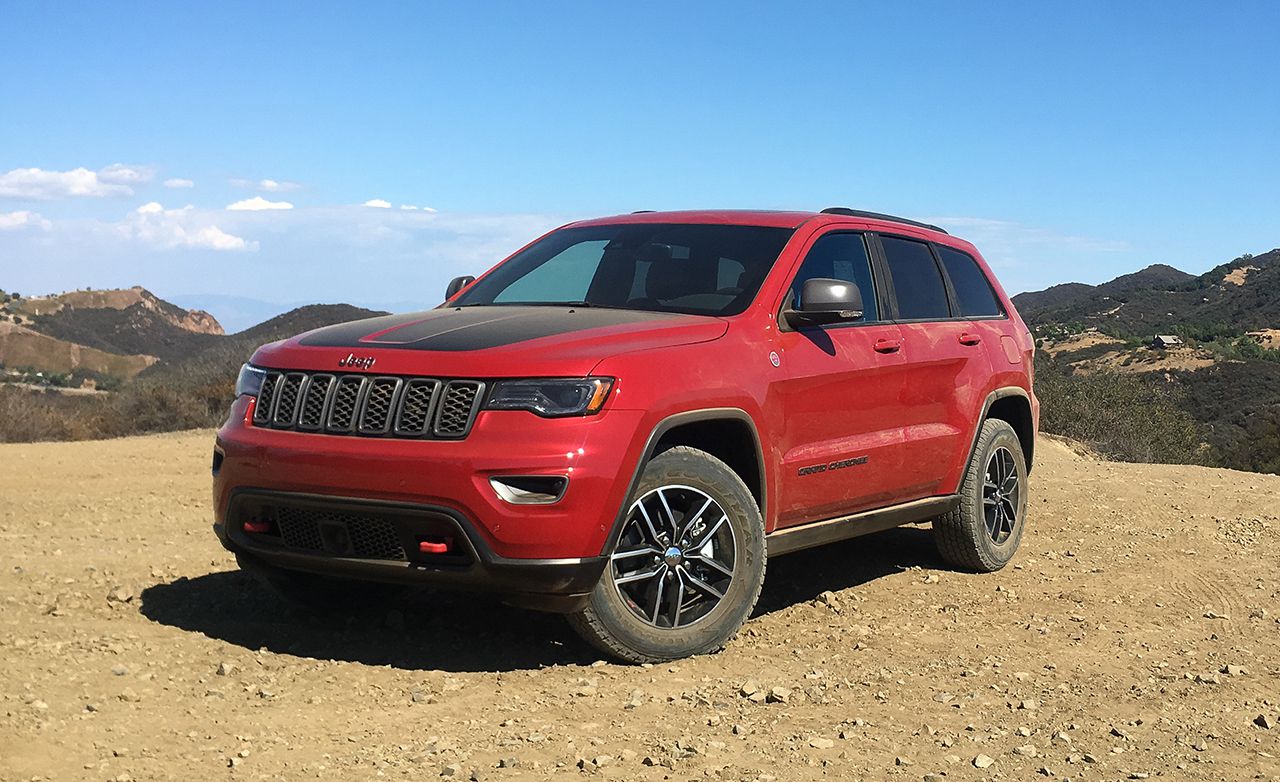
| Grand Cherokee | Mid-size SUV | Two- or three-row SUV | 1992– |
| Wagoneer S | Mid-size SUV | SUV, battery-electric | current (US) |
| Recon | Off-roader | SUV, battery-electric | current (US) |
| Grand Wagoneer | Large SUV | SUV | current (US) |
Every current and past model is listed in the Jeep catalogue.
Jeep in numbers
Key production and sales figures, from FCA US, Stellantis and standard references:
- About 640,000 Willys MB and Ford GPW built from 1941 to 1945.
- More than 1.5 million CJs, about 3 million Cherokee XJs and about 1.65 million Grand Cherokee ZJs.
- More than 2.5 million Compass models reported sold worldwide.
- 593,401 US sales in 2025, up from 587,725 in 2024: Grand Cherokee 210,082, Wrangler 167,322, Compass 101,997 and Gladiator 56,790.
- More than one million vehicles sold worldwide in 2025.

FAQ
Who owns Jeep?
Jeep is owned by Stellantis, the group formed in 2021 by the merger of Fiat Chrysler Automobiles and the PSA Group. In the US the brand is run by FCA US alongside Chrysler, Dodge and Ram.
Where does the name Jeep come from?
The origin is uncertain. The name began as Army slang, and the usual explanation is that it comes from "GP", for General Purpose, although no document from the period confirms it. A newspaper story of February 1941 made the word widely known.
Who invented the Jeep?
American Bantam, with engineer Karl Probst, built the first prototype in 1940 and is credited with the concept; in 1948 the Federal Trade Commission ruled that Willys could not claim sole credit. Willys-Overland developed the MB that went into mass production, and Ford built it under licence as the GPW.
Is Jeep part of Chrysler?
Jeep and Chrysler have belonged to the same company since Chrysler bought AMC in 1987. Today both are sister brands within Stellantis rather than one owning the other.
Where is the Jeep Wrangler built?
The Wrangler is built in Toledo, Ohio, which has been the home of Jeep production since 1945, when the first civilian CJ-2A was built there.
What is the best-selling Jeep?
In the US the Grand Cherokee was the best-selling Jeep in 2025, with 210,082 sales, ahead of the Wrangler with 167,322. Historically, the Cherokee XJ (about 3 million built) is among the highest-volume models.
Photos (6)