How to Use Less Fuel: 15 Eco-Driving Tips That Actually Work
The quickest ways to use less fuel are to drive more slowly on the motorway, accelerate gently and change up early, and look far ahead so you brake less. Keep the tyres at the right pressure, and take off the roof box and any weight you do not need. None of these needs new equipment. In a trial by the AA, staff who followed its eco-driving advice cut their weekly fuel bills by an average of 10%, and the best saver cut them by 33%. For a typical car, 10% is worth almost €184 a year in our 2026 example.
Key takeaways
- Speed costs the most: the AA says 70 mph (about 113 km/h) uses up to 9% more fuel than 60 mph (about 97 km/h), and 80 mph (about 129 km/h) up to 25% more than 70 mph.
- Change up at around 2,000 rpm in a diesel and 2,500 rpm in a petrol car, as the AA advises. ADAC, the German motoring club, says changing up too late alone can raise fuel use by about 30%.
- A roof box adds about 2 litres per 100 km at 130 km/h, according to ADAC. Take it off when you do not need it.
- Every extra 100 kg costs up to 0.3 l/100 km, ADAC says.
What eco-driving can save: a worked example
We calculated a 2026 example for a car that uses 7.0 l/100 km and covers 15,000 km a year, at an assumed fuel price of €1.75 per litre in 2026.
| Change | Fuel saved per year | Money saved (2026 example) |
|---|---|---|
| Eco-driving habits, AA trial average (−10%) | 105 litres | about €184 a year in 2026 |
| Removing 100 kg of permanent load (−0.3 l/100 km) | 45 litres | about €79 a year in 2026 |
| Roof box off for a 1,000 km motorway trip at 130 km/h (−2 l/100 km) | 20 litres | about €35 per trip in 2026 |
Our fuel cost calculator shows what any change in consumption is worth for your own distance and fuel price. If you read consumption figures in mpg in UK reviews, the fuel economy converter turns them into l/100 km.
15 ways to use less fuel
Before you set off
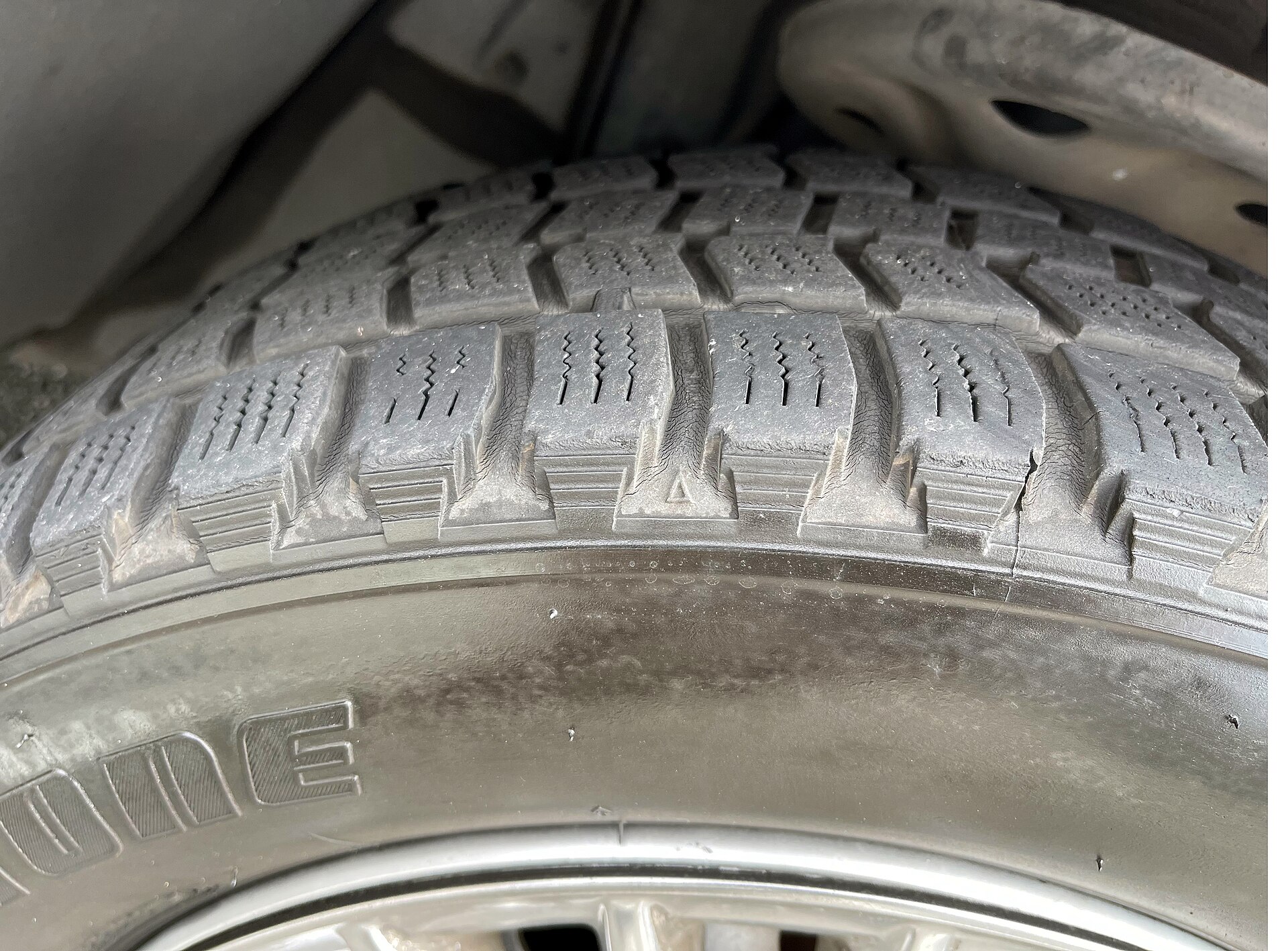
- Check tyre pressures once a month and before long trips. Under-inflated tyres increase fuel use. Natural Resources Canada, quoted by Wikipedia, puts the loss at about 1% for every 0.1 bar that all four tyres are below the correct pressure. Use the pressure on the door pillar or in the handbook, and the higher "full load" value when the car is packed.
- Take off the roof box, roof bars and bike carrier. ADAC measured a roof box adding about 11% at 80 km/h and about 2 l/100 km at 130 km/h. Its regional club ADAC Hessen-Thüringen puts the overall extra consumption of a car with a roof box at around 20%.
- Empty the boot. Golf clubs, tool boxes and child seats you no longer need all add weight; ADAC's rule is up to 0.3 l/100 km per 100 kg.
- Combine short trips. A cold engine uses more fuel, so one round trip with three stops beats three separate trips from cold. For journeys of a couple of kilometres, the AA suggests walking or cycling.
- Do not warm the engine up at a standstill. The AA's advice is to start the engine only when you are ready to move off. In winter, scrape the ice off the windows rather than let the engine idle. ADAC says warming up at a standstill brings the car no benefit.
- Plan the route. Check traffic before you leave. A detour or a queue wastes more fuel than a slightly longer free-flowing route.
On the road
- Slow down on the motorway. Air resistance grows with roughly the square of speed, so the faster you go, the more each extra km/h costs. The AA's figures in the table below show how quickly it adds up.
- Accelerate smoothly and change up early. The AA suggests changing up at around 2,000 rpm in a diesel and 2,500 rpm in a petrol car. Many cars from 2014 onwards have a gear shift indicator that tells you when.
- Read the road ahead. Ease off the accelerator early when you see a red light or a queue, and stay in gear. Slowing down early often means you do not have to stop at all, and moving off from rolling uses less fuel than moving off from a standstill.
- Use engine braking. Most modern petrol engines cut the fuel supply completely when you coast in gear with your foot off the pedal. The AA warns against coasting in neutral: it saves no fuel in a modern car and reduces your control.
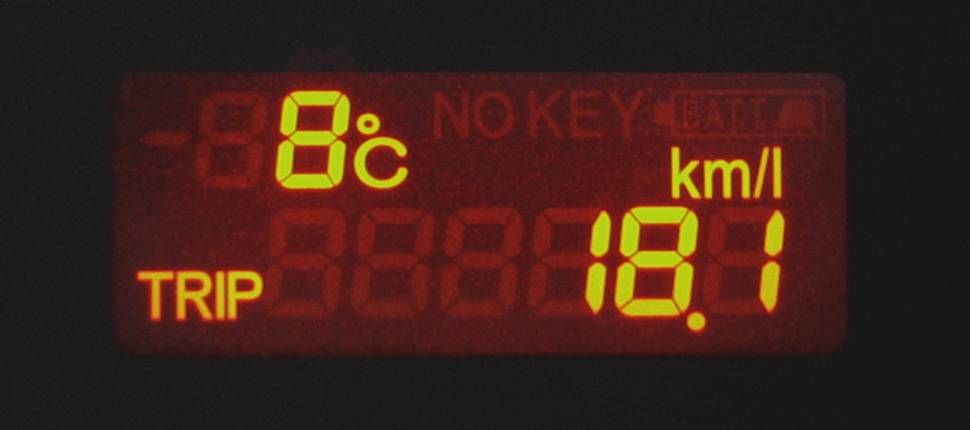
- Watch the trip computer. Reset it and compare similar periods, as the AA suggests. Seeing the figure change is the easiest way to learn which habits pay off.
- Use air conditioning wisely. The AA notes that air conditioning raises fuel use more at low speeds than at high speeds. In town, open the windows; on the motorway, the extra drag of open windows can cancel out much of the saving. Run the system at least once a week to keep it healthy.
- Switch off what you do not need. Rear screen heating, the demister fan and fog lights all draw power. ADAC puts the cost of fog lights at about 0.2 l/100 km when they are switched on.
- Switch off in long stops. Stop-start systems do this for you. Without one, the AA suggests switching off only when the engine is warm, the battery is in good condition and you expect to wait about three minutes or more, for example at a level crossing.
Looking after the car
- Keep the car serviced and use the right oil. The AA recommends regular servicing and the engine oil specification listed in your handbook. If consumption rises suddenly with no change in driving, have the car checked.
How much does speed cost?
The AA's figures are for UK motorway speeds in mph; we have added the km/h equivalents.
| Speed | Fuel use compared with the slower speed (AA) |
|---|---|
| 70 mph (113 km/h) vs 60 mph (97 km/h) | up to 9% more |
| 70 mph (113 km/h) vs 50 mph (80 km/h) | up to 15% more |
| 80 mph (129 km/h) vs 70 mph (113 km/h) | up to 25% more |
The European Environment Agency, also quoted by Wikipedia, found that lower speed limits improve energy efficiency by anywhere from 2% to 18%. By our calculation, dropping from 130 to 110 km/h adds only about 8 minutes per 100 km of motorway.
Common mistakes that waste fuel
- Coasting in neutral downhill. Engine braking in gear uses no fuel in most modern cars; neutral keeps the engine idling and burning fuel.
- Revving to warm up. A stationary warm-up wastes fuel and does not help the engine.
- Leaving the roof box on all summer. It costs fuel on every trip, not only on holiday.
- Driving with soft tyres. They waste fuel on every kilometre. Check them monthly, not only at the annual service.
- Judging by one tank. Consumption varies with weather and routes. Compare similar trips over several weeks.
How to measure your savings
For a figure you can trust, cross-check the trip computer with the pump: fill up to the click, note the kilometres and litres at the next fill-up, and divide litres by kilometres and multiply by 100. Compare a month of normal driving with a month of eco-driving, ideally in the same season.
If you are choosing your next car, the biggest saving is made before you drive at all: a smaller, lighter car with a more efficient powertrain. Our list of the best small city cars is a good starting point, and the fuel cost comparison puts petrol, diesel, hybrid and electric running costs side by side.
Who gains the most: drivers who cover long motorway distances, families who often drive fully loaded, and anyone with a lot of short urban trips. For them, speed, load and route planning matter more than any additive or gadget.
Try our calculator
Fuel cost calculatorFuel economy converterFuel cost comparisonFAQ
What is the most effective way to save fuel?
Driving more slowly on fast roads. The AA says 80 mph (about 129 km/h) uses up to 25% more fuel than 70 mph (about 113 km/h). Smooth acceleration, early gear changes and reading the road ahead come next.
Does using air conditioning increase fuel consumption?
Yes, and more at low speeds than at high speeds, according to the AA. In town, open the windows; at motorway speeds, open windows add drag, so the difference is smaller.
Is it better to coast in neutral to save fuel?
No. The AA says coasting in neutral saves no fuel in modern cars and reduces control. Coasting in gear with your foot off the accelerator lets most modern petrol engines cut the fuel supply completely.
How much fuel does a roof box use?
ADAC found a roof box adds about 11% at 80 km/h and about 2 litres per 100 km at 130 km/h. Remove it when you are not using it.
Should I switch off the engine at traffic lights?
Only if the car has stop-start or you expect to wait about three minutes or more. Without stop-start, the AA suggests switching off only when the engine is warm and the battery is in good condition.
Sources
- The AA: How to drive economically (AA staff trial: 10% average saving) (accessed 23 Oct 2026)
- leinetal24: ADAC figures on the biggest fuel wasters (roof box, weight, fog lights, late gear changes, warm-up), 19 February 2024 (accessed 23 Oct 2026)
- ADAC Hessen-Thüringen: press release PI 65, tidying up the car after the holidays (18 September 2023) (accessed 23 Oct 2026)
- Wikipedia: Energy-efficient driving (Natural Resources Canada tyre figure, EEA speed limits, fuel cut-off, air conditioning) (accessed 23 Oct 2026)
Found a mistake? Report an error