Child Car Seats in Europe: i-Size vs R44, Rear-Facing and Isofix
For a new child car seat in Europe, choose one approved to UN Regulation 129 (i-Size). It is sized by the child's height rather than weight, keeps babies rear-facing until at least 15 months, and is tested for side impacts as well as frontal crashes. Seats approved to the older R44 standard can no longer be sold in the EU since 1 September 2024, but one you already own may still be used legally. How long a child must use a seat depends on the country. The EU minimum is a restraint for children under 135 cm, while Germany, Italy, Switzerland and several others require one up to 150 cm.
Key takeaways
- R129 (i-Size) seats are chosen by height; R44 seats by weight group (0, 0+, 1, 2, 3).
- Under i-Size, children travel rear-facing until they are at least 15 months old; safety experts recommend rear-facing for as long as possible.
- A rear-facing seat may only go in the front if the passenger airbag is switched off, a rule applied almost everywhere in Europe.
- Height thresholds differ: 135 cm in the UK, Austria, Belgium and Hungary; 150 cm in Germany, Italy, Switzerland, the Czech Republic and Ireland.
i-Size (R129) vs R44 at a glance
| Specification | R44/04 | R129 (i-Size) |
|---|---|---|
| How the seat is chosen | Child's weight (groups 0 to 3) | Child's height in cm |
| Rear-facing | Group 0/0+ only, typically to 13 kg | Compulsory until at least 15 months |
| Side-impact test | No | Yes |
| Installation | Seat belt or Isofix | Isofix for integral seats; booster seats with the belt |
| Label | Orange label with "ECE R44" and weight group | Label with a circled "E" and "R129" |
| Sale in the EU | Ended on 1 September 2024 | The only standard for new seats |
| Use | Still legal for seats bought earlier | Legal |
The R44 weight groups are worth knowing if you are offered a used seat or a hand-me-down:
| R44 group | Child's weight | Seat type |
|---|---|---|
| 0 | up to 10 kg | Carrycot or rear-facing infant carrier |
| 0+ | up to 13 kg | Rear-facing infant seat |
| 1 | 9–18 kg | Rear- or forward-facing seat with harness |
| 2 | 15–25 kg | High-back booster |
| 3 | 22–36 kg | Booster seat or cushion |
Many seats combine groups, for example 1/2/3, and some R44 seats display several groups on their orange label.
Why rear-facing matters
Frontal collisions are the crashes most likely to cause severe injury or death, and rear-facing seats are significantly safer in them. That is why i-Size extended the minimum rear-facing period to 15 months, compared with the 9 to 12 months that earlier advice suggested. In Scandinavian countries children generally travel rear-facing until about the age of four.
If you put a rear-facing seat on the front passenger seat, the front airbag must be deactivated; ÖAMTC notes that this rule is almost identical across Europe. Many cars have a key switch or a menu setting for this; the owner's manual shows where.
What Isofix is, and why it helps
Isofix is an international standard, introduced in 1990, for fixing a child seat directly to the car's body with metal anchor points instead of the seat belt. The standard now includes a top tether, and many seats add a support leg resting on the floor, both of which stop the seat rotating forward in a crash. Ireland's Road Safety Authority describes the difference simply: Isofix is how the seat is attached, i-Size is the safety standard the seat is built to.
The main benefit is fewer fitting mistakes. A seat that clicks into fixed anchors is far harder to install loosely than one held by a belt routed through guides. Before buying, check the seat maker's vehicle compatibility list: not every car has Isofix on every seat, and the outer rear seats are the usual positions. If you need three seats across the rear bench, measure the bench and compare cars with our size comparison tool, which is especially useful when choosing between family SUVs.
Child seat rules by country
All EU countries have required approved child restraints since May 2006 under Directive 2003/20/EC, which set the minimum at 135 cm and allowed countries to go further. The table summarises the rules for visitors as reported by the Austrian automobile club ÖAMTC and the Swiss club TCS, checked in October 2026, and by GOV.UK for the United Kingdom.
| Country | Child seat required until | Front seat rules and notes |
|---|---|---|
| Austria | 135 cm | Fines of up to €5,000 possible (ÖAMTC, 2026) |
| Belgium | 135 cm | Airbag off for rear-facing seats in front |
| Croatia | 135 cm; 135–150 cm in the rear with the adult belt | Front seat from 150 cm; airbag off for rear-facing seats |
| Czech Republic | 150 cm or 36 kg | — |
| France | Age 10 | Under-10s not in front unless all rear seats are taken by under-10s |
| Germany | Age 12 or 150 cm, whichever comes first | Airbag off for rear-facing seats in front |
| Greece | Age 12 or 135 cm | Airbag off for rear-facing seats in front |
| Hungary | 135 cm | Airbag off for rear-facing seats in front |
| Ireland | 150 cm or 36 kg | Airbag off for rear-facing seats in front |
| Italy | 150 cm; rear-facing seat up to 9 kg | Anti-abandonment alarm for children under 4 in Italian-registered cars |
| Luxembourg | Age 17 or 150 cm | Over 36 kg may use the adult belt in the rear |
| Slovenia | 140 cm | — |
| Spain | 135 cm | — |
| Switzerland | Age 12 or 150 cm | Approvals R44/03, R44/04 or R129 accepted |
| United Kingdom | Age 12 or 135 cm, whichever comes first | Airbag off for rear-facing seats in front |
When you travel, follow the rules of the country you are driving in, not your home country: the clubs publish these tables precisely for drivers crossing borders. Fines vary, from €120 in Slovenia to €135 in France, according to ÖAMTC in 2026.
How to choose a seat: step by step
- Measure your child's height without shoes, and note the weight. i-Size seats are labelled with the height range in centimetres that they are approved for.
- Check your car. Find the Isofix points and any i-Size markings on the rear seats, and check whether the front airbag can be switched off.
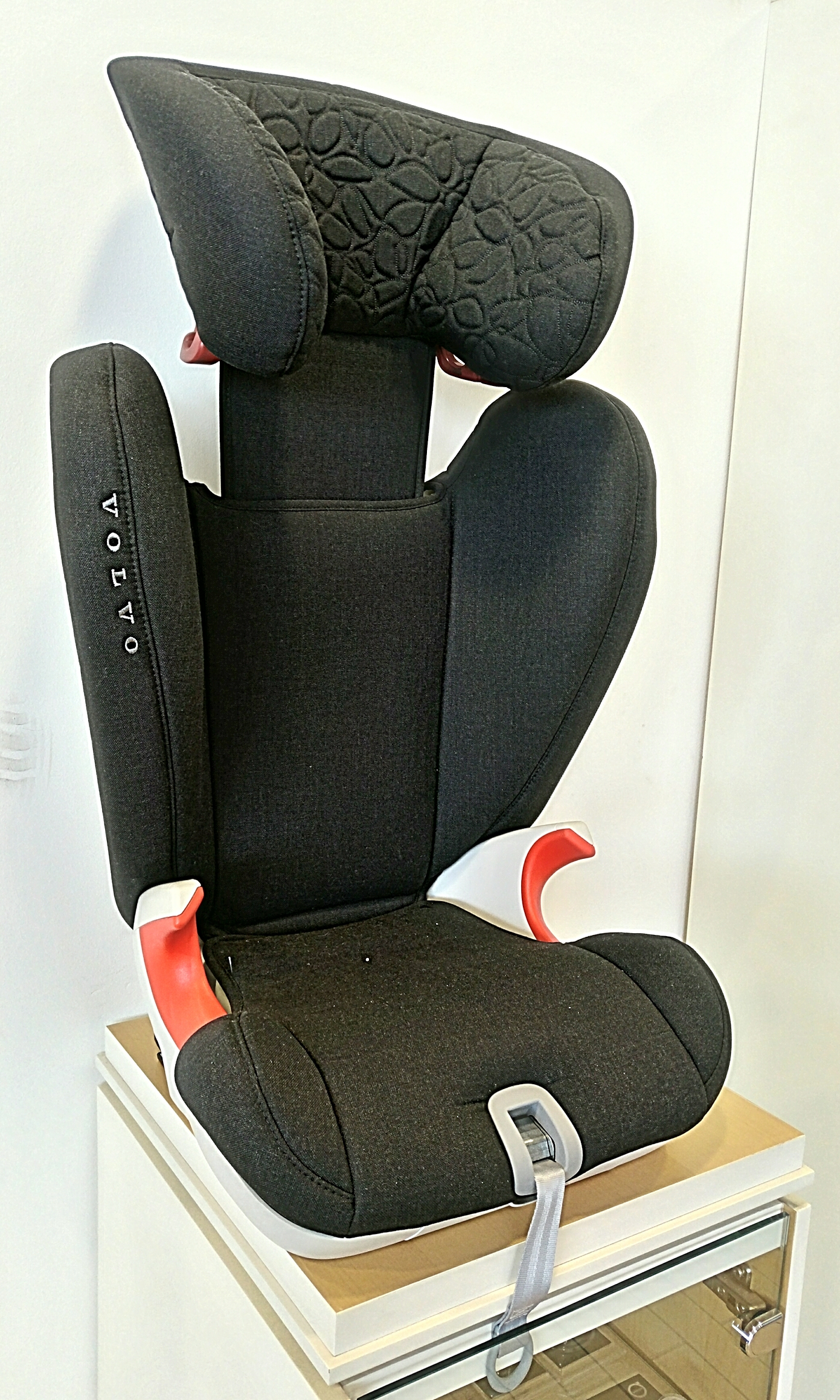
- Pick the stage, not the age. Infant carrier for newborns, a rear-facing toddler seat as the child grows, then a high-back booster. Move up only when the child reaches the seat's height or weight limit, not at a birthday.
- Try it in the car before paying. Fit it with the shop's help if possible. Check that the support leg touches the floor and that a large seat does not prevent the front seat moving back.
- Look for independent test results from consumer and automobile club tests. Euro NCAP also scores how well each car protects children; you can find these scores per model in our car safety ratings.
- Register the seat with the maker so you hear about recalls.
Common mistakes
- Moving to forward-facing too early. Under i-Size it is not allowed before 15 months, and rear-facing longer is safer.
- Bulky winter coats under the harness. They leave slack in the straps. Take the coat off and put it over the child once the harness is tight.
- A loose belt-fitted seat. If the seat moves more than a little at the belt path, refit it or switch to an Isofix seat.
- Buying second-hand without history. A seat that has been in a crash may be damaged invisibly. Only accept a used seat from someone you trust, with the manual and all parts.
- Leaving the airbag on. Never put a rear-facing seat in front of an active airbag.
- Using a booster cushion for a small child. GOV.UK notes that new booster cushions are only approved for the heaviest group (group 3, 22–36 kg). Smaller children need a high-back booster or a seat with a harness.
Try our calculator
Car size comparisonFAQ
Can I still use an R44 car seat?
Yes. R44 seats can no longer be sold by retailers in the EU since 1 September 2024, but seats bought before that date may still be used. Ireland's Road Safety Authority and GOV.UK confirm this for their countries. For a new seat, buy one approved to R129.
Until what age must a child be rear-facing?
Under i-Size (R129), at least until 15 months. There is no maximum: safety experts recommend keeping children rear-facing for as long as the seat allows, and in Scandinavian countries this is commonly about four years.
Is i-Size the same as Isofix?
No. i-Size (R129) is the safety standard the seat is approved to. Isofix is the system of metal anchor points that attaches the seat to the car. Most i-Size seats for younger children use Isofix.
Can a child sit in the front seat in Europe?
Rules vary. A rear-facing seat may go in the front only with the airbag switched off. France does not allow children under 10 in front unless the rear seats are already taken by children, and Croatia sets 150 cm as the minimum height for the front seat.
When can my child stop using a car seat?
It depends on the country you drive in: at 135 cm in the UK, Austria, Belgium and Spain, and at 150 cm in Germany, Italy, Switzerland, the Czech Republic and Ireland. Germany and the UK also allow the adult belt from age 12, whichever comes first.
Sources
- ÖAMTC — Kindersicherung im Auto in Europa (accessed 22 Oct 2026)
- TCS — Kindersitze: Vorschriften (country table) (accessed 22 Oct 2026)
- GOV.UK — Child car seats: the law (accessed 22 Oct 2026)
- Road Safety Authority (Ireland) — ISOFIX and i-Size (accessed 22 Oct 2026)
- Maxi-Cosi — Car seat safety rules explained: R44 vs R129 (accessed 22 Oct 2026)
- Wikipedia — Child safety seat (R44 groups, Directive 2003/20/EC, Isofix) (accessed 22 Oct 2026)
Found a mistake? Report an error