Brake Pads and Discs: When to Replace Them, Warning Signs and Cost
Replace brake pads when about 2–3 mm of friction material is left, and replace the discs when they are worn below the minimum thickness the manufacturer stamps on them, usually at the same time as the pads on modern cars. ADAC, the German automobile club, puts the life of a modern brake system at roughly 40,000 to 120,000 km, depending on the car, the driving style and the roads. Squealing or grinding that does not go away, vibration through the pedal or steering wheel and a brake warning light are the signs that it is time for a check.
Key takeaways
- Plan new pads below 3 mm of lining; below 2 mm the job is urgent.
- Front pads wear faster than rear pads, often about twice as fast, and city driving wears them faster than motorway driving.
- In ADAC's 2025 price survey, front pads and discs cost about €440 for a Škoda Fabia and about €2,400 for a Mercedes EQE, including parts, labour and VAT.
- Change the brake fluid at least every two years, whatever the mileage.
How brakes wear and why it matters
Most cars have disc brakes at the front and either discs or drums at the rear. When you press the pedal, the caliper squeezes two pads against a rotating disc. The friction turns the car's movement into heat, and both the pads and, more slowly, the disc wear away. Drum brakes work with shoes pressed against the inside of a drum. They are a closed system and less prone to rust, but lose effectiveness when hot, which is why ADAC notes they are fitted on the less heavily loaded rear axle of small cars and some electric models.
The front brakes do most of the work, because the car's weight shifts forward under braking. That is why front pads usually wear out first. Worn brakes do not just make noise: ADAC lists reduced braking performance, longer stopping distances, a pull to one side and damage to the disc when the steel backing plate of a fully worn pad reaches it.
Warning signs your brakes need attention
| Sign | What it can point to | What to do |
|---|---|---|
| Squeal or metallic noise when braking that persists | Worn pads | Book a brake check soon |
| Grinding at low speed | Lining worn down to the metal | Have it inspected before driving further |
| Vibration in the pedal or steering wheel | Disc problem | Check the discs; they are often replaced with the pads |
| Pedal travels further than usual, goes down easily | Worn pads or low brake fluid | Check immediately |
| Car pulls to one side | Uneven braking, late pad replacement | Inspect before a long trip |
| Brake warning light | Low fluid or worn pads, depending on the car | Follow the owner's manual; a red light means stop |
Noise in the first few stops after rain or a night outside is usually surface rust being wiped off the discs and is harmless. Noise that persists after several stops is not.
How long pads and discs last
There is no fixed interval, because wear depends heavily on how and where you drive. These typical ranges come from the Motrio workshop network and ADAC:
| Component | Typical life | What shortens it |
|---|---|---|
| Front pads, mostly town driving | about 24,000–40,000 km | Stop-start traffic, hills |
| Front pads, mostly motorway driving | about 48,000–72,000 km | Heavy loads, towing |
| Rear pads | often about twice the front | Cars that brake mainly on the rear axle |
| Whole brake system (pads and discs) | about 40,000–120,000 km | Hard driving, corrosion from road salt |
Motrio notes that hard driving or heavy loads can roughly halve pad life. Electric cars and hybrids are a special case: much of their braking is done by the electric motor recovering energy, so the friction brakes are used less. Their pads last longer, but ADAC warns that the rarely used discs can corrode, and a rusty patch that does not clear after a few firm stops is a standstill defect that needs repair, sometimes well before the pads are worn. Regular use and a dry garage help. If you are choosing an electric car or a hybrid, budget for brake corrosion checks rather than frequent pad changes.
How to check your brakes: step by step
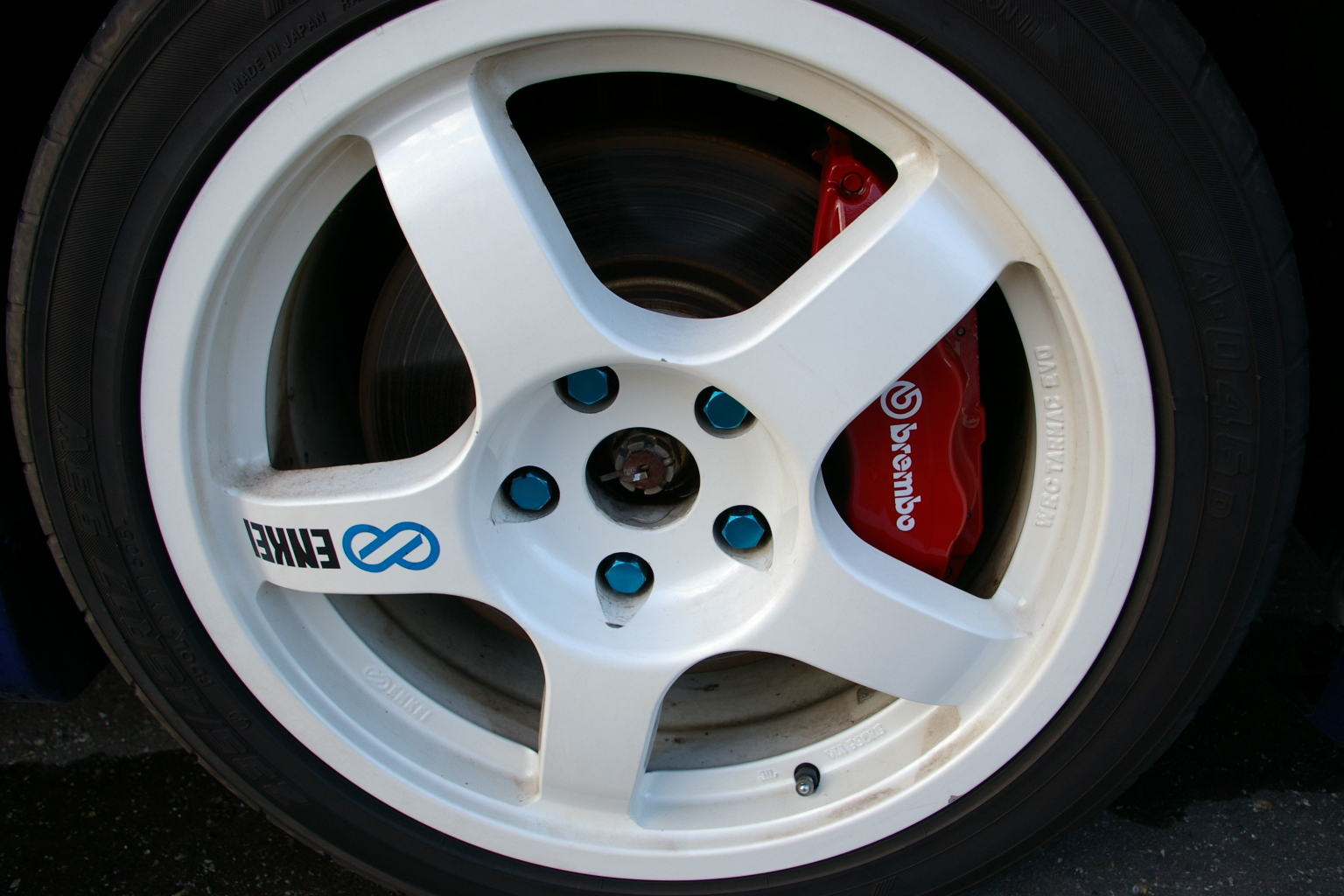
- Look through the wheel spokes. On many alloy wheels you can see the outer pad in the caliper. If the lining looks thinner than about 3 mm, have both sides measured.
- Feel the disc edge. A pronounced lip on the outer edge of the disc shows how much it has worn. The minimum thickness is stamped on the disc or listed in the workshop data.
- Check the fluid reservoir. The level should sit between MIN and MAX. A falling level can mean worn pads or a leak. The reservoir does not show the fluid's age, so you cannot judge water content by eye.
- Listen and feel on a quiet road. Brake gently and then firmly from moderate speed. Note noises, vibration and any pull.
- Watch the dashboard. Some cars have a separate pad wear warning. Our guide to on-board computer functions explains the other warning lights.
- Ask at every service. Workshops measure pad and disc thickness during inspections, and the periodic roadworthiness test checks the brakes too.
Pads only, or pads and discs?
Older cars often needed pads two or three times before the discs were worn. On many modern cars the discs are thinner and lighter, so ADAC says pads and discs are now usually replaced together. A workshop will replace discs with the pads when they are below minimum thickness, scored, warped or corroded. Brakes are always replaced in axle pairs, left and right together, so that the car brakes evenly.
| Job | When it is needed | Notes |
|---|---|---|
| Pads only | Discs above minimum thickness and in good condition | Motrio: typically 30–60 minutes per axle |
| Pads and discs | Discs below minimum thickness, scored or corroded | The usual job on modern cars, according to ADAC |
| Caliper rebuild or replacement | Seized or sticking caliper | Adds time and parts to the bill |
| Brake fluid change | At least every two years | ADAC: about €60–130 in 2025 |

Costs in EUR
Prices depend on the model, the region and the workshop. ADAC's March 2025 survey, which includes parts, labour and VAT, gives two useful markers: about €440 for front pads and discs on a Škoda Fabia in 2025, and about €2,400 on a Mercedes EQE, a large electric saloon with big brakes. Performance cars with large or ceramic discs cost more still.
Brake fluid is a separate job. ADAC's 2025 figures put a fluid change at roughly €60 to €130, depending on the model. Where the change is already part of the scheduled service, it is included in the service price.
To see how brake work fits into the yearly running costs of a car, add an estimate to the maintenance line of our cost of ownership calculator.
Brake fluid: the part people forget
Brake fluid is hygroscopic: it absorbs moisture over time, including through the brake hoses. Water lowers the fluid's boiling point, and under heavy braking, for example on a long mountain descent, the absorbed water can boil and form vapour bubbles. The pedal then goes soft and the brakes may fail. ADAC therefore recommends changing the fluid at the latest every two years, regardless of mileage, and says that every three or four years is not enough.
Use the type listed in the owner's manual (DOT 3, DOT 4 or DOT 5, which differ in boiling point and viscosity), and never mix types. A workshop can test the fluid's boiling point if you are unsure when it was last changed.
Common mistakes and safety notes
- Waiting for the grinding noise. By then the disc is often damaged, and a cheap pad job becomes a pad and disc job.
- Replacing one side only. Always replace pads, and discs where needed, on both wheels of an axle.
- Doing it yourself. ADAC advises against replacing pads or discs yourself: brakes are safety-critical, and the job belongs with a qualified specialist who has the right tools.
- Ignoring the red warning light. A red brake light means stop safely and check the manual; low fluid can mean a leak.
Try our calculator
Cost of ownership calculatorFAQ
What is the minimum thickness for brake pads?
ADAC says disc brake pads should be replaced when about 2 to 3 mm of lining remains, and drum brake shoes at about 1 mm. Motrio advises planning a replacement below 3 mm and treating anything under 2 mm as urgent.
How many kilometres do brake pads last?
Front pads typically last about 24,000 to 40,000 km in town driving and about 48,000 to 72,000 km in mainly motorway use, according to Motrio. Rear pads usually last about twice as long. Hard driving or heavy loads can halve these figures.
Do I need to replace discs every time I replace pads?
Not always. The discs must be replaced when they are below the minimum thickness or damaged. On many modern cars that happens at about the same time as the pads, so the two are often replaced together.
Why do my brakes squeal after rain?
A thin layer of rust forms on the discs when they are wet or the car stands overnight. It is cleaned off by the first few stops. Squealing that continues after several stops points to worn pads, glazing or a wear indicator touching the disc.
How often should brake fluid be changed?
At least every two years, whatever the mileage, according to ADAC. Brake fluid absorbs water over time, which lowers its boiling point and can cause brake fade under heavy use.
Sources
- ADAC — Bremsbeläge und Bremsscheiben: Was der Wechsel kostet (07.03.2025) (accessed 22 Oct 2026)
- ADAC — Bremsflüssigkeit: Wozu man sie braucht, was ein Wechsel kostet (20.05.2025) (accessed 22 Oct 2026)
- Motrio — When to change brake pads: signs, lifespan and cost (accessed 22 Oct 2026)
Found a mistake? Report an error