Timing Belt vs Chain: Which One You Have and When to Replace It
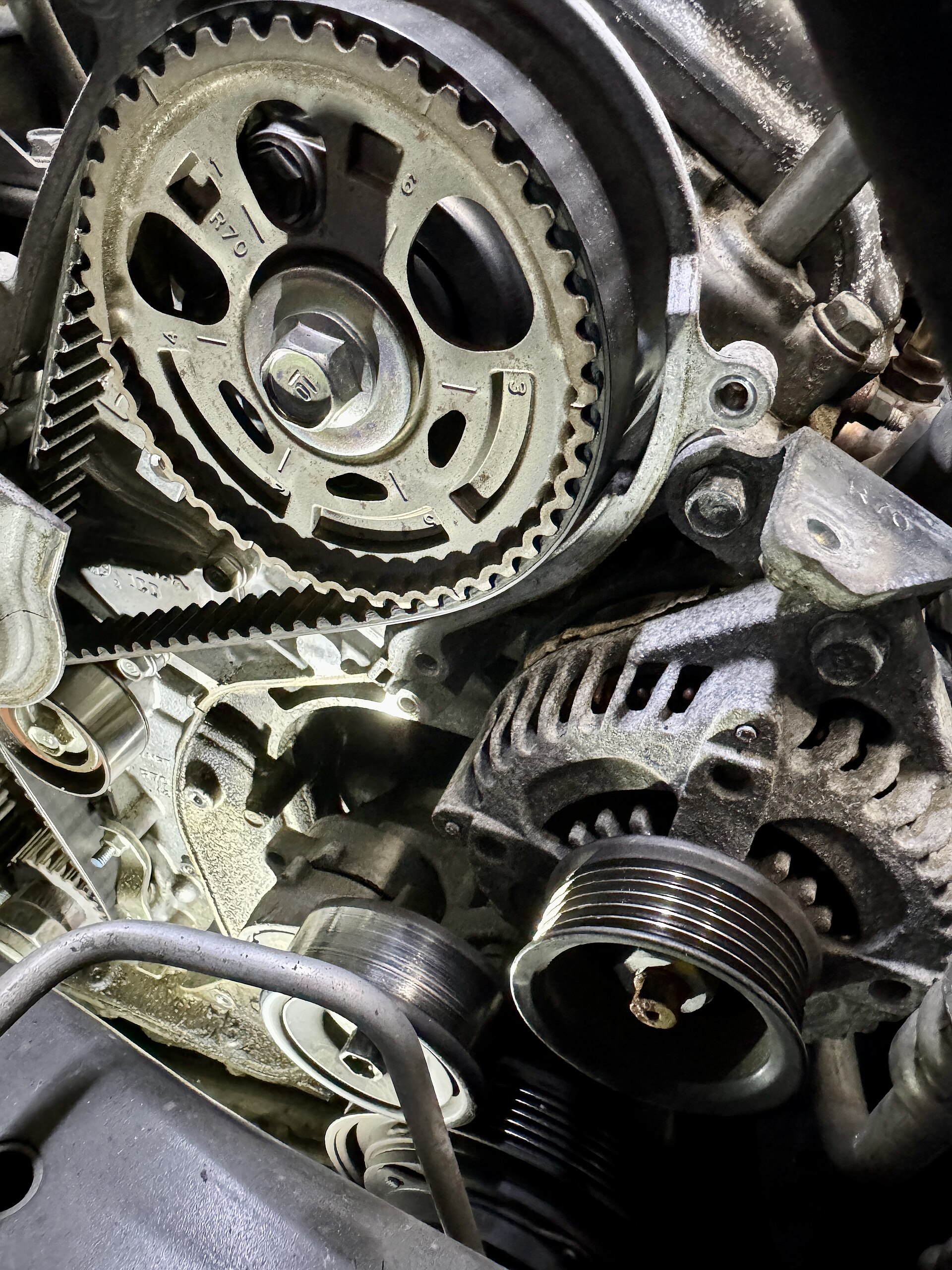
A timing belt is a toothed rubber belt that must be replaced at a fixed interval. That is typically every 60,000 to 240,000 km or 6 to 10 years, whichever comes first. A timing chain is a metal chain designed to last the life of the engine. It can still stretch, and it needs attention when it rattles. Your handbook or service schedule tells you which one your engine has. If a belt is due or the history cannot prove it was changed, budget for it before you buy. On most modern engines a snapped belt destroys the valves.
Key takeaways
- Belt intervals now range from 60,000 to 240,000 km and 6 to 10 years, depending on the engine (ADAC, 2025).
- A belt change cost about €200 to €1,000 at German garages in 2025, mostly labour; replace the tensioner and usually the water pump at the same time.
- "Wet" belts that run in engine oil, such as on the 1.2 PureTech and 1.0 EcoBoost, need exactly the approved oil and can fail early without it.
- Chains are not maintenance-free: a rattle on cold start can signal stretch, which can also end in engine damage.
Belt vs chain at a glance
| Specification | Timing belt | Timing chain |
|---|---|---|
| Material | Reinforced rubber with teeth | Steel links, like a bicycle chain |
| Lubrication | Dry, or running in oil ("wet belt") | Runs in engine oil |
| Replacement | Fixed interval in km and years | No fixed interval; replace when worn |
| Typical warning before failure | Little or none | Rattle, rough running, fault codes |
| Cost of routine replacement | Moderate, mostly labour | None routinely; repair is usually dearer |
| Noise and weight | Quieter, lighter | Slightly noisier, heavier |
Both do the same job. They keep the crankshaft and camshafts in exact step, so the valves open and close at the right moment relative to the pistons. Haynes notes that belts tend to snap with little warning, while chains wear more gradually and usually make themselves heard.
How to tell which one your engine has
- Check the service schedule. If it lists "replace timing belt" at a mileage or age, your engine has a belt. No such line usually means a chain.
- Look under the bonnet. A belt sits behind a plastic cover on the side of the engine; a chain is hidden inside a metal cover sealed to the engine.
- Look for a sticker. ADAC points out that garages often leave a sticker under the bonnet recording the mileage of the last belt change.
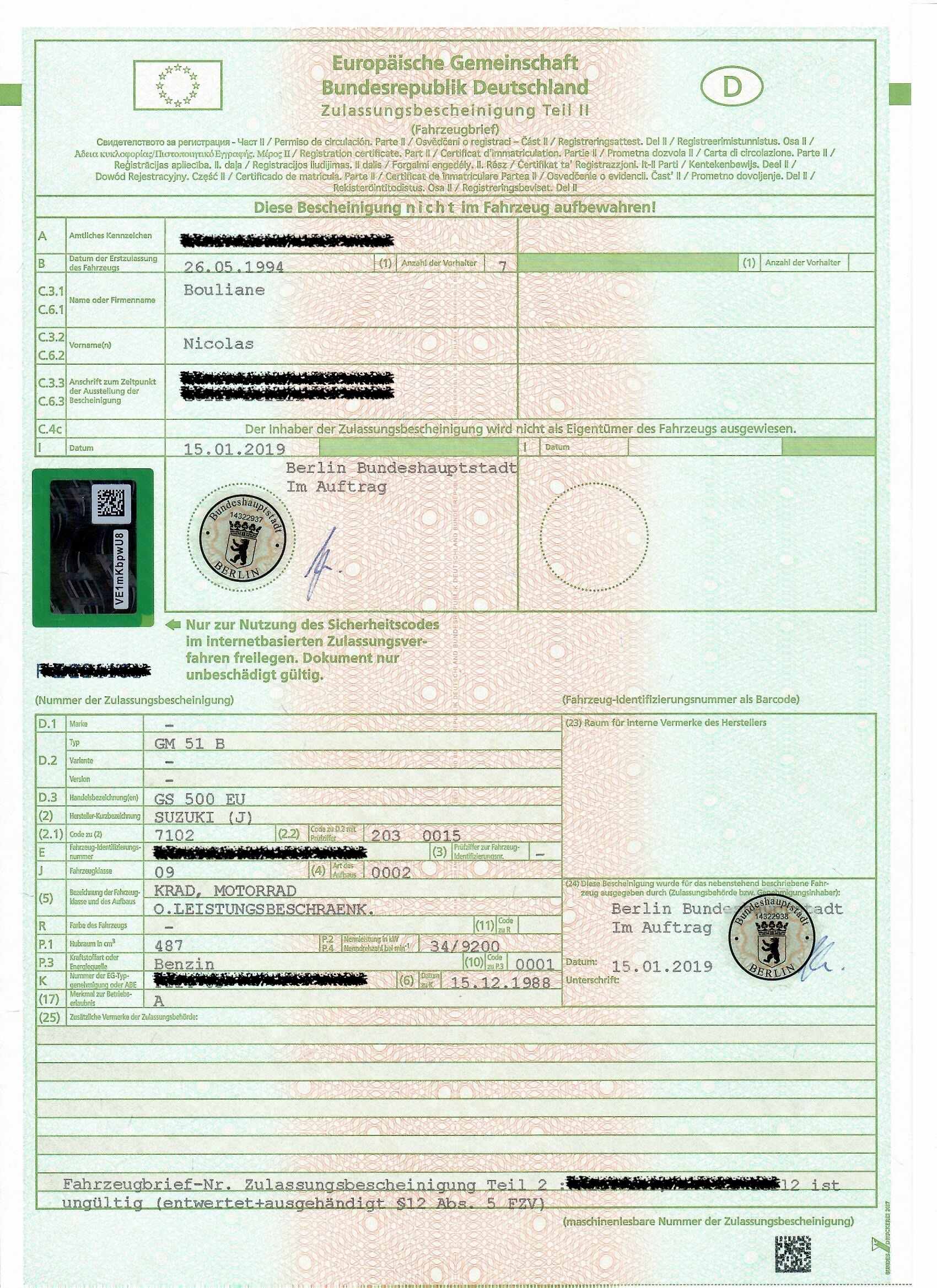
- Check the engine code. Read the engine code from the registration document or a VIN decoder, then look it up on our engine pages. For example, Nissan's RB26DETT uses a belt, while BMW's B48 and Toyota's 1NZ-FE use chains.
- Ask a dealer. With the VIN, any franchised workshop can confirm the drive type and the last recorded change.

When to replace a timing belt
Manufacturers set intervals in kilometres and years, and whichever comes first applies: rubber ages even if the car stands still. ADAC's 2025 table shows how much intervals vary:
| Car | Engine | Interval (km) | Interval (years) |
|---|---|---|---|
| VW Golf IV (1997–2000) | 1.9 TDI | 60,000 | — |
| Fiat 500 (2007–2020) | 1.2 8V | 120,000 | 6 |
| Citroën C3 (2018–2023) | 1.2 PureTech, belt in oil | 120,000 | 6 |
| Renault Clio (2012–2018) | 1.2 16V 75 | 150,000 | 6 |
| Nissan Qashqai (2014–2018) | 1.5 dCi | 150,000 | 6 |
| Peugeot 308 (2014–2018) | 1.6 HDi | 180,000 | 10 |
| Mercedes A-Class | A 180 d | 200,000 | 10 |
| Ford Fiesta (2019–2024) | 1.0 EcoBoost, belt in oil | 240,000 | 10 |
| VW Golf VII (2017–2020) | 1.5 TSI | 240,000 | — |
Change it earlier if the car is used hard: towing, lots of idling, extreme heat. The same applies if oil or coolant has leaked onto the belt, or if a used car has no written proof of the last change. Treat an undocumented belt as overdue.
What a timing belt change costs
According to Auto Bild in 2025, a typical belt change cost €200 to €1,000 in Germany, and occasionally more. The parts are the smaller share. A kit with belt, idler pulleys and water pump cost about €75 to €150 from independent suppliers in 2025. Labour usually takes three to five hours, or six to eight on V6 engines. Its 2025 examples: about €600 for a VW Golf 2.0 TDI including coolant, and about €400 for an Opel Astra 1.6 at an independent chain. On a few models the engine must come out, which pushes the bill well into four figures.
Always replace the tensioner and idler pulleys with the belt, and the water pump if the belt drives it. The labour is the same, and a seized pump or pulley can destroy a new belt. To see how a belt change affects your yearly budget, add it to the maintenance figure in our cost of ownership calculator.
Wet belts: the belt that runs in oil
Several small turbo petrol engines use a belt that runs inside the engine in an oil bath, which makes it quieter and longer-lasting on paper. In practice it makes the belt dependent on the oil. Auto Bild stresses that these engines need oil with the exact manufacturer approval, because the belt's life depends directly on it. The wrong oil can make the belt material break down.
The best-known case is the 1.2 PureTech petrol engine used by Peugeot, Citroën and other Stellantis brands. Belgian consumer group Test Achats reported on it in September 2024. Rapid belt deterioration could clog the oil filter and lower oil pressure, leading to high oil consumption or engine failure. Stellantis extended the warranty on these engines to 10 years or 175,000 km, with repairs handled in its own network. If you own or are buying a car with a wet belt:
- use only oil with the manufacturer's approval, at the specified interval or sooner;
- keep invoices that show the oil specification;
- check the oil level regularly: rising consumption is a warning sign;
- ask a dealer to confirm whether belt inspections or updates have been carried out.
Timing chains: built to last, not immortal
Chains are more robust and last longer, which is why they have returned to many modern engines, but they stretch slightly over time. Haynes lists a rattling noise and poor running or backfiring as signs that a chain needs replacing soon. ADAC warns that a stretched chain can also cause engine damage. Typical signs:
- a rattle for a few seconds after a cold start, getting longer over time;
- an engine warning light with camshaft or crankshaft position codes;
- rough idle or a loss of power.
Old or wrong oil accelerates chain and tensioner wear, so oil changes on time matter as much for a chain engine as for a wet belt. Replacing a chain usually costs more than a belt change, because more of the engine has to be opened. A rattling chain is therefore a strong negotiating point on a used car.
What happens if it breaks
On most modern engines the valves and pistons share the same space at different moments. If the belt or chain jumps a tooth or snaps, they collide. ADAC lists bent or broken valves and damaged pistons, and repairs are often so expensive that a replacement engine is needed. Engines where the valves cannot hit the pistons are rare today because of their high compression. Never keep driving after a timing failure; stop and have the car recovered.
Try our calculator
Cost of ownership calculatorFAQ
How do I know if my car has a timing belt or a chain?
Check the service schedule in the handbook: a belt has a replacement interval listed, a chain normally does not. You can also ask a dealer with the VIN or look up the engine code on our engine pages.
How often should a timing belt be changed?
Follow the manufacturer's interval, which ranges from 60,000 to 240,000 km and 6 to 10 years depending on the engine, whichever comes first. If a used car has no proof of the last change, replace the belt straight away.
Do timing chains need replacing?
Not at a fixed interval, but they can stretch with age, poor oil maintenance or a weak tensioner design. A rattle after a cold start or timing-related fault codes mean the chain should be checked promptly.
Which engine to choose: timing chain or belt?
A chain avoids a routine replacement bill and usually gives warning before it fails, which suits long ownership. A belt is quieter and cheaper to renew, but it must be changed on time. For a used car, the documented history matters more than which system it has.
Should the water pump be changed with the timing belt?
Yes, if the belt drives the pump. The extra parts cost is small compared with the labour, and a failing pump can wreck the new belt within months.
Sources
- ADAC: Zahnriemenwechsel, Tabelle mit Intervallen und alles Wissenswerte (accessed 21 Oct 2026)
- Haynes: Timing belts vs timing chains, what are the key differences? (accessed 21 Oct 2026)
- Auto Bild: Zahnriemen, Kosten und Intervalle beim Zahnriemenwechsel (accessed 21 Oct 2026)
- Test Achats: Extension de garantie sur les moteurs PureTech (accessed 21 Oct 2026)
- Auto Bild: Ölwechsel, Kosten, Intervalle, Fehler, Anleitung (accessed 21 Oct 2026)
Found a mistake? Report an error