 Rivian R1T
Specs, engines and history
Published Sources (2) Report an error
By Felix Hartmann, Automotive Technology & EV Contributor
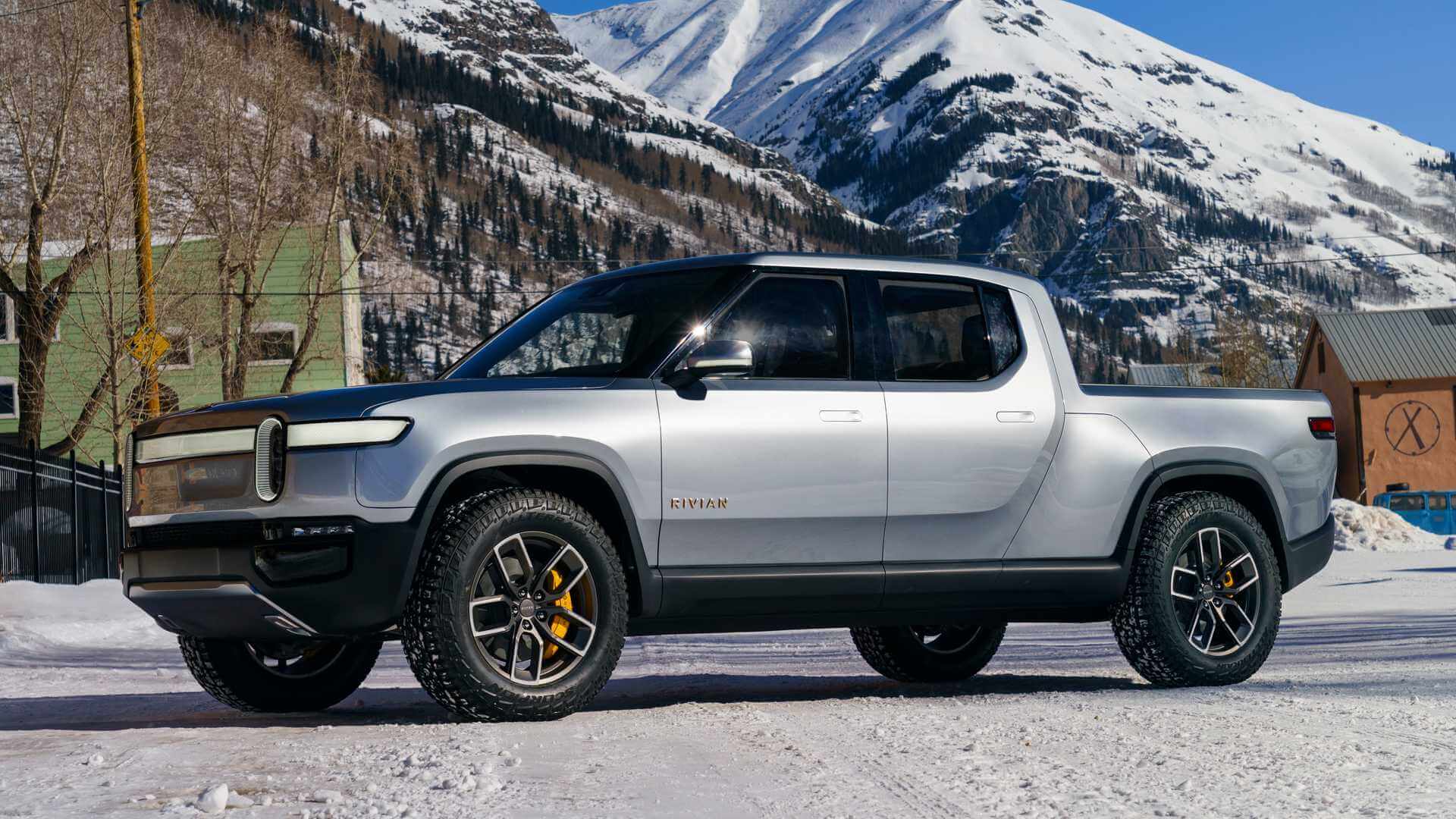
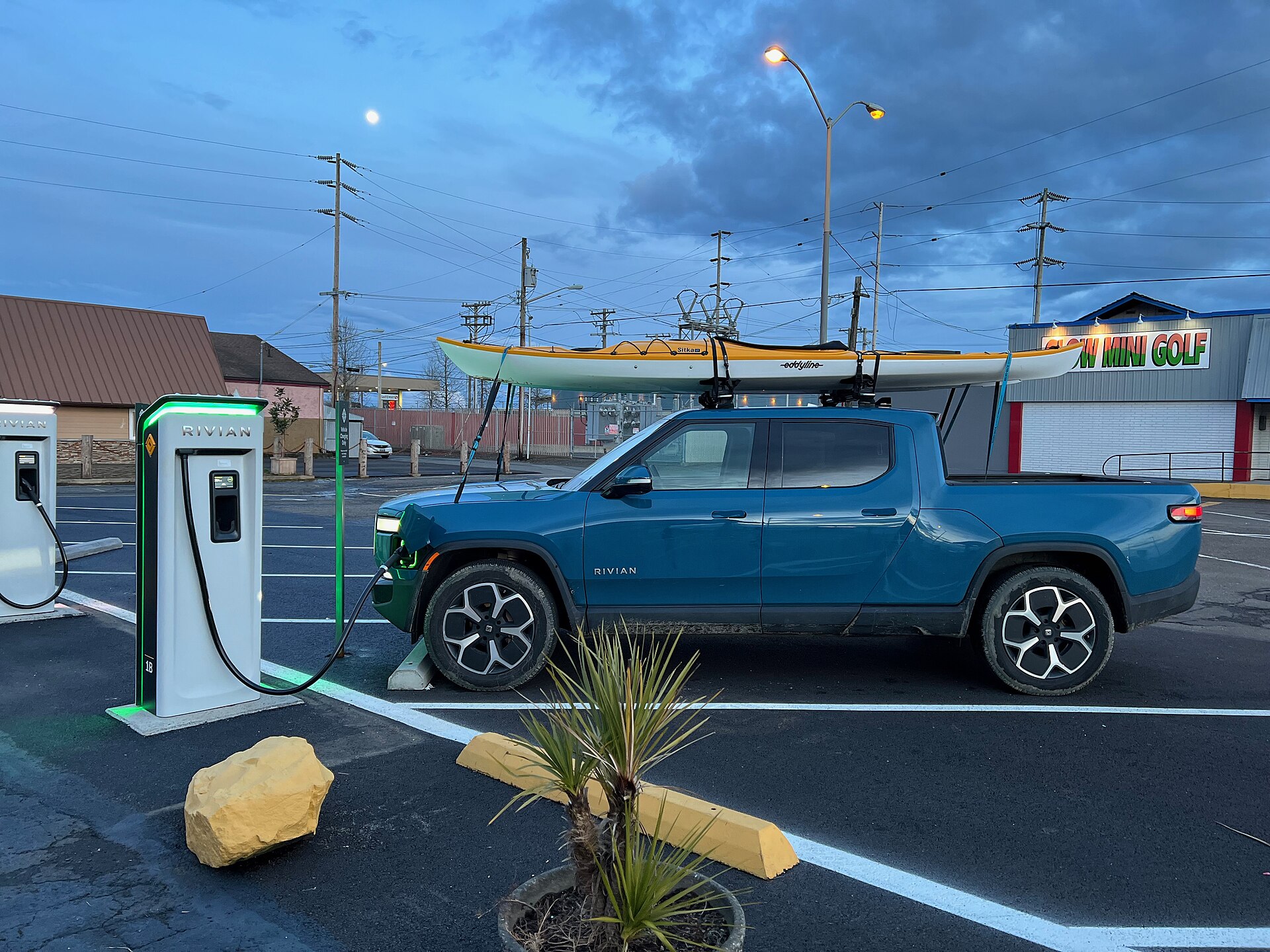
The Rivian R1T is a full-size electric pickup from the American company Rivian, with a distinctive design and specifications that let it rival — and in some respects beat — conventional trucks with combustion engines. It was the first model from the young manufacturer to reach customers, and it won MotorTrend's Truck of the Year award for 2022.
In short
- First shown in 2018 and built at Rivian's plant in Normal, Illinois, from 28 September 2021; deliveries began in October 2021.
- Built on Rivian's "skateboard" platform with batteries, motors and suspension below the top of the wheels.
- Battery packs of 105, 135 and 149 kWh give EPA ranges of roughly 370 to 645 km, and outputs range from 397 kW (533 hp) to 764 kW (1,025 hp) in the second-generation Quad-Motor.
- It can tow up to about 5,000 kg, wade through about 1.09 m of water and raise its ground clearance to 366 mm.
Specs by version
Engines
| Version | Engine | Gearbox | Drive | Production years |
|---|---|---|---|---|
| Automatic (A1) · 2022 (EPA) | Electric | 1-sp Automatic | Four-wheel drive (4×4) | 2022 |
Performance
Show all 1 versions
| Version | Fuel consumption | Range |
|---|---|---|
| Automatic (A1) · 2022 (EPA) | 29.9 kWh/100 km48.1 kWh/100 mi | 505 km314 mi |
Verified Manufacturer and type-approval data from our catalog · Sources and methodology
Rivian R1T at a glance
When electric pickups became a hot topic, several American start-ups had already shown concepts. Rivian joined them in 2018 with a truck first called the A1T and renamed R1T in November that year. What set it apart was its "skateboard" platform: a compact layout of motors, batteries and chassis components in a flat base on which almost any body can be mounted. The R1T has a classic double-cab pickup body with a load bed, and because there is no engine at the front, the space under the bonnet becomes a large luggage compartment. The truck was updated in 2024 with a second-generation design that introduced a simpler zonal electrical architecture. More about the brand is in our Rivian catalogue.
Exterior
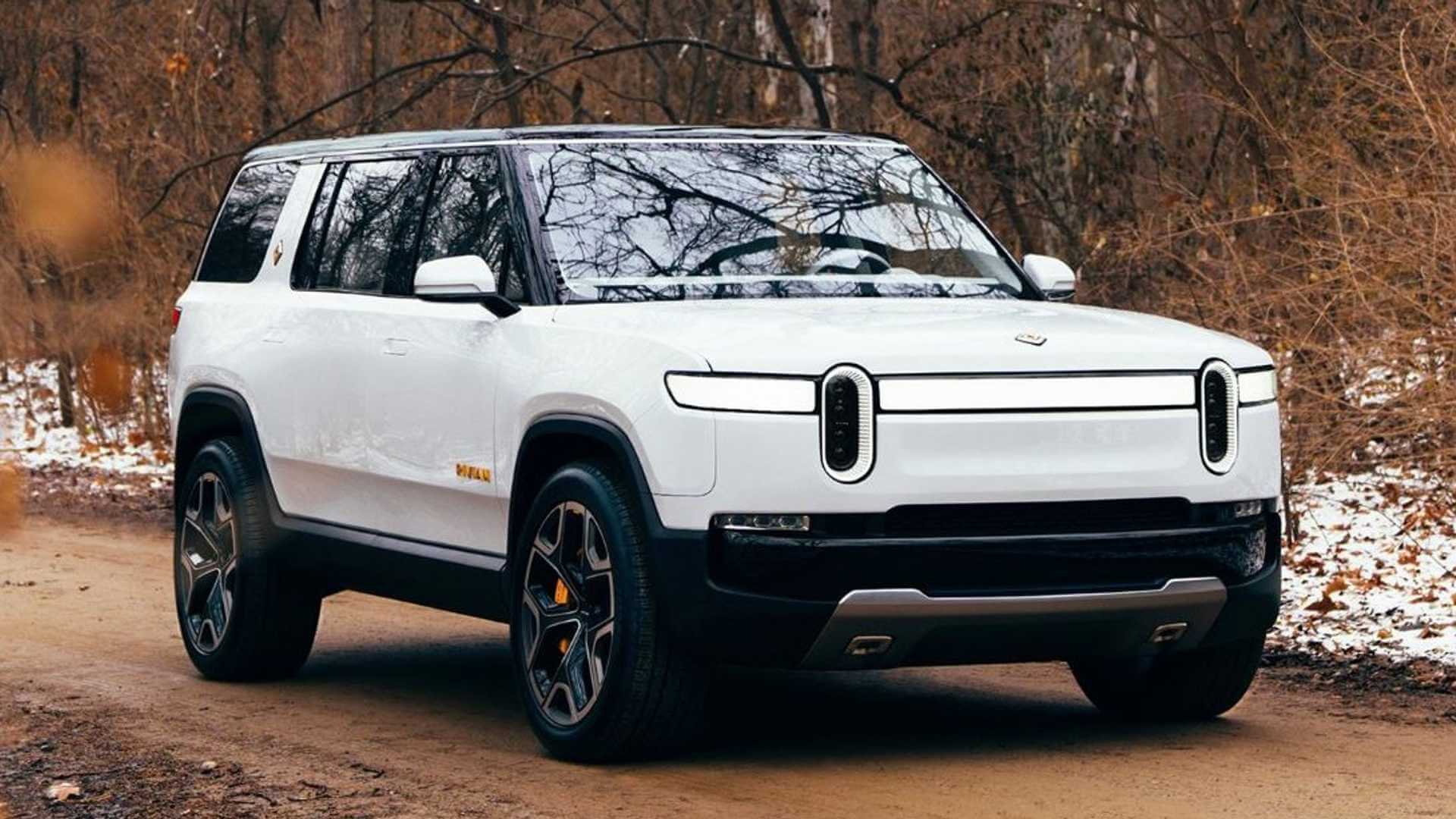
The R1T looks modern rather than brutal. Unlike most American pickups, which use a ladder frame and a rigid rear axle, it has independent suspension front and rear. Its most recognisable feature is the pair of vertical oval headlights, which handle both low and high beam and are joined by a light bar across the front. The front end is unusual enough that the truck never disappears in traffic. Exterior design was led by Jeff Hammoud. Smooth lines, a compact bumper and small fog lights complete the face.
From the side, the R1T has classic pickup proportions with unpainted protective cladding around the body. Air suspension lets the ground clearance vary from about 200 to 366 mm. In the highest off-road setting, the approach angle is 35.5°, the breakover angle 26.4° and the departure angle 30°, and the truck can wade through about 1.09 m of water; Rivian says the battery and electrical components are fully sealed. At the rear, a full-width LED light strip runs above the R1T name. There is no exhaust, of course; instead you find a tailgate with integrated steps, shaped plastic trim with lights and towing points.
Interior and storage
The R1T has a four-door, five-seat crew cab. Rivian says it uses premium yet practical materials that are easy to clean, since owners are expected to drive off-road. Real wood, aluminium and leather or vegan leather are used. The front seats are power-adjustable, and the seats are heated and ventilated. The dashboard carries a 12.3-inch digital instrument display and a 15.6-inch central touchscreen for infotainment, and software is updated over the air. The centre console has an armrest, plenty of organisers and room for drinks.
A panoramic glass roof and ambient lighting make the cabin bright. The rear bench has individually shaped seats, and despite being a working vehicle the R1T offers a high level of comfort. The skateboard layout creates extra storage: a front trunk of about 311 litres under the bonnet, and the "gear tunnel" of about 328 litres that runs across the truck behind the rear seats, reached through doors on each side. There is further storage under the rear seats and below the bed floor. A tonneau cover hides the cargo, crossbars can be fitted to the bed sides — for example to carry a tent — and a full-size spare wheel can be stored too. Towing capacity is 11,000 lb, about 5,000 kg.
Motors, batteries and range
| Version | Power (kW / hp) | Torque |
|---|---|---|
| Dual-Motor | 397 kW / 533 hp | 827 Nm |
| Performance Dual-Motor | 496 kW / 665 hp | 1,124 Nm |
| Quad-Motor | 623 kW / 835 hp | 1,231 Nm |
| Quad-Motor (second generation) | 764 kW / 1,025 hp | — |
| Battery | Capacity | EPA range (approx.) |
|---|---|---|
| Standard | 105 kWh | 370 km (231 miles) |
| Large | 135 kWh | 505 km (314 miles) |
| Max | 149 kWh | 645 km (401 miles) |
The original concept called for four motors, one for each wheel, and the Quad-Motor version delivers exactly that, enabling precise torque vectoring. Dual-Motor versions have one motor per axle. The Quad-Motor R1T has been tested at 3.0 seconds from 0 to 60 mph (about 97 km/h). Exact range depends on the motors, battery and wheel size, so individual EPA ratings vary around the figures above.
Platform and chassis
The skateboard platform places the battery, motors and chassis components below the top of the wheels, giving a low centre of gravity and freeing up space. Suspension uses double wishbones at the front and a multi-link rear, with air springs and adaptive dampers. The battery pack is integrated into the structure and protected by reinforced materials. DC fast charging allows a substantial top-up in around half an hour at a suitable charger, according to Rivian.
Safety and technology
The R1T has eight airbags and a suite of driver-assistance systems using radar, cameras and positioning sensors. The second-generation update reduced the wiring length by about 2.6 km and the weight by about 20 kg by grouping control units into zones, and the 2024 model earned the IIHS Top Safety Pick+ rating.
Strengths and weaknesses
The R1T combines strong performance, serious off-road capability, a high towing rating and clever storage solutions, with a premium, practical cabin and over-the-air updates. Its downsides are the high price, heavy weight and dependence on fast-charging infrastructure for long trips, especially when towing. Rivals include the Tesla Cybertruck, Ford F-150 Lightning, Chevrolet Silverado EV and GMC Hummer EV.
FAQ
When did the Rivian R1T go on sale?
Production started in Normal, Illinois, on 28 September 2021, and customer deliveries began in October 2021.
How far can the Rivian R1T go on a charge?
Depending on the battery, about 370 km (105 kWh), 505 km (135 kWh) or 645 km (149 kWh) on the EPA cycle.
How powerful is the Rivian R1T?
From 397 kW (533 hp) in the Dual-Motor to 764 kW (1,025 hp) in the second-generation Quad-Motor.
How much can the Rivian R1T tow?
Up to 11,000 lb, about 5,000 kg.
What is the Rivian gear tunnel?
A storage compartment of about 328 litres running across the truck between the cab and the load bed, accessible through doors on both sides.
Data sources
Data checked by an editor against the sources below.
- Wikipedia — Rivian R1T
- US EPA fueleconomy.gov — 44462.shtml