Bantam BRC-40: How a Small Pennsylvania Firm Built the First Jeep
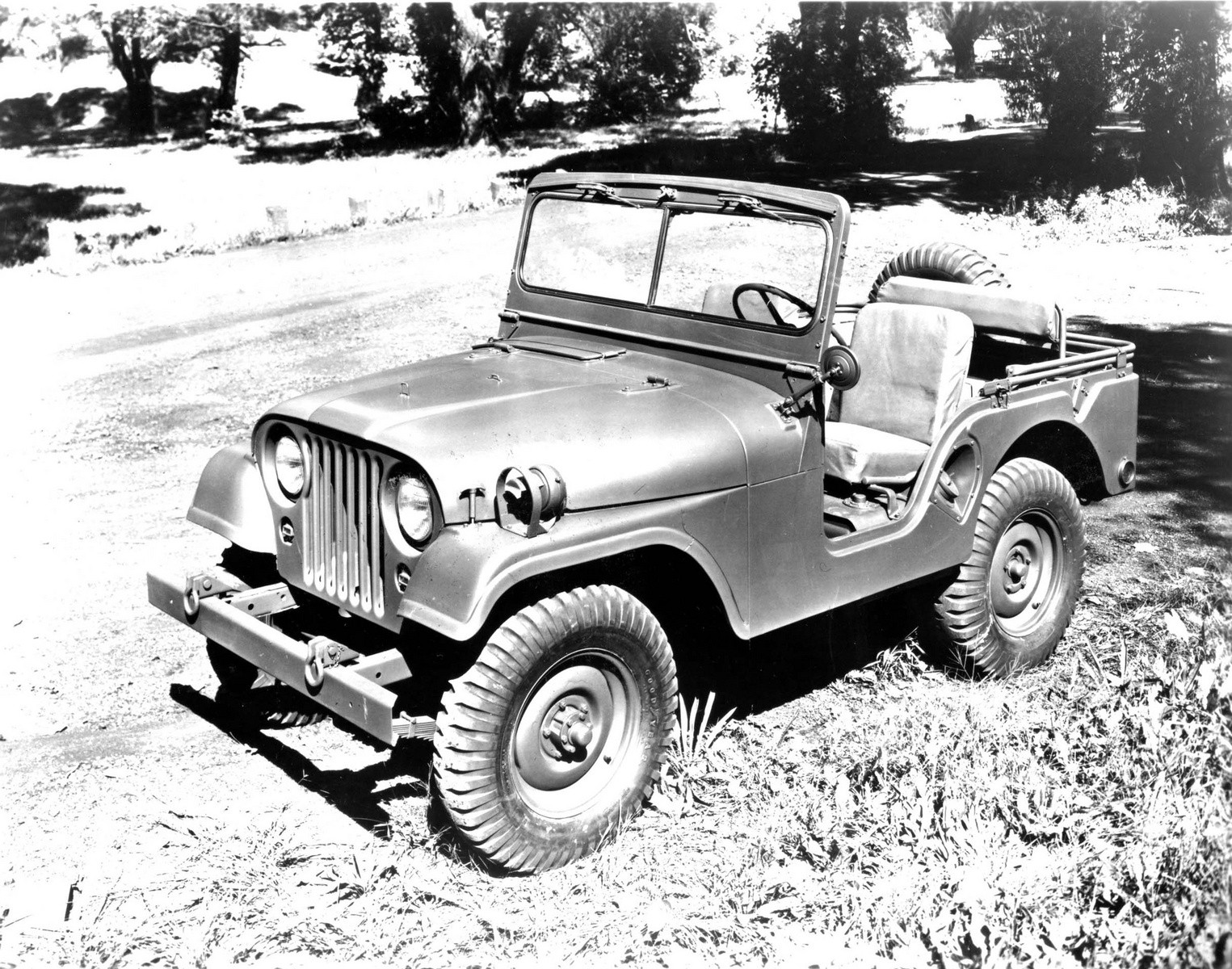
The Bantam BRC-40 was the first production quarter-ton 4×4 reconnaissance car for the US Army, the vehicle the world soon called the Jeep. The American Bantam Car Company of Butler, Pennsylvania, designed it with engineer Karl Probst in 1940 and delivered the prototype on 23 September 1940. Bantam built 2,642 BRCs, but the mass-production contracts went to Willys and Ford.
Key takeaways
- The Army's July 1940 tender asked for a 4×4 with an 80-inch wheelbase and a 590 kg weight limit; only Bantam and Willys-Overland bid.
- Karl Probst drew the design in days, and the prototype reached Camp Holabird within the 49-day deadline.
- About 2,642 vehicles were built in 1940–1941: 70 pre-series Model 60s and the BRC-40 production version.
- Bantam lacked the capacity for mass production; Willys and Ford built about 640,000 standardised quarter-ton 4×4s during the war.
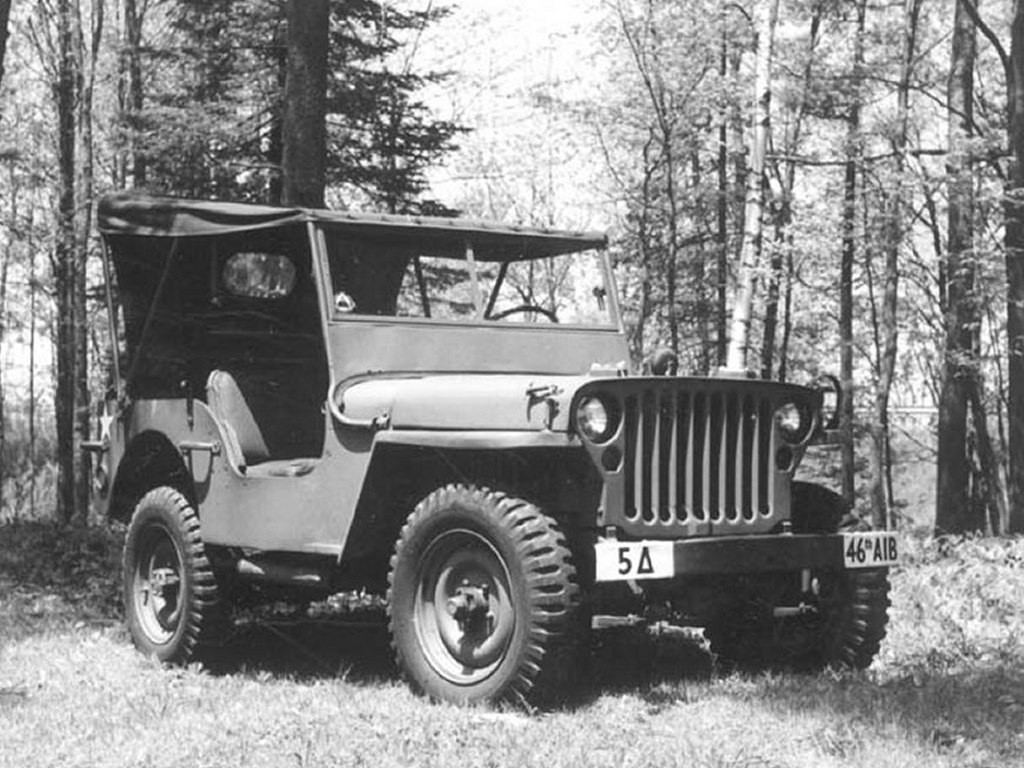
Bantam BRC-40 at a glance

| Item | Data |
|---|---|
| Maker | American Bantam Car Company, Butler, Pennsylvania |
| Designer | Karl Probst, with Bantam's team |
| Prototype delivered | 23 September 1940, Camp Holabird, Maryland |
| Production | 1940–1941 |
| Built | 2,642 (excluding the prototype) |
| Engine | Continental BY-4112 four-cylinder, 1,835 cc, 36 kW (48 hp) |
| Torque | 108 Nm (80 lb-ft) |
| Gearbox | 3-speed manual, 2-speed transfer case |
| Wheelbase | 2,032 mm (80 in) |
| Length / width / height | 3,251 / 1,422 / 1,778 mm with roof |
| Kerb weight | about 950 kg |
| Top speed | 86 km/h |
| Range | about 315 km |
The 1940 Army tender
By 1940 the US Army wanted a light, four-wheel-drive car for reconnaissance, messengers and light loads. On 27 May 1940 a technical committee approved the basic requirements: all-wheel drive, a wheelbase of 80 inches (2,032 mm), a track of about 47 inches and a maximum weight of 590 kg. The old version of this page listed some of the other targets, such as a height of about 92 cm, a payload of at least 270 kg and a mounting for a light gun.

In July 1940 the War Department sent the tender to 135 American manufacturers. The contract was worth 175,000 US dollars and set brutal deadlines: a prototype in 49 days and 70 vehicles in 75 days. Only two companies answered: American Bantam and Willys-Overland.
Karl Probst and the 49-day prototype
Bantam was a small maker of economy cars, and it badly needed the work. It received the specification on 17 July 1940 and hired Karl Probst, an independent designer from Detroit. Probst arrived in Butler on 18 July and finished the preliminary drawings the next day. Bantam submitted its bid on 22 July and won the tender on 5 August, because it promised the vehicle in 49 days against Willys' 120.

To save time, the team used bought-in parts: Studebaker Champion axles with Spicer joints, a Spicer transfer case and a Continental four-cylinder engine. On 23 September 1940 Bantam drove the prototype 275 km to Camp Holabird in Maryland. It then passed a 30-day endurance test of 5,800 km, and on 27 October it was shown to the armoured forces at Fort Knox.
The prototype weighed 922 kg, far above the 590 kg limit. The designers had planned for about 841 kg from the start and ignored the official limit; the production cars weighed about 950 kg.
From Model 60 to BRC-40
| Version | Built | Features |
|---|---|---|
| Prototype | 1 | rounded front wings, delivered September 1940 |
| Model 60 (Mk II, BRC-60) | 70 | pre-series; eight with four-wheel steering |
| BRC-40 | Army orders for 1,350, then 72 more | production version; 22 of the 72 with all-wheel steering |
| Total | 2,642 | figure excluding the prototype; Ware's order summary gives 2,643 |
The second version, the Model 60, had squarer front wings, more ground clearance and grilles over the headlamps, as the old version of this page described. The BRC-40 followed as the production version. Its unit price fell from 1,123 US dollars for the first 500 to 938 US dollars. Eight Model 60s had four-wheel steering, and 22 of a later batch of BRC-40s also had all-wheel steering for tests; the idea was not adopted. Production began on 31 March 1941.

The requirement against the real car
| Item | Army requirement (1940) | Bantam prototype | BRC-40 production |
|---|---|---|---|
| Wheelbase | 80 in (2,032 mm) | 80 in | 80 in (2,032 mm) |
| Track | about 47 in | – | about 47.5 in |
| Weight | 590 kg maximum | 922 kg | about 950 kg |
| Drive | four-wheel drive | four-wheel drive | four-wheel drive, two-speed transfer case |
| Deadline | prototype in 49 days | delivered on time | – |
By our calculation the production car was about 60 % heavier than the weight the Army had first asked for. The overweight did not stop the project. Willys had the same problem: to create its MA, it had to cut roughly 240 lb, about 110 kg, from the Quad. The old version of this page added a few more items from the 1940 brief, including a top speed target and a payload of at least 270 kg.

Rivals: the Willys Quad and the Ford Pygmy
The Army gave Bantam's drawings to the other makers. Willys delivered its Quad on 11 November 1940, with the same Spicer axles and transfer case but its own stronger engine. Ford introduced the Pygmy on 23 November 1940.

| Vehicle | Delivered | Engine | What followed |
|---|---|---|---|
| Bantam BRC | September 1940 | Continental, 36 kW (48 hp) | 2,642 built |
| Willys Quad | November 1940 | Willys "Go Devil", 45 kW (60 hp) gross | Willys MA, then MB |
| Ford Pygmy | November 1940 | Ford four-cylinder | Ford GP, then licensed GPW |
The Army ordered 1,500 of each type for trials. The Willys "Go Devil" engine, with 45 kW (60 hp) gross, was a key reason for its later choice. By our calculation the production Bantam carried about 26 kg per kW. Our power-to-weight calculator explains the ratio.
Why Bantam lost the contract
Bantam could not build the 75 vehicles a day the Army needed. In July 1941 Willys won the contract for a standardised design, the Willys MB. From January 1942 Ford built the same design under licence as the GPW, with the Willys engine, so that parts were interchangeable. Willys built about 363,000 MBs and Ford about 280,000 GPWs, some 640,000 vehicles in total. The old version of this page credited the wartime total to Ford alone; both companies built it.
Bantam got no further vehicle orders. Instead it received an Army order for 10,000 light trailers for the new 4×4s. In 1948 the US Federal Trade Commission ruled that Willys could not claim it had created the Jeep, because the idea came from Bantam. Bantam went out of business soon after, and in 1950 Willys registered "Jeep" as its trademark. That is why every modern Jeep Wrangler carries a name that began at Butler.
Lend-Lease and wartime service
Most BRC-40s went abroad. Britain received 1,001 in 1941 and 150 more in 1943, the latter originally ordered by Yugoslavia. Under Lend-Lease, 531 went to the Soviet Union, 500 of them by the end of 1942. The old page mentioned that Bantams served there in large numbers. A few also reached the Polish army.
The BRC could carry a .50-calibre Browning M2 on a pillar between the front seats. In 1941 the Army tested BRC-40s with a 37 mm gun as tank destroyers; seven T2 and eleven T2E1 conversions were built, but the chassis proved too light and the gun was removed.
Verdict: the BRC-40 for collectors today
Surviving BRC-40s are rare collector items, much rarer than Willys MBs and Ford GPWs. In 2015 the Pennsylvania legislature recognised Bantam's role in a resolution. For a collector, a BRC-40 means a far smaller supply of spare parts than for the Willys MB. In return, it is the car that started the story. More vehicles of the period are in our 1940s classics section, and the rest of the brand's history is in our history of Jeep.
How the BRC-40 compares with the Willys MB
| Item | Bantam BRC-40 | Willys MB |
|---|---|---|
| Wheelbase | 2,032 mm (80 in) | about 2,030 mm (80 in) |
| Engine | Continental 1,835 cc, 36 kW (48 hp) | Willys L134 2.2 l, 45 kW (60 hp) gross |
| Built | 2,642 | about 363,000 (plus about 280,000 Ford GPWs) |
The table shows why the Army chose the Willys: more power and a maker able to build in volume. The car comparison tool has more classic off-roaders, and our 4×4 section lists modern successors.
FAQ
Was the Bantam BRC-40 the first Jeep?
Yes. Bantam's prototype of September 1940 was the first vehicle built to the Army's quarter-ton 4×4 specification, and the BRC-40 was the first production version. In 1948 the US Federal Trade Commission confirmed that the idea came from Bantam.
Who designed the Bantam BRC?
Karl Probst, an independent engineer from Detroit, working with Bantam's staff in Butler, Pennsylvania. He drew the preliminary design in about two days in July 1940.
How many Bantam BRC-40s were built?
About 2,642, excluding the prototype, including 70 pre-series Model 60s. Other sources give 2,605 or 2,675, depending on whether they count pre-series cars and later orders.
Why did Willys and Ford build the wartime Jeep instead of Bantam?
Bantam was too small to build the 75 vehicles a day the Army wanted. Willys also offered a stronger engine, and Ford built the same standardised design under licence from 1942.
Where did the Bantam BRC-40s go?
Most went abroad under Lend-Lease: 1,151 to Britain and 531 to the Soviet Union, together about two thirds of production. The remainder stayed with the US Army.