
BMW iX vs Mercedes-Benz EQE SUV: electric SUVs
Updated Report an error By Oleksandr Hnatiuk

BMW · 2021–present
iX
No versions in our catalog yet
- Power
- -
- 0–100 km/h
- -
- Top speed
- -
- Kerb mass
- -

Mercedes-Benz · 2022–present
EQE SUV X294
- Power
- 235 kW320 PS
- 0–100 km/h
- 6.4 s
- Top speed
- 210 km/h
- Kerb mass
- 2,490 kg
Verdict Opinion
The iX is the stronger all-rounder. For a lower German list price it adds 65 kW, all-wheel drive, faster charging and a towing limit of 2,500 kg, with the same WLTP range.
The EQE SUV answers with a slightly larger boot, lower official consumption and quicker AC charging with the 22 kW option. If production ends in 2026 as reported, nearly new 350+ models with the 96.0 kWh battery may offer good value, but buyers who tow a caravan or a horse trailer should choose the BMW.
- Oleksandr Hnatiuk
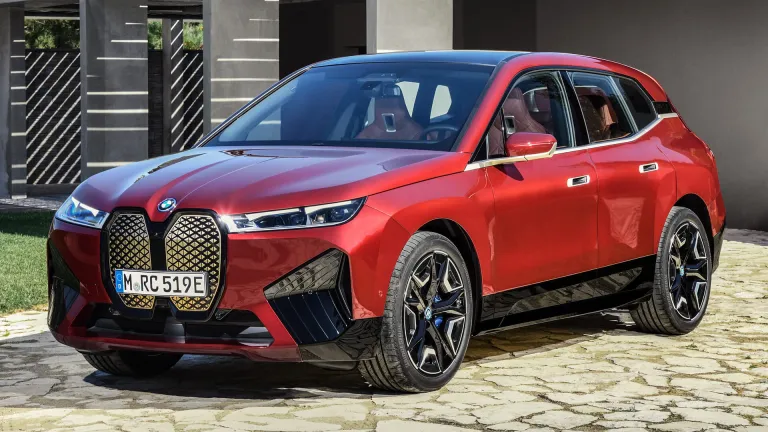
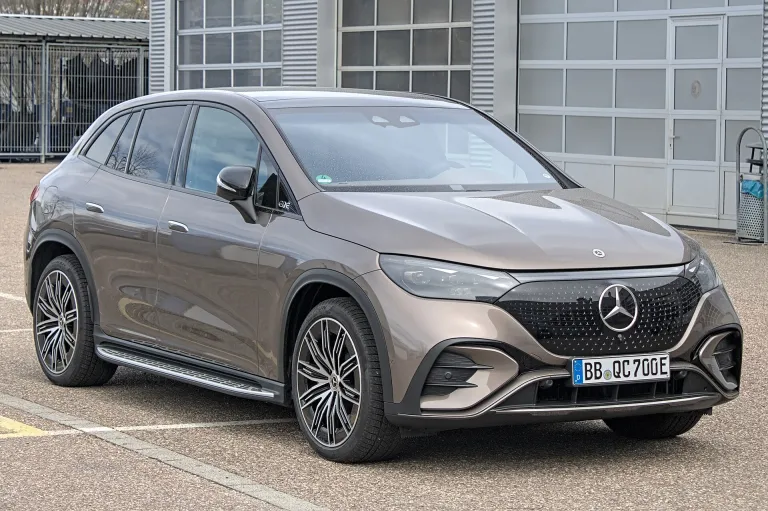
The BMW iX and the Mercedes-Benz EQE SUV are the two German electric SUVs of roughly five metres that were designed as electric cars from the start. The iX (I20) has been built in Dingolfing since July 2021 on an aluminium spaceframe and was updated in 2025, when the xDrive45 became the entry version. The EQE SUV (X294) followed in December 2022 from Tuscaloosa, Alabama, and Beijing, on the EVA platform it shares with the Mercedes-Benz EQE saloon.
Their futures differ. Autocar reported in September 2025 that the EQE SUV would leave production in 2026 without a direct successor, while the iX continues. The comparison sets the iX xDrive45 against the updated rear-drive EQE 350+ sold in Germany from April 2025.
BMW iX vs Mercedes-Benz EQE SUV: power, range, charging and prices
Power and drive
The iX xDrive45 has two motors and all-wheel drive as standard, with 300 kW (408 PS) and 700 Nm. It reaches 100 km/h in 5.1 s and 200 km/h. The EQE 350+ has one rear motor with 235 kW (320 PS) and 565 Nm and takes 6.4 s to 100 km/h. Mercedes adds all-wheel drive with the 350 4MATIC and 500 4MATIC, the latter with up to 330 kW (449 PS).
Battery, range and efficiency
The ranges are almost identical. The xDrive45 uses a 94.8 kWh net battery and is rated at 602 km WLTP and 17.8 kWh/100 km. The EQE 350+ has 96.0 kWh and 603 km, with 18.7 kWh/100 km. ADAC measured the iX at 21.1 kWh/100 km in its own test, charging losses included. For longer range BMW offers the iX xDrive60 with 400 kW and 700 km WLTP.
Charging
The iX charges at up to 175 kW DC, and 10 to 80 percent takes 34 minutes according to BMW and 36 minutes in the ADAC test. The EQE SUV peaks at 170 kW and needs 32 minutes in the ADAC data on a 400-volt system. On AC the iX takes 585 minutes at 11 kW and 300 minutes at 22 kW. The EQE 350+ needs 480 minutes at 11 kW and 255 minutes with the optional 22 kW charger, which cost EUR 1,190 in Germany in 2025.
Size, boot and weight
The iX is longer at 4,965 mm against 4,863 mm, wider at 1,970 mm against 1,940 mm and slightly taller at 1,695 mm. The EQE SUV has the longer wheelbase, 3,030 mm against 3,000 mm. The Mercedes boot holds 520 to 1,675 litres, the BMW 500 to 1,750 litres. Kerb weights in EU trim are 2,525 kg for the iX and 2,490 kg for the EQE 350+.
Towing
This is the largest gap. The iX xDrive45 may tow 2,500 kg braked and 750 kg unbraked, according to ADAC. For the EQE 350+ ADAC lists only 750 kg, braked or unbraked.
Euro NCAP
Both have five Euro NCAP stars. The iX was tested in 2021 with 91 percent for adult occupants, 87 for children, 73 for vulnerable road users and 81 for safety assistance. The EQE 350 4MATIC SUV followed in 2023 with 87, 90, 80 and 85 percent.
Prices in Germany
ADAC lists the iX xDrive45 at EUR 83,500 in 2026. The EQE 350+ Electric Art Advanced cost EUR 86,811 from April 2025 to October 2026, and the 500 4MATIC EUR 99,841. At the top, the iX M70 xDrive with 485 kW (659 PS) cost EUR 126,500 in 2025, while Mercedes-AMG sold the EQE 53 4MATIC+ with 460 kW, or 505 kW with the Dynamic Plus package.
Full specifications
| BMW iX | Mercedes-Benz EQE SUV | |
|---|---|---|
| General | ||
| Version | No data | EQE 350+ 96 kWh · electric · 235 kW (320 PS) |
| Production years | 2021–present | 2022–present |
| Body | SUV | SUV |
| Class | No data | SUV / crossover |
| Country | Germany | United States |
| Performance | ||
| Power Why it matters: More power means stronger acceleration and easier overtaking, especially with a full load. | No data | 235 kW (320 PS) 315 hp |
| Power, all versions | No data | 180–505 kW (245–687 PS) 241–677 hp |
| Torque Why it matters: Torque is the pulling force you feel when accelerating from low revs, towing or climbing hills. | No data | 565 Nm 417 lb-ft |
| 0–100 km/h Why it matters: A shorter 0–100 km/h time means quicker getaways and safer merging onto fast roads. | No data | 6.4 s |
| Top speed Why it matters: Top speed hints at how relaxed the car is at motorway speeds, even if you never reach it. | No data | 210 km/h 130 mph |
| Power per tonne | No data | 94 kW/t 115 hp/ton calculated |
| Engine and transmission | ||
| Fuel | Electric | Electric |
| Gearbox | No data | 1-speed single-speed |
| Drive | No data | Rear-wheel drive |
| Dimensions and weight | ||
| Length | No data | 4,863 mm 191.5 in |
| Width | No data | 1,940 mm 76.4 in |
| Height | No data | 1,685 mm 66.3 in |
| Wheelbase | No data | 3,030 mm 119.3 in |
| Kerb weight Why it matters: A lighter car is usually more agile and uses less energy. | No data | 2,490 kg 5,490 lb |
| Boot Why it matters: A bigger boot fits more luggage, shopping or a pram. | No data | 520 l 18.4 cu ft |
| Economy and running costs | ||
| Fuel cost per year | No data | €840/year estimated |
| Electric | ||
| Battery Why it matters: A bigger battery usually gives more range, but takes longer to charge fully. | No data | 96 kWh |
| Electric range Why it matters: A longer range means fewer charging stops on long journeys. | No data | 603 km 375 mi |
| Energy use | No data | 18.7 kWh/100 km |
| Safety | ||
| Euro NCAP | No data | ★★★★★ (2023) |
These cars do not differ in the data we have.
Equal rows hidden (2): Body, Fuel.
Estimated at 15,000 km a year with fuel at €0.30/kWh electricity.
In plain words
BMW iX is the older design (from 2021); Mercedes-Benz EQE SUV arrived in 2022. Our catalog has no 0–100 km/h for the BMW iX yet, so some checks above leave it out.
Which one to choose
Choose the BMW iX if you tow, want all-wheel drive in the entry version, plan long trips with fast DC stops, or want a model that BMW keeps building.
Choose the Mercedes-Benz EQE SUV if you rarely tow, prefer rear-wheel drive and lower WLTP consumption, or find a well-priced nearly new EQE 350+ from 2025 or 2026.
More options are ranked in our list of the best electric SUVs; every Mercedes is in the Mercedes-Benz catalogue.
Frequently asked questions
Which has more range, the BMW iX or the Mercedes EQE SUV?
They are level. The iX xDrive45 is rated at 602 km WLTP and the updated EQE 350+ at 603 km, according to ADAC. The iX xDrive60 goes further, with 700 km WLTP.
Which tows more, the iX or the EQE SUV?
The BMW iX by a wide margin. ADAC lists 2,500 kg braked for the iX xDrive45, against only 750 kg braked or unbraked for the EQE 350+.
Is the Mercedes EQE SUV being discontinued?
Autocar reported in September 2025 that the EQE SUV would end production in 2026; Mercedes did not comment. The German ADAC price list runs to October 2026, and the electric GLC takes over its role.
Which charges faster?
On DC the iX peaks at 175 kW and the EQE SUV at 170 kW, with 10 to 80 percent in 34-36 and 32 minutes respectively. On a 22 kW wallbox the EQE is quicker: 255 minutes against 300 minutes for the iX.