
Nissan Qashqai III vs Kia Sportage NQ5: specs side by side
Quick comparison from catalog data - no editorial review of this pair yet.

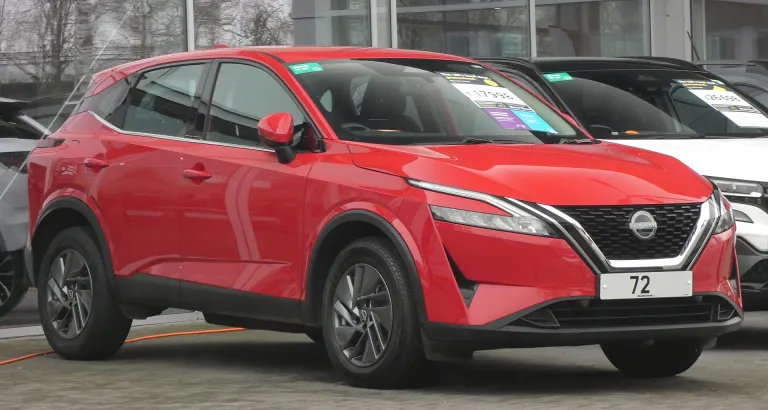
Nissan · 2021–present
Qashqai III
- Power
- 139 kW189 PS
- 0–100 km/h
- 7.9 s
- Top speed
- 170 km/h
- Kerb mass
- 1,699 kg
Photo: Harvey Bold / Wikimedia Commons, CC0

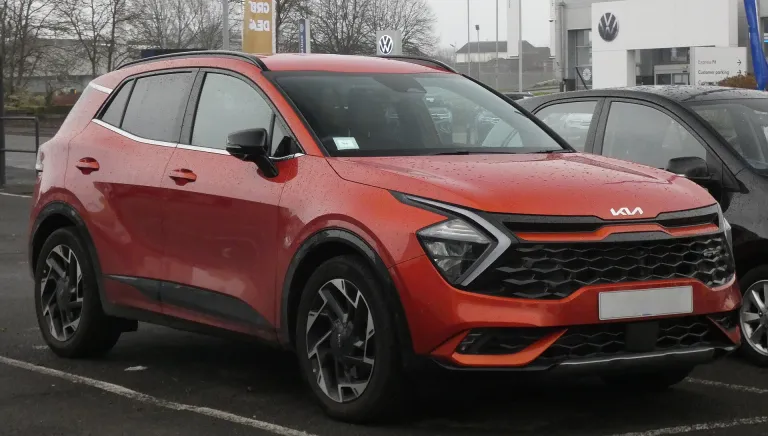
Kia · 2021–present
Sportage NQ5
- Power
- 137 kW186 PS
- 0–100 km/h
- -
- Top speed
- -
- Kerb mass
- -
At a glance
Who suits what, worked out from the catalog figures of the versions above.
Categories won: Qashqai III 1 Sportage NQ5 1
- Family Sportage NQ5 Boot: 503 l vs 479 l; Euro NCAP: 5★ vs 4★
- City Qashqai III Width: 1,835 mm vs 1,865 mm
In plain words
Nissan Qashqai III has more power: 139 kW (189 PS) against 137 kW (186 PS) for Kia Sportage NQ5. Kia Sportage NQ5 is 90 mm longer than Nissan Qashqai III (4,515 mm vs 4,425 mm). Kia Sportage NQ5 has the bigger boot: 503 l against 479 l. On the catalog figures, the Kia Sportage NQ5 is the pick for family; the Nissan Qashqai III is the pick for city. Our catalog has no 0–100 km/h for the Kia Sportage NQ5 yet, so some checks above leave it out.
Size and weight
Side view to scale, all cars from the front bumper.
| Qashqai III | Sportage NQ5 | |
|---|---|---|
| Length | 4,425 mm174.2 in † | 4,515 mm177.8 in +90 mm +3.5 in +2.0% |
| Width | 1,835 mm72.2 in † | 1,865 mm73.4 in +30 mm +1.2 in +1.6% |
| Height | 1,625 mm64.0 in † | 1,650 mm65.0 in +25 mm +1.0 in +1.5% |
| Wheelbase | 2,665 mm104.9 in † | 2,680 mm105.5 in +15 mm +0.6 in +0.6% |
| Boot | 479 l16.9 cu ft | 503 l17.8 cu ft +24 l +0.8 cu ft +5.0% |
| Fuel tank | 55 l14.5 gal US | 54 l14.3 gal US † −1 l −0.3 gal US −1.8% |
| Fits a standard garage? | Yes | Tight |
Difference vs Qashqai III (±). Garage check: a standard single garage takes a car up to about 5.0 m (16 ft 5 in) long and 1.9 m (6 ft 3 in) wide (width as listed in the catalog; some makers include the mirrors). Leave about 0.6 m (2 ft) to open the doors. † from another version of this generation.
Full specifications
| Nissan Qashqai III | Kia Sportage NQ5 | |
|---|---|---|
| General | ||
| Version | e-Power · hybrid · 139 kW (189 PS) | 2.0 CRDi · diesel · 137 kW (186 PS) |
| Production years | 2021–present | 2021–present |
| Body | SUV | SUV |
| Class | SUV / crossover | SUV / crossover |
| Country | Japan | South Korea |
| Performance | ||
| Power Why it matters: More power means stronger acceleration and easier overtaking, especially with a full load. | 139 kW (189 PS) 186 hp | 137 kW (186 PS) 184 hp |
| Power, all versions | 103–139 kW (140–189 PS) 138–186 hp | 85–195 kW (116–265 PS) 114–261 hp |
| Torque Why it matters: Torque is the pulling force you feel when accelerating from low revs, towing or climbing hills. | No data | 417 Nm 308 lb-ft |
| 0–100 km/h Why it matters: A shorter 0–100 km/h time means quicker getaways and safer merging onto fast roads. | 7.9 s | No data |
| Top speed Why it matters: Top speed hints at how relaxed the car is at motorway speeds, even if you never reach it. | 170 km/h 106 mph | No data |
| Power per tonne | 82 kW/t 100 hp/ton calculated | No data |
| Engine and transmission | ||
| Fuel | Hybrid | Diesel |
| Engine | No data | 1,998 cc · 4 cyl 2.0 l |
| Engine code | No data | Smartstream D2.0 |
| Gearbox | No data | 8-speed automatic |
| Drive | No data | All-wheel drive |
| Dimensions and weight | ||
| Length | 4,425 mm 174.2 in † | 4,515 mm 177.8 in |
| Width | 1,835 mm 72.2 in † | 1,865 mm 73.4 in |
| Height | 1,625 mm 64.0 in † | 1,650 mm 65.0 in |
| Wheelbase | 2,665 mm 104.9 in † | 2,680 mm 105.5 in |
| Kerb weight Why it matters: A lighter car is usually more agile and uses less energy. | 1,699 kg 3,746 lb | No data |
| Boot Why it matters: A bigger boot fits more luggage, shopping or a pram. | 479 l 16.9 cu ft | 503 l 17.8 cu ft Better |
| Fuel tank Why it matters: A larger tank means more distance between fuel stops. | 55 l 14.5 gal US | 54 l 14.3 gal US † |
| Economy and running costs | ||
| Fuel consumption Why it matters: Lower consumption cuts running costs and CO₂ emissions on every trip. | 5.2 l/100 km 45.2 mpg US | No data |
| CO₂ | 117 g/km | No data |
| Fuel cost per year | €1,370/year estimated | No data |
| Range on a full tank | 1,058 km 657 mi estimated | No data |
| Safety | ||
| Euro NCAP | ★★★★☆ (2025) | ★★★★★ (2022) Better |
These cars do not differ in the data we have.
Equal rows hidden (3): Production years, Body, Class.
Better marks the stronger figure - only for measurable specs (power, torque, 0–100 km/h, consumption, boot, weight).
Estimated at 15,000 km a year with fuel at €1.75/l petrol. † from another version of this generation.