
Opel Astra L vs Kia Ceed III: specs side by side
Quick comparison from catalog data - no editorial review of this pair yet.

Opel · 2021–present
Astra L
- Power
- 115 kW156 PS
- Kerb mass
- 1,332 kg

Kia · 2018–2025
Ceed III
No versions in our catalog yet
- Power
- 85–150 kW116–204 PS
- Kerb mass
- -
Photo: Vauxford / Wikimedia Commons, CC BY-SA 4.0
In plain words
Kia Ceed III is the older design (from 2018); Opel Astra L arrived in 2021. Opel Astra L is still in production; Kia Ceed III is not. Our catalog has no kerb mass for the Kia Ceed III yet, so some checks above leave it out.
Full specifications
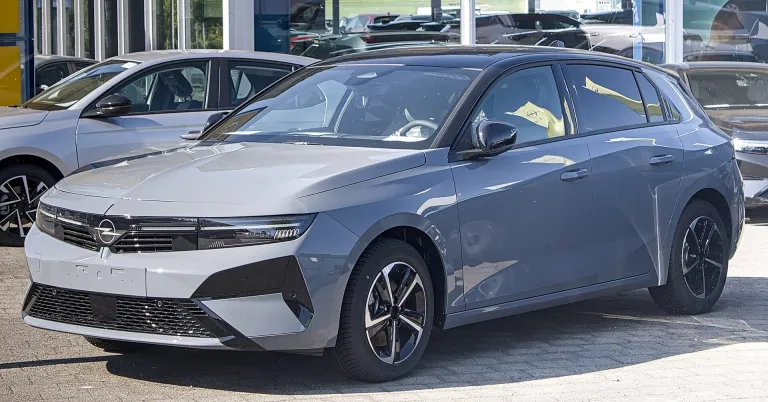
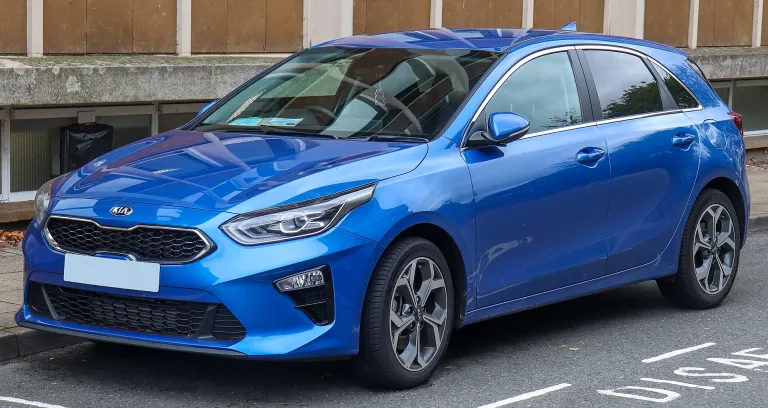
| Opel Astra L | Kia Ceed III | |
|---|---|---|
| General | ||
| Version | Electric · 115 kW (156 PS) | No data |
| Production years | 2021–present | 2018–2025 |
| Body | Hatchback, Station wagon | Hatchback, Station wagon |
| Country | Germany | South Korea |
| Performance | ||
| Power Why it matters: More power means stronger acceleration and easier overtaking, especially with a full load. | 115 kW (156 PS) 154 hp | 85–150 kW (116–204 PS) 114–201 hp Better |
| Power, all versions | 81–165 kW (110–224 PS) 109–221 hp | 85–150 kW (116–204 PS) 114–201 hp |
| Power per tonne | 86 kW/t 105 hp/ton calculated | No data |
| Engine and transmission | ||
| Fuel | Electric | No data |
| Drive | Front-wheel drive | No data |
| Dimensions and weight | ||
| Length | 4,374 mm 172.2 in | No data |
| Width | 1,860 mm 73.2 in | No data |
| Height | 1,441 mm 56.7 in | No data |
| Wheelbase | 2,675 mm 105.3 in | No data |
| Kerb weight Why it matters: A lighter car is usually more agile and uses less energy. | 1,332 kg 2,937 lb | No data |
| Boot Why it matters: A bigger boot fits more luggage, shopping or a pram. | 422 l 14.9 cu ft | No data |
| Fuel tank Why it matters: A larger tank means more distance between fuel stops. | 52 l 13.7 gal US † | No data |
| Economy and running costs | ||
| Fuel cost per year | €680/year estimated | No data |
| Electric | ||
| Battery Why it matters: A bigger battery usually gives more range, but takes longer to charge fully. | 54 kWh | No data |
| Electric range Why it matters: A longer range means fewer charging stops on long journeys. | 415 km 258 mi | No data |
| Energy use | 15.2 kWh/100 km | No data |
| Safety | ||
| Euro NCAP | ★★★★☆ (2022) | ★★★★☆ (2019) |
These cars do not differ in the data we have.
Equal rows hidden (1): Body.
Better marks the stronger figure - only for measurable specs (power, torque, 0–100 km/h, consumption, boot, weight).
Estimated at 15,000 km a year with fuel at €0.30/kWh electricity. † from another version of this generation.