Ferrari Strips the Hybrid From the 296 for a Road-Legal Track Car
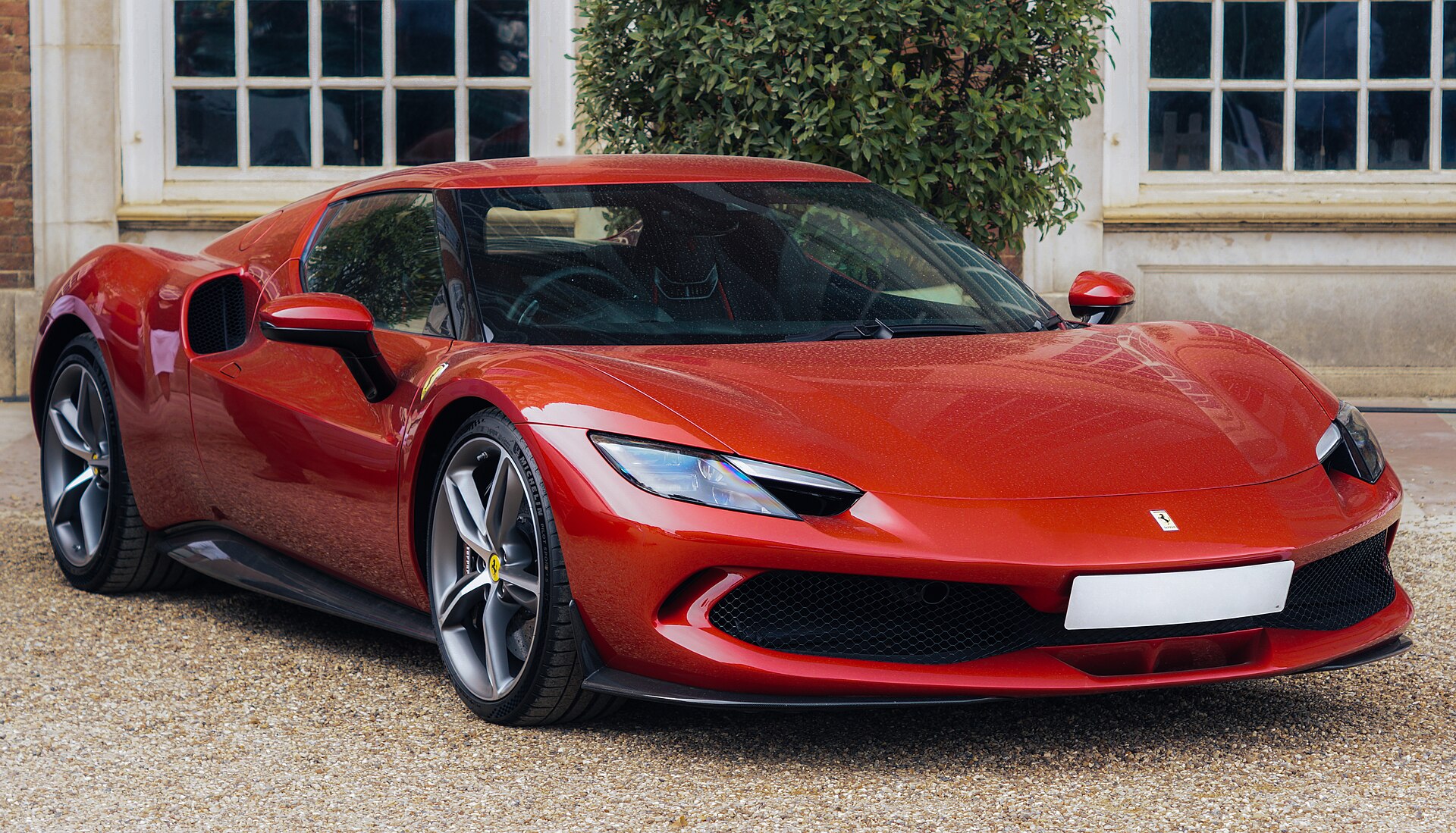
Ferrari revealed the 296 Challenge Stradale on 21 November, a track-focused version of its V6 berlinetta that loses the electric motor and high-voltage battery altogether. With 493 kW (670 PS) from the twin-turbo 3.0-litre engine alone, it lapped Fiorano in 1:18.5, quicker than the hybrid 296 Speciale, Top Gear and Carscoops reported.
Key takeaways
- Petrol-only 3.0-litre V6 with 493 kW (670 PS) and 740 Nm, rear-wheel drive and an eight-speed dual-clutch gearbox.
- Dry weight is 1,330 kg, 140 kg less than the 296 GTB and 80 kg less than the Speciale.
- Downforce peaks at 617 kg at 250 km/h, 42% more than the Speciale.
- Top Gear put the UK price at about GBP 260,000 in 2026, roughly the cost of a 296 GTB.
A Challenge Stradale without the hybrid
The Challenge Stradale name is back on a road Ferrari, and the recipe is familiar: fewer kilos, more downforce, a car built around lap times rather than headline power. Removing the hybrid hardware costs a lot of output. The Ferrari 296 GTB makes 611 kW (819 hp) and the Speciale 647 kW (868 hp), so the Challenge Stradale gives away 118 kW to the first and 154 kW to the second. Ferrari compensated with the Speciale's engine internals, including titanium conrods and a nitrided steel crankshaft, dry-sump hardware from the Ferrari Challenge race series, a mechanical air-conditioning compressor and a belt starter-generator in place of the electric motor. Power-to-weight works out at 1.98 kg per PS.
Aero, chassis and cabin
The body carries a deeper front splitter, larger bonnet ducts, twin canards, side fins, five pairs of vortex generators, a fully enclosed underbody and a fixed rear wing that alone produces 270 kg. Spring rates are nearly doubled, with helper springs taken from the race car, and the semi-active dampers have been recalibrated. Ferrari claims 34% more stability than the GTB and a 68% smaller roll gradient. Carbon-ceramic brakes measure 398 mm at the front and 380 mm at the rear, and buyers choose between Pirelli P Zero R and Trofeo RS tyres.
Inside, the door panels and centre console are single carbon-fibre pieces, sound deadening has gone and an optional trim removes the carpets. The front boot shrinks to 67 litres. Adaptive cruise control, lane keeping, sign recognition and drowsiness detection all stay, so the car can still be driven to the circuit on the motorway.
Faster on a twisty lap, slower to 200 km/h
The 0-100 km/h time is 2.8 seconds, the same as the Speciale, while 0-200 km/h takes 7.9 seconds, 0.9 seconds slower. The Fiorano time of 1:18.5 beats the GTB by 2.5 seconds and the Speciale by half a second. Ferrari's Matteo Turconi told Top Gear that the Speciale is quicker at Monza. Top Gear compared the newcomer with the Porsche 911 GT3 RS, which Porsche quotes at 1,450 kg wet and 3.2 seconds to 100 km/h. That rivalry has history, as the Porsche 911 family story shows.
What it means for buyers
Unlike many recent Ferrari specials, the Challenge Stradale is a regular series model rather than a numbered edition. Ferrari has not announced an official price, and the sources give no delivery dates. For anyone who found the plug-in 296 too heavy or too quiet, this is now the lightest member of the 296 family; the rest of the line-up sits in the Ferrari catalogue, and more track-capable road cars feature among the best sports cars.
Sources
- Top Gear: Challenge accepted: meet the non-hybrid 670bhp Ferrari 296 Challenge Stradale (21 Nov 2026) (accessed 24 Nov 2026)
- Carscoops: Ferrari Revives Challenge Stradale Name For A Hardcore, Non-Hybrid 296 (22 Nov 2026) (accessed 24 Nov 2026)
Found a mistake? Report an error