How Often to Change Engine Oil: Fixed vs Long-Life Intervals
Change your engine oil when the manufacturer says, and at least once a year. On most modern European cars a fixed schedule means every 15,000 km or 12 months. A long-life (variable) schedule stretches this to as much as 30,000 km or two years, if the car is driven gently over longer distances. If you mostly make short trips, tow, drive hard or run on LPG, shorten the interval by at least a third. Using oil with the exact manufacturer approval matters as much as the interval.
Key takeaways
- Fixed service: typically 15,000 km or one year. Long-life service at Volkswagen: as much as twice that distance and time.
- Short trips, city traffic, towing, high motorway speeds and low annual mileage all count as severe use: change oil sooner.
- Even if you drive very little, change the oil every year: it ages with time as well as distance.
- An oil service cost about €60 to €200 at independent garages and €90 to €350 at dealers in Germany in 2026.
Oil change intervals at a glance
| How you drive | Recommended approach | Typical interval |
|---|---|---|
| Long, steady journeys, over 15,000 km a year | Long-life (variable) service if the maker allows it | Up to 30,000 km or 2 years |
| Mixed driving, 10,000–20,000 km a year | Fixed service | 15,000 km or 1 year |
| Mostly short trips and city traffic | Fixed service, shortened | About two-thirds of the normal interval |
| Towing, heavy loads, fast motorway driving in heat | Fixed service, shortened | About two-thirds of the normal interval |
| Very low mileage (a few thousand km a year) | Time-based | Once a year |
| LPG conversion or tuned engine | Shortened | Up to half the normal interval for LPG |
These are guidelines. The handbook and the car's service indicator always come first, and a car still under warranty must follow the official schedule.
Fixed vs long-life service: which to choose
Most European manufacturers offer two regimes. Volkswagen's French service calendar is a good example. It lists a standard service every 15,000 km or one year. The alternative "Long Life" service can extend intervals to a maximum of 30,000 km or two years. Volkswagen says its customer advisers propose long-life servicing based on driving style, the type of route and annual mileage.
With a variable service, the engine control unit estimates oil condition from data such as engine temperature, cold starts, load and revs. It then shows the due date on the dashboard. Our guide to what a car's on-board computer does explains these readouts. The longer interval only applies if the engine is filled with long-life oil carrying the right approval. If a garage uses ordinary oil, the system must be reset to the fixed schedule.
Long-life servicing saves money and time for high-mileage drivers on motorways. It is a poor match for cars that do short hops in town. There, fuel and condensation get into the oil, and the long interval becomes a risk.
Severe use: when to change oil more often
TotalEnergies is one of Europe's big oil suppliers. It describes the ideal long-life conditions as more than 20 km of daily driving on flat, uncongested roads at 80–90 km/h in mild weather. Few drivers live like that. It recommends shorter intervals for:
- short trips and frequent city driving, especially with cold starts;
- fast motorway driving in hot weather, towing a trailer or carrying heavy loads;
- older, high-mileage engines;
- cars with a heavily clogged particulate filter;
- low annual mileage, for example around 3,000 km a year;
- tuned engines;
- cars converted to LPG, where contamination can acidify the oil.
Its rule of thumb is to cut the interval by at least a third, so 30,000 km becomes roughly 20,000 km. For LPG cars it suggests halving the interval. Auto Bild recommends a yearly oil change even if the manufacturer allows longer. It advises changing sooner still for frequent short trips or sporty driving.
Choosing the right oil: approval beats brand
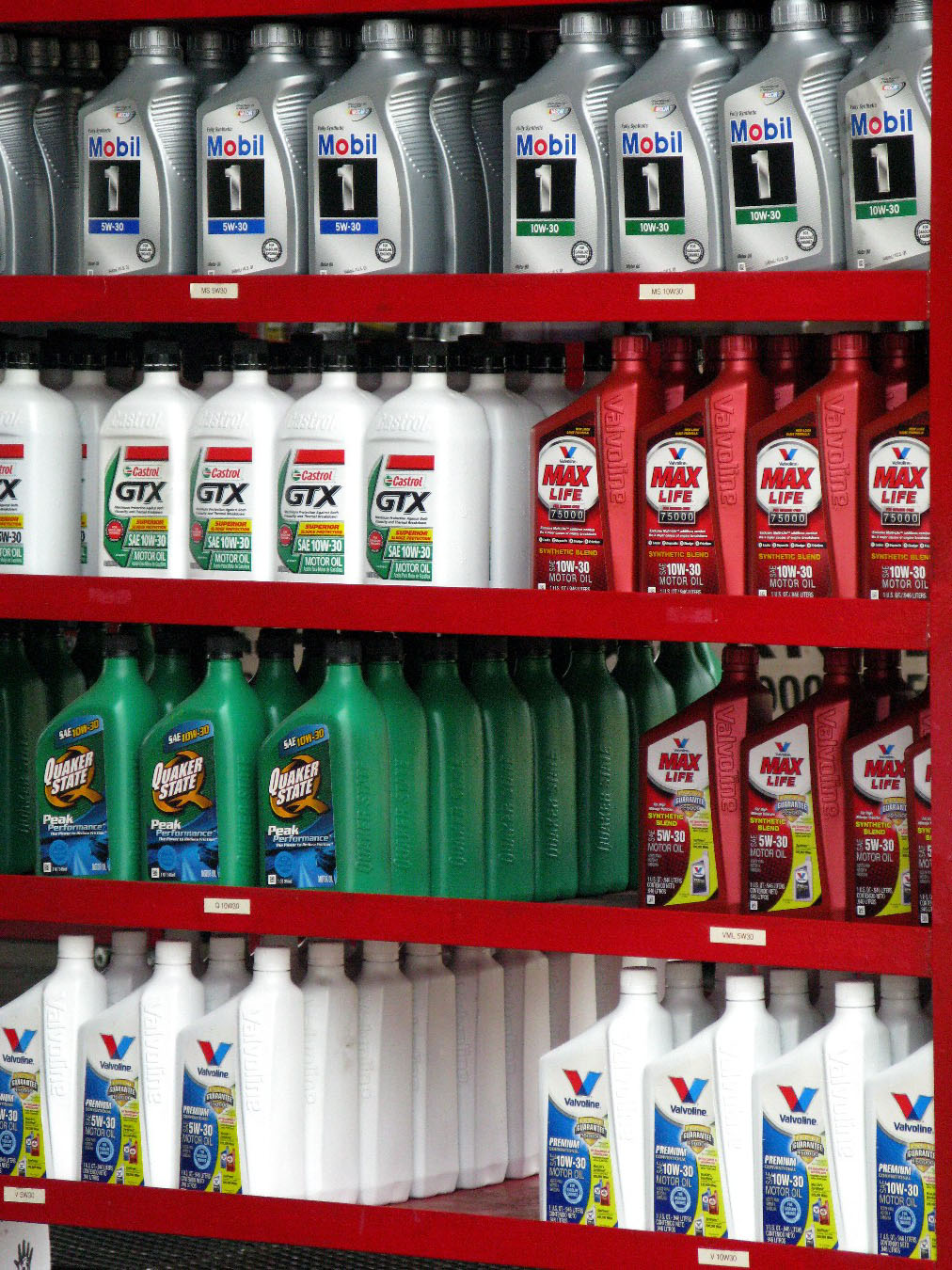
The viscosity on the bottle (for example 0W-30 or 5W-30) is only half of the story. What matters is the manufacturer approval printed on the label, such as Volkswagen's VW 504 00 for long-life oils. Any brand will do if it carries the approval your handbook lists.
The European industry standard is the ACEA classification, currently the 2023 sequence for cars. ACEA "C" categories are designed for engines with exhaust after-treatment such as particulate filters and catalysts. C4 is low-SAPS (low ash), while C2, C3, C5 and C6 are mid-SAPS with different viscosity levels. They are not interchangeable just because they share a letter. Use the category and approval the manufacturer specifies. The AA notes that the wrong type of oil can prevent a diesel particulate filter from regenerating properly.
Engines with a timing belt running in oil need extra care. Auto Bild stresses that the belt's life depends directly on using oil with the correct approval. Wrong or old oil can break the belt material down. Our guide to engines lists the main engine families, and the handbook gives the exact specification.
Check the level between services
An interval tells you when to replace the oil, not whether there is enough of it. Check the level every few weeks and before long trips:
- Park on level ground and wait a few minutes after switching off (or follow the handbook if the car has an electronic gauge only).
- Pull the dipstick, wipe it, push it fully back in and pull it out again.
- The level should sit between the minimum and maximum marks; top up with the same specification if it is near the minimum.
- Note how much you add. Rising consumption can point to worn piston rings, a turbo problem or, on some wet-belt engines, a developing fault worth reporting to a dealer.
Never overfill: too much oil can foam and damage seals and catalytic converters.
What an oil change costs
Auto Bild's 2026 price guide for Germany puts a DIY oil change at about €50 to €80. In 2026 independent workshops charge €60 to €200 and dealers €90 to €350, depending on oil quantity, quality and labour. Most modern engines take three to six litres; large engines can need more than ten. Always replace the oil filter at the same time. Keep the invoice showing the oil specification, because buyers will check it as part of the service history.
When you compare cars, put the yearly cost into the maintenance field of our cost of ownership calculator. A high-mileage car on long-life servicing can need fewer services per 100,000 km than one on a fixed schedule. Many of the best used diesel estates fall into that group.
Try our calculator
Cost of ownership calculatorFAQ
How often should I change engine oil?
Follow the manufacturer's schedule. A fixed service is typically due every 15,000 km or 12 months, a long-life service after as much as 30,000 km or 24 months. Change the oil yearly at the latest, and sooner if you mostly drive short trips, tow or drive hard.
Is long-life oil service bad for the engine?
Not if the car is used as intended, with longer regular journeys, and filled with oil carrying the correct approval. It is a poor choice for short-trip city driving, where fuel and moisture contaminate the oil before the long interval is reached.
Do I need to change oil once a year if I hardly drive?
Yes. Oil ages, absorbs moisture and loses additive strength over time, and cars used for short trips suffer most. A yearly change is cheap protection, especially for engines with turbochargers, timing chains or wet belts.
Can I use any 5W-30 oil?
Only if it carries the manufacturer approval or ACEA category listed in your handbook. Two 5W-30 oils can have very different ash content and specifications. The wrong one can harm a particulate filter or a timing belt that runs in oil.
Does an independent garage oil change affect my warranty?
Generally no, as long as the garage follows the manufacturer's schedule, uses oil and parts that meet the specified approvals and records the work properly. Keep the invoices with the oil specification as proof.
Sources
- Volkswagen France: Calendrier de l'entretien (accessed 21 Oct 2026)
- TotalEnergies: LongLife, yes, but not for everyone (accessed 21 Oct 2026)
- Auto Bild: Ölwechsel, Kosten, Intervalle, Fehler, Anleitung (accessed 21 Oct 2026)
- OilSpecifications.org: ACEA oil sequences (accessed 21 Oct 2026)
- The AA: Diesel particulate filters, cleaning and problems (accessed 21 Oct 2026)
Found a mistake? Report an error