
Ford Mondeo CD391 vs Toyota Camry XV50: specs side by side
Quick comparison from catalog data - no editorial review of this pair yet.

Ford · 2014–2022
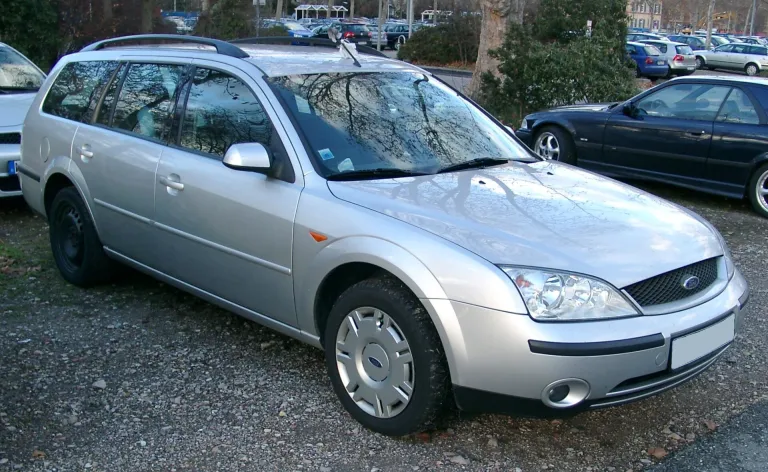
Mondeo CD391
- Power
- 110 kW150 PS
- Top speed
- -
Photo: Rudolf Stricker / Wikimedia Commons, CC BY-SA 3.0

Toyota · 2011–2017
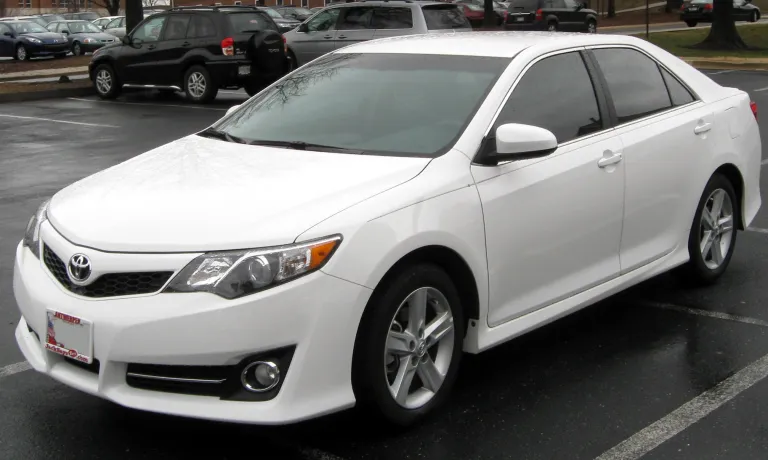
Camry XV50
- Power
- 110 kW150 PS
- Top speed
- 202 km/h
Photo: IFCAR / Wikimedia Commons, Public domain
At a glance
Who suits what, worked out from the catalog figures of the versions above.
Categories won: Mondeo CD391 0 Camry XV50 1
- Family Camry XV50 Boot: 506 l vs 429 l
- City Too close to call Length: 4,872 mm vs 4,865 mm
In plain words
Ford Mondeo CD391 is 7 mm longer than Toyota Camry XV50 (4,872 mm vs 4,865 mm). Toyota Camry XV50 has the bigger boot: 506 l against 429 l. Toyota Camry XV50 is the older design (from 2011); Ford Mondeo CD391 arrived in 2014. On the catalog figures, the Toyota Camry XV50 is the pick for family.
Size and weight
Side view to scale, all cars from the front bumper.
| Mondeo CD391 | Camry XV50 | |
|---|---|---|
| Length | 4,872 mm191.8 in | 4,865 mm191.5 in −7 mm −0.3 in −0.1% |
| Height | 1,478 mm58.2 in | 1,470 mm57.9 in −8 mm −0.3 in −0.5% |
| Wheelbase | 2,850 mm112.2 in | 2,775 mm109.3 in −75 mm −3.0 in −2.6% |
| Boot | 429 l15.2 cu ft | 506 l17.9 cu ft +77 l +2.7 cu ft +17.9% |
| Fits a standard garage? | No data | Tight |
Difference vs Mondeo CD391 (±). Garage check: a standard single garage takes a car up to about 5.0 m (16 ft 5 in) long and 1.9 m (6 ft 3 in) wide (width as listed in the catalog; some makers include the mirrors). Leave about 0.6 m (2 ft) to open the doors.
Full specifications
| Ford Mondeo CD391 | Toyota Camry XV50 | |
|---|---|---|
| General | ||
| Version | 2.5 · 110 kW (150 PS) | 110 kW (150 PS) |
| Production years | 2014–2022 | 2011–2017 |
| Body | Liftback, Sedan | Sedan |
| Country | United States | Japan |
| Performance | ||
| Power Why it matters: More power means stronger acceleration and easier overtaking, especially with a full load. | 110 kW (150 PS) 148 hp | 110 kW (150 PS) 148 hp |
| Power, all versions | 84–177 kW (114–241 PS) 113–237 hp | 107–200 kW (145–272 PS) 143–268 hp |
| Torque Why it matters: Torque is the pulling force you feel when accelerating from low revs, towing or climbing hills. | No data | 199 Nm 147 lb-ft |
| Top speed Why it matters: Top speed hints at how relaxed the car is at motorway speeds, even if you never reach it. | No data | 202 km/h 126 mph |
| Engine and transmission | ||
| Fuel | Diesel | No data |
| Engine | 2,500 cc 2.5 l | No data |
| Dimensions and weight | ||
| Length | 4,872 mm 191.8 in | 4,865 mm 191.5 in |
| Width | No data | 1,820 mm 71.7 in |
| Height | 1,478 mm 58.2 in | 1,470 mm 57.9 in |
| Wheelbase | 2,850 mm 112.2 in | 2,775 mm 109.3 in |
| Boot Why it matters: A bigger boot fits more luggage, shopping or a pram. | 429 l 15.2 cu ft | 506 l 17.9 cu ft Better |
| Economy and running costs | ||
| Fuel consumption Why it matters: Lower consumption cuts running costs and CO₂ emissions on every trip. | No data | 7.2 l/100 km 32.7 mpg US |
| Safety | ||
| Euro NCAP | ★★★★★ (2019) | No data |
These cars do not differ in the data we have.
Equal rows hidden (1): Power.
Better marks the stronger figure - only for measurable specs (power, torque, 0–100 km/h, consumption, boot, weight).