
Lexus LX570 vs Nissan Patrol: specs side by side
Quick comparison from catalog data - no editorial review of this pair yet.

Lexus · 2007–2021
LX570 J200
- Power
- 200 kW272 PS
- Kerb mass
- -

Nissan · 2024–present
Patrol Y63
- Power
- 313 kW426 PS
- Kerb mass
- 2,680 kg
At a glance
Who suits what, worked out from the catalog figures of the versions above.
- Off-road Patrol Y63 Drive and body: Four-wheel drive (4×4) · SUV vs All-wheel drive · SUV
In plain words
Nissan Patrol has more power: 313 kW (426 PS) against 200 kW (272 PS) for Lexus LX570. Nissan Patrol is the older design (from 1951); Lexus LX570 arrived in 2007. Nissan Patrol is still in production; Lexus LX570 is not. On the catalog figures, the Nissan Patrol is the pick for off-road. Our catalog has no kerb mass for the Lexus LX570 yet, so some checks above leave it out.
Full specifications
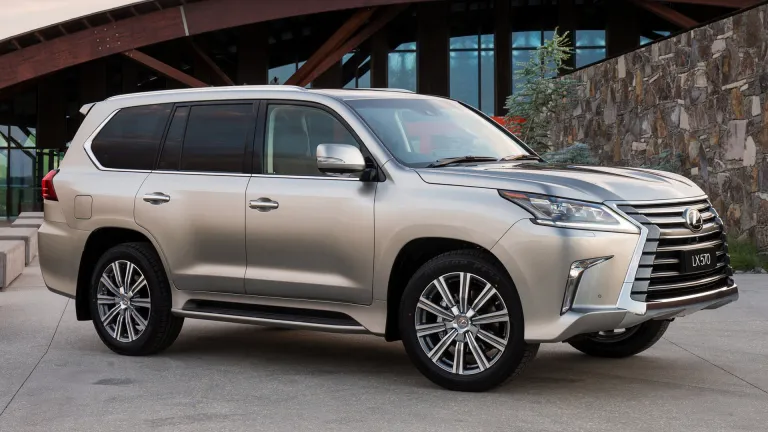
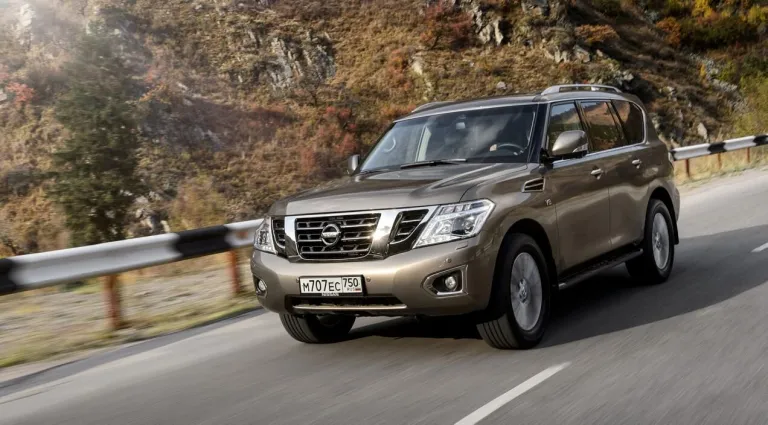
| Lexus LX570 | Nissan Patrol | |
|---|---|---|
| General | ||
| Version | LX 450d · diesel · 200 kW (272 PS) | Patrol Y63 · 3.5 V6 twin-turbo · petrol · 313 kW (426 PS) |
| Production years | 2007–2021 | 2024–present |
| Body | SUV | SUV |
| Class | SUV / crossover | SUV / crossover |
| Country | Japan | Japan |
| Performance | ||
| Power Why it matters: More power means stronger acceleration and easier overtaking, especially with a full load. | 200 kW (272 PS) 268 hp | 313 kW (426 PS) 420 hp Better |
| Power, all versions | 200–286 kW (272–389 PS) 268–384 hp | 55–369 kW (75–502 PS) 74–495 hp |
| Torque Why it matters: Torque is the pulling force you feel when accelerating from low revs, towing or climbing hills. | 650 Nm 479 lb-ft | 700 Nm 516 lb-ft Better |
| Power per tonne | No data | 117 kW/t 142 hp/ton calculated |
| Engine and transmission | ||
| Fuel | Diesel | Petrol |
| Engine | 4,461 cc · 8 cyl 4.5 l | 3,492 cc · 6 cyl 3.5 l |
| Engine code | No data | VR35DDTT |
| Gearbox | No data | 9-speed automatic |
| Drive | All-wheel drive | Four-wheel drive (4×4) |
| Dimensions and weight | ||
| Length | No data | 5,350 mm 210.6 in |
| Width | No data | 2,030 mm 79.9 in |
| Height | No data | 1,945 mm 76.6 in |
| Wheelbase | No data | 3,075 mm 121.1 in |
| Kerb weight Why it matters: A lighter car is usually more agile and uses less energy. | No data | 2,680 kg 5,908 lb |
These cars do not differ in the data we have.
Equal rows hidden (3): Body, Class, Country.
Better marks the stronger figure - only for measurable specs (power, torque, 0–100 km/h, consumption, boot, weight).