
Kia Optima vs Toyota Camry: specs side by side
Quick comparison from catalog data - no editorial review of this pair yet.

Kia · 2015–2020
Optima
- Power
- 110 kW150 PS

Toyota · 2023–present
Camry XV80
- Power
- 168 kW228 PS
At a glance
Who suits what, worked out from the catalog figures of the versions above.
- City Too close to call Length: 4,845 mm vs 4,885 mm
In plain words
Toyota Camry has more power: 168 kW (228 PS) against 110 kW (150 PS) for Kia Optima. Toyota Camry is 40 mm longer than Kia Optima (4,885 mm vs 4,845 mm). Toyota Camry is the older design (from 1982); Kia Optima arrived in 2015. Toyota Camry is still in production; Kia Optima is not.
Size and weight
Side view to scale, all cars from the front bumper.
| Optima | Camry XV80 | |
|---|---|---|
| Length | 4,845 mm190.7 in | 4,885 mm192.3 in +40 mm +1.6 in +0.8% |
| Width | 1,860 mm73.2 in | 1,840 mm72.4 in −20 mm −0.8 in −1.1% |
| Height | 1,455 mm57.3 in | 1,445 mm56.9 in −10 mm −0.4 in −0.7% |
| Wheelbase | 2,805 mm110.4 in | 2,825 mm111.2 in +20 mm +0.8 in +0.7% |
| Fits a standard garage? | Tight | Tight |
Difference vs Optima (±). Garage check: a standard single garage takes a car up to about 5.0 m (16 ft 5 in) long and 1.9 m (6 ft 3 in) wide (width as listed in the catalog; some makers include the mirrors). Leave about 0.6 m (2 ft) to open the doors.
Full specifications
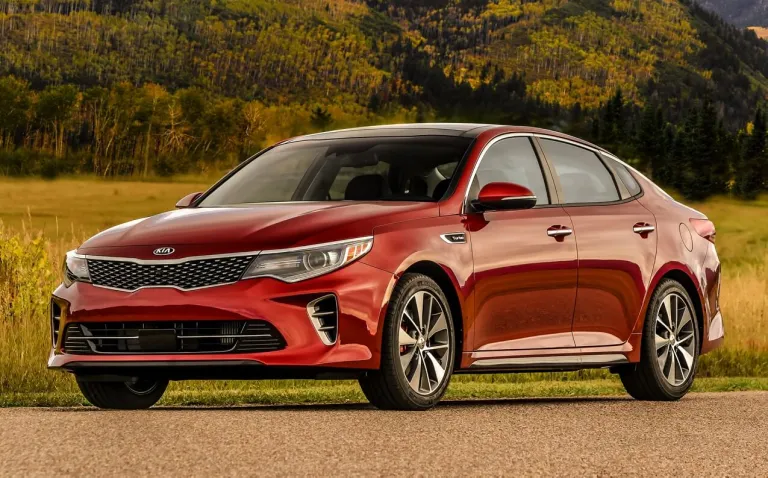
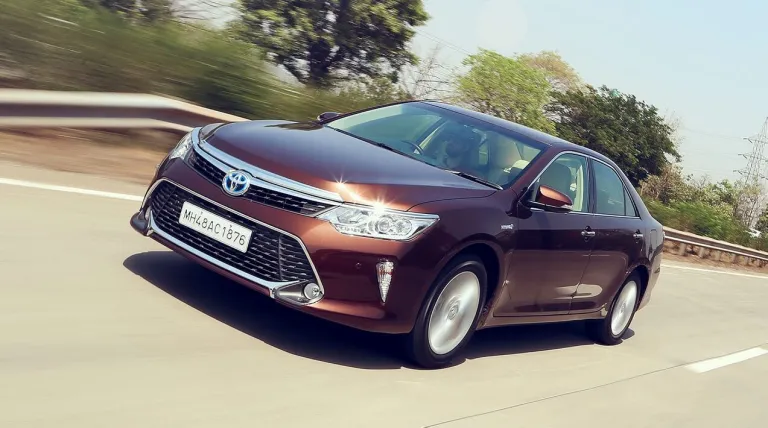
| Kia Optima | Toyota Camry | |
|---|---|---|
| General | ||
| Version | 2.0 · 110 kW (150 PS) | Camry XV80 · 2.5 Hybrid FWD · 168 kW (228 PS) |
| Production years | 2015–2020 | 2023–present |
| Body | Sedan | Sedan |
| Country | South Korea | Japan |
| Performance | ||
| Power Why it matters: More power means stronger acceleration and easier overtaking, especially with a full load. | 110 kW (150 PS) 148 hp | 168 kW (228 PS) 225 hp Better |
| Power, all versions | 100–180 kW (136–245 PS) 134–241 hp | 107–224 kW (145–305 PS) 143–300 hp |
| Engine and transmission | ||
| Fuel | No data | Hybrid |
| Engine | 2,000 cc · 4 cyl 2.0 l | 2,487 cc · 4 cyl 2.5 l |
| Gearbox | manual | CVT |
| Drive | Front-wheel drive | Front-wheel drive |
| Dimensions and weight | ||
| Length | 4,845 mm 190.7 in | 4,885 mm 192.3 in |
| Width | 1,860 mm 73.2 in | 1,840 mm 72.4 in |
| Height | 1,455 mm 57.3 in | 1,445 mm 56.9 in |
| Wheelbase | 2,805 mm 110.4 in | 2,825 mm 111.2 in |
| Boot Why it matters: A bigger boot fits more luggage, shopping or a pram. | 505 l 17.8 cu ft | No data |
| Safety | ||
| Euro NCAP | ★★★★★ (2015) | No data |
These cars do not differ in the data we have.
Equal rows hidden (2): Body, Drive.
Better marks the stronger figure - only for measurable specs (power, torque, 0–100 km/h, consumption, boot, weight).