
Tesla Model X vs Mercedes-Benz EQC N293: specs side by side
Quick comparison from catalog data - no editorial review of this pair yet.

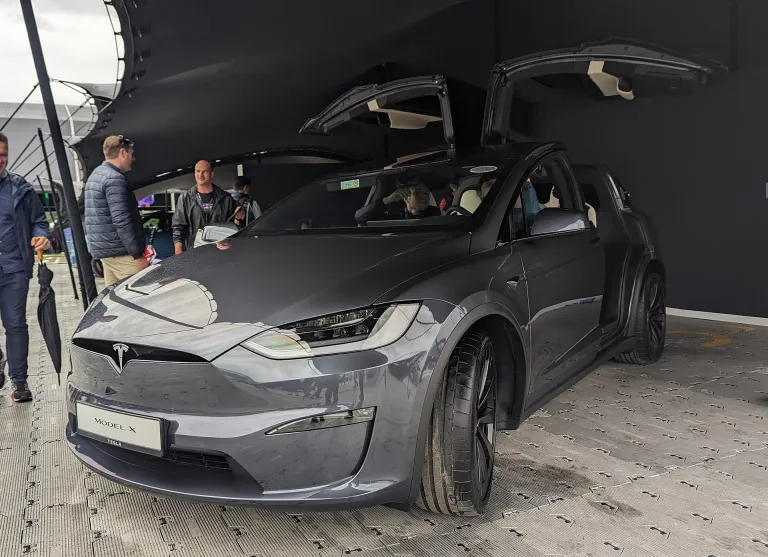
Tesla · 2015–2026
Model X
- Power
- 190 kW258 PS
- 0–100 km/h
- -
- Top speed
- -
- Kerb mass
- 2,506 kg
Photo: Calreyn88 / Wikimedia Commons, CC0

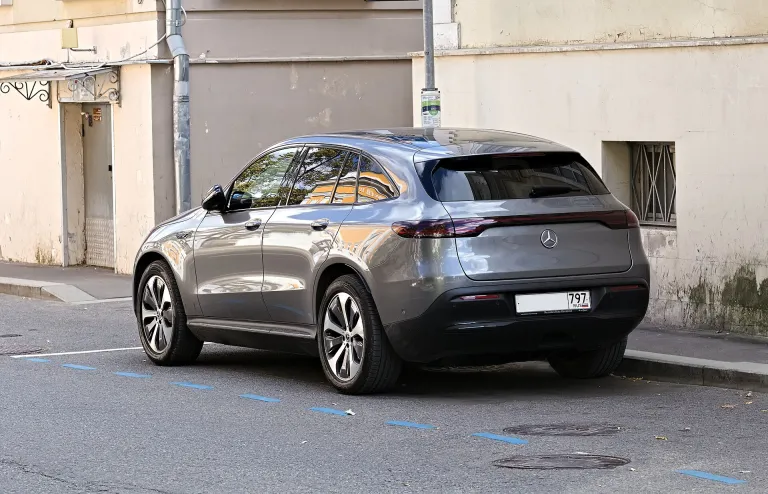
Mercedes-Benz · 2019–2023
EQC N293
- Power
- 300 kW408 PS
- 0–100 km/h
- 5.1 s
- Top speed
- 180 km/h
- Kerb mass
- 2,435 kg
At a glance
Who suits what, worked out from the catalog figures of the versions above.
Categories won: Model X 2 EQC N293 2
- City EQC N293 Length: 4,761 mm vs 5,036 mm
- Performance EQC N293 Power per tonne: 123 kW/t vs 76 kW/t
- Running costs Model X Fuel per year: €980 vs €1,020 (estimated)
- Off-road Model X Drive and body: All-wheel drive · SUV vs All-wheel drive · Crossover
In plain words
Mercedes-Benz EQC N293 has more power: 300 kW (408 PS) against 190 kW (258 PS) for Tesla Model X. Tesla Model X is 275 mm longer than Mercedes-Benz EQC N293 (5,036 mm vs 4,761 mm). Mercedes-Benz EQC N293 is lighter by 71 kg (2,435 kg vs 2,506 kg). At 15,000 km a year, fuel would cost about €980 (Tesla Model X), €1,020 (Mercedes-Benz EQC N293) (estimated). Tesla Model X is the older design (from 2015); Mercedes-Benz EQC N293 arrived in 2019. On the catalog figures, the Mercedes-Benz EQC N293 is the pick for city and performance; the Tesla Model X is the pick for running costs and off-road. Our catalog has no 0–100 km/h for the Tesla Model X yet, so some checks above leave it out.
Race Stats side by side
Each figure is a 0–100 score from the catalog numbers, the same as on the 1CARS Race cards. PI is the overall performance index (100–999) and its class D–S.
| Stat | Model X | EQC N293 |
|---|---|---|
| PI | C · 473 | B · 547 |
| Power | 41 | 56 |
| Grip | 36 | 50 |
| Handling | 33 | 39 |
| Top speed | 48 | 31 |
| Launch | 51 | 63 |
Grip and handling are estimates from drive type, weight, height and body (hover a figure to see where it comes from). 1CARS Race
Who wins a race?
Quarter-mile (402 m) drag from a standing start, dry road, no reaction time - the 1CARS Race physics on the catalog figures of these versions.
- 1 EQC N293400 4MATIC · electric · 300 kW (408 PS) 13.58 sat 160 km/h
- 2 Model Xelectric · 190 kW (258 PS) 14.83 sat 145 km/h · +1.25 s
Size and weight
Side view to scale, all cars from the front bumper.
| Model X | EQC N293 | |
|---|---|---|
| Length | 5,036 mm198.3 in | 4,761 mm187.4 in −275 mm −10.8 in −5.5% |
| Width | 1,999 mm78.7 in | 2,096 mm82.5 in +97 mm +3.8 in +4.9% |
| Height | 1,684 mm66.3 in | 1,624 mm63.9 in −60 mm −2.4 in −3.6% |
| Wheelbase | 2,965 mm116.7 in | 2,873 mm113.1 in −92 mm −3.6 in −3.1% |
| Kerb weight | 2,506 kg5,525 lb | 2,435 kg5,368 lb −71 kg −157 lb −2.8% |
| Fits a standard garage? | Too long and too wide | Too wide |
Difference vs Model X (±). Garage check: a standard single garage takes a car up to about 5.0 m (16 ft 5 in) long and 1.9 m (6 ft 3 in) wide (width as listed in the catalog; some makers include the mirrors). Leave about 0.6 m (2 ft) to open the doors.
Full specifications
| Tesla Model X | Mercedes-Benz EQC N293 | |
|---|---|---|
| General | ||
| Version | electric · 190 kW (258 PS) | 400 4MATIC · electric · 300 kW (408 PS) |
| Production years | 2015–2026 | 2019–2023 |
| Body | SUV | Crossover |
| Class | SUV / crossover | SUV / crossover |
| Country | United States | Germany |
| Performance | ||
| Power Why it matters: More power means stronger acceleration and easier overtaking, especially with a full load. | 190 kW (258 PS) 255 hp | 300 kW (408 PS) 402 hp Better |
| Power, all versions | 190–760 kW (258–1,033 PS) 255–1,019 hp | 210–300 kW (286–408 PS) 282–402 hp |
| Torque Why it matters: Torque is the pulling force you feel when accelerating from low revs, towing or climbing hills. | No data | 760 Nm 561 lb-ft |
| 0–100 km/h Why it matters: A shorter 0–100 km/h time means quicker getaways and safer merging onto fast roads. | No data | 5.1 s |
| Top speed Why it matters: Top speed hints at how relaxed the car is at motorway speeds, even if you never reach it. | No data | 180 km/h 112 mph |
| Power per tonne | 76 kW/t 92 hp/ton calculated | 123 kW/t 150 hp/ton calculated Better |
| Engine and transmission | ||
| Fuel | Electric | Electric |
| Drive | All-wheel drive | All-wheel drive |
| Dimensions and weight | ||
| Length | 5,036 mm 198.3 in | 4,761 mm 187.4 in |
| Width | 1,999 mm 78.7 in | 2,096 mm 82.5 in |
| Height | 1,684 mm 66.3 in | 1,624 mm 63.9 in |
| Wheelbase | 2,965 mm 116.7 in | 2,873 mm 113.1 in |
| Kerb weight Why it matters: A lighter car is usually more agile and uses less energy. | 2,506 kg 5,525 lb | 2,435 kg 5,368 lb Better |
| Boot Why it matters: A bigger boot fits more luggage, shopping or a pram. | No data | 500 l 17.7 cu ft |
| Economy and running costs | ||
| Fuel cost per year | €980/year estimated Better | €1,020/year estimated |
| Electric | ||
| Battery Why it matters: A bigger battery usually gives more range, but takes longer to charge fully. | No data | 80 kWh |
| Electric range Why it matters: A longer range means fewer charging stops on long journeys. | No data | 417 km 259 mi |
| Energy use | 21.7 kWh/100 km Better | 22.7 kWh/100 km |
| Safety | ||
| Euro NCAP | ★★★★★ (2019) | ★★★★★ (2019) |
These cars do not differ in the data we have.
Equal rows hidden (4): Class, Fuel, Drive, Euro NCAP.
Better marks the stronger figure - only for measurable specs (power, torque, 0–100 km/h, consumption, boot, weight).
Estimated at 15,000 km a year with fuel at €0.30/kWh electricity.