
Audi Q2 GA vs Volkswagen T-Roc A1: specs side by side
Quick comparison from catalog data - no editorial review of this pair yet.

Audi · 2016–2026
Q2 GA
- Power
- 85 kW116 PS
- 0–100 km/h
- 10.5 s
- Top speed
- 197 km/h
- Kerb mass
- 1,330 kg

Volkswagen · 2017–2025
T-Roc A1
- Power
- 221 kW300 PS
- 0–100 km/h
- -
- Top speed
- -
- Kerb mass
- -
Photo: Vauxford / Wikimedia Commons, CC BY-SA 4.0
At a glance
Who suits what, worked out from the catalog figures of the versions above.
- Off-road T-Roc A1 Drive and body: All-wheel drive · Crossover vs Front-wheel drive · Crossover
In plain words
Volkswagen T-Roc A1 has more power: 221 kW (300 PS) against 85 kW (116 PS) for Audi Q2 GA. Audi Q2 GA is the older design (from 2016); Volkswagen T-Roc A1 arrived in 2017. On the catalog figures, the Volkswagen T-Roc A1 is the pick for off-road. Our catalog has no 0–100 km/h for the Volkswagen T-Roc A1 yet, so some checks above leave it out.
Full specifications
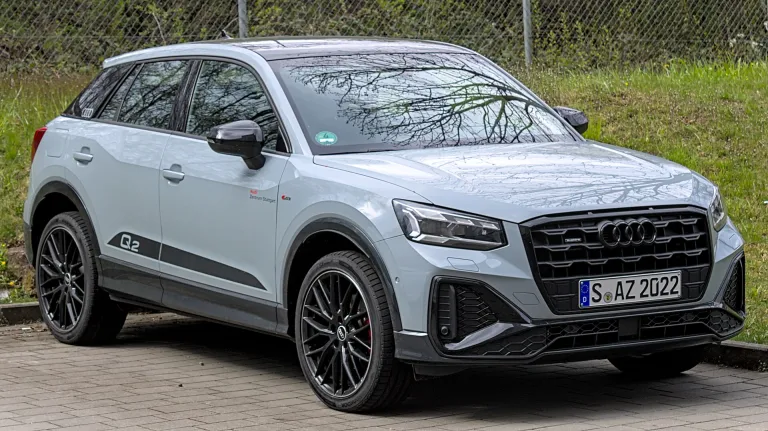
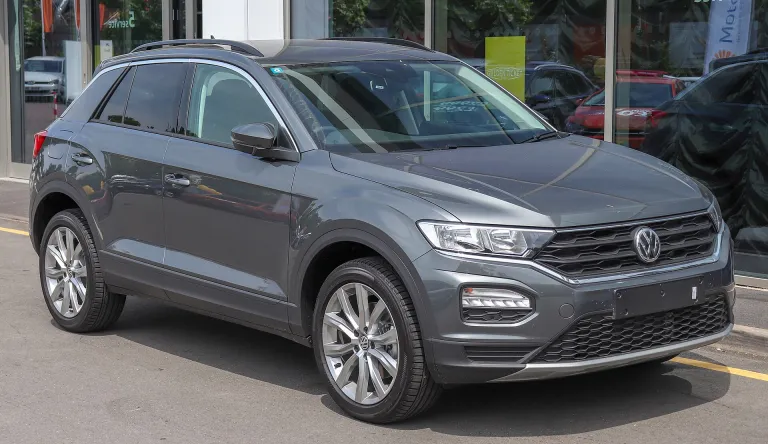
| Audi Q2 GA | Volkswagen T-Roc A1 | |
|---|---|---|
| General | ||
| Version | 30 TFSI · petrol · 85 kW (116 PS) | R 2.0 TSI 4MOTION · petrol · 221 kW (300 PS) |
| Production years | 2016–2026 | 2017–2025 |
| Body | Crossover | Crossover |
| Class | SUV / crossover | SUV / crossover |
| Country | Germany | Germany |
| Performance | ||
| Power Why it matters: More power means stronger acceleration and easier overtaking, especially with a full load. | 85 kW (116 PS) 114 hp | 221 kW (300 PS) 296 hp Better |
| Power, all versions | 81–221 kW (110–300 PS) 109–296 hp | 85–221 kW (116–300 PS) 114–296 hp |
| Torque Why it matters: Torque is the pulling force you feel when accelerating from low revs, towing or climbing hills. | 200 Nm 148 lb-ft | 400 Nm 295 lb-ft Better |
| 0–100 km/h Why it matters: A shorter 0–100 km/h time means quicker getaways and safer merging onto fast roads. | 10.5 s | No data |
| Top speed Why it matters: Top speed hints at how relaxed the car is at motorway speeds, even if you never reach it. | 197 km/h 122 mph | No data |
| Power per tonne | 64 kW/t 78 hp/ton calculated | No data |
| Engine and transmission | ||
| Fuel | Petrol | Petrol |
| Engine | 999 cc · 3 cyl 1.0 l | 4 cyl |
| Gearbox | 6-speed manual | 7-speed dual-clutch |
| Drive | Front-wheel drive | All-wheel drive |
| Dimensions and weight | ||
| Length | 4,208 mm 165.7 in | No data |
| Width | 1,794 mm 70.6 in | No data |
| Height | 1,508 mm 59.4 in | No data |
| Wheelbase | 2,601 mm 102.4 in | No data |
| Kerb weight Why it matters: A lighter car is usually more agile and uses less energy. | 1,330 kg 2,932 lb | No data |
| Boot Why it matters: A bigger boot fits more luggage, shopping or a pram. | 405 l 14.3 cu ft | No data |
| Fuel tank Why it matters: A larger tank means more distance between fuel stops. | 50 l 13.2 gal US | No data |
| Economy and running costs | ||
| Fuel consumption Why it matters: Lower consumption cuts running costs and CO₂ emissions on every trip. | 5.9 l/100 km 39.9 mpg US | No data |
| CO₂ | 135 g/km | No data |
| Fuel cost per year | €1,550/year estimated | No data |
| Range on a full tank | 847 km 526 mi estimated | No data |
| Safety | ||
| Euro NCAP | ★★★★★ (2016) | No data |
These cars do not differ in the data we have.
Equal rows hidden (4): Body, Class, Country, Fuel.
Better marks the stronger figure - only for measurable specs (power, torque, 0–100 km/h, consumption, boot, weight).
Estimated at 15,000 km a year with fuel at €1.75/l petrol.