
Daewoo Gentra vs Hyundai Solaris: specs side by side
Quick comparison from catalog data - no editorial review of this pair yet.

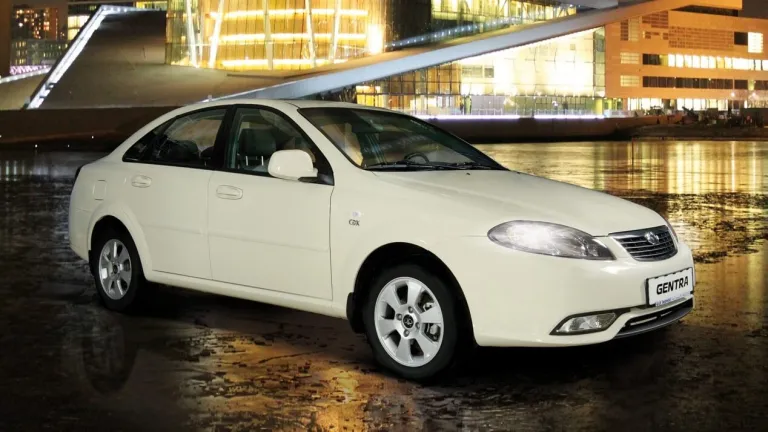
Daewoo · 2013–2015
Gentra
- Power
- 79 kW107 PS
- 0–100 km/h
- 11.9 s

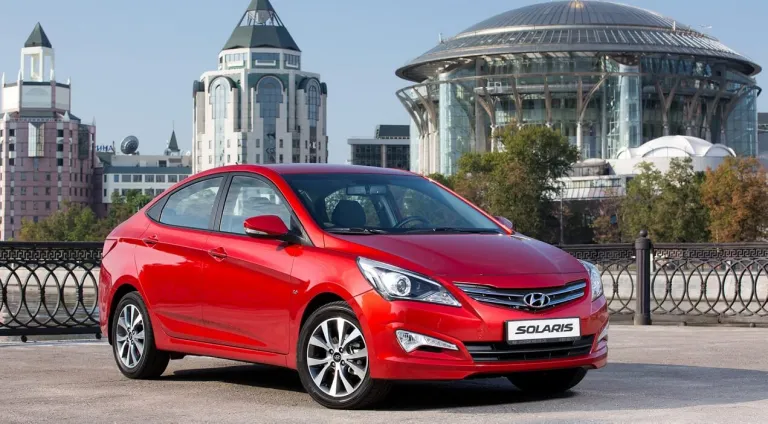
Hyundai · 2011–2017
Solaris RB
- Power
- 90 kW122 PS
- 0–100 km/h
- -
At a glance
Who suits what, worked out from the catalog figures of the versions above.
- City Solaris RB Length: 4,370 mm vs 4,515 mm
In plain words
Hyundai Solaris has more power: 90 kW (122 PS) against 79 kW (107 PS) for Daewoo Gentra. Daewoo Gentra is 145 mm longer than Hyundai Solaris (4,515 mm vs 4,370 mm). Hyundai Solaris is the older design (from 2011); Daewoo Gentra arrived in 2013. On the catalog figures, the Hyundai Solaris is the pick for city. Our catalog has no 0–100 km/h for the Hyundai Solaris yet, so some checks above leave it out.
Size and weight
| Gentra | Solaris RB | |
|---|---|---|
| Length | 4,515 mm177.8 in | 4,370 mm172.0 in −145 mm −5.7 in −3.2% |
| Wheelbase | 2,600 mm102.4 in | 2,570 mm101.2 in −30 mm −1.2 in −1.2% |
Difference vs Gentra (±).
Full specifications
| Daewoo Gentra | Hyundai Solaris | |
|---|---|---|
| General | ||
| Version | 1.5 · petrol · 79 kW (107 PS) | 1.6 · 90 kW (122 PS) |
| Production years | 2013–2015 | 2011–2017 |
| Body | Sedan | Sedan, Hatchback |
| Country | Uzbekistan | South Korea |
| Performance | ||
| Power Why it matters: More power means stronger acceleration and easier overtaking, especially with a full load. | 79 kW (107 PS) 106 hp | 90 kW (122 PS) 121 hp Better |
| Power, all versions | 79 kW (107 PS) 106 hp | 79–90 kW (107–122 PS) 106–121 hp |
| Torque Why it matters: Torque is the pulling force you feel when accelerating from low revs, towing or climbing hills. | 141 Nm 104 lb-ft | No data |
| 0–100 km/h Why it matters: A shorter 0–100 km/h time means quicker getaways and safer merging onto fast roads. | 11.9 s | No data |
| Engine and transmission | ||
| Fuel | Petrol | Petrol |
| Engine | 1,500 cc 1.5 l | 1,600 cc · 4 cyl 1.6 l |
| Drive | Front-wheel drive | No data |
| Dimensions and weight | ||
| Length | 4,515 mm 177.8 in | 4,370 mm 172.0 in |
| Height | No data | 1,700 mm 66.9 in |
| Wheelbase | 2,600 mm 102.4 in | 2,570 mm 101.2 in |
| Boot Why it matters: A bigger boot fits more luggage, shopping or a pram. | 405 l 14.3 cu ft | No data |
| Fuel tank Why it matters: A larger tank means more distance between fuel stops. | 60 l 15.9 gal US | No data |
| Economy and running costs | ||
| Fuel consumption Why it matters: Lower consumption cuts running costs and CO₂ emissions on every trip. | No data | 5.0 l/100 km 47.0 mpg US |
| Fuel cost per year | No data | €1,310/year estimated |
These cars do not differ in the data we have.
Equal rows hidden (1): Fuel.
Better marks the stronger figure - only for measurable specs (power, torque, 0–100 km/h, consumption, boot, weight).
Estimated at 15,000 km a year with fuel at €1.75/l petrol.