
Chevrolet Cobalt vs Daewoo Nexia: specs side by side
Quick comparison from catalog data - no editorial review of this pair yet.

Chevrolet · 2011–present
Cobalt II
- Power
- 64 kW87 PS
- 0–100 km/h
- -
- Top speed
- -
- Kerb mass
- -

Daewoo · 1994–2016
Nexia
- Power
- 80 kW109 PS
- 0–100 km/h
- 11.0 s
- Top speed
- 185 km/h
- Kerb mass
- 1,025 kg
At a glance
Who suits what, worked out from the catalog figures of the versions above.
- Family Too close to call Boot: 545 l vs 530 l
In plain words
Daewoo Nexia has more power: 80 kW (109 PS) against 64 kW (87 PS) for Chevrolet Cobalt. Chevrolet Cobalt has the bigger boot: 545 l against 530 l. Daewoo Nexia is the older design (from 1994); Chevrolet Cobalt arrived in 2011. Chevrolet Cobalt is still in production; Daewoo Nexia is not. Our catalog has no 0–100 km/h for the Chevrolet Cobalt yet, so some checks above leave it out.
Size and weight
| Cobalt II | Nexia | |
|---|---|---|
| Width | 1,514 mm59.6 in | 1,662 mm65.4 in +148 mm +5.8 in +9.8% |
| Height | 1,514 mm59.6 in | 1,393 mm54.8 in −121 mm −4.8 in −8.0% |
| Wheelbase | 2,620 mm103.1 in | 2,520 mm99.2 in −100 mm −3.9 in −3.8% |
| Boot | 545 l19.2 cu ft | 530 l18.7 cu ft −15 l −0.5 cu ft −2.8% |
| Fits a standard garage? | No data | Yes |
Difference vs Cobalt II (±). Garage check: a standard single garage takes a car up to about 5.0 m (16 ft 5 in) long and 1.9 m (6 ft 3 in) wide (width as listed in the catalog; some makers include the mirrors). Leave about 0.6 m (2 ft) to open the doors.
Full specifications
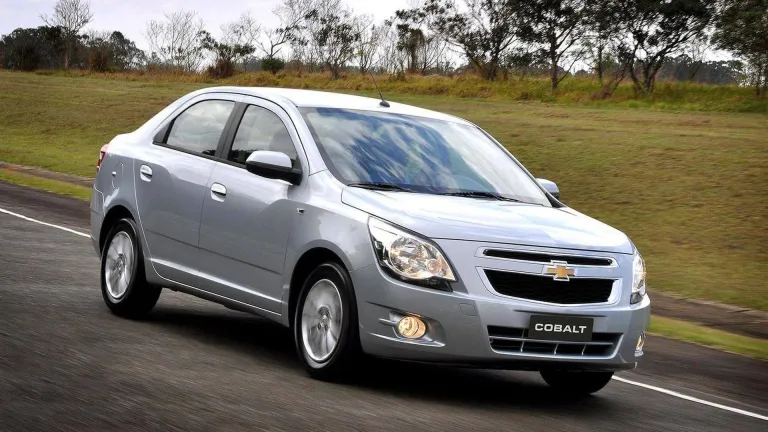
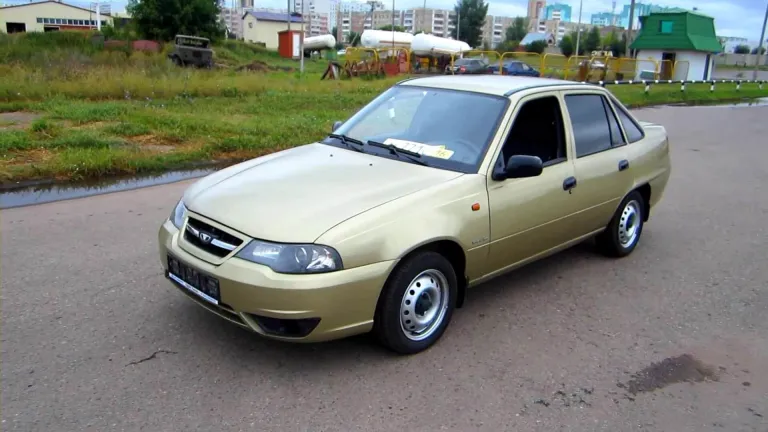
| Chevrolet Cobalt | Daewoo Nexia | |
|---|---|---|
| General | ||
| Version | petrol · 64 kW (87 PS) | 1.6 · petrol · 80 kW (109 PS) |
| Production years | 2011–present | 1994–2016 |
| Body | Sedan | Sedan |
| Country | United States | Uzbekistan |
| Performance | ||
| Power Why it matters: More power means stronger acceleration and easier overtaking, especially with a full load. | 64 kW (87 PS) 86 hp | 80 kW (109 PS) 107 hp Better |
| Power, all versions | 64–77 kW (87–105 PS) 86–103 hp | 55–80 kW (75–109 PS) 74–107 hp |
| Torque Why it matters: Torque is the pulling force you feel when accelerating from low revs, towing or climbing hills. | No data | 150 Nm 111 lb-ft |
| 0–100 km/h Why it matters: A shorter 0–100 km/h time means quicker getaways and safer merging onto fast roads. | No data | 11.0 s |
| Top speed Why it matters: Top speed hints at how relaxed the car is at motorway speeds, even if you never reach it. | No data | 185 km/h 115 mph |
| Power per tonne | No data | 78 kW/t 95 hp/ton calculated |
| Engine and transmission | ||
| Fuel | Petrol | Petrol |
| Engine | No data | 1,600 cc 1.6 l |
| Drive | No data | Front-wheel drive |
| Dimensions and weight | ||
| Length | No data | 4,482 mm 176.5 in |
| Width | 1,514 mm 59.6 in | 1,662 mm 65.4 in |
| Height | 1,514 mm 59.6 in | 1,393 mm 54.8 in |
| Wheelbase | 2,620 mm 103.1 in | 2,520 mm 99.2 in |
| Kerb weight Why it matters: A lighter car is usually more agile and uses less energy. | No data | 1,025 kg 2,260 lb |
| Boot Why it matters: A bigger boot fits more luggage, shopping or a pram. | 545 l 19.2 cu ft | 530 l 18.7 cu ft |
| Fuel tank Why it matters: A larger tank means more distance between fuel stops. | 46 l 12.2 gal US | No data |
These cars do not differ in the data we have.
Equal rows hidden (2): Body, Fuel.
Better marks the stronger figure - only for measurable specs (power, torque, 0–100 km/h, consumption, boot, weight).