
Subaru BRZ vs Audi TT Coupe: specs side by side
Quick comparison from catalog data - no editorial review of this pair yet.

Subaru · 2021–present
BRZ ZD8
- Power
- 173 kW235 PS
- Top speed
- 225 km/h
- Kerb mass
- 1,350 kg

Audi · 2014–2023
TT Coupe III
Price from €37,150 (2014)
- Power
- 294 kW400 PS
- Top speed
- -
- Kerb mass
- -
At a glance
Who suits what, worked out from the catalog figures of the versions above.
- Off-road TT Coupe III Drive and body: All-wheel drive · Coupe vs Rear-wheel drive · Coupe
In plain words
Audi TT Coupe has more power: 294 kW (400 PS) against 173 kW (235 PS) for Subaru BRZ. Subaru BRZ is the older design (from 2012); Audi TT Coupe arrived in 2014. Subaru BRZ is still in production; Audi TT Coupe is not. On the catalog figures, the Audi TT Coupe is the pick for off-road. Our catalog has no kerb mass for the Audi TT Coupe yet, so some checks above leave it out.
Full specifications
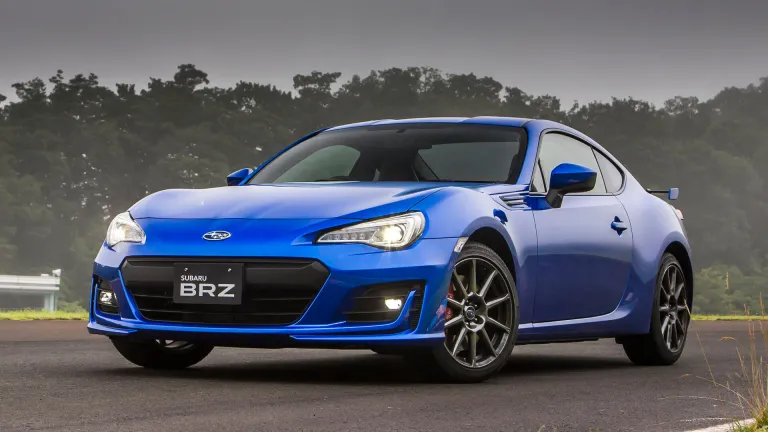
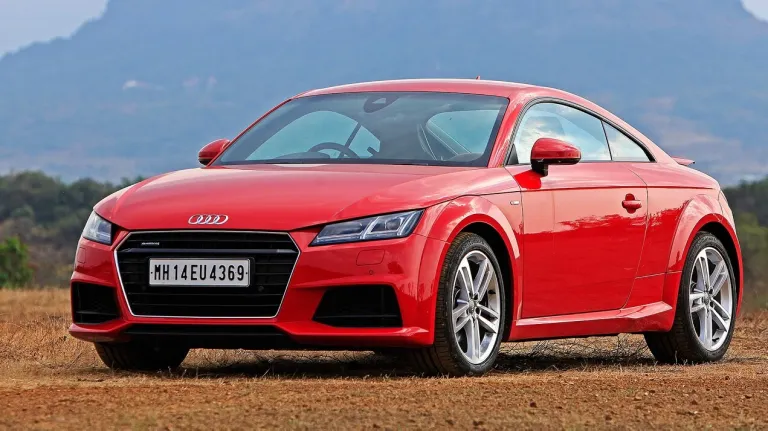
| Subaru BRZ | Audi TT Coupe | |
|---|---|---|
| General | ||
| Version | BRZ ZD8 · 2.4 · petrol · 173 kW (235 PS) | 2.5 · petrol · 294 kW (400 PS) |
| Production years | 2021–present | 2014–2023 |
| Body | Coupe | Coupe |
| Class | Sports car | Sports car |
| Country | Japan | Germany |
| Performance | ||
| Power Why it matters: More power means stronger acceleration and easier overtaking, especially with a full load. | 173 kW (235 PS) 232 hp | 294 kW (400 PS) 394 hp Better |
| Power, all versions | 147–173 kW (200–235 PS) 197–232 hp | 132–294 kW (179–400 PS) 177–394 hp |
| Torque Why it matters: Torque is the pulling force you feel when accelerating from low revs, towing or climbing hills. | 250 Nm 184 lb-ft | 480 Nm 354 lb-ft Better |
| Top speed Why it matters: Top speed hints at how relaxed the car is at motorway speeds, even if you never reach it. | 225 km/h 140 mph | No data |
| Power per tonne | 128 kW/t 156 hp/ton calculated | No data |
| Engine and transmission | ||
| Fuel | Petrol | Petrol |
| Engine | 2,387 cc 2.4 l | 2,480 cc · 5 cyl 2.5 l |
| Engine code | FA24 | No data |
| Drive | Rear-wheel drive | All-wheel drive |
| Dimensions and weight | ||
| Length | No data | 4,177 mm 164.4 in |
| Width | No data | 1,832 mm 72.1 in |
| Height | No data | 1,353 mm 53.3 in |
| Wheelbase | No data | 2,505 mm 98.6 in |
| Kerb weight Why it matters: A lighter car is usually more agile and uses less energy. | 1,350 kg 2,976 lb | No data |
| Economy and running costs | ||
| Fuel consumption Why it matters: Lower consumption cuts running costs and CO₂ emissions on every trip. | 8.8 l/100 km 26.7 mpg US | No data |
| CO₂ | 200 g/km | No data |
| Fuel cost per year | €2,310/year estimated | No data |
| Safety | ||
| Euro NCAP | No data | ★★★★☆ (2015) |
| Price | ||
| Price | No data | from €37,150 (2014) |
These cars do not differ in the data we have.
Equal rows hidden (3): Body, Class, Fuel.
Better marks the stronger figure - only for measurable specs (power, torque, 0–100 km/h, consumption, boot, weight).
Estimated at 15,000 km a year with fuel at €1.75/l petrol.