
ZIL-130 vs GAZ-3307: specs side by side
Quick comparison from catalog data - no editorial review of this pair yet.

ZIL · 1962–1994
ZIL-130
- Power
- 81 kW110 PS
- Kerb mass
- 4,300 kg

GAZ · 1989–2020
GAZ-3307
- Power
- 91 kW124 PS
- Kerb mass
- -
At a glance
Who suits what, worked out from the catalog figures of the versions above.
- City GAZ-3307 Width: 2,380 mm vs 2,500 mm
In plain words
GAZ-3307 has more power: 91 kW (124 PS) against 81 kW (110 PS) for ZIL-130. ZIL-130 is 124 mm longer than GAZ-3307 (6,675 mm vs 6,551 mm). ZIL-130 is the older design (from 1962); GAZ-3307 arrived in 1989. On the catalog figures, the GAZ-3307 is the pick for city. Our catalog has no kerb mass for the GAZ-3307 yet, so some checks above leave it out.
Size and weight
Side view to scale, all cars from the front bumper.
| ZIL-130 | GAZ-3307 | |
|---|---|---|
| Length | 6,675 mm262.8 in | 6,551 mm257.9 in −124 mm −4.9 in −1.9% |
| Width | 2,500 mm98.4 in | 2,380 mm93.7 in −120 mm −4.7 in −4.8% |
| Height | 2,400 mm94.5 in | 2,350 mm92.5 in −50 mm −2.0 in −2.1% |
| Wheelbase | 3,800 mm149.6 in | 3,770 mm148.4 in −30 mm −1.2 in −0.8% |
| Fits a standard garage? | Too long and too wide | Too long and too wide |
Difference vs ZIL-130 (±). Garage check: a standard single garage takes a car up to about 5.0 m (16 ft 5 in) long and 1.9 m (6 ft 3 in) wide (width as listed in the catalog; some makers include the mirrors). Leave about 0.6 m (2 ft) to open the doors.
Full specifications
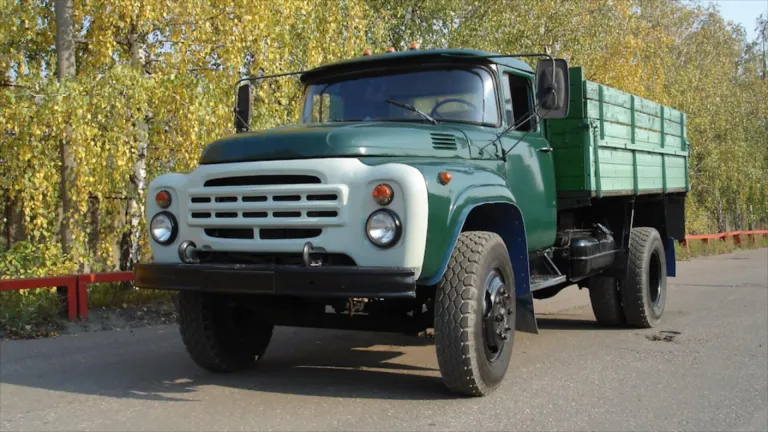
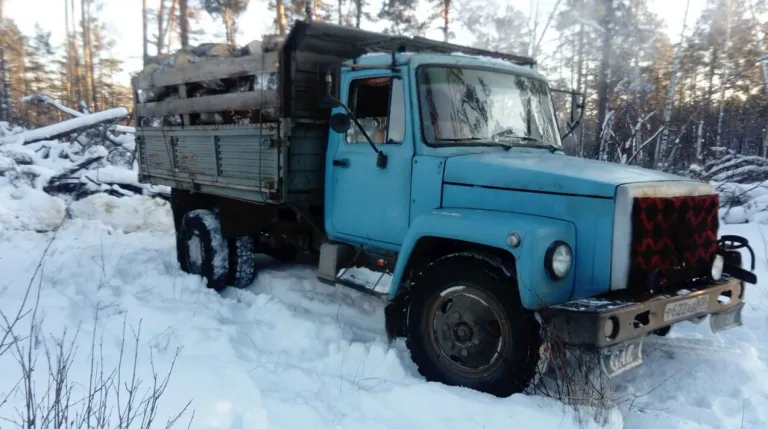
| ZIL-130 | GAZ-3307 | |
|---|---|---|
| General | ||
| Version | ZIL-157 · 81 kW (110 PS) | petrol · 91 kW (124 PS) |
| Production years | 1962–1994 | 1989–2020 |
| Body | Truck | Truck |
| Class | Heavy truck | Heavy truck |
| Country | Soviet Union (USSR) | Soviet Union (USSR) |
| Performance | ||
| Power Why it matters: More power means stronger acceleration and easier overtaking, especially with a full load. | 81 kW (110 PS) 109 hp | 91 kW (124 PS) 122 hp Better |
| Power, all versions | 81–110 kW (110–150 PS) 109–148 hp | 83–92 kW (113–125 PS) 111–123 hp |
| Power per tonne | 19 kW/t 23 hp/ton calculated | No data |
| Engine and transmission | ||
| Fuel | No data | Petrol |
| Engine | 6 cyl | No data |
| Engine code | ZIL-157 | No data |
| Drive | Rear-wheel drive | No data |
| Dimensions and weight | ||
| Length | 6,675 mm 262.8 in | 6,551 mm 257.9 in |
| Width | 2,500 mm 98.4 in | 2,380 mm 93.7 in |
| Height | 2,400 mm 94.5 in | 2,350 mm 92.5 in |
| Wheelbase | 3,800 mm 149.6 in | 3,770 mm 148.4 in |
| Kerb weight Why it matters: A lighter car is usually more agile and uses less energy. | 4,300 kg 9,480 lb | No data |
| Fuel tank Why it matters: A larger tank means more distance between fuel stops. | 170 l 44.9 gal US | No data |
These cars do not differ in the data we have.
Equal rows hidden (3): Body, Class, Country.
Better marks the stronger figure - only for measurable specs (power, torque, 0–100 km/h, consumption, boot, weight).