
Ford Gran Torino vs Chevrolet Chevelle SS: specs side by side
Quick comparison from catalog data - no editorial review of this pair yet.
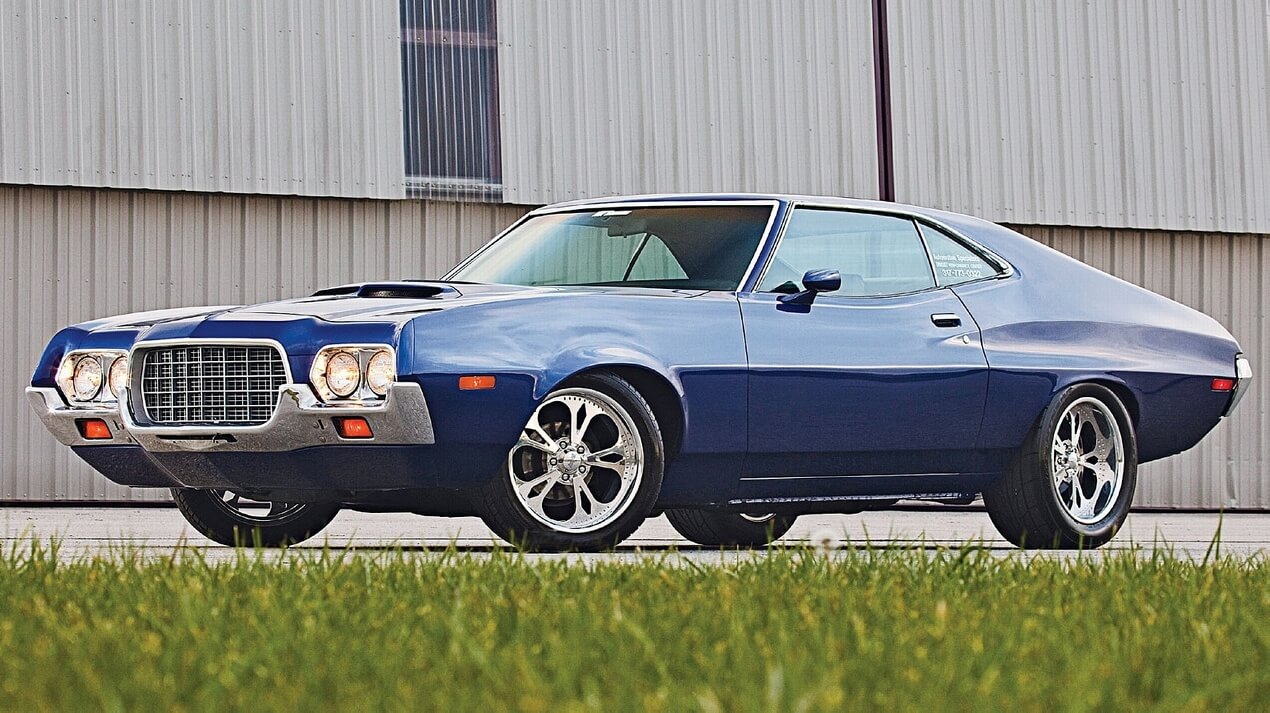
Ford · 1972–1976
Gran Torino
- Power
- 182 kW247 PS
- 0–100 km/h
- 6.8 s
- Kerb mass
- 1,528 kg

Chevrolet · 1968–1972
Chevelle SS II
- Power
- 336 kW457 PS
- 0–100 km/h
- -
- Kerb mass
- 1,482 kg
At a glance
Who suits what, worked out from the catalog figures of the versions above.
- Performance Chevelle SS II Power per tonne: 227 kW/t vs 119 kW/t
In plain words
Chevrolet Chevelle SS has more power: 336 kW (457 PS) against 182 kW (247 PS) for Ford Gran Torino. Chevrolet Chevelle SS is lighter by 46 kg (1,482 kg vs 1,528 kg). Chevrolet Chevelle SS is the older design (from 1964); Ford Gran Torino arrived in 1972. On the catalog figures, the Chevrolet Chevelle SS is the pick for performance. Our catalog has no 0–100 km/h for the Chevrolet Chevelle SS yet, so some checks above leave it out.
Race Stats side by side
Each figure is a 0–100 score from the catalog numbers, the same as on the 1CARS Race cards. PI is the overall performance index (100–999) and its class D–S.
| Stat | Gran Torino | Chevelle SS II |
|---|---|---|
| PI | A · 610 | S · 756 |
| Power | 55 | 75 |
| Grip | 45 | 64 |
| Handling | 79 | 80 |
| Top speed | 54 | 84 |
| Launch | 51 | 62 |
| Reliability | 58 | 56 |
Grip and handling are estimates from drive type, weight, height and body (hover a figure to see where it comes from). 1CARS Race
Who wins a race?
Quarter-mile (402 m) drag from a standing start, dry road, no reaction time - the 1CARS Race physics on the catalog figures of these versions.
- 1 Chevelle SS IISS 454 LS6 · petrol · 336 kW (457 PS) 12.81 sat 195 km/h
- 2 Gran Torino182 kW (247 PS) 14.97 sat 151 km/h · +2.16 s
Size and weight
| Gran Torino | Chevelle SS II | |
|---|---|---|
| Wheelbase | 2,896 mm114.0 in | 2,900 mm114.2 in +4 mm +0.2 in +0.1% |
| Kerb weight | 1,528 kg3,369 lb | 1,482 kg3,267 lb −46 kg −101 lb −3.0% |
Difference vs Gran Torino (±).
Full specifications
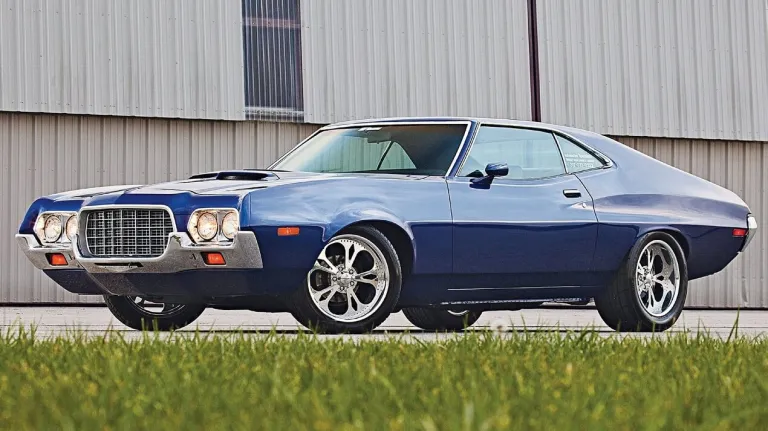
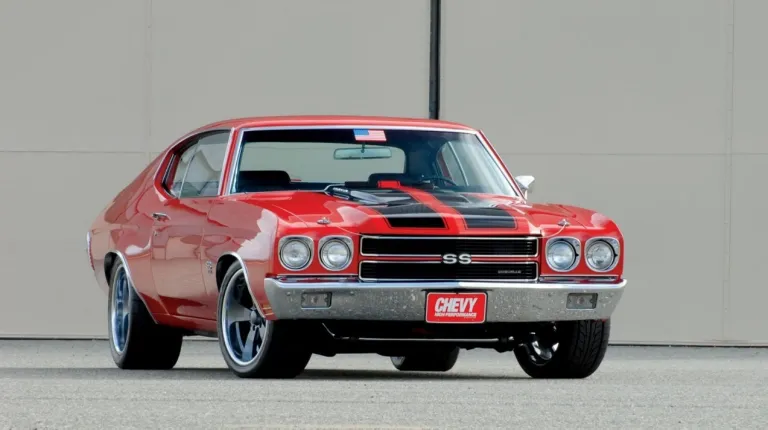
| Ford Gran Torino | Chevrolet Chevelle SS | |
|---|---|---|
| General | ||
| Version | 182 kW (247 PS) | SS 454 LS6 · petrol · 336 kW (457 PS) |
| Production years | 1972–1976 | 1968–1972 |
| Body | Coupe | Coupe |
| Class | Sports car | Sports car |
| Country | United States | United States |
| Performance | ||
| Power Why it matters: More power means stronger acceleration and easier overtaking, especially with a full load. | 182 kW (247 PS) 244 hp | 336 kW (457 PS) 451 hp Better |
| Power, all versions | 182 kW (247 PS) 244 hp | 164–336 kW (223–457 PS) 220–451 hp |
| Torque Why it matters: Torque is the pulling force you feel when accelerating from low revs, towing or climbing hills. | No data | 678 Nm 500 lb-ft |
| 0–100 km/h Why it matters: A shorter 0–100 km/h time means quicker getaways and safer merging onto fast roads. | 6.8 s | No data |
| Power per tonne | 119 kW/t 145 hp/ton calculated | 227 kW/t 276 hp/ton calculated Better |
| Engine and transmission | ||
| Fuel | Petrol | Petrol |
| Engine | No data | 7,400 cc · 8 cyl 7.4 l |
| Engine code | No data | LS6 |
| Dimensions and weight | ||
| Width | 2,014 mm 79.3 in | No data |
| Wheelbase | 2,896 mm 114.0 in | 2,900 mm 114.2 in |
| Kerb weight Why it matters: A lighter car is usually more agile and uses less energy. | 1,528 kg 3,369 lb | 1,482 kg 3,267 lb Better |
These cars do not differ in the data we have.
Equal rows hidden (4): Body, Class, Country, Fuel.
Better marks the stronger figure - only for measurable specs (power, torque, 0–100 km/h, consumption, boot, weight).