
Volkswagen Beetle vs Moskvich-400: specs side by side
Quick comparison from catalog data - no editorial review of this pair yet.

Volkswagen · 2011–2019
Beetle III
- Power
- 9–165 kW12–224 PS
- Top speed
- -
- Kerb mass
- -

Moskvich · 1946–1956
Moskvich-400
- Power
- 17–19 kW23–26 PS
- Top speed
- 90 km/h
- Kerb mass
- 850 kg
At a glance
Who suits what, worked out from the catalog figures of the versions above.
- Running costs Beetle III Fuel per year: €1,710 vs €2,360 (estimated)
In plain words
At 15,000 km a year, fuel would cost about €1,710 (Volkswagen Beetle), €2,360 (Moskvich-400) (estimated). Volkswagen Beetle is the older design (from 1938); Moskvich-400 arrived in 1946. On the catalog figures, the Volkswagen Beetle is the pick for running costs. Our catalog has no kerb mass for the Volkswagen Beetle yet, so some checks above leave it out.
Full specifications
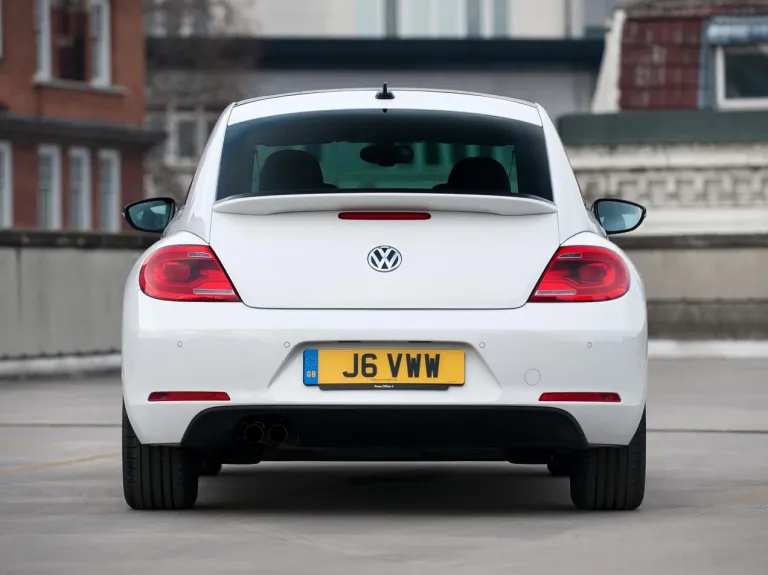
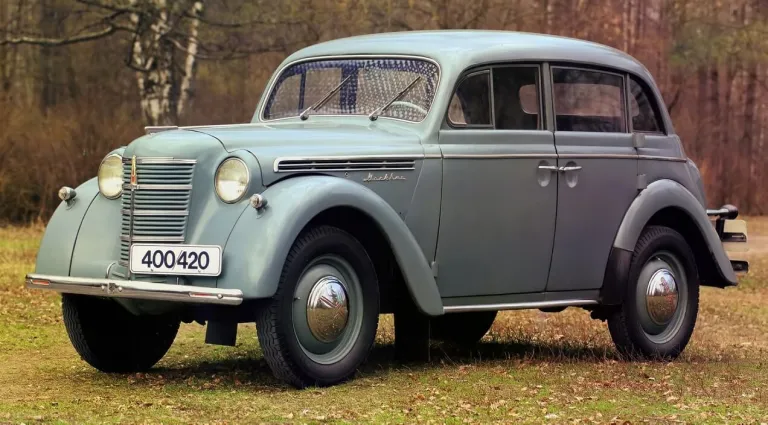
| Volkswagen Beetle | Moskvich-400 | |
|---|---|---|
| General | ||
| Version | Beetle III · 2 L 4 cyl Automatic (AM-S6) · 2015 (EPA) · diesel | 1.1 · petrol |
| Production years | 2011–2019 | 1946–1956 |
| Body | Hatchback, Convertible | Sedan, Convertible |
| Country | Germany | Soviet Union (USSR) |
| Performance | ||
| Power Why it matters: More power means stronger acceleration and easier overtaking, especially with a full load. | 9–165 kW (12–224 PS) 12–221 hp Better | 17–19 kW (23–26 PS) 23–25 hp |
| Torque Why it matters: Torque is the pulling force you feel when accelerating from low revs, towing or climbing hills. | No data | 55 Nm 41 lb-ft |
| Top speed Why it matters: Top speed hints at how relaxed the car is at motorway speeds, even if you never reach it. | No data | 90 km/h 56 mph |
| Engine and transmission | ||
| Fuel | Diesel | Petrol |
| Engine | 2,000 cc · 4 cyl 2.0 l | 1,074 cc · 4 cyl 1.1 l |
| Gearbox | 6-speed dual-clutch | 3-speed manual |
| Drive | Front-wheel drive | Rear-wheel drive |
| Dimensions and weight | ||
| Length | No data | 3,855 mm 151.8 in |
| Width | No data | 1,400 mm 55.1 in |
| Height | No data | 1,555 mm 61.2 in |
| Wheelbase | No data | 2,340 mm 92.1 in |
| Kerb weight Why it matters: A lighter car is usually more agile and uses less energy. | No data | 850 kg 1,874 lb |
| Fuel tank Why it matters: A larger tank means more distance between fuel stops. | No data | 31 l 8.2 gal US |
| Economy and running costs | ||
| Fuel consumption Why it matters: Lower consumption cuts running costs and CO₂ emissions on every trip. | 6.9 l/100 km 34.1 mpg US Better | 9.0 l/100 km 26.1 mpg US |
| Fuel cost per year | €1,710/year estimated Better | €2,360/year estimated |
| Range on a full tank | No data | 344 km 214 mi estimated |
| Safety | ||
| Euro NCAP | ★★★★★ (2011) | No data |
These cars do not differ in the data we have.
Better marks the stronger figure - only for measurable specs (power, torque, 0–100 km/h, consumption, boot, weight).
Estimated at 15,000 km a year with fuel at €1.65/l diesel, €1.75/l petrol.