
Ford Transit vs Mercedes-Benz Sprinter: specs side by side
Quick comparison from catalog data - no editorial review of this pair yet.

Ford · 2000–2013
Transit V184
- Power
- 147 kW200 PS

Mercedes-Benz · 2006–2018
Sprinter NCV3
- Power
- 140 kW190 PS
In plain words
Ford Transit has more power: 147 kW (200 PS) against 140 kW (190 PS) for Mercedes-Benz Sprinter. Ford Transit is the older design (from 1965); Mercedes-Benz Sprinter arrived in 1995.
Full specifications
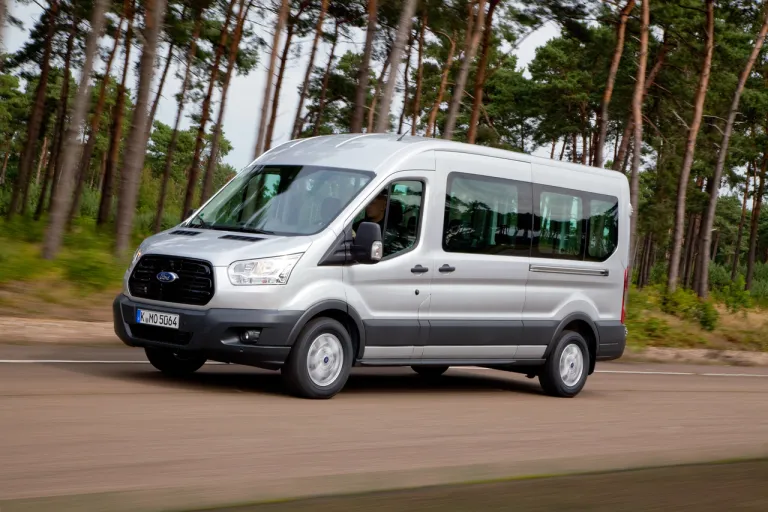
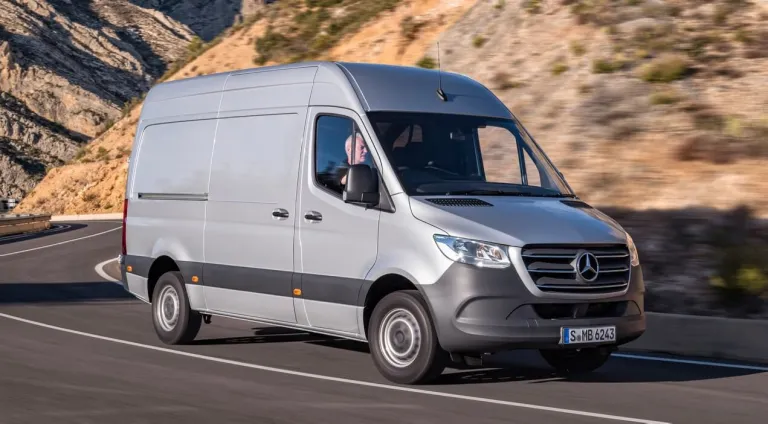
| Ford Transit | Mercedes-Benz Sprinter | |
|---|---|---|
| General | ||
| Version | Transit V184 · 3.2 · diesel · 147 kW (200 PS) | 3.0 · diesel · 140 kW (190 PS) |
| Production years | 2000–2013 | 2006–2018 |
| Body | Pickup, Van | Minibus, Van |
| Class | Van | Van |
| Country | United Kingdom | Germany |
| Performance | ||
| Power Why it matters: More power means stronger acceleration and easier overtaking, especially with a full load. | 147 kW (200 PS) 197 hp Better | 140 kW (190 PS) 188 hp |
| Power, all versions | 32–147 kW (44–200 PS) 43–197 hp | 58–190 kW (79–258 PS) 78–255 hp |
| Engine and transmission | ||
| Fuel | Diesel | Diesel |
| Engine | 3,200 cc 3.2 l | 3,000 cc 3.0 l |
| Gearbox | No data | 6-speed manual |
| Drive | No data | Rear-wheel drive |
| Dimensions and weight | ||
| Width | No data | 1,933 mm 76.1 in |
| Wheelbase | No data | 4,025 mm 158.5 in |
| Fuel tank Why it matters: A larger tank means more distance between fuel stops. | 80 l 21.1 gal US | No data |
These cars do not differ in the data we have.
Equal rows hidden (2): Class, Fuel.
Better marks the stronger figure - only for measurable specs (power, torque, 0–100 km/h, consumption, boot, weight).