KamAZ: History of the Kama Truck Plant and Its Trucks
KamAZ is a heavy-truck maker founded in 1969 on the Kama River, whose plant was built from scratch as one of the largest truck factories in the world. Its first truck left the line in 1976, and the KamAZ-5320 family with the 10.85-litre KamAZ-740 V8 diesel became the standard heavy truck of the Soviet Union.

Key takeaways
- Ground was broken on 13 December 1969; more than 700 foreign firms, including Renault, Fiat, Komatsu, Liebherr and Hitachi, supplied equipment.
- Design capacity: 150,000 heavy trucks and 250,000 engines a year on a site of 57 km².
- First models: the 5320 flatbed, the 5410 tractor unit and the 5511 dump truck, all with a V8 diesel of 154 kW (210 PS).
- Two-millionth truck in February 2012; Kamaz Master has won the Dakar truck category 19 times (to 2022).

Background: why the Kama truck plant was built
By the late 1960s the Soviet economy needed far more heavy trucks than existing plants could supply. In 1969 the government approved a new heavy-duty truck complex. Planners studied 70 candidate sites before choosing a location on the Kama River. The old 1cars history notes that the first truck design drew on earlier development work by ZIL for a cab-over diesel truck known as the ZIL-170. The new plant was meant to make diesel cab-over trucks with payloads of around 8 tonnes in very large numbers.

Development and launch
Ground was broken on 13 December 1969. More than 100,000 people from over 70 ethnic groups worked on the construction site, and the complex eventually covered 57 square kilometres. More than 700 international companies supplied machinery, among them Renault, Fiat, Komatsu, Liebherr and Hitachi. The town next to the site grew from about 27,000 residents before construction to over half a million.
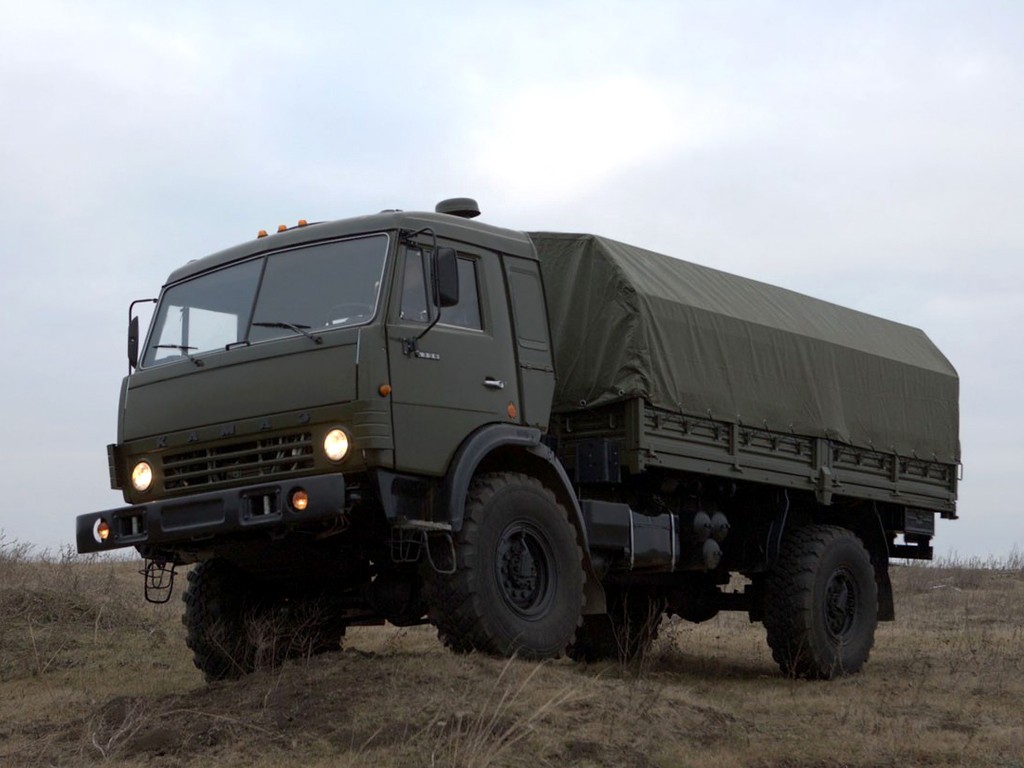
Small-batch production of the KamAZ-5320 began in 1976, while parts of the plant were still being built, and series production followed in 1978. According to the old 1cars history, about 15,000 trucks were built in the first year and the first 100,000 in less than three years. The second stage of the plant was completed within five years.
The first KamAZ trucks
| Model | Type | Production | Payload / use |
|---|---|---|---|
| KamAZ-5320 | 6×4 flatbed truck | 1976–2000 | 8,000 kg |
| KamAZ-53212 | 6×4 flatbed, higher payload | from 1980 | heavier loads |
| KamAZ-5410 | 6×4 tractor unit | 1970s | semi-trailers |
| KamAZ-5511 | 6×4 dump truck | 1970s | construction |
| KamAZ-4310 | 6×6 all-terrain truck | 1980s | off-road transport |
The KamAZ-5320 set the pattern for the whole family. Its layout was shared by the 5410 tractor, the 5511 dump truck and, with all-wheel drive, the 4310. As a result, cabs, engines, gearboxes and axles could be produced in huge numbers and repaired with the same parts anywhere. The basic recipe was a tilting cab-over cab with a sleeping berth, a three-axle chassis with two driven rear axles, and the KamAZ-740 V8 diesel. East Germany began importing the trucks in 1978, one of the first export markets.

Technical highlights
| Parameter | KamAZ-5320 |
|---|---|
| Engine | KamAZ-740 V8 diesel, direct injection |
| Displacement | 10.85 L (10,850 cc) |
| Power | 154 kW (210 PS) |
| Torque | 639 Nm |
| Gearbox | 5-speed manual with range splitter (10 speeds) |
| Length | 7,395 mm |
| Wheelbase | 3,190 + 1,320 mm |
| Kerb weight | 7,080 kg |
| Gross weight | 15,080 kg |
| Payload | 8,000 kg |
The KamAZ-740 is a 90-degree V8 with a bore and stroke of 120 × 120 mm. In its first form it was naturally aspirated. Later turbocharged versions such as the 740.31-240 in the KamAZ-4326 reached 176 kW (240 PS) and 912 Nm, and the 11.76-litre 740.63-400 in the KamAZ-6520 produced 294 kW (400 PS). The gearbox has five speeds with a front splitter, giving ten ratios, and synchronised gears from second upwards. KamAZ also built engines with Cummins through the Cummins Kama joint venture, and from 2002 the 6520 dump truck used a ZF 16-speed gearbox.

Production years and numbers
According to the old 1cars history, within ten years of the first truck the plant had paid back its construction costs, and KamAZ trucks carried about two-thirds of all road freight in the Soviet Union. In 1987 KamAZ also began building the Oka microcar on a separate line; seven years later this production was moved to a separate company.

In April 1993 a fire destroyed the engine plant, including its buildings and specialised equipment. With help from the authorities, the company, by then a joint-stock company, rebuilt engine production. In the 2000s KamAZ returned to profit and widened its range with the 6520 heavy dump truck and new tractor units. From 2008 a line assembled Mercedes-Benz heavy trucks, and Daimler Truck held a 15% stake. A joint venture with CNH (Fiat group) for road-building and agricultural machinery was set up but cancelled in 2013.
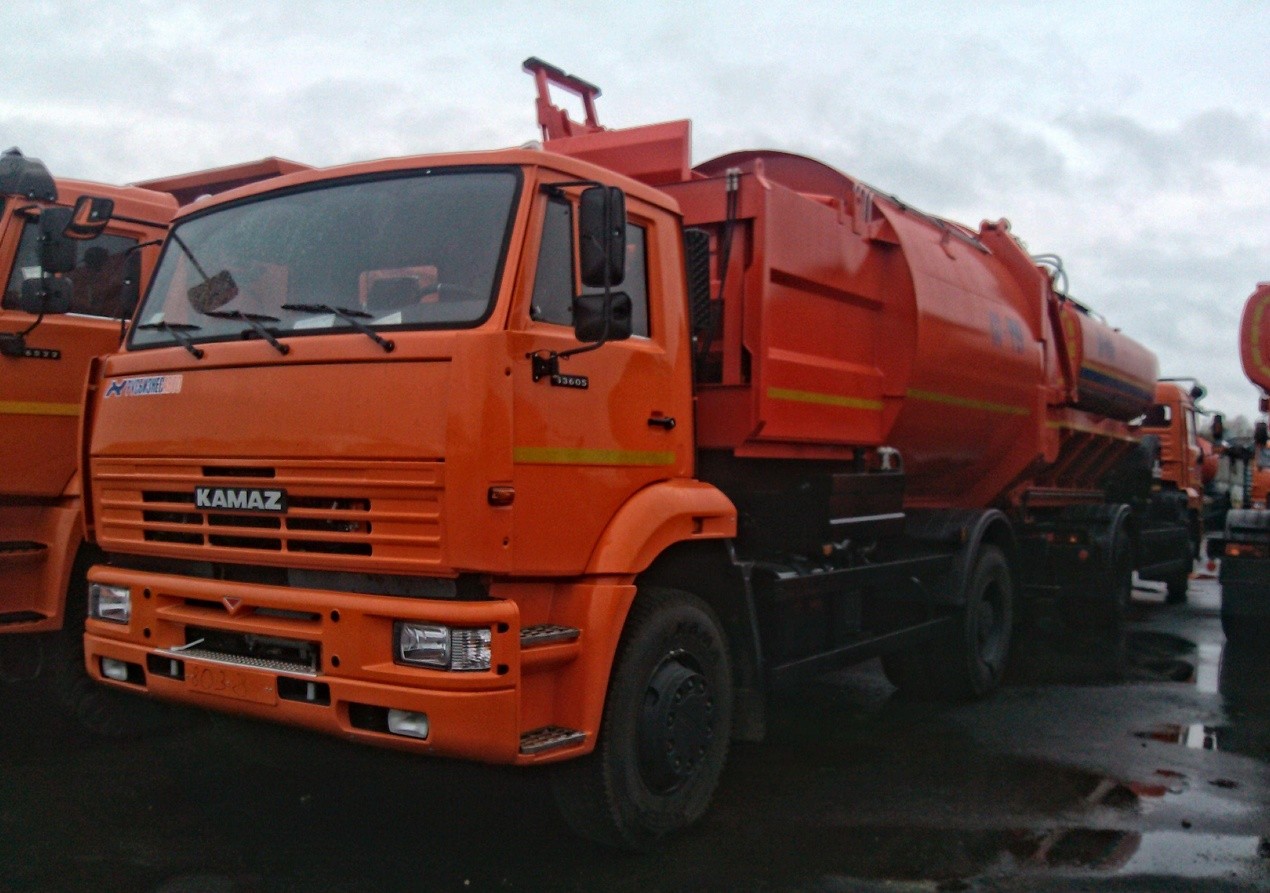
The newer generation of trucks showed how KamAZ widened its range. The all-wheel-drive 4326, developed from the 4310, entered series production in 1995. The 6520 heavy dump truck of 2002 was offered with a Cummins ISLe 8.9-litre engine as well as KamAZ's own V8 and was aimed partly at export markets. Its 6×6 sister, the 6522, became the two-millionth KamAZ truck in 2012, and the 6580 succeeded the 6520 from 2016.
| Milestone | Value |
|---|---|
| Plant approved | 1969 |
| Ground broken | 13 December 1969 |
| First trucks | 1976 (series from 1978) |
| Design capacity | 150,000 trucks and 250,000 engines a year |
| Oka microcar line | from 1987 |
| Engine plant fire | April 1993 |
| Two-millionth truck | February 2012 (a KamAZ-6522) |
| Output in 2014 | about 43,000 trucks |
The group now includes more than 110 subsidiaries and affiliates, among them the NEFAZ bus maker, and has assembly abroad in Vietnam, India and Kazakhstan. The Ganja plant in Azerbaijan has assembled KamAZ trucks since 2015. The modern range includes more than 25 truck models and their versions, from the 6520 to the KamAZ-5490 tractor unit. Daimler suspended its cooperation with KamAZ in February 2022.
Kamaz Master and the Dakar Rally
The factory team Kamaz Master was formed in 1988 and became the dominant force in the truck category of the Dakar Rally, with 19 wins by 2022. The team has also competed in the Silk Way Rally and the Africa Eco Race. Its success brought KamAZ international recognition and served as a testing ground for engines, suspensions and cabs, including the KamAZ-4326-9 rally truck based on the 4326.

Legacy and collectability today
KamAZ trucks shaped heavy road transport across the Soviet Union and many export markets for decades. Early 5320s, 5410s and 5511s are still at work in many countries because they are simple, strong and easy to repair, and spare parts remain widely available. Kamaz Master rally trucks are the brand's most famous modern image. Other heavy trucks are listed among trucks, and all KamAZ models are in the KamAZ catalogue.
FAQ
When was KamAZ founded?
The KamAZ truck complex was approved in 1969, and ground was broken on 13 December 1969. The first trucks were built in 1976, and series production began in 1978.
What was the first KamAZ truck?
The first model was the KamAZ-5320 6×4 flatbed truck with an 8-tonne payload and a 10.85-litre KamAZ-740 V8 diesel with 154 kW (210 PS). It was followed by the 5410 tractor unit and the 5511 dump truck.
How many KamAZ trucks have been built?
KamAZ built its two-millionth truck in February 2012. The plant was designed for 150,000 trucks a year, while output in 2014 was about 43,000 trucks.
How many times has KamAZ won the Dakar Rally?
The Kamaz Master team, formed in 1988, had won the truck category of the Dakar Rally 19 times by 2022, making it the most successful team in the category.
Did KamAZ build cars?
Yes. From 1987 KamAZ built the Oka microcar on a separate line, and production was later moved to a separate company. Otherwise KamAZ has always focused on heavy trucks, buses and engines.
Photos (1)

Videos 2

Video 1

Video 2