
KamAZ-5410
Specs, engines and history
Updated Published Sources (2) Report an error
By Felix Hartmann, Automotive Technology & EV Contributor

- Built
- 1976–2006
- Top power
- 154 kW (209 PS)
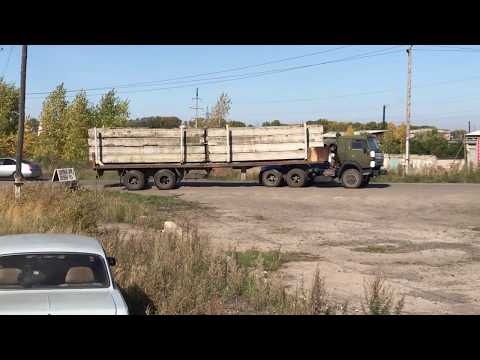
The KamAZ-5410 is a three-axle 6×4 semi-trailer tractor unit, built by KAMAZ in the Soviet Union and, after 1991, in Russia from 1976 to 2006. It was the company's first standard tractor for semi-trailers and used the 10.85-litre KamAZ-740 V8 diesel, rated at 154 kW (210 PS), with drive to the two rear axles only.
In short
- KAMAZ's first series semi-trailer tractor: a tilting cab over the engine, three axles and a 6×4 layout, not all-wheel drive.
- Naturally aspirated KamAZ-740 V8 diesel of 10,850 cc (662 cu in), 154 kW (210 PS), with a 10-ratio manual gearbox.
- In production for about 30 years, from 1976 to 2006, and designed for semi-trailers of up to about 19 tonnes.
- Complemented from 1980 by the heavier KamAZ-54112 and followed in 1995 by the KamAZ-54115.
Specs by version
Engines
Performance
Show all 1 versions
| Version | Top speed |
|---|---|
| 10.9 740.10 Tractor unit | 90 km/h56 mph |
Dimensions and weight
Show all 2 versions
| Version | Fuel tank |
|---|---|
| 10.9 740.10 Tractor unit | 250 l66.0 gal US |
| 10.9 154 kW (209 PS) Tractor unit | 250 l66.0 gal US |
Verified Manufacturer and type-approval data from our catalog · Sources and methodology
KamAZ-5410 at a glance
The KamAZ-5410 is the tractor-unit version of the first KAMAZ truck range, intended to pull semi-trailers on public roads rather than to work off-road. KAMAZ was founded in 1969, and the 5410 was one of its three initial production models, alongside the KamAZ-5320 flatbed truck.

Its job defined its shape. A short wheelbase, a fifth-wheel coupling over the rear tandem and twin driven rear axles gave a compact tractor that could take long semi-trailers within the legal length. The front axle is steered but not driven, so the 5410 has differential locks for slippery ground but no all-wheel drive. For the wider story of the plant and its early range, see KAMAZ trucks of the era.
Development and production history
The KamAZ-5410 went from prototype to series production in the mid-1970s. German sources date the first prototypes to the first half of the 1970s, and mass production began in 1976, the same year as the 5320 flatbed.

From the start the design targeted semi-trailers of up to about 19 tonnes. The 210 PS V8 was considered too weak for heavier combinations, so KAMAZ built a heavier prototype, the KamAZ-54102, with the experimental JaMZ-741 V10 engine of 13.56 litres (827 cu in) and 191 kW (260 PS). A state commission approved it for series production, but KAMAZ lacked the resources to build it, and the V10 tractor never went on sale.
The answer to heavier loads came in 1980 with the KamAZ-54112. It kept the same V8 but carried a much higher fifth-wheel load, and it was built in parallel with the 5410 rather than replacing it at once. According to the German reference works, there were periods when roughly ten times as many 5410s as 54112s left the line. East Germany imported the 5410 from 1978 to 1983, which is why the best-documented technical description of the truck comes from German literature.
The next generation, the KamAZ-54115, appeared in 1995 with a turbocharged V8. The 5410 and the 54112 both ended production in 2006, after about 30 years, and the 54115 was discontinued in 2011.
| Year | Event |
|---|---|
| 1969 | KAMAZ founded |
| Early 1970s | First KamAZ-5410 prototypes |
| 1976 | Series production begins |
| 1978–1983 | Imports to East Germany |
| 1980 | KamAZ-54112 enters production alongside the 5410 |
| 1995 | KamAZ-54115 enters production |
| 2006 | Production of the 5410 and the 54112 ends |
| 2011 | KamAZ-54115 discontinued |
Design and engineering
The KamAZ-5410 is a cab-over-engine tractor on three axles: the cab sits above the V8 and tilts forward for engine access. The layout keeps the tractor short, at 6,180 mm (243.3 in), which leaves more of the permitted combination length for the semi-trailer.
The drivetrain is 6×4. Drive goes to the two rear axles, which form a tandem 1,320 mm (52.0 in) apart behind a 2,840 mm (111.8 in) main wheelbase, and both driven axles have differential locks. This arrangement gives the traction needed to start a loaded combination on wet or snowy roads without the weight, cost and fuel use of a driven front axle. The 5410 was never meant for heavy off-road work; that role belonged to the 6×6 KamAZ-4310, another member of the same design family.
The cab design follows the period's functional approach: a rectangular cab with round headlights, a flat, upright windscreen and versions with or without a sleeping berth behind the seats. Ground clearance is 280 mm (11.0 in), and the turning circle is quoted as 17 m (55.8 ft).
Relationship with the KamAZ-5320
The KamAZ-5410 is closely related to the KamAZ-5320, the three-axle 6×4 flatbed truck that entered production in the same year. Both use the KamAZ-740 V8 rated at 154 kW (210 PS), the same cab family and a 6×4 drivetrain, so the tractor can be understood as the semi-trailer counterpart of the flatbed. The 5320 was built until 2000, while the 5410 continued to 2006.
Engine and drivetrain
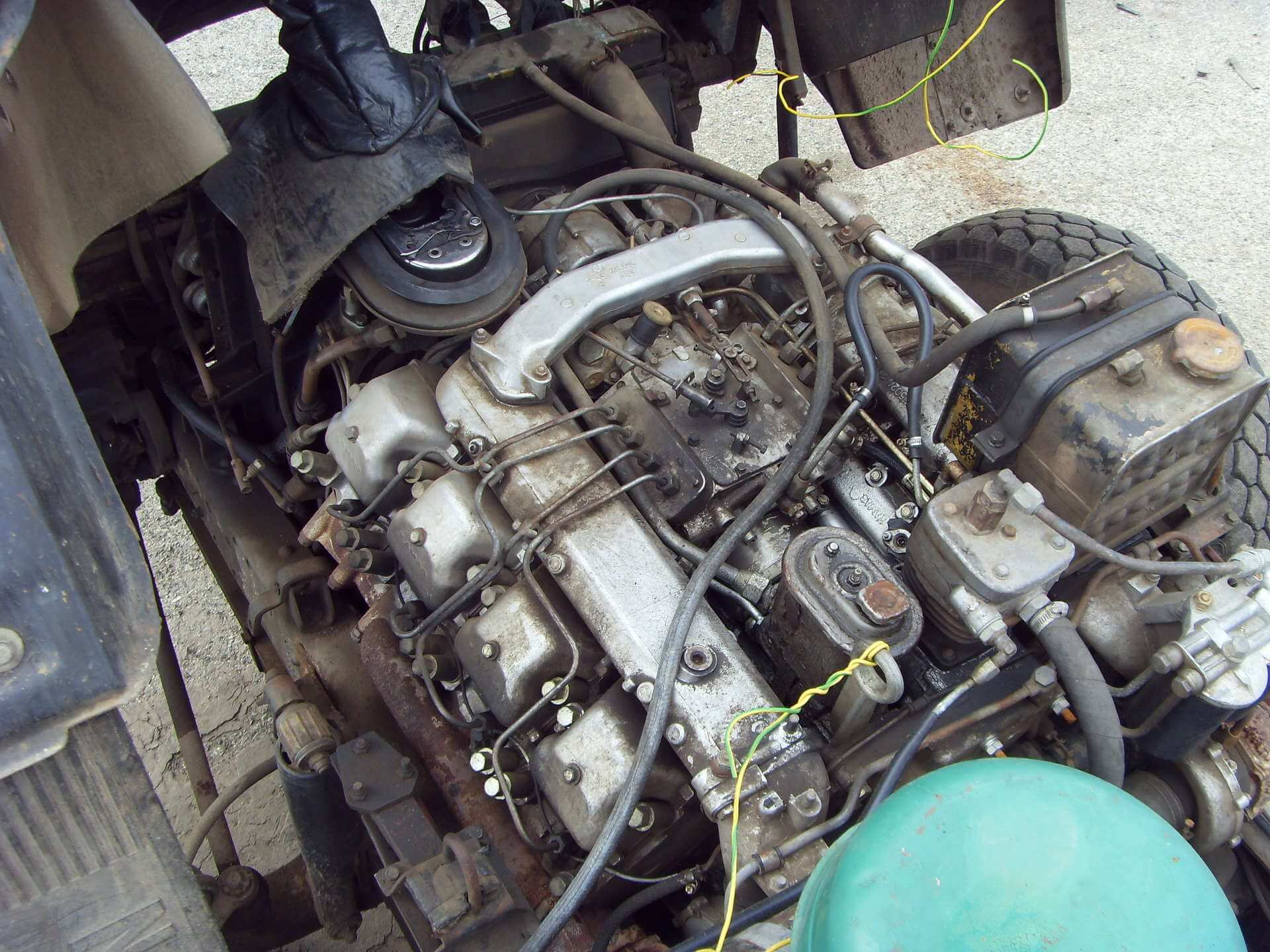
The KamAZ-5410 is powered by the KamAZ-740 (740.10), a naturally aspirated four-stroke V8 diesel with a displacement of 10,850 cc (662 cu in). Bore and stroke are both 120 mm (4.72 in), and output is 154 kW (210 PS), or 207 hp.

Published torque figures for this engine disagree, so none is quoted here. Many later descriptions also give the 5410 a turbocharged 740.11-240 engine with 176 kW (240 PS). That unit belongs to the later tractors of the 54115 era and was not the original 5410 engine, which explains why the 5410 is often listed with too much power.
The gearbox is a five-speed manual with a two-stage range unit, giving ten forward ratios in total. The low range helped when starting a heavy combination on a gradient; the maximum climbable gradient is given as 18%. Fuel consumption is quoted as 32 L/100 km (7.4 mpg US / 8.8 mpg imp) at a steady 60 km/h (37 mph) and 40.4 L/100 km (5.8 mpg US) at 80 km/h (50 mph). Two 125-litre tanks give 250 L (66.0 US gal) in total. Top-speed figures vary between sources, so this page does not state one.
KamAZ-5410 specifications
The table covers the standard KamAZ-5410 with the KamAZ-740 engine. Almost all figures come from a single family of German reference works, so treat them as reported values rather than factory certificates.

| Parameter | Metric | Imperial |
|---|---|---|
| Production | 1976–2006 | 1976–2006 |
| Layout | 6×4, rear-wheel drive, differential locks | 6×4, rear-wheel drive, differential locks |
| Engine | KamAZ-740 V8 diesel, 10,850 cc | KamAZ-740 V8 diesel, 662 cu in |
| Bore × stroke | 120 × 120 mm | 4.72 × 4.72 in |
| Maximum power | 154 kW (210 PS) | 154 kW (207 hp) |
| Gearbox | 5-speed manual + 2-stage range unit (10 ratios) | 5-speed manual + 2-stage range unit (10 ratios) |
| Length × width × height | 6,180 × 2,500 × 2,830 mm | 243.3 × 98.4 × 111.4 in |
| Wheelbase | 2,840 + 1,320 mm | 111.8 + 52.0 in |
| Track, front / rear | 2,026 / 1,856 mm | 79.8 / 73.1 in |
| Ground clearance | 280 mm | 11.0 in |
| Kerb weight | 6,650 kg | 14,661 lb |
| Fifth-wheel load | 8,100 kg | 17,857 lb |
| Permitted weight with semi-trailer | 14,900 kg | 32,849 lb |
| Permitted weight as a road train | 25,900 kg | 57,100 lb |
| Fuel tanks | 2 × 125 L | 2 × 33.0 US gal |
| Fuel consumption at 60 km/h | 32 L/100 km | 7.4 mpg US / 8.8 mpg imp |
| Turning circle | 17 m | 55.8 ft |
Several numbers in older descriptions differ. The 240 PS power output belongs to the later turbocharged engine, and gross weights such as 22,200 kg do not match the German reference figures above.
KamAZ-5410 variants and derivatives
The KamAZ-5410 line runs from a single basic tractor to an abandoned V10 prototype, a heavier parallel model and a turbocharged successor.
| Variant | Years | Body / purpose | Engine | Notes |
|---|---|---|---|---|
| KamAZ-5410 | 1976–2006 | Standard 6×4 semi-trailer tractor | KamAZ-740 V8, 154 kW (210 PS) | Fifth-wheel load 8,100 kg |
| KamAZ-54102 | 1970s, prototype | Tractor for heavier semi-trailers | JaMZ-741 V10, 13.56 L, 191 kW (260 PS) | Approved but not built in series |
| KamAZ-54112 | 1980 to probably 2006 | Higher-load 6×4 tractor | KamAZ-740 V8, 154 kW (210 PS) | Fifth-wheel load 11,350 kg |
| East German conversions | Imported 1978–1983 | Retrofitted tipping hydraulics for tipper semi-trailers | KamAZ-740 V8 | Fitted after import |
| Climate versions | Not dated | Tropical and polar packages | KamAZ-740 V8 | Polar version down to -50 °C |
| KamAZ-54115 | 1995–2011 | Next-generation 6×4 tractor | KamAZ-740 turbo V8, 176 kW (240 PS) | Fifth-wheel load 12,000 kg |
| KamAZ-5320 | 1976–2000 | 6×4 flatbed sibling | KamAZ-740 V8, 154 kW (210 PS) | Payload 8,000 kg |
KamAZ-5410 and KamAZ-54112 compared
The KamAZ-54112 is best read as a heavier-duty partner to the 5410, not a straight replacement. It weighs 7,050 kg (15,543 lb) at kerb, 400 kg more than the 5410, and its fifth-wheel load of 11,350 kg (25,022 lb) is around 40% higher. Its gross vehicle weight is 19,000 kg (41,888 lb), and the permitted combination weight is given as 33,000 to 35,000 kg. Both models share the KamAZ-740 V8 and the 6×4 layout, and both ended production in 2006. The 54115 then raised the fifth-wheel load to 12 tonnes and added a turbocharged engine.
Service, climate versions and legacy
The KamAZ-5410 served for three decades as a general-purpose tractor for semi-trailers, including tipper semi-trailers in East Germany. Its standard version was rated for operation between -40 °C and +50 °C (-40 °F to 122 °F), and KAMAZ also offered a tropical package and a polar package for temperatures down to -50 °C (-58 °F).

East Germany was the best-documented export customer. The 5410 was imported from 1978 to 1983, and German sources describe tractors that were retrofitted with tipping hydraulics so that they could work with tipper semi-trailers.
Durability is harder to document. No verified service statistics or owner surveys were found, so this page makes no claims about reliability beyond the record itself: a 30-year production life, a heavier parallel model from 1980 and a successor that kept the same V8 layout. KAMAZ's later tractor units belong to different generations: the two-axle KamAZ-5460 of the 2000s and the KamAZ-5490, built from 2013 with a cab derived from the Mercedes-Benz Axor.
Preservation and collecting today
Identifying the exact model and engine is the first step for anyone restoring a KamAZ-5410. A 210 PS rating points to an original 5410 or 54112, while a 240 PS turbocharged V8 suggests a later engine or a re-engined truck. The fifth-wheel load on the plate separates the 5410 (8,100 kg) from the 54112 (11,350 kg). Scale models of the tractor are also offered for collectors. It sits among other Soviet classic cars and classic cars of the 1970s, and the full range is listed under all KamAZ models.

Rivals
Compare with…
Compare KamAZ-5410 with
- MAZ-6422 quick spec comparison

KamAZ-5410 in our rankings
- No. 6 of 21 · Fastest trucks (90 km/h)
- No. 37 of 56 · Most powerful trucks (154 kW · top 70%)
- No. 13 of 16 · Most torque: trucks (833 Nm · top 82%)
Faster than 61% of ranked trucks in the 1CARS catalog (No. 6 of 21).
KamAZ-5410 photos 18


FAQ
What is the KamAZ-5410?
The KamAZ-5410 is a three-axle 6×4 semi-trailer tractor unit with a tilting cab over the engine, built by KAMAZ from 1976 to 2006. It was the company's first standard tractor for semi-trailers and was designed for trailers of up to about 19 tonnes.
What engine does the KamAZ-5410 have?
It uses the KamAZ-740, a naturally aspirated 10,850 cc (662 cu in) V8 diesel with a bore and stroke of 120 × 120 mm, rated at 154 kW (210 PS). Drive goes through a five-speed manual gearbox with a two-stage range unit, giving ten forward ratios.
Is the KamAZ-5410 all-wheel drive?
No. The KamAZ-5410 is a 6×4: the two rear axles are driven and have differential locks, while the front axle only steers. Listings that describe it as all-wheel drive are incorrect; the 6×6 KamAZ truck of the same family is the 4310.
What is the difference between the KamAZ-5410, 54112 and 54115?
The 54112, built from 1980, has the same 154 kW (210 PS) V8 as the 5410 but a fifth-wheel load of 11,350 kg instead of 8,100 kg. The 54115, built from 1995 to 2011, uses a turbocharged V8 with 176 kW (240 PS) and a fifth-wheel load of 12,000 kg.
How is the KamAZ-5410 related to the KamAZ-5320?
The KamAZ-5320 is the three-axle 6×4 flatbed truck from the same first KAMAZ range, and the 5410 is its semi-trailer tractor counterpart. Both entered production in 1976 and both use the KamAZ-740 V8 rated at 154 kW (210 PS).
How long was the KamAZ-5410 built?
Series production ran for about 30 years, from 1976 to 2006. Production of the heavier KamAZ-54112 ended in the same year, while the KamAZ-54115 continued until 2011.
Data sources
Data checked by an editor against the sources below.
- The text of this article (1cars archive)
- Wikipedia - KamAZ 5410


