
KamAZ-5320
Specs, engines and history
Updated Published Sources (2) Report an error
By Oleksandr Hnatiuk, Automotive Editor & Used Car Specialist Reviewed by Felix Hartmann
- Built
- 1976–2000
- Top power
- 154 kW (209 PS)
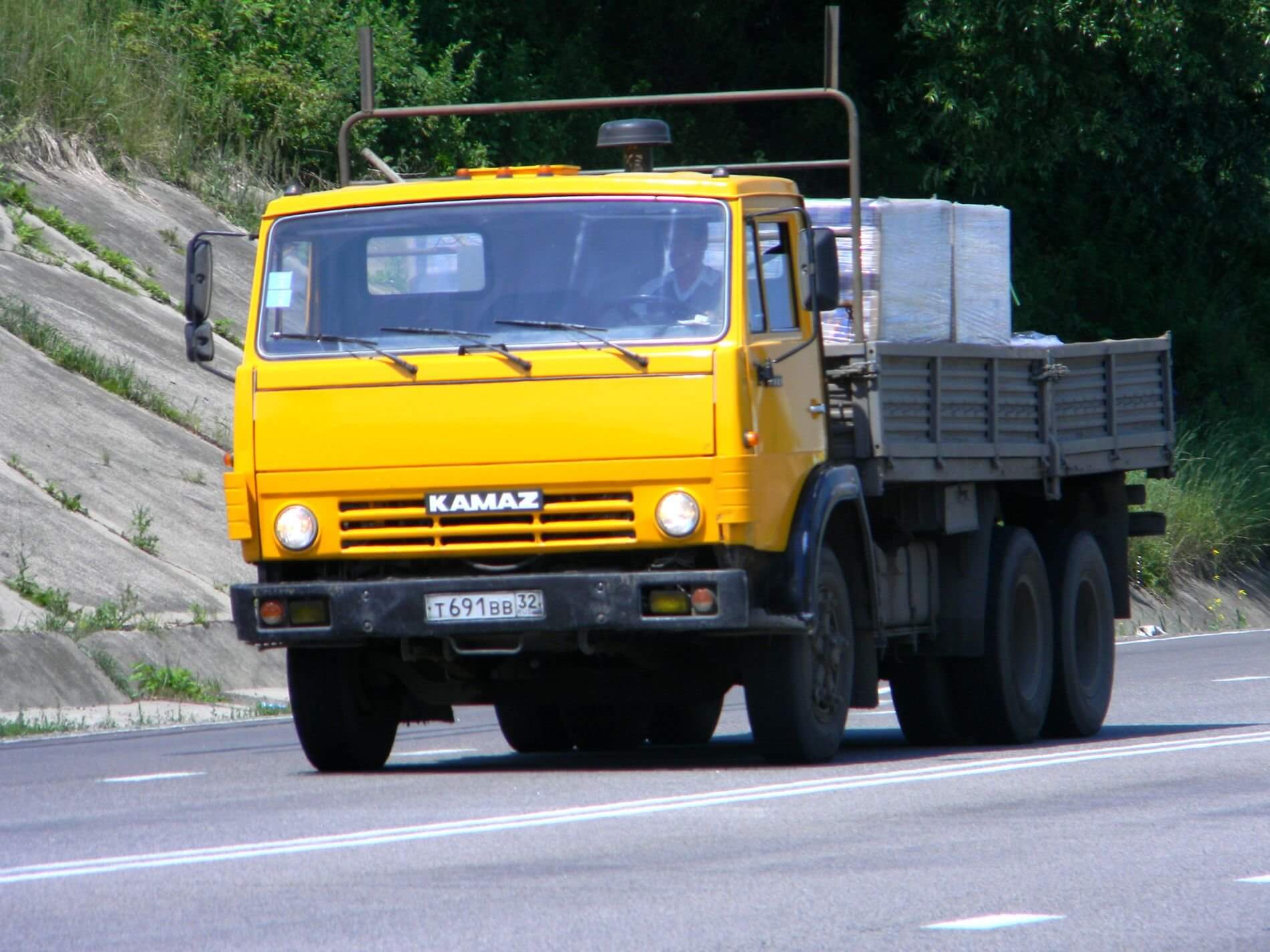
The KamAZ-5320 is a three-axle 6×4 flatbed truck built by KamAZ from 1976 to 2000. It was the first model of the new KamAZ plant and founded a whole family of trucks, including the 5410 tractor unit and the 5511 dump truck. Its 10.85-litre KamAZ-740 V8 diesel produces 154 kW (210 PS) and 639 Nm, and it carries an 8-tonne payload.
In short
- Production: small series from 1976, full-scale production from 1978, built until 2000.
- Engine: KamAZ-740 V8 diesel, 10,850 cc, 154 kW (210 PS), 639 Nm, direct injection.
- Gearbox: five-speed manual with a two-stage range unit, giving ten forward gears.
- Payload 8,000 kg, gross weight 15,080 kg, top speed 100 km/h.

Specs by version
Performance
Show all 1 versions
| Version | Top speed |
|---|---|
| 154 kW (209 PS) Truck | 50 km/h31 mph |
Verified Manufacturer and type-approval data from our catalog · Sources and methodology
KamAZ-5320 at a glance
The KamAZ-5320 was designed as a modern, high-capacity truck for long-distance freight, with a forward-control tilting cab and a powerful V8 diesel. It set the technical pattern for the whole family: the same cab, engine and gearbox were used in the KamAZ-5410 tractor unit, the KamAZ-5511 dump truck and many later models. The company's story is told in the history of KamAZ, and all its trucks are in the KamAZ catalogue.
| Fact | Value |
|---|---|
| Maker | KamAZ |
| Production | 1976–2000 (full scale from 1978) |
| Layout | 6×4, two driven rear axles |
| Cab | Forward-control, tilting; short or long version |
| Engine | KamAZ-740 V8 diesel, 10.85 L |
| Power | 154 kW (210 PS) |
| Payload | 8,000 kg |
| Gross vehicle weight | 15,080 kg |
Design and body
The 5320 has a steel flatbed with drop sides and a forward-control cab that tilts forward for access to the engine. The cab was offered in a short version and a long version, the latter with more space behind the seats. According to the old 1cars text, the cab seats three, the windscreen is split into two panes and the dashboard carries a full set of gauges and warning lights. For its time the cab was considered comfortable, although the large steering wheel and awkward pedals tire the driver on long journeys.

The 5320 was designed to pull a trailer: the old 1cars text notes that a matching trailer could carry another 8 tonnes, doubling the load of a single truck.
Engine
| Parameter | Value |
|---|---|
| Engine | KamAZ-740, four-stroke V8 diesel |
| Displacement | 10,850 cc |
| Bore × stroke | 120 × 120 mm |
| Compression ratio | 16:1 |
| Injection | Direct |
| Power | 154 kW (210 PS) |
| Torque | 639 Nm |
The KamAZ-740 is a naturally aspirated V8 with direct injection, designed for long service life. The old 1cars text mentions versions with 132 kW (180 PS) and 154 kW (210 PS), a pre-heater and flame-glow system for starting in cold weather, and an air filter with automatic dust removal. The truck was designed to work in temperatures from +50 °C to −40 °C. The closed cooling system uses two thermostats and a fan driven through an automatic hydraulic coupling, which keeps the engine at a steady temperature in both hot and cold climates. Two fuel tanks, of 250 and 175 litres according to the old 1cars text, give a long range despite fuel use of about 35 litres per 100 km.
Gearbox and running gear
The gearbox is a five-speed manual, synchronised from second gear, combined with a two-stage range unit that doubles the number of ratios to ten. According to the old 1cars text, the clutch is a twin-plate design with hydraulic assistance. Both rear axles are driven, giving a 6×4 layout. The top speed is 100 km/h.

Suspension, steering and brakes
According to the old 1cars text, the front axle is suspended on semi-elliptic leaf springs with double-acting telescopic dampers, while the rear bogie uses a balancing suspension on semi-elliptic springs, which spreads the load between the two rear axles. Steering is by a screw-and-nut mechanism with an integrated hydraulic power booster. All six wheels have drum brakes with a dual-circuit pneumatic system, and an exhaust-type engine retarder serves as an auxiliary brake; the trailer brakes are operated from the truck. The same source gives a stopping distance of 36.7 metres from 60 km/h and a main service interval of 8,000 km.

Dimensions and weights
| Parameter | Metric | Imperial |
|---|---|---|
| Length | 7,395 mm | 291.1 in |
| Width | 2,500 mm | 98.4 in |
| Height | 3,650 mm | 143.7 in |
| Wheelbase | 3,190 + 1,320 mm | 125.6 + 52.0 in |
| Kerb weight | 7,080 kg | 15,609 lb |
| Payload | 8,000 kg | 17,637 lb |
| Gross vehicle weight | 15,080 kg | 33,245 lb |
| Top speed | 100 km/h | 62 mph |
| Fuel use | about 35 l/100 km | 6.7 mpg US |
Variants and derivatives
| Variant | Years | Body / purpose | Engine | Notes |
|---|---|---|---|---|
| KamAZ-5320 | 1976–2000 | 6×4 flatbed | KamAZ-740 V8 | Base model, short or long cab |
| KamAZ-53202 | late 1970s | Long-wheelbase flatbed | KamAZ-740 V8 | Small series, 3,690 mm wheelbase (old 1cars text) |
| KamAZ-53212 | from 1980 | 6×4 flatbed | KamAZ-740 V8 | Higher payload, 10 t (old 1cars text) |
| KamAZ-53201 / 53211 | – | Chassis for special bodies | KamAZ-740 family | Tankers, fire engines, mixers (old 1cars text) |
| KamAZ-532007 | – | Flatbed | KamAZ-740 V8 | Version for tropical climates (old 1cars text) |
| KamAZ-53208 | from 1987 | Flatbed | Gas-diesel V8, 210 PS | Dual-fuel system (old 1cars text) |
| KamAZ-5410 | from 1976 | Tractor unit | KamAZ-740 V8 | For semi-trailers |
| KamAZ-5511 | from 1976 | Dump truck | KamAZ-740 V8 | Rear-tipping body |
| KamAZ-4310 | – | 6×6 truck | KamAZ-740 V8 | All-wheel-drive version based on the 5320 |
The KamAZ-4310 added all-wheel drive for rough terrain, while later models such as the KamAZ-4308 used a new generation of cabs and engines.

Development and production history
The task of creating a new family of heavy diesel trucks was set in 1968, according to the old 1cars text, and the KamAZ plant was built specifically for it. The new family was planned from the start around a common cab, engine and gearbox, so that flatbeds, tractor units, dump trucks and chassis for special bodies could be built on one production line. The first 5320s were built in small numbers in 1976, and large-scale production started in 1978. From 1978 the trucks were also exported to East Germany. The 5320 remained in production with few changes until 2000, by which time a new generation of KamAZ trucks had appeared. In the mid-1980s KamAZ also developed a gas-diesel system together with the NAMI research institute: a prototype was built in 1984, tests in 1985 showed better fuel economy and lower smoke and noise, and gas-diesel trucks went into production in 1987, according to the old 1cars text.

| Year | Event |
|---|---|
| 1976 | First KamAZ-5320 trucks built in small numbers |
| 1978 | Full-scale production; exports to East Germany begin |
| 1980 | Higher-payload KamAZ-53212 joins the range |
| 1984–1987 | Gas-diesel version developed and put into production |
| 2000 | End of KamAZ-5320 production |
In service and preservation today
Many 5320s are still in use, because the design is simple, strong and easy to repair, and parts remain available for the KamAZ-740 engine and the gearbox. When buying one, check the frame for cracks and corrosion, the condition of the engine and its fuel injection pump, the gearbox and range unit, and the rear bogie.

Strengths and weaknesses
The old 1cars text summarises the experience of drivers and operators:

Strengths:
- Works in climates from +50 °C to −40 °C.
- Easy to maintain, with relatively cheap spare parts.
- Copes well with overloading and has good ground clearance for poor roads.
- Good visibility from the high cab and effective brakes for its class.
- A wide range of variants and special bodies.
Weaknesses:
- Engine noise and poor sound insulation in the cab.
- Seats and interior materials of low quality by later standards.
- High fuel consumption.
- Some repairs need special skills and tools.
Rivals: how the 5320 compared
In its class the 5320 competed with other heavy trucks of its era, such as the MAZ-500 family and the ZIL-133. Its strengths were its powerful V8 diesel, ten-speed gearbox, high payload and the tilting cab that made maintenance easier. Its weaknesses were high fuel consumption, a basic cab, a very large steering wheel and uncomfortable pedals.

Rivals


KamAZ-5320 in our rankings
More powerful than 30% of ranked trucks in the 1CARS catalog (No. 36 of 56).
KamAZ-5320 photos 15


KamAZ-5320 videos 4

KamAZ-5320 video 1

KamAZ-5320 video 2

KamAZ-5320 video 3

KamAZ-5320 video 4
FAQ
What engine does the KamAZ-5320 have?
It uses the KamAZ-740, a 10.85-litre naturally aspirated V8 diesel with direct injection, producing 154 kW (210 PS) and 639 Nm. Versions with 132 kW (180 PS) were also mentioned in the old 1cars text.
What is the payload of the KamAZ-5320?
The 5320 carries 8,000 kg on its flatbed, with a gross vehicle weight of 15,080 kg. With a trailer, the total load can be roughly doubled.
When was the KamAZ-5320 produced?
Small-series production began in 1976 and full-scale production in 1978. The truck was built until 2000, with the higher-payload 53212 added from 1980 and a gas-diesel version from 1987.
How many gears does the KamAZ-5320 have?
It has a five-speed manual gearbox combined with a two-stage range unit, which together give ten forward gears. Gears two to five are synchronised, and a twin-plate clutch with hydraulic assistance is fitted.
What trucks belong to the KamAZ-5320 family?
The family includes the 5320 flatbed, the 53212 with a higher payload, the 5410 tractor unit, the 5511 dump truck, the all-wheel-drive 4310 and chassis versions for tankers and other special bodies.
Data sources
Data checked by an editor against the sources below.
- The text of this article (1cars archive)
- Wikipedia - KamAZ 5320


