Archive first published
Toyota HiAce H300: Why the 2019 Van Gained a Bonnet
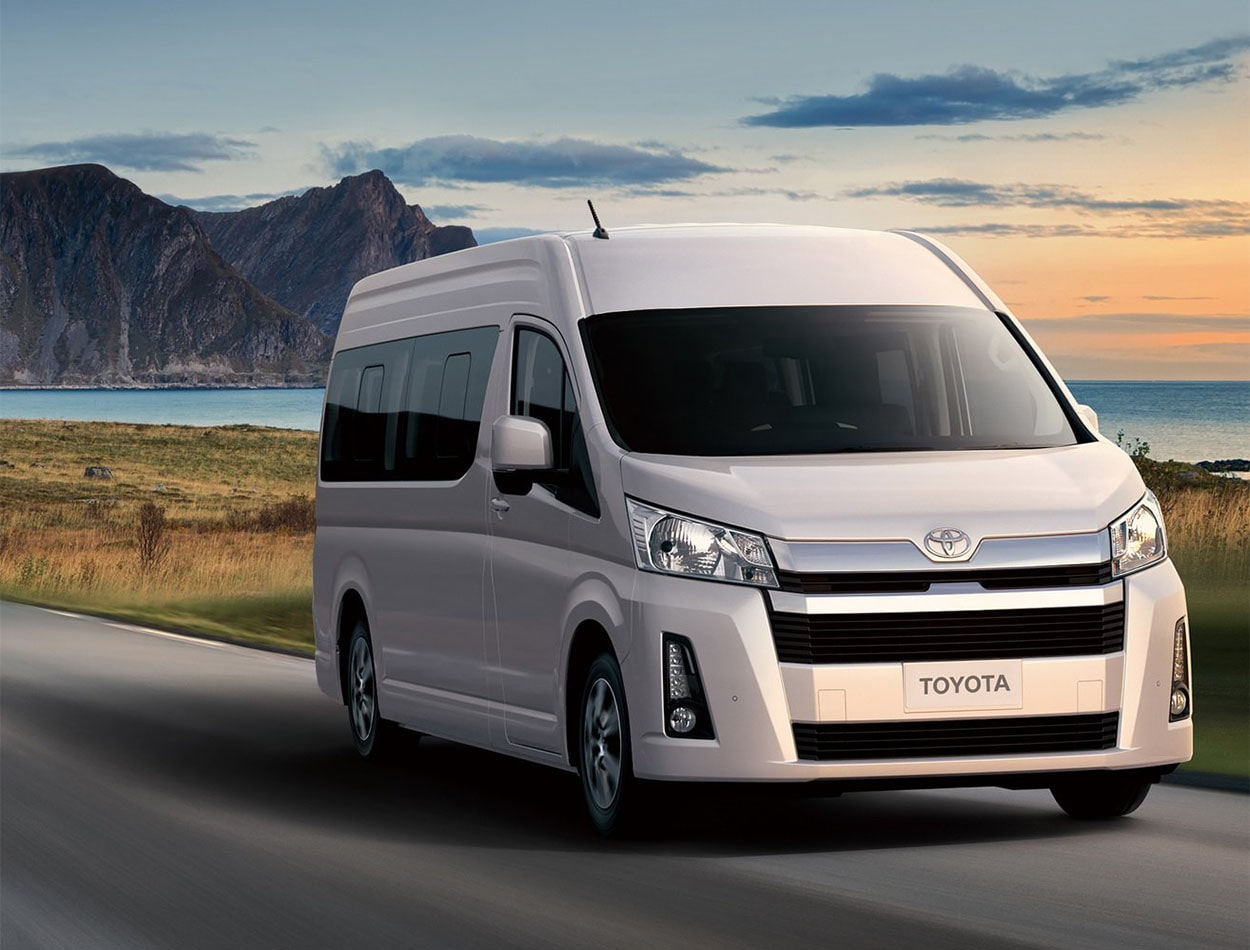
The sixth-generation Toyota HiAce, code H300, had its world premiere in the Philippines on 18 February 2019. It broke with 52 years of cab-over design: the engine moved ahead of the cabin under a short bonnet, mainly for crash safety. Toyota sold it in Asia, Australia, Africa, Latin America and the Middle East, while Japan kept the older H200.
Key takeaways
- First HiAce with a semi-bonnet layout; rear-wheel drive with a longitudinal engine.
- Engines: 2.8-litre 1GD-FTV diesel up to 130 kW (177 PS) and 3.5-litre V6 petrol with 207 kW (281 PS).
- Five-star ANCAP rating in 2019, with 94% for adult occupants.
- Still on sale in 2026; sales in Brazil began in September 2025.

A new layout after five generations
The first HiAce appeared in October 1967 as a one-box van developed by Toyota Auto Body. Every later generation kept the driver above the front axle. That packaging gave the most load space for the length, but it left little room to absorb a frontal impact.

For the H300, Toyota placed the engine in front of the cabin and added a crumple zone. The company aimed at the top marks of the Euro NCAP-aligned crash tests. The old 1cars report noted nine airbags in some versions, including a centre airbag for a double passenger seat. Full results depended on the Toyota Safety Sense package, which was not standard in every market.
The van was not meant for Europe, where Toyota sold the front-drive Proace built by Groupe PSA.
Toyota HiAce H300 specifications
Diesel outputs vary by market.

| Parameter | Short wheelbase | Long wheelbase |
|---|---|---|
| Wheelbase | 3,210 mm | 3,860 mm |
| Length | 5,265 mm | 5,915 mm |
| Width | 1,950 mm | 1,950 mm |
| Height | 1,990 mm | 2,280 mm |
| Cargo volume (van) | 6.2 m³ | 9.3 m³ |
| Diesel (1GD-FTV, 2.8 l) | 115–130 kW (156–177 PS), up to 450 Nm | same |
| Petrol (7GR-FKS, 3.5 l V6) | 207 kW (281 PS), 351 Nm | same |
| Gearboxes | 6-speed manual or 6-speed automatic | same |
The short wheelbase is 640 mm longer than the 2,570 mm of the old van. The front suspension switched to MacPherson struts, and leaf springs remained at the rear. A long-wheelbase Commuter seats up to 16 people on simple benches. The business version carries 12 passengers in individual leather seats. To check whether a 5.9-metre van fits a driveway, use the garage fit tool.
Rivals and markets in 2019
In its markets the H300 competed with the Hyundai H350 and the Nissan NV350 Urvan. The Granvia people carrier arrived in Taiwan and Australia in May 2019, where it replaced the Tarago. The Majesty went on sale in Thailand, and the GranAce reached Japan in December 2019.

The HiAce H300 from 2019 to 2026
| Date | Event |
|---|---|
| 18 February 2019 | World premiere in the Philippines |
| 28 May 2019 | Launch in Australia |
| 2019 | ANCAP five stars: adult 94%, child 88%, pedestrian 84%, safety assist 77% |
| December 2019 | GranAce luxury version on sale in Japan |
| October 2024 | GranAce dropped in Japan after weak sales |
| September 2025 | Sales begin in Brazil, with the 2.8 diesel and 6-speed automatic |
| January 2026 | Japan's older H200 receives its final facelift |
Production spread to Thailand, Vietnam, Malaysia, South Africa and Argentina. More Toyota models are in the Toyota catalogue, and the brand's background is in the history of Toyota.
Status in 2026: who should buy one
In October 2026 the H300 remains Toyota's export van for markets outside Europe and North America. Its strengths are crash protection, a durable diesel and a wide dealer network. Its weakness is size: the long version is almost six metres long.
Passenger operators on rough roads gain most. European buyers should look at the Proace instead. Compare dimensions and running costs with the comparison tool or browse the vans section.
FAQ
When did the new Toyota HiAce come out?
Toyota unveiled the H300 in the Philippines on 18 February 2019. Australia followed in May 2019 and Thailand in June. Japan kept selling the older H200, which received its last facelift in January 2026.
Why did the HiAce get a bonnet?
Toyota moved the engine ahead of the cabin to create a crumple zone. The cab-over layout used since 1967 placed the occupants right behind the front panel, which limited frontal crash protection.
What engines does the HiAce H300 have?
The main engine is the 2.8-litre 1GD-FTV turbodiesel with 115–130 kW (156–177 PS) and up to 450 Nm. Selected markets also offer a naturally aspirated 3.5 V6 rated at 207 kW (281 PS).
Is the HiAce H300 sold in Europe?
No. Toyota sells the Proace in Europe, a front-wheel-drive van built by Stellantis, formerly Groupe PSA. The H300 is aimed at Asia, Australia, Africa, the Middle East and Latin America.