
 Renault Zoe Z.E.
Specs, engines and history
Updated Published Sources (3) Report an error
By Felix Hartmann, Automotive Technology & EV Contributor Reviewed by Oleksandr Hnatiuk
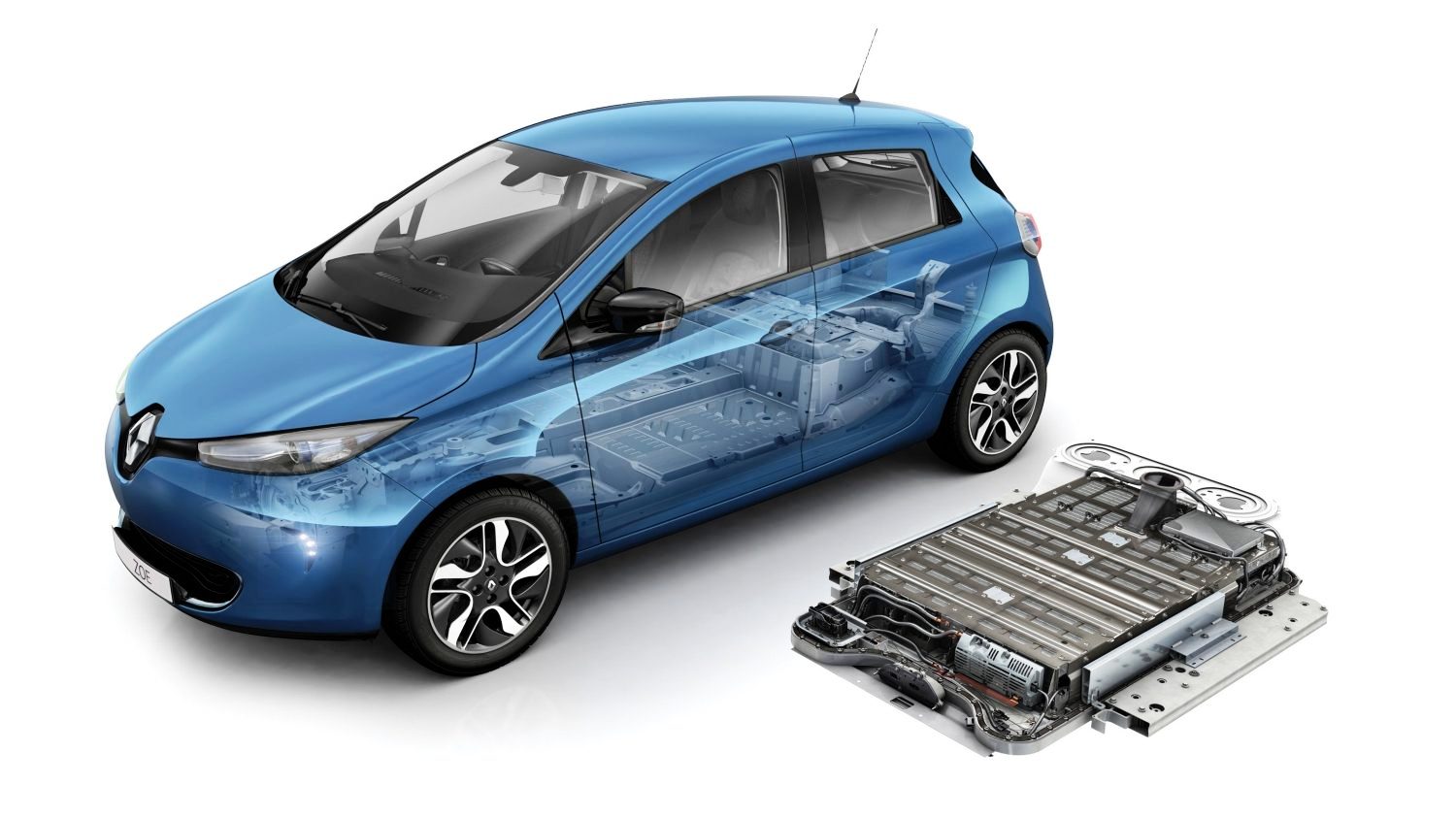
- Built
- 2016–2019
- Top power
- 80 kW (109 PS)
Buying advice for a used Z.E. 40
Our verdict · Felix Hartmann
- Battery contract: check whether the battery is owned or rented. A rented battery means a monthly fee and a contract that the buyer must take over.
- Battery health: ask for a state-of-health report; air-cooled packs lose capacity faster in hot climates and with frequent fast charging.
- Motor: an R110 from late 2018 is quicker, while a Q90 is the better choice if you rely on 43 kW AC chargers.
- Charging cable: make sure the Type 2 cable is included and in good condition.
The Z.E. 40 suits drivers who mostly cover town and regional trips and can charge at home or at work. For regular motorway journeys, a Z.E. 50 with the CCS socket is the better buy. The brand's history is told in our Renault history.
The Renault Zoe Z.E. 40 is the version of Renault's small electric hatchback with a 41 kWh battery, unveiled at the Paris Motor Show in October 2016 and replaced by the Z.E. 50 at the end of 2019. The new pack almost doubled the usable capacity of the first Zoe and raised the official NEDC range from 240 to 400 km.
In short
- Battery: 41 kWh usable (45.6 kWh total), 192 cells developed with LG Chem, assembled at Flins, about 305 kg.
- Motors: R90 for range and Q90 for fast AC charging at launch, then the 80 kW R110 from 2018.
- Range: 400 km NEDC for the R90 and about 370 km for the Q90; roughly 300 km in everyday driving.
- Market: one of the best-selling electric cars in Europe; Renault sold 31,932 Zoes in 2017 and 40,517 in 2018.

Size at a glance
| Dimensions | Renault Zoe Z.E. 40 |
|---|---|
| Length | 4,084 mm160.8 in |
| Width | 1,730 mm68.1 in |
| Height | 1,562 mm61.5 in |
| Wheelbase | 2,588 mm101.9 in |
Specs by version
Engines
| Version | Engine | Power | Torque | Gearbox | Drive | Production years |
|---|---|---|---|---|---|---|
| Z.E. 40 R90 | Electric | 68 kW 92 PS91 hp | - | Single-speed | Front-wheel drive | - |
| Z.E. 40 R110 (80 kW) | Electric | 80 kW 109 PS107 hp | 225 Nm166 lb-ft | Single-speed | Front-wheel drive | 2018–2019 |
Performance
Show all 2 versions
| Version | Fuel consumption | Range |
|---|---|---|
| Z.E. 40 R90 | 17.0 kWh/100 km27.4 kWh/100 mi | 400 km249 mi |
| Z.E. 40 R110 (80 kW) | 17.6 kWh/100 km28.3 kWh/100 mi | - |
Dimensions and weight
Show all 2 versions
| Version | Length | Width | Height | Wheelbase | Kerb weight | Battery |
|---|---|---|---|---|---|---|
| Z.E. 40 R90 | 4,084 mm160.8 in | 1,730 mm68.1 in | 1,562 mm61.5 in | 2,588 mm101.9 in | 1,548 kg3,413 lb | 41 kWh |
| Z.E. 40 R110 (80 kW) | - | - | - | - | 1,576 kg3,474 lb | 41 kWh |
Verified Manufacturer and type-approval data from our catalog · Sources and methodology
Renault Zoe Z.E. 40 at a glance

| Parameter | Metric | Imperial |
|---|---|---|
| Battery (usable / total) | 41 / 45.6 kWh, air cooling | - |
| Motors | R90 / Q90: 65–68 kW (sources differ); R110: 80 kW, 225 Nm | 88–92 PS; 109 PS |
| Range, NEDC | 400 km (R90), about 370 km (Q90) | 249 / 230 miles |
| Range, real use (Renault estimate) | about 300 km | 186 miles |
| AC charging | 22 kW (R90, R110); up to 43 kW (Q90) | - |
| Length / width / height | 4,084 / 1,730 / 1,562 mm | 160.8 / 68.1 / 61.5 in |
| Wheelbase | 2,588 mm | 101.9 in |
| On sale | October 2016 – late 2019 | - |
| Plant | Flins, France | - |
What the 41 kWh battery changed
Renault and LG Chem developed new cells for the Z.E. 40 instead of enlarging the old pack. The 192 cells each hold 63.35 Ah at a nominal 3.75 V, and they fit into the same space under the floor and rear seat as the 22 kWh battery of 2012. The total capacity is 45.6 kWh, of which 41 kWh can be used, and the pack weighs about 305 kg. By our calculation it stores about 134 Wh per kg at pack level, against roughly 80 Wh per kg for the first Zoe battery, and holds 86 % more usable energy for a pack that is only about 25 kg heavier.

The gain in range was large. Renault quoted 400 km on the NEDC cycle for the R90 version, compared with 240 km for the R240 car it replaced, and about 300 km in real use against 170 km. On the stricter WLTP cycle, introduced in 2018, the Z.E. 40 is rated at about 300 km. Owners of earlier Zoes with a rented battery could switch to the 41 kWh pack for about €3,500.
R90, Q90 and R110: the three motors
The Z.E. 40 was sold with two motor versions at first, and a third arrived later:
- R90: Renault's own motor, built for the longest range, charging at up to 22 kW AC.
- Q90: a version for fast AC charging at up to 43 kW through the Chameleon charger, with a slightly shorter NEDC range of about 370 km.
- R110: shown in February 2018 and sold in Europe from late summer 2018, with 80 kW and 225 Nm. It gave the Zoe noticeably better acceleration and kept the 41 kWh battery.

Sources disagree on the output of the R90 and Q90: Renault material and the old version of this page give 92 PS (68 kW), while other references list 65 or 66 kW. All three motors drive the front wheels through a single-speed gearbox. The suspension stays simple, with MacPherson struts at the front and a torsion beam at the rear.
Charging times in practice
How long a Z.E. 40 takes to charge depends on the motor version and the power supply. By our calculation, ignoring losses, filling 41 kWh from empty takes about 5.5 hours on a 7.4 kW home wallbox and a little under two hours on a 22 kW public post. A Q90 on a 43 kW AC charger can, in theory, add 80 % in well under an hour. A standard household socket needs a full day or night. The Z.E. 40 has no DC fast-charging socket; CCS arrived only with the Z.E. 50.

| Supply | Power | Time for 41 kWh (our calculation) |
|---|---|---|
| Household socket | 2.3 kW | about 18 h |
| Home wallbox | 7.4 kW | about 5.5 h |
| Public AC post | 22 kW | about 1 h 50 min |
| Fast AC (Q90 only) | 43 kW | about 1 h; 80 % in about 45 min |
Prices and battery rental in France
At the launch in October 2016 Renault sold the Z.E. 40 in France without the battery, which customers rented monthly. The Q90 cost €500 more than the R90 in every trim.

| Trim (2016) | R90 | Q90 | Main equipment |
|---|---|---|---|
| Life | €23,600 | €24,100 | 15-inch wheels, manual air conditioning, cruise control |
| Zen | €24,800 | €25,300 | R-Link Evolution 7-inch touchscreen with TomTom navigation, 16-inch wheels |
| Intens | €25,600 | €26,100 | rear parking sensors, keyless entry, automatic lights and wipers |
| Edition One | €28,000 | €28,500 | 17-inch wheels, leather, heated seats, Bose audio, rear camera |
Battery rental started at €69 a month for up to 7,500 km a year (Flex) or €119 a month with unlimited mileage (Relax). A government bonus of €6,300 applied to all versions, and a launch offer combined car and battery for €149 a month for drivers who scrapped a diesel more than ten years old. Buying the battery outright was reported to add about €8,000. Our cost of ownership calculator helps compare rental and purchase over several years.
Cabin, boot and safety
The interior is the same as on the 22 kWh Zoe. It has five seats and a digital instrument display, and Zen and higher trims add the 7-inch R-Link touchscreen also used in the Clio and Captur. Because the battery sits under the floor, the boot keeps its full volume of about 338 litres. The cabin is quiet at town speeds, and the higher seating position gives a good view.

Euro NCAP tested the Zoe in 2013 and gave it five stars, with 89 % for adult occupants, 80 % for children, 66 % for pedestrians and 85 % for safety assistance. That rating covered the Z.E. 40 during its time on sale. The later collapse of the score to zero stars applies to the Z.E. 50 tested in 2021, which is explained on our main Renault Zoe page.
Z.E. 40 against other electric cars of 2017–2019
| Car | Battery | Official range | Note |
|---|---|---|---|
| Renault Zoe Z.E. 40 | 41 kWh | 400 km NEDC | rental or purchase |
| Nissan Leaf (2018) | 40 kWh | 378 km NEDC | CHAdeMO fast charging |
| Hyundai Ioniq Electric | 28 kWh | 280 km NEDC | 100 kW DC charging |
| Opel Ampera-e | 60 kWh | 520 km NEDC | larger and dearer |
At its launch the Z.E. 40 offered more range than any electric car at a similar price in Europe. Its weak point was the lack of DC charging for long trips, where the Leaf and Ioniq were stronger. Other battery models of that period and today are gathered in our electric cars section.


Renault Zoe Z.E. in our rankings
- No. 87 of 588 · Smallest cars (4,084 mm · top 15%)
- No. 25 of 86 · Heaviest hatchbacks (1,576 kg · top 30%)
- No. 49 of 105 · Smallest hatchbacks (4,084 mm · top 47%)
- No. 227 of 446 · Heaviest cars (1,576 kg · top 51%)
- No. 60 of 105 · Longest hatchbacks (4,084 mm · top 58%)
- No. 260 of 446 · Lightest cars (1,548 kg · top 59%)
Shorter than 85% of ranked cars in the 1CARS catalog (No. 87 of 588).
Renault Zoe Z.E. photos 20




FAQ
What is the range of the Renault Zoe Z.E. 40?
The official NEDC range is 400 km for the R90 version and about 370 km for the Q90. Renault estimated about 300 km in real driving, and the WLTP rating is about 300 km.
What is the difference between the R90 and Q90?
The R90 has the longest range and charges at up to 22 kW AC. The Q90 can charge at up to 43 kW on fast AC chargers, but its NEDC range is about 30 km shorter.
How big is the battery in the Zoe Z.E. 40?
The battery holds 41 kWh of usable energy out of 45.6 kWh in total. It has 192 cells developed with LG Chem and weighs about 305 kg.
How much did the Renault Zoe Z.E. 40 cost?
In France in October 2016 the Life R90 started at €23,600, excluding the battery and before the state bonus of €6,300. Renting the battery cost from €69 a month.
When was the Zoe Z.E. 40 replaced?
Renault announced the Z.E. 50 with a 52 kWh battery and a 100 kW motor in mid-2019, and deliveries began at the end of 2019, ending the Z.E. 40.
Data sources
Data checked by an editor against the sources below.
- The text of this article (1cars archive)
- Wikipedia - Renault Zoe
- EEA CO₂ monitoring (European Environment Agency, CC BY 4.0)


