GAZ: History, Landmark Models and Line-up
GAZ is a vehicle maker founded under a 1929 agreement between the Soviet government and the Ford Motor Company. Its plant started production on 1 January 1932 with Ford-based cars and trucks, went on to build the Pobeda, Volga and Chaika saloons, stopped making passenger cars in 2010 and now concentrates on GAZelle vans, medium trucks and buses.

Key takeaways
- Ford supplied the designs and technical help: the first GAZ-A car and GAZ-AA truck were versions of the Ford Model A and Model AA.
- The Pobeda (1946–1958, 235,999 built) and the GAZ-21 Volga (1956–1970, 639,478 built) were its best-known passenger cars.
- Passenger-car production ended in November 2010 with the Chrysler-based Volga Siber.
- Since the GAZelle van of 1994, light commercial vehicles have been the core of the business.
GAZ at a glance
GAZ is a Soviet-founded maker of light commercial vehicles, trucks and, until 2010, passenger cars, part of the GAZ Group holding since 2005. Key facts as of October 2026:
| Fact | Value |
|---|---|
| Name | GAZ, Gorky Automobile Plant; opened as NAZ |
| Origin | May 1929 agreement between the Soviet government and the Ford Motor Company |
| Production start | 1 January 1932 |
| Country | Soviet Union until 1991, Russia since |
| Group | Part of the GAZ Group holding since 2005 |
| Products today | Light commercial vehicles, medium trucks, buses |
| Passenger cars | Built from 1932 to 2010 |
| Milestone | Ten millionth vehicle in March 1981 |

1929–1940: the Ford agreement and the first GAZ cars
GAZ exists because of a deal with Ford. In May 1929 the Soviet government signed an agreement with the Ford Motor Company that combined a large purchase of Ford vehicles and parts with technical assistance to build an integrated car plant. The assistance was planned to run until 1938, although the contract is usually described as having been dissolved by mutual agreement in 1935.

Construction began in 1930, and the plant started production on 1 January 1932 under the name NAZ. In 1933 it was renamed GAZ, the Gorky Automobile Plant, after the writer Maxim Gorky.
Its first two products came straight from Ford:
- The GAZ-AA, a 1.5-tonne (3,307 lb) truck based on the Ford Model AA, built from 1932. Close to one million had been made by 1938.
- The GAZ-A, a near copy of the 1930 Ford Model A, with the first cars completed in December 1932. A total of 41,917 were built up to 1936.
The GAZ-M1 of 1936, known as the "Emka", replaced the GAZ-A. Its body was developed from a Ford Model B design study, but a common myth needs correcting: the standard M1 used a four-cylinder engine, not the Ford V8, which appeared only in a special version. Systematic production ended in 1941 after 62,888 had been built.
1946–1958: the Pobeda
The GAZ-M20 Pobeda was the first post-war GAZ car and is usually described as its first car of original design. Development started in 1943 under chief engineer Andrei Liphart (also spelt Lipgart), with styling by Veniamin Samoilov, and the first production car followed in June 1946.

The GAZ-M20 Pobeda had a smooth ponton body with the wings integrated into the sides. Its 2.1-litre (128 cu in) side-valve four produced 37 kW (50 PS). The front suspension and part of the unit body were reportedly derived from the 1938 Opel Kapitän.
By the end of production in 1958, 235,999 had been built, including 37,492 taxis and 14,222 cabriolets. The car was exported across Eastern Europe and to Finland, where it was reportedly the most popular taxi of the 1950s. In Poland, FSO built it under licence as the Warszawa from 1951 to 1973.
1950–1981: the ZIM, the Volga and the Chaika
From 1950 GAZ moved upmarket and broadened its car range. The GAZ-12 ZIM (1950–1959), a large limousine, was the first GAZ to carry the leaping-deer bonnet ornament.
The GAZ-21 Volga was shown in 1955 and built from 1956 to 1970. Its 2.4-litre four gave 51–55 kW (70–75 PS), depending on the version. Enthusiasts divide production into three series, nicknamed "Star", "Shark" and "Baleen". Including the GAZ-22 estate, 639,478 were made.
Exports began after the car was shown at the 1958 Brussels World's Fair, and in Belgium it was assembled as the Scaldia-Volga.
At the top of the range sat the GAZ-13 Chaika (1959–1981), a large official limousine with a 5.5-litre (337 cu in) overhead-valve V8. Its successor, the GAZ-14, followed in 1977.
The plant also designed the GAZ-69 light four-wheel drive vehicle. GAZ built it from 1953 to 1956 before transferring production to UAZ, where it continued until 1972, and more than 600,000 were made in total.
1970–1990: the GAZ-24 Volga and the truck range
The second-generation Volga, the GAZ-24, replaced the GAZ-21 in 1970. It kept a 2.4-litre four-cylinder engine and stayed in production in updated GAZ-24-10 form from 1985 to 1992. In Belgium, Scaldia-Volga offered a version with a Peugeot diesel engine.

The GAZ-3102 joined it in 1982, and the Volga line continued as the GAZ-31029 (1992), the GAZ-3110 (1997) and the GAZ-31105 (2004–2009).
Trucks were just as important. The GAZ-53 medium truck ran from 1961 to 1993, with the lighter GAZ-52 alongside it. On 24 August 1971 the plant became the AvtoGAZ production association, and in March 1981 it built its ten millionth vehicle.
1990s–2010: privatisation, the Volga 3110 and the Siber
Ownership changed after the end of the Soviet Union. In November 2000 SibAl, part of the Basic Element industrial group, acquired control, and in 2005 GAZ became part of the newly formed GAZ Group holding.

The GAZ-3110 Volga, introduced in 1997, carried the Volga name into the 2000s. Early cars used the ZMZ-406 2.3-litre (140 cu in) engine rated at 110 kW (150 PS); later versions were quoted at 96 kW (131 PS).
To replace it, GAZ bought the production line and press tooling of the Chrysler Sebring and Dodge Stratus in 2006. The result was the Volga Siber: a pilot batch was built on 28 March 2008, and steady production began in July 2008. The plan foresaw 40,000 cars a year, but only about 9,000 were made.
In November 2010 GAZ ended production of the Siber and the remaining Volga range. That decision closed almost eight decades of GAZ passenger cars.
The group also expanded. It took over the truck maker Ural in 2005, and in July 2006 GAZ bought the British van maker LDV, which became insolvent in 2009 and was sold on.
The GAZelle and the commercial-vehicle focus
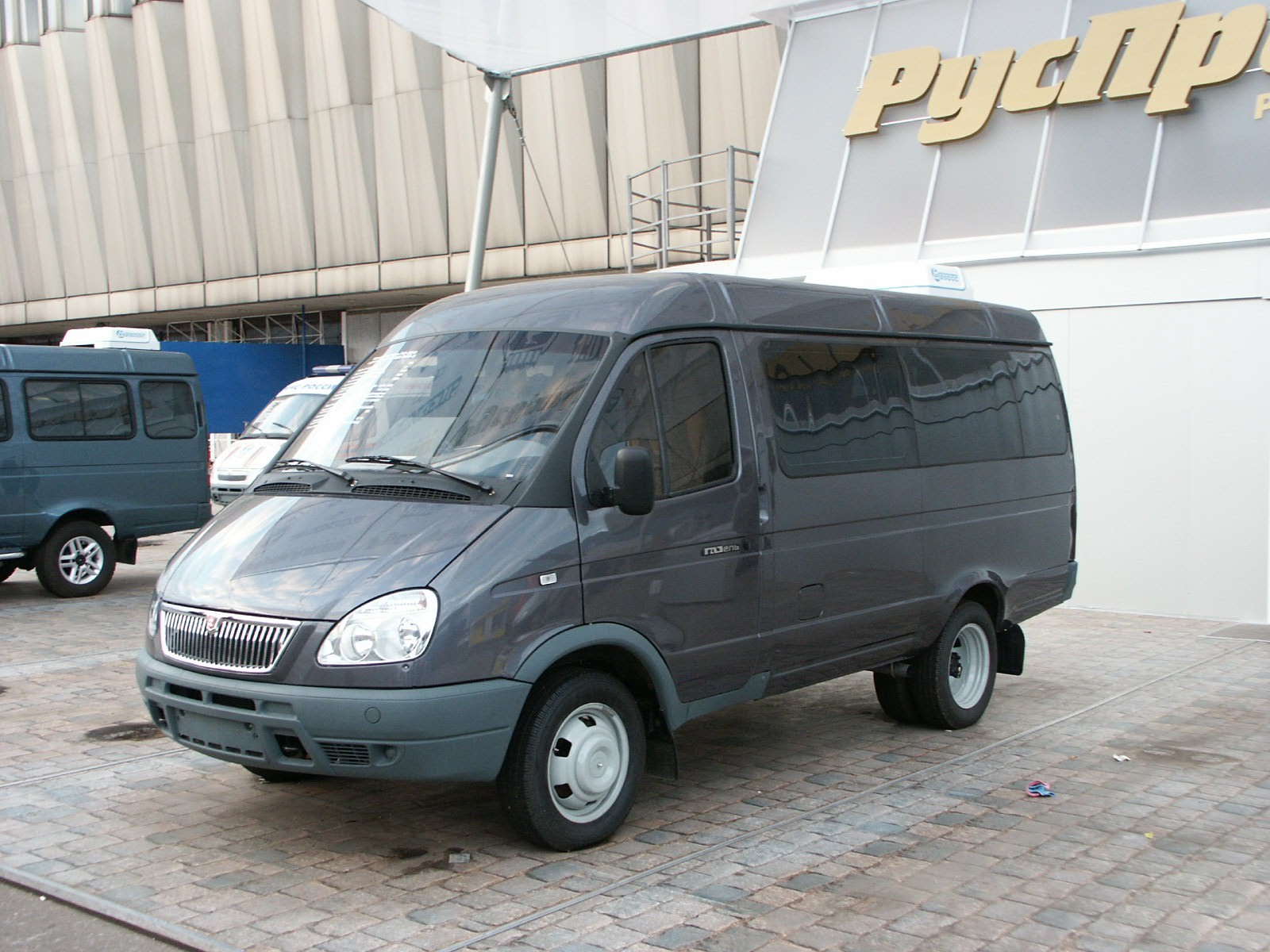
The GAZelle light commercial vehicle has been the backbone of GAZ since the 1990s. Presented in 1993 and in production from 1994, it was offered as a van, minibus and dropside truck, and the smaller Sobol range followed in 1998. Production passed one million by 2005.

The modernised GAZelle Business arrived in 2010. Its successor, the GAZelle NEXT, entered series production on 10 April 2013 and received European type approval in May 2014. It uses the Cummins ISF 2.8-litre diesel, rated at 88–110 kW (120–150 hp). A facelifted version, the GAZelle NN, followed for the 2021 model year.
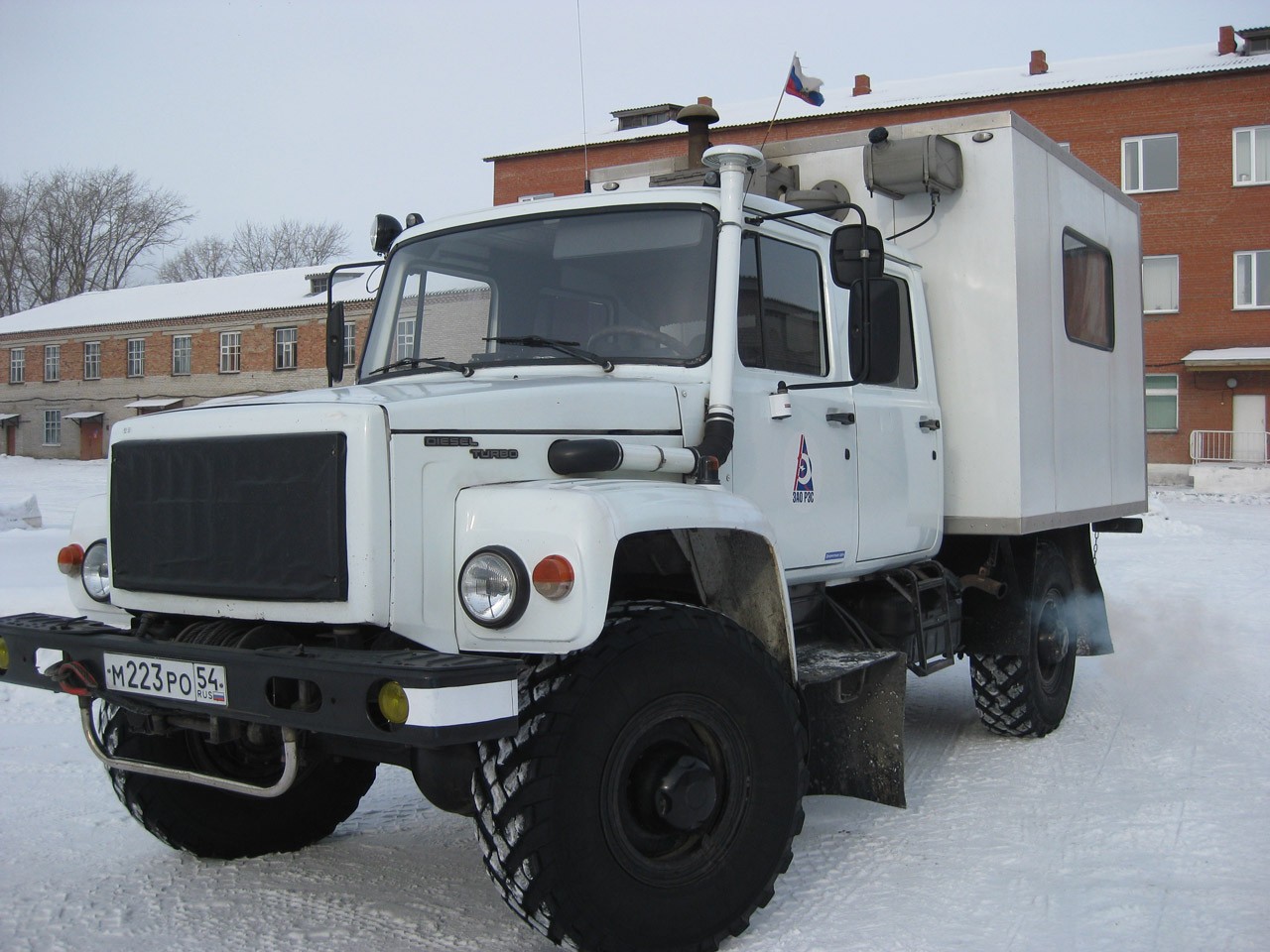
The NEXT design was then extended to heavier vehicles: the GAZon NEXT medium truck and the Sadko NEXT were both in the range by 2019. The older GAZ-3307 truck ended production in 2020.
Between 2011 and 2018 GAZ also assembled cars for other manufacturers. An agreement with Volkswagen Group, signed in June 2011 and usually quoted at EUR 200 million, covered the Škoda Yeti and Octavia and the VW Jetta. General Motors had the Chevrolet Aveo built there, and about 30,000 Mercedes-Benz Sprinter vans were assembled between 2012 and 2018.
Engineering firsts and motorsport
A few GAZ models are cited for engineering or sporting firsts, though some claims need care:
- The Pobeda is often described as one of the first Soviet cars with ponton styling; claims that it was a world first are not supported by the sources.
- The GAZ-M72, a four-wheel drive Pobeda on GAZ-69 running gear, is sometimes cited as an early example of a mass-produced monocoque car with four-wheel drive. Only 4,677 were built.
- A GAZ-21 Volga won its class in the 1959 1000 Lakes Rally in Finland.
Ownership, plants and production today
GAZ has been part of the GAZ Group holding since 2005. The group's present shareholder structure is not given here, as no up-to-date independent source could be confirmed.
According to the most recent published line-up, the range consists entirely of commercial vehicles: GAZelle NEXT and NN vans and minibuses, Sobol light vans, GAZon NEXT and Sadko NEXT trucks, and buses. No GAZ passenger car has been built since 2010.
Landmark GAZ models
These models defined GAZ's history, from Ford-based beginnings to the light commercial era.
| Model | Years | Why it matters |
|---|---|---|
| GAZ-A / GAZ-AA | 1932– | First cars and trucks, based on the Ford Model A and AA |
| GAZ-M1 | 1936–1941 | Ford-derived successor to the GAZ-A, 62,888 built |
| GAZ-M20 Pobeda | 1946–1958 | Ponton saloon, 235,999 built, licence-built in Poland |
| GAZ-12 ZIM | 1950–1959 | Limousine, first GAZ with the leaping-deer ornament |
| GAZ-21 Volga | 1956–1970 | 639,478 built, exported to Western Europe |
| GAZ-13 Chaika | 1959–1981 | V8 limousine for official use |
| GAZ-24 Volga | 1970–1992 | Second-generation Volga, basis of later models |
| GAZ-53 | 1961–1993 | Long-running medium truck |
| GAZ-3110 Volga | 1997–2004 | Volga of the late 1990s, updated as the GAZ-31105 |
| GAZelle | 1994– | Light commercial vehicle that reshaped the company |
| GAZelle NEXT | 2013– | European type approval, Cummins diesel |
GAZ timeline
These are the dated milestones of GAZ history, from the Ford deal to the end of passenger cars.
| Year | Event |
|---|---|
| 1929 | Agreement with the Ford Motor Company in May |
| 1932 | Production starts on 1 January as NAZ; first GAZ-A cars in December |
| 1933 | Plant renamed GAZ |
| 1936 | GAZ-M1 "Emka" replaces the GAZ-A |
| 1946 | Pobeda enters production in June |
| 1950 | GAZ-12 ZIM launched |
| 1956 | GAZ-21 Volga enters production |
| 1959 | GAZ-13 Chaika launched |
| 1970 | GAZ-24 Volga replaces the GAZ-21 |
| 1971 | AvtoGAZ production association formed on 24 August |
| 1981 | Ten millionth vehicle built in March |
| 1994 | GAZelle production begins |
| 2000 | SibAl acquires control in November |
| 2005 | GAZ Group holding formed |
| 2008 | Volga Siber production begins |
| 2010 | Passenger-car production ends in November |
| 2013 | GAZelle NEXT series production starts on 10 April |
Current model line-up
As of October 2026, the GAZ range consists of light commercial vehicles and medium trucks; these are the models listed in the most recent published line-up, and GAZ's 2026 production plans were not independently confirmed.
| Model | Segment | Body | Years |
|---|---|---|---|
| GAZelle NEXT / NN | Light commercial | Van, minibus, dropside, chassis cab | 2013– |
| Sobol | Light commercial | Van, minibus | 1998– |
| GAZon NEXT | Medium truck | Dropside, chassis cab | 2010s– |
| Sadko NEXT | Medium truck | Dropside, chassis cab | 2019– |
| Volga saloons (21, 24, 3102, 3110, 31105, Siber) | Passenger car | Saloon, estate | 1956–2010, ended |
Historic and current models, including the lighter GAZ trucks, are collected in the catalogue of all GAZ models.
GAZ in numbers
GAZ's production milestones show how the business shifted from cars to commercial vehicles:
- GAZ-A: 41,917 built (1932–1936)
- GAZ-M1: 62,888 built
- GAZ-M20 Pobeda: 235,999 built (1946–1958)
- GAZ-21 Volga: 639,478 built (1956–1970)
- GAZ-69: more than 600,000 built at GAZ and UAZ
- Ten millionth GAZ vehicle: March 1981
- GAZelle: more than one million built by 2005
- Volga Siber: about 9,000 built (2008–2010)
FAQ
What does GAZ stand for?
GAZ is the abbreviation of Gorkovsky Avtomobilny Zavod, the Gorky Automobile Plant. The plant opened in 1932 as NAZ and took the GAZ name in 1933, after the writer Maxim Gorky.
Did Ford help build GAZ?
Yes. In May 1929 the Soviet government signed an agreement with the Ford Motor Company for vehicles, parts and technical assistance in building the plant. The first GAZ-A car and GAZ-AA truck were based on the Ford Model A and Model AA.
When did GAZ stop making passenger cars?
GAZ ended passenger-car production in November 2010, when it stopped building the Volga Siber and the remaining Volga range. Since then it has built only light commercial vehicles, trucks and buses.
How many GAZ-21 Volgas were built?
A total of 639,478 GAZ-21 Volgas were built between 1956 and 1970, including the GAZ-22 estate. The car was also assembled in Belgium as the Scaldia-Volga.
What is the GAZelle?
The GAZelle is a light commercial vehicle built by GAZ since 1994 as a van, minibus and dropside truck. More than one million were made by 2005, and the current GAZelle NEXT has been in production since April 2013.
Is the Pobeda related to Opel?
Partly. The Pobeda was a GAZ design, but its front suspension and part of the unit body were reportedly derived from the 1938 Opel Kapitän. Its ponton styling and overall engineering were developed at GAZ.
Videos 2

Video 1

Video 2