
GAZ-3111
Specs, engines and history
Updated Published Sources (2) Report an error
By Oleksandr Hnatiuk, Automotive Editor & Used Car Specialist Reviewed by Felix Hartmann

- Built
- 1998–2004
- Top power
- 114 kW (155 PS)
The GAZ-3111 is the Volga that did not make it into real series production. Shown in 1998 as GAZ's new top saloon and the planned replacement for the GAZ-3110, it was meant to be built at 25,000 cars a year. In the end only a pre-production run of a few hundred cars was delivered between 2001 and 2004, which makes it one of the rarest Volgas.
In short
- Four-door, rear-wheel-drive luxury saloon, first shown in 1998 and built by GAZ in Russia.
- Production was planned from 2000; deliveries followed in 2001, 2002 and 2004, and sources put the total at roughly 400 cars.
- Petrol engines of 2.3 and 2.5 litres and a 2.1-litre diesel appear in sources, but published outputs disagree.
- No crash-test result was published; its styling lived on in the GAZ-31105 facelift.

Specs by version
Engines
Dimensions and weight
Show all 1 versions
| Version | Length | Width | Wheelbase | Kerb weight | Boot |
|---|---|---|---|---|---|
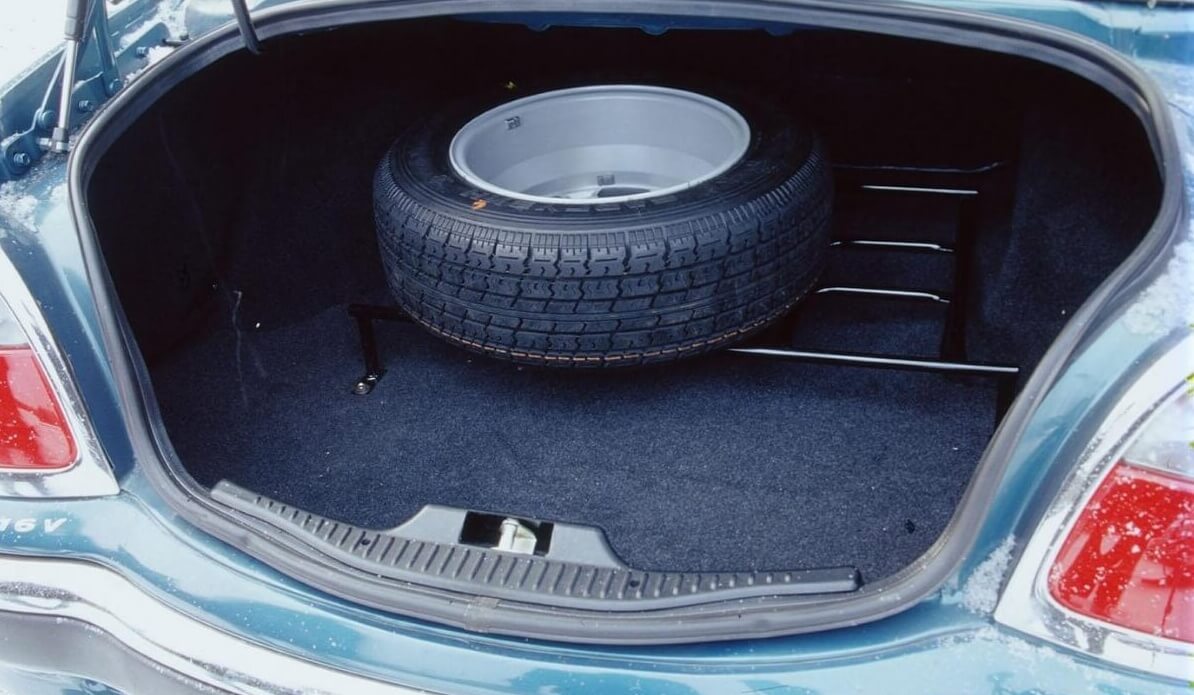
| 2.5 114 kW (155 PS) Sedan | 4,950 mm194.9 in | 1,800 mm70.9 in | 2,791 mm109.9 in | 1,560 kg3,439 lb | 600 l21.2 cu ft |
Verified Manufacturer and type-approval data from our catalog · Sources and methodology
GAZ-3111 at a glance
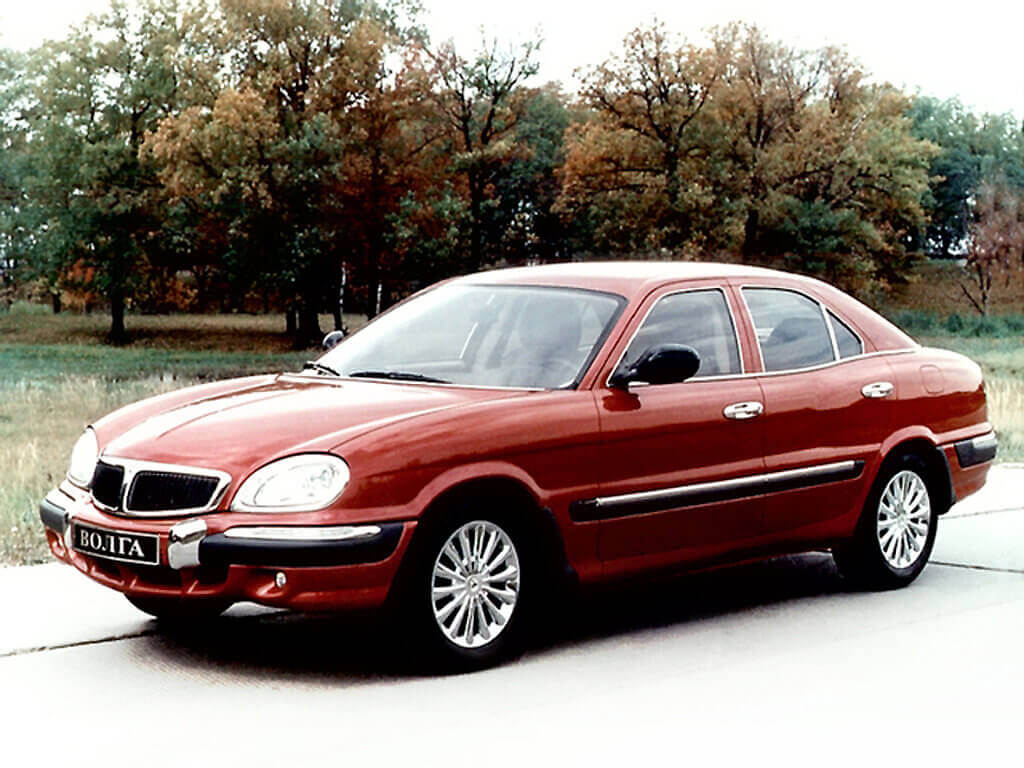
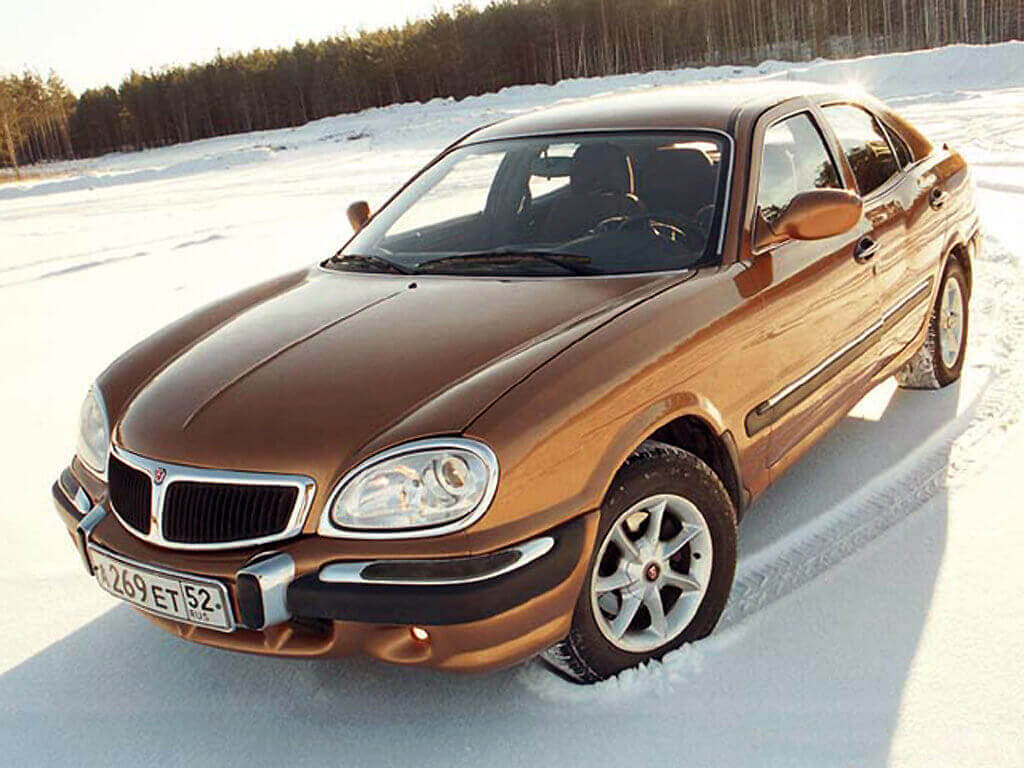
The GAZ-3111 is a large four-door saloon that GAZ developed as the flagship of its Volga range, with a body of its own rather than a reworked older shell. English-language Wikipedia describes it as the intended successor to the GAZ-3110, styled with deliberate references to the GAZ-21 of the 1950s.

The dates need some care. The car was first shown at a motor show in 1998, which is why many catalogues, including ours, list 1998 as its year. Series production was planned to begin in 2000, with 53 cars scheduled for delivery that year. According to Wikipedia, actual deliveries were 342 cars in 2001, 20 in 2002 and nine in 2004. The same source family also gives totals of "just over 400" and "428 pre-production cars", so the honest summary is a run of about 400, with sources that do not add up exactly.
The Volga line before it
The 3111 sits near the end of a long family of Volga saloons. The GAZ-21 ran from 1956 to 1970 and was followed by the GAZ-24, built from 1970 to 1992. The Volga-3102 followed in the early 1980s and stayed in production until 2008.

In 1997 GAZ created the 3110 as a modernised version of the GAZ-31029. The 3111 was meant to be the next step: a new car that would take the Volga name upmarket instead of relying on further updates of an existing design. Its retro styling cues were drawn from the GAZ-21, the car that started the Volga line.
Design and engineering
The exterior design is described by Wikipedia as developed in collaboration with a US-based company, which the source does not name. The result was longer than the 3110 and looked like a clean break, even though it kept a conventional front-engine, rear-wheel-drive layout.

Under the skin, the pre-production cars were less new than they looked. Wikipedia notes that some early components were taken from older GAZ models, with an axle from the Chaika given as one example. UK spec listings describe a rear axle on leaf springs, disc brakes at the front and drums at the rear, and 205/60 R15 tyres; these come from aggregator data only and are best read as typical rather than confirmed for every car.
The planned equipment list was ambitious for a Volga. Wikipedia mentions ABS, power steering, climate control, an automatic gearbox, leather upholstery and even V6 and V8 engines as intended features. It also states that the pre-production cars did not have an automatic gearbox, and it does not confirm which of the other items reached the delivered cars. Treat any claim of a fully equipped production 3111 with caution.
Engines and drivetrain
The engine question is where sources disagree most. Wikipedia lists engines without power figures, while UK spec aggregators give outputs that do not fully agree with each other. The table collects what is published; all figures are unconfirmed.

| Engine | Layout | Displacement | Power (kW / bhp) | Notes |
|---|---|---|---|---|
| ZMZ-4062.10 petrol | 2.3 L inline four | 2,280 cc | about 95 kW (128 bhp) | named by Wikipedia; output from an aggregator, which also lists 129 and 143 bhp variants |
| 2.5-litre petrol | inline four, 4 valves per cylinder | 2,429 cc / 2,465 cc | 100 kW (134 bhp) / 110 kW (148 bhp) | two aggregator entries; Wikipedia gives the type as ZMZ-4052.10, which looks like a typo |
| GAZ-560 diesel | 2.1 L inline four, turbo | 2,134 cc | 84 kW (112 bhp) at 3,800 rpm | 255 Nm (188 lb-ft), per aggregator |
| Toyota 5VZ-FE petrol | 3.4 L V6 | not published | not published | listed in the Wikipedia infobox; not confirmed for delivered cars |
All versions are listed with a 5-speed manual gearbox and rear-wheel drive. The all-wheel-drive entry in our catalogue is an error, covered in the FAQ below. Performance data is just as thin: aggregators quote a top speed of about 180 km/h (112 mph) for most versions and 0–100 km/h in around 13 seconds for one 2.5-litre car, figures we would not lean on.
Dimensions and weights
Published dimensions differ by 50–70 mm between sources, so the table gives ranges rather than a single figure. The lower lengths come from UK aggregator listings and the higher ones from Wikipedia.

| Parameter | Metric | Imperial |
|---|---|---|
| Length | 4,897–4,950 mm | 192.8–194.9 in |
| Width | 1,800–1,840 mm | 70.9–72.4 in |
| Height | 1,450–1,480 mm | 57.1–58.3 in |
| Wheelbase | 2,791–2,820 mm | 109.9–111.0 in |
| Kerb weight | 1,550–1,560 kg (one listing: 1,690 kg) | 3,417–3,439 lb (3,726 lb) |
| Boot | about 700 L (aggregator) | about 24.7 cu ft |
| Fuel tank | 70 L (aggregator) | 15.4 UK gal |
| Drive | rear-wheel | rear-wheel |
| Gearbox | 5-speed manual | 5-speed manual |
Even on the most cautious reading, the 3111 is about 4.9 m long on a wheelbase of roughly 2.8 m. That makes it longer than the 3110, not shorter, as some older descriptions claim. The 1,900 mm height that appears in some catalogue data, ours included, would suit an SUV, not this saloon.
Why it stayed rare
The short answer is price and reputation. Wikipedia says that sales were weak because the base price was high and the Volga brand did not carry the prestige of the cars GAZ was aiming at, which it names as the Mercedes-Benz E-Class and the BMW 5 Series.

Production was planned on a dedicated line at 25,000 cars a year, and the gap between that plan and the few hundred cars delivered tells most of the story. By late 2002, according to Wikipedia, it was clear the 3111 would not go into volume production, and GAZ turned its effort to updating the 3110 instead. No sales figures are published beyond the delivery totals, and we found no dated price we could quote in euros.
Finding one today
With only a few hundred built, a GAZ-3111 is a collector's car by default rather than a used-car purchase. Because sources disagree about engines and equipment, anyone looking at one should establish which engine and gearbox it actually has and what equipment it left the factory with, rather than relying on a generic spec sheet. We do not publish values for it.
Legacy: from the 3111 to the 31105 and the Volga Siber
The 3111 failed as a product but left a visible mark on the cars that followed. The GAZ-31105, an extensive update of the 3110 in production from January 2004, received block headlights that Wikipedia describes as inspired by the 3111. According to the same source, the 31105 also dropped the old kingpin-type front suspension in 2004.

The next attempt at a modern Volga took a different route. The Volga Siber, unveiled in August 2007 and built from July 2008, was based on the Chrysler Sebring rather than a GAZ design. Around 9,000 were built between 2008 and 2010, far more than the 3111 but still short of a lasting replacement. The 3111 remains a footnote among all GAZ models and an unusual entry among classic cars of the 1990s, a retro-styled luxury saloon that sits apart from the other Volga sedans.
Rivals
Compare with…
Compare GAZ-3111 with
- Hyundai Grandeur quick spec comparison
- Volvo S80 quick spec comparison
- Honda Accord quick spec comparison
-
Ended 2022
- Years
- 1986–2022
- Body
- Sedan
- Fuel
- Petrol, Diesel, Hybrid
- Power
- 88–218 kW (120–296 PS)
6 generations
- I
- II
- XG
- TG
- HG
- IG
-
Ended 2016
- Years
- 1998–2016
- Body
- Sedan
- Fuel
- Petrol, Diesel
- Power
- 80–232 kW (109–315 PS)
2 generations
- I
- II
-
In production
- Years
- 1976–present
- Body
- Sedan, Hatchback
- Fuel
- Petrol, Diesel, Hybrid
- Power
- 50–207 kW (68–281 PS)
11 generations
- VI
- VII
- VIII
- IX
- CV
- XI
- +5 earlier


GAZ-3111 in our rankings
- No. 4 of 68 · Biggest boot: sedans (600 l)
- No. 29 of 348 · Biggest boot: cars (600 l · top 9%)
- No. 83 of 609 · Longest cars (4,950 mm · top 14%)
- No. 34 of 126 · Longest sedans (4,950 mm · top 27%)
- No. 38 of 85 · Heaviest sedans (1,560 kg · top 46%)
- No. 88 of 184 · Biggest engines: sedans (2,500 cc · top 50%)
Bigger boot than 94% of ranked sedans in the 1CARS catalog (No. 4 of 68).
GAZ-3111 photos 26







GAZ-3111 videos 4

GAZ-3111 video 1

GAZ-3111 video 2

GAZ-3111 video 3

GAZ-3111 video 4
FAQ
How many GAZ-3111 were built?
About 400, all from a pre-production run. English-language Wikipedia gives "just over 400" in one article and 428 in another, while its delivery figures (342 in 2001, 20 in 2002 and nine in 2004) add up to 371, so the exact number is uncertain.
Is the GAZ-3111 rear-wheel or all-wheel drive?
Rear-wheel drive, like the Volga saloons before it. Spec listings pair it with a 5-speed manual gearbox. The all-wheel-drive entry in some catalogue data, including ours, is an error.
What engine did the GAZ-3111 have?
Sources name a 2.3-litre ZMZ-4062.10 petrol four, a 2.5-litre petrol four and a 2.1-litre GAZ-560 turbodiesel; a Toyota 3.4-litre V6 is also mentioned. Aggregators quote 84 to 110 kW (112 to 148 bhp), but figures differ between sources.
Why was the GAZ-3111 so rare?
According to Wikipedia, a high base price and the Volga brand's image held sales back, while GAZ had aimed it at the Mercedes-Benz E-Class and BMW 5 Series. Planned output was 25,000 a year; only a few hundred cars were delivered.
What replaced the GAZ-3111?
No direct successor reached the market. GAZ updated the 3110 into the GAZ-31105 from 2004, using headlights inspired by the 3111, and later launched the Chrysler-based Volga Siber in 2008.
Is the GAZ-3111 the same as the Volga 3110?
No. The 3110 was a 1997 modernisation of the GAZ-31029 and a series-production car, whereas the 3111 had its own body and design and was intended to replace it.
Data sources
Data checked by an editor against the sources below.
- The text of this article (1cars archive)
- Wikipedia - GAZ 3111


