FAW: History, Landmark Models and Line-up
FAW Group (First Automobile Works) is China's state-owned vehicle maker, founded in 1953 in Changchun. It built the country's first truck, the Jiefang CA-10, in 1956 and launched Hongqi, the oldest Chinese passenger-car marque, in 1958. Since 1991 it has also built Volkswagen, Audi and later Toyota cars through joint ventures, and its annual output now exceeds three million vehicles.

Key takeaways
- FAW was set up by the state in 1953; its first truck, the Jiefang CA-10 of 1956, was based on the Soviet ZIS-150.
- Hongqi started with the CA72 on 1 August 1958 and was relaunched with a new brand strategy on 8 January 2018.
- FAW-Volkswagen was founded on 6 February 1991, the company took the name FAW Group in 1992, and FAW Toyota followed in the early 2000s.
- FAW is owned by the central government through SASAC and runs three brands of its own: Jiefang, Hongqi and Bestune.

FAW Group at a glance
FAW is a central state-owned enterprise that builds trucks under the Jiefang name, cars under Hongqi and Bestune, and joint-venture cars with Volkswagen, Audi and Toyota. Key facts as of October 2026:
| Fact | Value |
|---|---|
| Full name | FAW Group Corporation (FAW = First Automobile Works, also given as First Automotive Works) |
| Founded | 1953; the founding date is usually given as 15 July 1953 |
| Headquarters | Changchun, Jilin province, China |
| Ownership | Central state-owned enterprise, controlled by SASAC |
| Own brands | Jiefang (trucks), Hongqi, Bestune (Besturn) |
| Main joint ventures | FAW-Volkswagen (with Volkswagen and Audi), FAW Toyota |
| Employees | 119,658 (2023) |
| First product | Jiefang CA-10 truck, 1956 |
| Scale | More than three million vehicles a year, including joint ventures |
Origins: a state project built around one truck
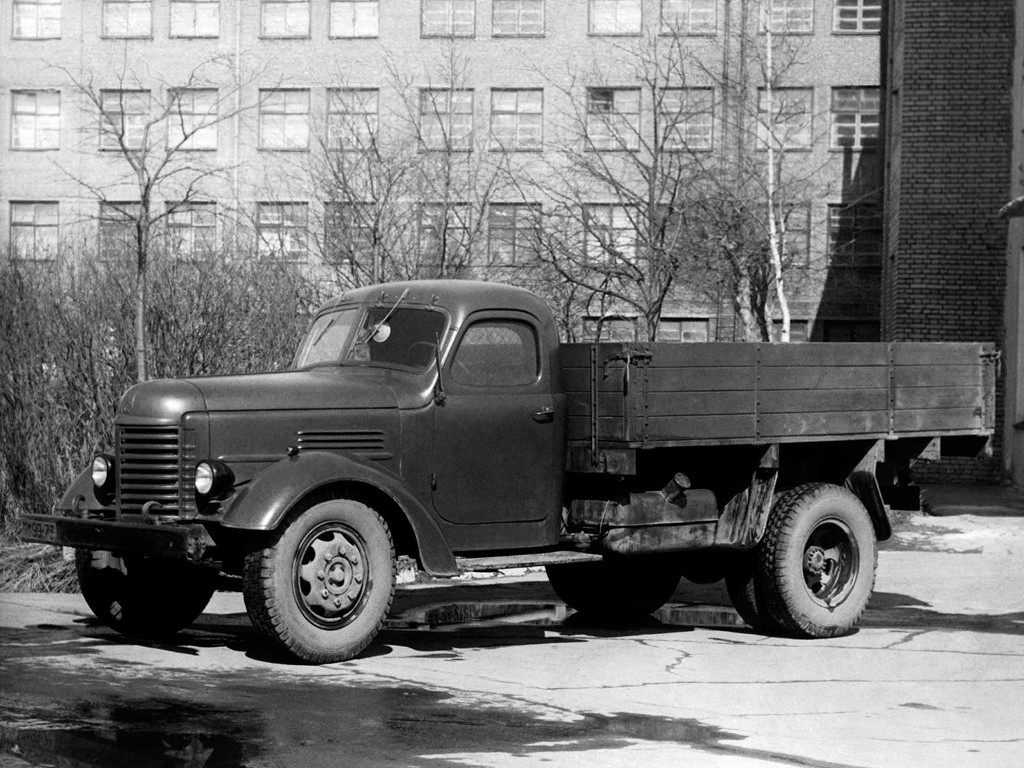
FAW had no individual founder: the state created it in Changchun on 15 July 1953, the date usually quoted, as China's first automobile works, with one job, building trucks. From the start the Soviet Union supported the project with training, tooling and technical help from the plant that built the ZIS-150, the factory later known as ZIL.

The result was the Jiefang CA-10 of 1956, the first truck built in the People's Republic of China. Because it was based on the ZIS-150, the design was proven, and the new plant could concentrate on learning series production. In 1957 three trucks went to a buyer in Jordan, FAW's first export.
The licence link continued. The ZIL-157 was later built in China as the Jiefang CA-30, so two generations of FAW trucks trace back to the same Soviet works. The other side of that story is told in the history of ZIL.
FAW history by era
FAW's seven decades fall into five periods, each marked by a change in what it built and with whom.
1953–1965: Jiefang trucks and the first Hongqi
The first decade was about trucks, but cars arrived early. FAW began building passenger cars in 1958, and the first Hongqi, the CA72, was introduced on 1 August 1958. That makes Hongqi the oldest Chinese passenger-car marque. FAW added a bus subsidiary, Taihu, in 1959 and adopted its winged "1" emblem in 1964.
1966–1989: the CA770 and the Audi 100 contract
The large Hongqi CA770 carried FAW's car business for 15 years. It was introduced in 1963, gained a long-wheelbase version in 1965 and was built in series from 1966 until 1981, when Hongqi production stopped. In the 1980s FAW prepared for foreign trade: FAW Import and Export Corporation (FAWIE) was set up in 1984.
The turning point came on 13 August 1988, when Audi AG signed a contract with First Automobile Works to build the Audi 100 for China from parts shipped from Germany. It came less than three years before the FAW-Volkswagen joint venture.
1990–2005: FAW-Volkswagen, Xiali and Toyota
FAW-Volkswagen was founded in Changchun on 6 February 1991 and built its first car, a second-generation Jetta, in December 1991. The joint venture began official business on 1 September 1992, the year in which First Automotive Works became FAW Group Corporation. FAW holds the majority; the split is usually given as FAW 60%, Volkswagen 30% and Audi 10%, although sources disagree on the exact figures.
Other partners followed. Hainan Mazda, a joint venture between the Hainan provincial government and Mazda, was founded in January 1992. In September 2002 FAW bought 50% of Tianjin Automotive Xiali, which became FAW Tianjin, and Tianjin also became the base of the Toyota partnership. Sources date Tianjin FAW Toyota either to June 2000 or to 2003; the shares are FAW 50%, Toyota Motor Corporation 45% and Toyota Motor China 5%. The partner's own story is in the history of Toyota. Meanwhile, from 1995 to 2006 the cars sold as Hongqi were foreign designs, among them the Audi 100 and Lincoln Town Car variants.
2006–2017: Bestune and the Mazda6 years
FAW launched its own passenger-car brand, Bestune, on 18 August 2006. The name is spelled Besturn in older material and in the 1cars catalogue. Its first model, the Besturn B70, used the platform of the first-generation Mazda6 and came with 2.0-litre and 2.3-litre engines of 108 kW (147 PS) and 120 kW (163 PS). In the same year FAW took over Mazda's share of Hainan Mazda, the business later known as FAW Haima, and FAW Tianjin started building the Vita small car in July 2006.
The smaller Besturn B50 followed in 2009, again on the older Mazda6 platform but with a 1.6-litre engine, and stayed in production until 2019. A second-generation B70, based on the second-generation Mazda6, arrived in May 2014. The Besturn X80 SUV went on sale in China on 16 May 2013 after its debut at Auto Shanghai. It used Mazda-sourced 2.0-litre and 2.3-litre engines of 109 kW (146 hp) and 115 kW (154 hp), later joined by a 1.8-litre turbo of 139 kW (186 hp).
At the cheaper end, the Vita was built as a hatchback until 2012 and as a saloon until 2015, with Toyota-derived 1.5-litre engines of 75 kW (102 PS). Its 2012–2015 facelift was sold as the FAW V5, and the line continued with the FAW V2, sold in China as the Vizi V2.
Group output grew from more than 1.5 million vehicles in 2008 to 2.56 million in 2010 and 2.6 million in 2011, when FAW ranked third among Chinese vehicle makers. Hongqi stayed small: it returned in 2006 with the HQ3, based on the Toyota Crown Majesta, but sold only 2,534 cars in 2013.
2018–2026: the Hongqi relaunch and new partners
The current period began on 8 January 2018, when FAW presented a new Hongqi brand strategy, with a new design and logo, at a conference in Beijing. Sales rose quickly from 33,000 in 2018: Hongqi passed 100,000 in 2019, 200,000 in 2020 and 300,000 in 2021. FAW reported 411,777 Hongqi sales for 2024.
Hongqi also began exporting cars. It entered Norway in September 2021 and Vietnam on 1 February 2022 with the E-HS9 and H9, followed by Israel, Denmark and Sweden. In July 2024 it announced plans to sell the electric EH7 and EHS7 in the UK. In 2021 Audi and FAW set up Audi FAW NEV, majority-owned by Audi, for new-energy Audi models. The FAW-Volkswagen agreement had already been extended in 2014 to run until 2041.
Two newer changes rest mainly on a single source and are best read as announcements. Bestune took on outside investors from September 2023. In 2025 FAW and the electric-car maker Leapmotor announced a cooperation that includes a Hongqi for overseas markets on a Leapmotor platform, with mass production planned for the second half of 2026, and a small FAW shareholding in Leapmotor.
Landmark models from the CA-10 to the E-HS9
These vehicles trace FAW's path from licensed trucks to its own electric cars.

| Model | Years | Why it matters |
|---|---|---|
| Jiefang CA-10 | from 1956 | First truck built in the People's Republic of China; based on the ZIS-150 |
| Hongqi CA72 | from 1958 | First Hongqi, introduced on 1 August 1958 |
| Hongqi CA770 | 1966–1981 | Large Hongqi saloon; long-wheelbase version from 1965 |
| Audi 100 | contract 1988 | Built from German parts; later sold as a Hongqi |
| Jetta (FAW-Volkswagen) | from 1991 | First car of FAW-Volkswagen, built from December 1991 |
| Besturn B70 | 2006– | First Bestune model, on the first-generation Mazda6 platform |
| Vita / V5 | 2006–2015 | FAW Tianjin small car with Toyota-derived engines |
| Besturn B50 | 2009–2019 | Smaller Bestune saloon on the older Mazda6 platform |
| Besturn X80 | from 2013 | Bestune SUV with Mazda-sourced engines |
| Hongqi E-HS9 | exported from 2022 | Electric SUV among the first Hongqi models sold abroad |
Engineering firsts and records
FAW is not known for motorsport; its records are industrial: the first truck built in the People's Republic of China (1956) and the oldest Chinese passenger-car marque (1958).

Its engineering strategy relied on proven foreign designs adapted for its own plants. The CA-10 and CA-30 came from Soviet trucks, the first FAW-Volkswagen line used equipment from a closed American plant, and two generations of Bestune saloons shared Mazda6 platforms. That let FAW build volume quickly. FAW-Volkswagen reached one million cars in 2004 and three million in 2009, and built 1,018,888 in 2011 alone.
Ownership, joint ventures and factories today
FAW is a central state-owned enterprise controlled by SASAC. Three subsidiaries are listed on the stock market: FAW Jiefang and Qiming Information Technology in Shenzhen, and Changchun FAWAY in Shanghai.
Most of FAW's volume comes from partnerships; shares are as usually quoted.
| Company | Founded | Ownership | Main products |
|---|---|---|---|
| FAW-Volkswagen | 1991 | FAW majority (usually 60/30/10 with Volkswagen and Audi) | Volkswagen, Audi, Jetta (brand from 2019) |
| FAW Toyota | 2000 or 2003 (sources differ) | FAW 50%, Toyota 45%, Toyota Motor China 5% | Corolla, Crown, RAV4, bZ3, bZ5 |
| Audi FAW NEV | 2021 | Audi majority | New-energy Audi models |
| FAW-GM | 2009 | Joint venture with General Motors | Light commercial vehicles |
| FAW Haima (former Hainan Mazda) | 1992 | 49% transferred to Hainan Development Holdings in July 2021 | Passenger cars |
FAW-Volkswagen builds cars in Changchun (since 1991), Chengdu (2011), Foshan (2013) and Qingdao and Tianjin (2018). The Toyota venture is based in Tianjin and was renamed FAW Toyota Motor Co. in 2022.
FAW model line-up: current brands and recent models
The table lists the main nameplates of FAW's brands and joint ventures, plus earlier FAW cars covered on 1cars; years are given where confirmed.

| Model | Segment | Body | Years |
|---|---|---|---|
| Hongqi H9 | Large luxury | Saloon | exported from 2022 |
| Hongqi E-HS9 | Large, electric | SUV | exported from 2022 |
| Hongqi EH7 / EHS7 | Electric | Saloon / SUV | UK sales announced in 2024 |
| Bestune B70 | Mid-size | Saloon | 2006– (third generation 2020) |
| Jiefang | Commercial vehicles | Trucks | 1956– |
| FAW-Volkswagen: Volkswagen, Audi, Jetta | Various | Various | 1991– |
| FAW Toyota: Corolla, Crown, RAV4, bZ3, bZ5 | Various | Various | early 2000s– |
| Besturn B50 | Compact | Saloon | 2009–2019 |
| Besturn X80 | Mid-size | SUV | from 2013 |
| FAW V5 | Small | Saloon | 2012–2015 |
| FAW V2 | Small | Hatchback | successor to the Vita |
Every FAW model on the site, with specifications by version, is listed in the FAW catalogue.
FAW timeline
The dated milestones of FAW history:
| Year | Event |
|---|---|
| 1953 | FAW founded; construction of the Changchun plant begins |
| 1956 | First Jiefang CA-10 truck, based on the ZIS-150 |
| 1958 | First Hongqi, the CA72, introduced on 1 August |
| 1988 | Audi 100 contract signed on 13 August |
| 1991 | FAW-Volkswagen founded on 6 February; first Jetta in December |
| 1992 | Renamed FAW Group Corporation; Hainan Mazda founded |
| 2002 | 50% of Tianjin Automotive Xiali acquired |
| 2006 | Bestune brand launched on 18 August; Mazda's share of Hainan Mazda taken over |
| 2011 | Group output 2.6 million; FAW-Volkswagen passes one million in a year |
| 2018 | New Hongqi brand strategy presented on 8 January |
| 2021 | Hongqi sales pass 300,000; first Hongqi exports, to Norway |
| 2025 | Cooperation with Leapmotor announced |

FAW in numbers
Production and sales figures, as usually quoted:
- Group output: more than 1.5 million vehicles in 2008, 2.6 million in 2011 and 2.3 million in 2012 (64% passenger cars).
- Hongqi sales: 2,534 in 2013, 33,000 in 2018, more than 370,000 in 2023 and 411,777 in 2024.
- Own-brand sales of 732,328 in 2023 and 813,632 in 2024; group production of about 3.3 million vehicles in 2025, including joint ventures.

FAQ
Who owns FAW?
FAW is a central state-owned enterprise controlled by SASAC. It owns the Jiefang, Hongqi and Bestune brands and holds the majority in FAW-Volkswagen and 50% of FAW Toyota.
What does FAW stand for, and what does its logo show?
FAW stands for First Automobile Works, also translated as First Automotive Works; the name FAW Group Corporation dates from 1992. Its winged emblem, adopted in 1964, is built around the numeral "1".
What is Hongqi and who makes it?
Hongqi is FAW's premium car brand and the oldest Chinese passenger-car marque, started with the CA72 in 1958. After a relaunch in January 2018, sales rose from 33,000 that year to 411,777 in 2024.
Was the first Chinese truck a Soviet design?
Yes. The Jiefang CA-10 of 1956, the first truck built in the People's Republic of China, was based on the Soviet ZIS-150. The later Jiefang CA-30 was a licence version of the ZIL-157.
Is FAW connected to Volkswagen, Toyota and Mazda?
Yes. FAW-Volkswagen (1991) builds Volkswagen, Audi and Jetta models, and FAW Toyota dates from the early 2000s. FAW took over Mazda's share of Hainan Mazda in 2006, and the first Bestune saloons used Mazda6 platforms.
Where are FAW cars made?
FAW is based in Changchun, home of its first truck plant and FAW-Volkswagen's first factory. FAW-Volkswagen also builds cars in Chengdu, Foshan, Qingdao and Tianjin, and FAW Toyota is based in Tianjin.