Archive first published
Chevrolet has decided to revive the legendary Blazer crossover version
Many people remember the Chevrolet Blazer as one of the first foreign cars assembled in the region. From the end of 1996, the SUVs were assembled in Yelabuga from kits supplied by Chevrolet's Brazilian plant, long before most foreign carmakers built local factories. The licence covered the Brazilian version of the Blazer.
It was a tough body-on-frame vehicle, with a solid rear axle on leaf springs, four-wheel drive with a low-range gearbox and a locking rear differential. However, the locally assembled Blazer never achieved great success. The 1998 financial crisis also played a part: production stopped at fewer than 4 thousand vehicles.

But globally, the Chevrolet Blazer is quite a well-known and popular car. In various markets the model existed from 1969 to 2011. In 2019, the company plans to start selling a new Blazer. This time, however, it is not an SUV but a crossover.
Fans of the brand protested that the Blazer name did not belong on a crossover, especially as Ford's revived Bronco SUV would keep its off-road credentials. A logical question arises: why did General Motors decide to ignore the image of Blazer, which has been developed over the years?
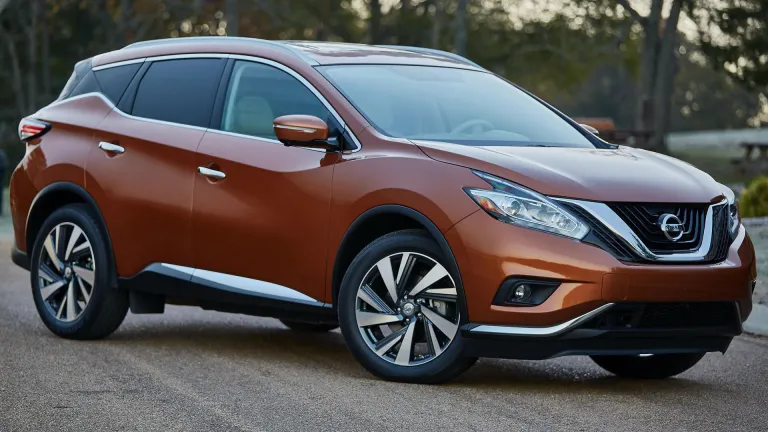
The marketing department convinced General Motors that the mid-size 5-seat crossover segment is large, and that if it delayed a rival to the Ford Edge, Nissan Murano and Jeep Grand Cherokee, the company could lose a sure profit. So the tough "Blazer" became a quiet crossover, though not a faceless one.
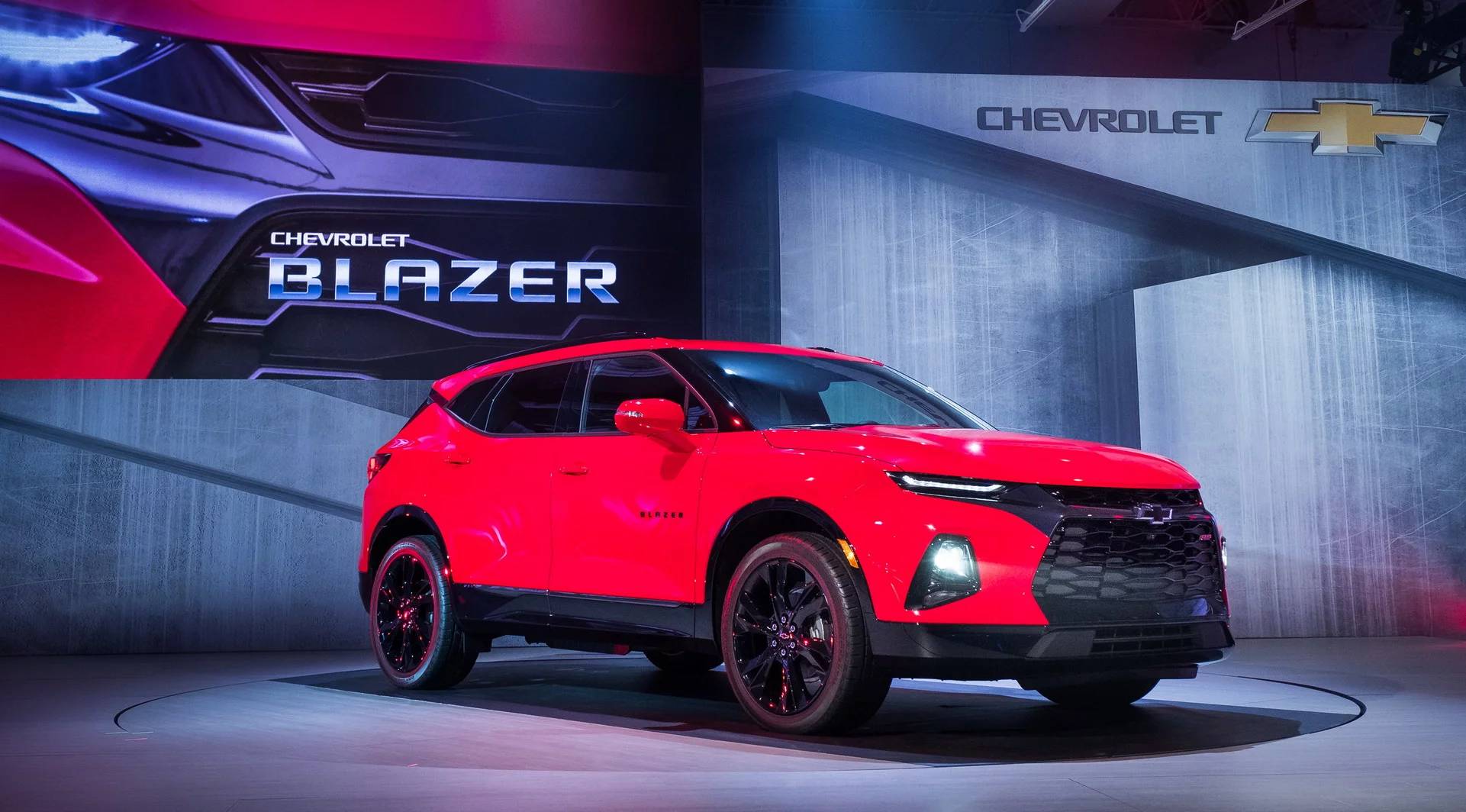
The Blazer looks good, with an athletic stance. Its appearance clearly shows what the car is for - driving on tarmac with occasional trips onto country roads. The interior of the new model is styled like the Chevrolet Camaro, giving it a sporty feel. According to one engineer, the Blazer is the car that will soon replace the sports sedan. That is quite a bold statement.
The top Chevrolet Blazer has a 3.6-litre V6 engine producing about 224 kW (300 hp). The basic version has only a four-cylinder 2.5-litre engine with 142 kW (190 hp). The gearbox is a nine-speed automatic. This hardware, together with modern start/stop technology, provides decent fuel economy.

In terms of handling and comfort, the American crossover is similar to its rivals. It is one of the ordinary modern SUVs that fill roads all over the world. Still, the model will stand out in city traffic. The top version of the Chevrolet Blazer 2019 has 21-inch alloy wheels.
The new model uses an all-wheel drive system similar to that of the Buick Regal TourX off-road estate, tuned for safe, fast driving. American experts say that the all-wheel drive "Blazer" can tow a trailer weighing up to 4,500 pounds (more than 2 tons).
Interestingly, the rear-view mirror can show the image from the camera on the tailgate. One more camera was installed for easier parking. All the cameras stay clean because Chevrolet's engineers gave them washer jets. The grille also has a camera for easier parking.
The rear seats can be folded into a flat floor, which clearly simplifies luggage transport. The luggage compartment itself is not record-breaking, but it is spacious and comfortable enough. There is a cargo management system. There is plenty of free space inside the car. There are also technologies that ensure the proper level of safety - in all this the Chevrolet Blazer is on par with modern vehicles.
In other words, this is a modern, well-made crossover on which the company has high hopes. In the United States the new model costs about 50 000 dollars in the top version with all-wheel drive and the V6 engine. The crossover sits between the Equinox and the larger Traverse (a much more expensive car).
The price list for the new version is a little higher than, for example, the same Ford Edge with similar equipment. However, the Edge looks plainer, while the Blazer has a more striking appearance. It would be good to see the new American model exported, although export prices are unlikely to be low.
There have been cases when the American media were surprised by an export-market Chevrolet Camaro, when the famous fuel-hungry model was offered with a 2.0-liter engine.
Photos (8)