Archive first published
Mercedes Concept IAA 2015: How a Transforming Coupé Chased Low Drag
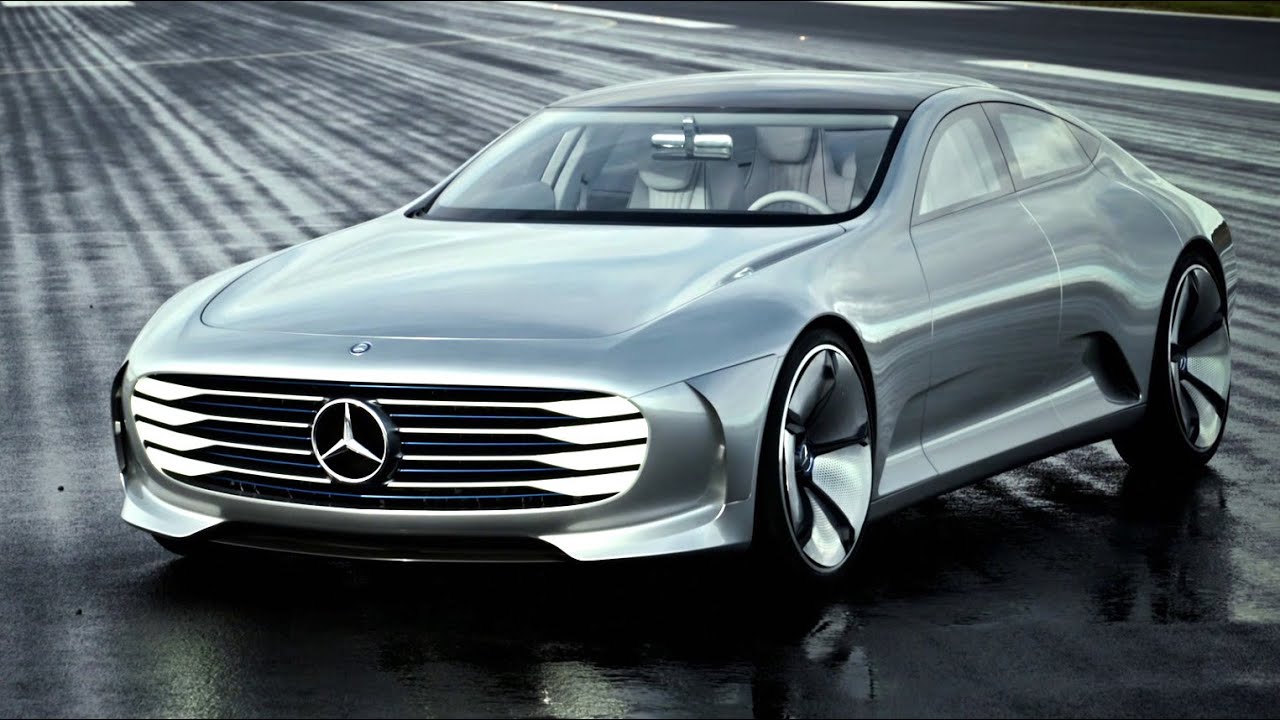
The Mercedes-Benz Concept IAA was a four-door coupé shown at the Frankfurt Motor Show (IAA) in September 2015. Its name stood for Intelligent Aerodynamic Automobile. Above 80 km/h it changed shape, extending its tail by 390 mm and reaching a drag coefficient of 0.19. It never entered production, but its aims shaped the low-drag EQS and the Vision EQXX.
Key takeaways
- Shown at Frankfurt in September 2015; switches from Design mode to Aerodynamic mode at 80 km/h or at the press of a button.
- Cd 0.19 in Aerodynamic mode, presented by Mercedes as a record for its class.
- Plug-in hybrid with 205 kW (279 hp), 250 km/h and 62–66 km of electric range.
- A one-off concept; its lessons appeared in the 2021 EQS and the 2022 Vision EQXX.

A concept named after its own show
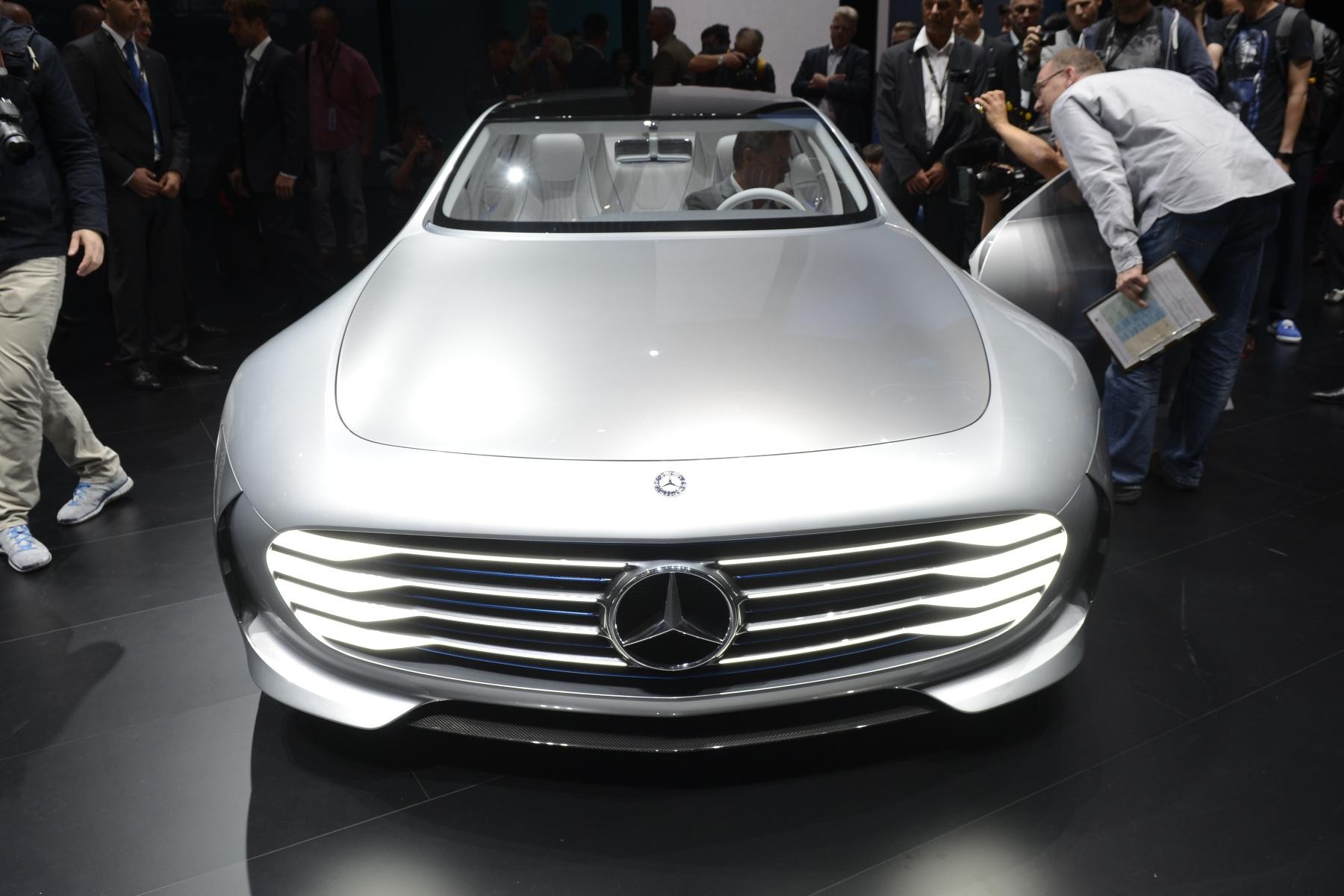
Mercedes named the car after the show where it appeared. The Frankfurt Motor Show is called the IAA in German, and the letters were reused as Intelligent Aerodynamic Automobile. Our November 2015 report described its shark-like nose, LED lights and wide wheel arches.

In Design mode it looked like a sleek four-door coupé. In Aerodynamic mode, moving panels changed the body to cut drag. The whole transformation happened automatically at about 80 km/h.
Concept IAA aero devices and drivetrain
| Item | Concept IAA (2015) |
|---|---|
| Body | four-door, four-seat coupé |
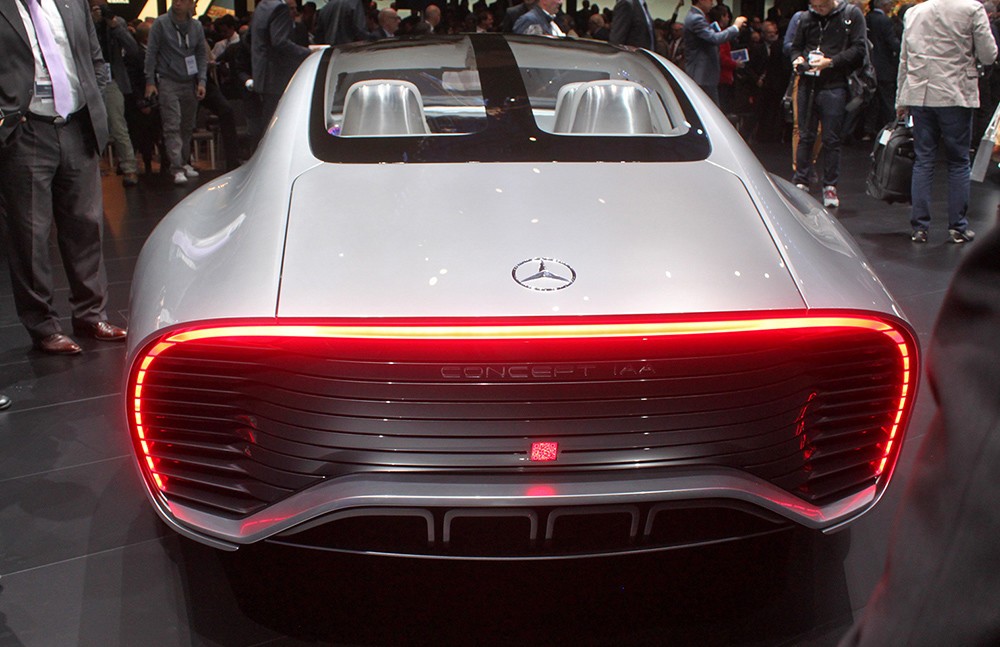
| Rear | eight segments extend up to 390 mm |
| Front bumper flaps | move 25 mm forward and 20 mm rearward |
| Grille louvre | slides 60 mm back to close the air path |
| Active Rims | wheel dish goes from 55 mm deep to flat |
| Drag coefficient | 0.19 in Aerodynamic mode |
| Drivetrain | petrol-electric plug-in hybrid, 205 kW (279 hp) |
| Top speed | 250 km/h, limited |
| Electric range | 66 km (Aerodynamic) / 62 km (Design) |
| CO2 | 28 g/km (Aerodynamic) / 31 g/km (Design) |
Our original article listed more details from the Mercedes presentation. There were no door handles, and cameras replaced the door mirrors. The cabin used light leather, aluminium and glass, and a Car-to-X system exchanged data with other vehicles and roadside equipment. Mercedes also said that digital simulation had cut the development time to about ten months. Only the final tuning took place in a wind tunnel.

Why drag mattered so much in 2015
The concept arrived as European CO2 limits tightened and plug-in hybrids began to spread. At motorway speeds, air resistance is the largest single load on a car. The Concept IAA showed that an extra 4 km of electric range could come from shape alone, without a larger battery.
It also showed the cost: the moving tail, flaps and wheel covers added weight and complexity, so the transformation stayed on the show stand.
What happened after the Concept IAA
| Date | Event |
|---|---|
| September 2015 | Concept IAA shown in Frankfurt |
| 2018 | Third-generation CLS continues the four-door coupé line without active bodywork |
| April 2021 | Electric EQS revealed with a Cd of 0.20, then the lowest of any production car |
| January 2022 | Vision EQXX concept reaches Cd 0.17 and drives over 1,000 km on one charge |
| 2025 | New CLA launched with a Cd of 0.21 |
Mercedes kept the goal but changed the method: the EQS and later cars reached very low drag with fixed shapes, closed grilles, smooth underbodies and active shutters. None adopted an extending tail.
Our verdict on the Concept IAA in 2026
In October 2026 the Concept IAA remains a one-off show car, and the Vision EQXX, also a concept, has beaten its record.
For drivers, the lesson is about efficiency. A car with low drag uses less energy at high speed, which matters most for electric cars on long trips. If that is your priority, look at the electric cars section and the plug-in and hybrid models, browse the Mercedes-Benz catalogue or compare running costs with the fuel cost calculator.

FAQ
What does IAA stand for in the Mercedes Concept IAA?
It stands for Intelligent Aerodynamic Automobile. The name also refers to the IAA, the German name of the Frankfurt Motor Show where the car appeared in 2015.
What was the drag coefficient of the Mercedes Concept IAA?
Mercedes gave a drag coefficient of 0.19 in Aerodynamic mode. The car switched into that mode automatically at about 80 km/h, or when the driver pressed a button, by extending its tail and moving flaps.
Did the Mercedes Concept IAA go into production?
No. It stayed a concept. Its aerodynamic aims returned in the EQS of 2021 and the Vision EQXX of 2022, but without moving body panels.
What powered the Mercedes Concept IAA?
It had a petrol-electric plug-in hybrid drivetrain with 205 kW (279 hp). Top speed was limited to 250 km/h, and electric range was 62–66 km.
Photos (1)